Posts Tagged ‘mega drive’
Review: Sherlock Homes Consulting Detective (Sega CD)
 Console: Sega-CD/Mega-CD
Released: 1992
Developer: ICOM Simulations
Publisher: Sega (Sega/Mega-CD)
Instruction Manual: Not necessary
Difficulty: Moderate
Played it as a child? Yes
Value: $5.99 (used) $11.99 (new) (pricecharting.com) – Price for Sega CD version only
Price: $5.00-$10.00 (used) N/A on US Version (new) on eBay
Other Releases: FM Towns (original release, Japan only), DOS/MAC, Commodore CDTV, Turbografx-16 CD
Digital Release? Yes – an updated version with better video quality released on PC, Mac OS X, and iPad in late Sept. 2012
Sherlock Holmes Consulting Detective is a bit of an anomaly in the realm of video games. Much like Myst, the game premiered on CD-based consoles and computers to show off the benefits of the new technology, but was much less of a game than it was an interactive form of media. A basic interface allowed the player to navigate various options and view content (mostly video) in order to solve one of the popular cases that originally appeared in the novel by the same name. To show off all of the fancy marvels of a multimedia CD-ROM title there was complete focus on showing off content rather than optimizing any aspect of the game for quick playing, resulting in a few simple actions taking ridiculous amounts of time to accomplish. I was recording gameplay videos for this article last night and it took more than 30 mins just to capture the “tutorial” that includes many icons, each with its own slow loading audio (no subtitles) background, and a video from Sherlock Holmes himself. It was so slow-paced and boring to capture, I made the executive decision that it would be even more boring to watch and scrapped the video. Don’t let this discourage you, especially with the re-releases likely having no load times, Sherlock Holmes Consulting Detective is a thought-provoking hybrid between the adventure genre and the full motion video (FMV) game.
Happy 20th to the Sega CD

Sega CD Model 2 with Genesis Model 2, the most common setup
Okay, I know the Sega CD actually turned 20 exactly one week ago on October 15, but we’ve been very busy over here so we regretfully missed the window. Fortunately we are making up for that with tons of Sega CD coverage for the month of November, check in to see write-ups and gameplay on many of the titles that made Sega’s overpriced add-on a temptation in 1993. Now I know it is popular opinion to crap all over the Sega CD and in full disclosure I’m an avid fanboy of this specific system, but somewhere in between lies its true value. Someone once told me that any console with at least three good games is worth being in existence and under that theory the Sega CD justifies itself at least three times over. In recent days the Sega CD has also dropped in price/value so it’s quite possible to get your hands on a Genesis/CD combo for roughly $50-$75, which isn’t too shabby even by today’s standards.
In truth the Sega CD (Mega CD in Japan and Europe) wasn’t designed for our market. It was developed in Japan to compete with the PC-Engine CD (Turbografx-16 Duo in our country) and hopefully migrate the consumers of the time into the CD generation as an unassuming add-on instead of a full-blown machine. In the end both consoles did make their way stateside (NEC being very conservative with Turbo Duo distribution and Sega liberally releasing any and all hardware in every market) with hefty price tags ($300-$450). Sega CD emerged victorious but many would argue its victory was due more to the fact that almost every game that released in Japan came over here whereas an extremely meager amount of PC-Engine CD titles ever made it stateside. Like the PC-Engine CD, the Sega CD was able to upgrade visuals, considerably upgrade audio quality (especially with straight CD tracks in red and yellow book audio format), and increase capacity of discs to 600 mb when compared to the frail 32 megabit capacity of the Genesis. Sega CD was kept under wraps so tightly that aside from technical specs, many developers of early games had no idea what console they were developing for.
Zero Wing (Toaplan)
Ah, Zero Wing, good ole “All your base are belong to us.” For those that don’t know the story of the legendary line, feel free to check out our localization article, but despite the horrendous translation this was supposed to be a solid shmup. Sorry, Europe, but from what I can tell, save for the Parodius series, the exports that hail the only English translation from across the pond kinda suck. The reason I bring this up is that I wanted to like Zero Wing, I even tried for more than 3 hours to like the game and despite completing it (thanks to endless continues), it’s just not the shmup I had hoped for. It’s got a power-up system that’s sub-par to the Darius series and a grab-and-throw mechanic that is a stripped R-Type staple, but this hybrid doesn’t net any benefits. Additionally the controls, while responsive, and the framerate, which suffers little slowdown, makes for a clumsy sluggish ride because your ship is so slow. I’m also not too keen on the fact that this game utilizes a low enemy count with high hit points. Stronger enemies are okay from time to time, but I need to take out groups of weaklings for that little ego boost and to soften the blow of a death. In Zero Wing, if you die within a level you may have to restart the same checkpoint tons of times to overcome the mass of strong enemies that continues with only your basic cannon.
Don’t get me wrong, this isn’t to say that Zero Wing doesn’t have its good points, and frankly I really enjoyed the “true” boss battles, but it’s a headache to get PAL (European standard def) games to play in the US and I would be disappointed if I did all that work and spent all that money on Zero Wing. Fortunately I got my hands on a European Mega Drive/32x combo this weekend to test drive this game and the super expensive Darxide. I’m going to be recording that video tonight and I’m frankly psyched to play a nearly $1,000 game, but I’m guessing it will disappoint based purely on the high value/price tag. Look for it tomorrow!
M.U.S.H.A. (Compile)
Today is yet another Sunday for Shmuppreciation month, which I feel is a time to play shmups and not spend all day reading about them. It is for this reason that I have chosen a game that needs little introduction: M.U.S.H.A. In Japan, this is part of a larger series known as Aleste, but given that only two titles came out in the US, seemingly almost unrelated, and its roots stem to the Japanese MSX and rare PC-Engine Super CD titles I have avoided the series personally and will do the same in this write-up. For technical reasons, the game is known as Musha Aleste: Full Metal Fighter Ellenor in Japan and in the US it has the acronym title that stands for “Metallic Uniframe Super Hybrid Armor”. Basically the game deals with mechs that can power up guns and shields, not normally a topic I’m very fond of, but this particular title was made into a vertical shmup. You play as the main character Terri (Ellenor in Japan, hence the title), who is the last living mech pilot to protect a space colony named “Little Japan” from obliteration by a series of mechs. As a result you blast through a bunch of levels filled with a bunch of things that explode in impressive ways.
Thanks to the Sega Genesis architecture, shmups perform quite well on the system and M.U.S.H.A. is no exception. There will be tons of enemies, power-ups and bullets on screen but this title won’t skip a beat in keeping up with all of them. In truth it functions much like the 19xx series in terms of how you pick up power-ups and how enemies act, but with a lot more variety to situational combat as well as much improved level design. For a long time this rare title was seen as an expensive “holy grail” of Genesis/Mega Drive shmups, but thanks to Virtual Console this can be had in any region for a low (and great) price. I, of course, jumped the gun and hunted down an expensive original version prior to its release on VC, thus decreasing the value a few short months after purchase. It’s okay though, this game is well worth the money.
Fantasy Zone (Sega)
So many shmups have heavy music, vast spacescapes and horrid alien bosses, but not Fantasy Zone. One of Sega’s first shooters to grace arcades in 1986 it’s also one of the best titles that explains exactly what you’re going to get. Fantasy Zone breaks the mold for such a popular title – it was ported to almost everything imaginable in the late 80s – and still manages to be a fun and addicting shmup. Forget the brutal challenge and seriousness of other shmups (like Gradius, which has been owning my soul all morning) and instead wander over to a colorful bubbly world with protagonist Opa-Opa.

Looking like a hybrid between a space ship and a small winged creature with legs, Opa-Opa has been somewhat of a sidekick for Sega, even getting an appearance in Sonic and Sega All-Stars Racing. In Fantasy Zone you will control this little ship in a scrolling world (think Defender) while defeating bad guys to collect money and upgrade your ship. As you move along certain boss battles will unlock that move you on to the next world, each new one as unique as the one before it. Fantasy Zone is littered with bright colors and funny looking enemies that get it categorized as more of a “cute ’em up”. To this day I still don’t know exactly where to unlock each boss, but I do know that they appear before you have spent too much time thinking about it. That’s the thing, unlike many other shmups you’re not trying to reach a goal per se, but rather exploring a world and letting it take you on a ride. I know plenty of people who didn’t think there even was a world beyond the first and still pumped quarters into the machine to play it anyway.
Converts
So now you want to import consoles and games, do you? Well you’ll be happy to know that it is entirely possible on most consoles, however there are some things you’ll have to be aware of before you do it. This article discusses the different things you have to do to both the electric and video signal of various imported consoles. It will also briefly discuss how to get foreign games to play on US consoles, if possible.
Electricity Differences
No matter what console you are using, it’s important to know the differences between electricity in the US, Europe and Japan.
Japanese Consoles in the US
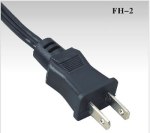 As you’ll see plenty of times in this article, Japan is quite similar to the United States in many ways, including power. We use 120 volts as our standard for power. Japan doesn’t appear to use a ground (or at least none of the Japanese consoles I’ve ever gotten do, never been to Japan itself), so all plugs from Japanese consoles will be two-pronged and fit in an US outlet. Also fortunate is the fact that most consoles, especially retro ones, will use AC adaptors that work in the US. Never interchange US power supplies into Japanese consoles, you could fry the console or worse. For example, if you import a Famicom, use that console’s AC adaptor and not an US NES one. For newer consoles like Japanese PS2s and PS3s, you may want to check the back of the console, but I think those are good for AC 100-240 volts for worldwide distribution, but I could be wrong. Basically if it generates heat, be very careful and do a search for advice from a reputable source (no, Yahoo! Answers is not a reputable source). Also if you want to be completely safe, there are Japanese voltage converters that allow use of Japanese products here.
Generation Gap Pt. 3: 16-Bit
By 1989 the NES was a powerhouse not to be reckoned with. Sure, there were other consoles out there, but if you were doing home gaming it was predominantly on the NES. That is, until Sega introduced the first 16-bit system to the market. Billed as the Genesis (Mega Drive in other regions, but due to an US copyright it was renamed to the Genesis), Sega hit the ground running bringing near-perfect arcade ports of popular titles like Golden Axe and Altered Beast. This spawned the popular “Genesis does what Nintendon’t” campaign, the onslaught of the console wars, and the second true generation of consoles since the crash. For those simply wondering what 16-bit (and other “bits”) means is the type of processor working within the system at a given speed (think “Pentium 4” for a basic comparison).
16-bit Generation (1989 – 1999)
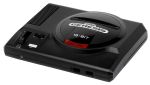
Sega Genesis – Launch Price: $189.99 – Released: 1989
It came literally out of nowhere. Back then the only place to purchase Nintendo games in the Chicago suburbs was Toys R Us – you’d go see a slew of Nintendo box art in closed plastic sleeves, remove a ticket with a large price on it, and take it up to a booth that was enclosed and caged like a casino redemption. There wasn’t a “video game” section, just a “Nintendo” section, because at that time Nintendo was synonymous with video game (and for my grandparents, it still is). On that faithful summer day in August 1989 I walked into the Nintendo section and a slot was missing from the game display, replaced by a big blue logo that read “Sega” and a television that had a commercial playing. In the commercial games like Golden Axe were getting compared to Bionic Commando, a truly unfair comparison from a graphics standpoint alone, despite hindsight revealing Bionic Commando the better title. This upbeat guy was chanting “Genesis…” and a bold deep voice finished the sentence “Does!” as the commercial cross-cut the great visuals of Sega’s new console versus Nintendo’s clearly dated NES. Then my eyes wandered down to the price: $189.99 – available soon! I immediately forgot about it.
 Gaming History 101