Posts Tagged ‘genesis’
Fantasy Zone (Sega)
So many shmups have heavy music, vast spacescapes and horrid alien bosses, but not Fantasy Zone. One of Sega’s first shooters to grace arcades in 1986 it’s also one of the best titles that explains exactly what you’re going to get. Fantasy Zone breaks the mold for such a popular title – it was ported to almost everything imaginable in the late 80s – and still manages to be a fun and addicting shmup. Forget the brutal challenge and seriousness of other shmups (like Gradius, which has been owning my soul all morning) and instead wander over to a colorful bubbly world with protagonist Opa-Opa.

Looking like a hybrid between a space ship and a small winged creature with legs, Opa-Opa has been somewhat of a sidekick for Sega, even getting an appearance in Sonic and Sega All-Stars Racing. In Fantasy Zone you will control this little ship in a scrolling world (think Defender) while defeating bad guys to collect money and upgrade your ship. As you move along certain boss battles will unlock that move you on to the next world, each new one as unique as the one before it. Fantasy Zone is littered with bright colors and funny looking enemies that get it categorized as more of a “cute ’em up”. To this day I still don’t know exactly where to unlock each boss, but I do know that they appear before you have spent too much time thinking about it. That’s the thing, unlike many other shmups you’re not trying to reach a goal per se, but rather exploring a world and letting it take you on a ride. I know plenty of people who didn’t think there even was a world beyond the first and still pumped quarters into the machine to play it anyway.
Supplemental: Remembering the Sega 32X

In 1994, the 16-bit generation in America was dwindling and gamers were ready for the 32-bit generation to emerge. With discussions of interactive CD-ROM consoles, the emergence of early 32-bit CD consoles like CD-i and 3DO and everyone wanted to know what Sega and Sony had in store for the future. Super Nintendo was only three years into its life and riding strong while the Genesis was having a tougher time competing. Not only did its age (it’s two years older than the SNES) hinder it, but with the introduction of the failing Sega CD, the Genesis still didn’t have the kick it wanted. In early January 1994, Sega CEO Hayao Nakayama wanted a 32-bit cartridge console to be released that Christmas, codenamed “Project Jupiter” (Sega used planets for its projects). Sega shortly decided that CD-based technology would be better suited for this project and it was renamed to “Project Saturn” – it would later go on to be the Sega Saturn console that released in 1995.
Converts
So now you want to import consoles and games, do you? Well you’ll be happy to know that it is entirely possible on most consoles, however there are some things you’ll have to be aware of before you do it. This article discusses the different things you have to do to both the electric and video signal of various imported consoles. It will also briefly discuss how to get foreign games to play on US consoles, if possible.
Electricity Differences
No matter what console you are using, it’s important to know the differences between electricity in the US, Europe and Japan.
Japanese Consoles in the US
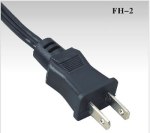 As you’ll see plenty of times in this article, Japan is quite similar to the United States in many ways, including power. We use 120 volts as our standard for power. Japan doesn’t appear to use a ground (or at least none of the Japanese consoles I’ve ever gotten do, never been to Japan itself), so all plugs from Japanese consoles will be two-pronged and fit in an US outlet. Also fortunate is the fact that most consoles, especially retro ones, will use AC adaptors that work in the US. Never interchange US power supplies into Japanese consoles, you could fry the console or worse. For example, if you import a Famicom, use that console’s AC adaptor and not an US NES one. For newer consoles like Japanese PS2s and PS3s, you may want to check the back of the console, but I think those are good for AC 100-240 volts for worldwide distribution, but I could be wrong. Basically if it generates heat, be very careful and do a search for advice from a reputable source (no, Yahoo! Answers is not a reputable source). Also if you want to be completely safe, there are Japanese voltage converters that allow use of Japanese products here.
Day 10
On the tenth day of Christmas my memories gave to me…
10 Turbografx-16 Cards!

I know the picture has more than 10 games, but I just recently found a bunch of old Turbografx-16 games from my youth and I don’t have all of the original “big 10”, sue me. Back in 1992 Toys R Us decided it was high time to get rid of the Turbografx-16 and clearance priced both the console and the games. I’m fairly certain the console dropped down to $49.99 and I know the games were all $9.99. I had no idea what the heck a Turbografx-16 was but the graphics definitely looked like Sega Genesis and Super Nintendo so I grabbed it and five games for Christmas. This was an even bigger deal when you consider that my Toys R Us only had 10 games for the console. I was hoping that I could find other stores or places downtown (I lived in a suburb of Chicago) but to no avail. After two weeks of searching I finally gave up and decided to ask for the other five games for my birthday to at least have my strong 10 game collection.
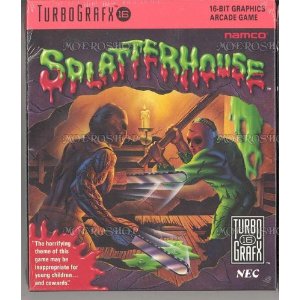 That ended up being one of the most worthwhile Christmas gifts I could have possibly asked for. The back of the box was adorned with games I had never heard of, like Bloody Wolf, that looked absolutely amazing. Unfortunately, I was limited to just the 10 games I could find but many of those were gems of the console: Keith Courage in Alpha Zones (pack-in), Legendary Axe, Splatterhouse, Devil’s Crush, Pac-Land, Vigilante, Aeroblasters, Bonk’s Adventure, Victory Run, and of course J.J. & Jeff made up my collection. Being only ten years old and getting my hands on a game like Splatterhouse, an action title where your character looks like Jason from the Friday the 13th series and explores a haunted house, I was blown away. Additionally the Turbografx-16 had a strong Japanese influence, so all games looked very cartoony and covered topics like graphic violence and adult situations.

I spent most of 1993 playing Turbografx-16 at home, but with my obsession with Mortal Kombat for Christmas the next year, my Genesis became the main console of my life after that. For the longest time the Turbografx-16 remained a vague memory gathering dust in my closet (much like my Wii was a year ago). I ended up selling off the console in college but the box containing my games remained untouched in my parent’s basement, which had more than tripled by the time I was 20. I recently found the games and picked up a used Turbografx-16 and upon that first boot-up of Keith Courage in Alpha Zones it was like being a kid again. I had no idea what a great part of gaming history I had stumbled upon for Christmas ’92.
Day 9
On the ninth day of Christmas my memories gave to me…
A 9-in-1 Game Cart!

My father was born and raised in Costa Rica (hence why I’m half Costa Rican), but I was pretty young for the first family vacations back “home”. Near the end of the NES era, a bunch of family members on my mother’s side as well as my immediate family celebrated Christmas in Costa Rica. There were lots of subtle differences to American culture there, but none more interesting to me than imported knock-offs. If you were to enter little toy shops in and around central hub city San Jose, you could expect to see items cheaply made and imported from Asia. I still remember the Teenage Mutant Ninja Turtles figures I picked up (all 4 for about $15) that had Chinese all over the box and looked a bit off-center with its paint job. They all broke by the end of the trip. There were also video games, of course, and I couldn’t help but check them all out.
For like $50 there was an NES that was painted all silver, more boxy (I later discovered it was the Famicom design) and had controllers and a zapper permanently wired into them. Not only that, when you turned it on it had 101 games built-in, which I didn’t pick up because I had an NES already and this console wouldn’t work with cartridges. What I also saw was a slew of “x-in-1” cartridges that contained some of the console’s best games all together. It was old school pirating at its best – take a bunch of smaller older games and thanks to new technology put them all into a single cartridge and sell them in foreign countries. I remember buying one for my NES, probably a 76-in-1, that I could have sworn had 76 individual titles but I later discovered there were only like seven games repeating on a list with different names. I also bought a Game Gear 9-in-1 (pictured above) for my buddy, which was amazing because it contained Sonic the Hedgehog and a handful of arcade ports. I wasn’t really trying to be kind, but it was like $20 and I used to love borrowing his Game Gear, now I gave him a reason to be forthcoming with it.
This trend would continue in gaming moving forward to as recently as this generation with Sonic’s Ultimate Genesis Collection and several others. In addition, I still see 30-in-1 Genesis systems and 50-in-1 Atari systems for roughly $30 at Walgreens, which are now legal items that these respective companies have approved. As is the case with most collections, they were as much a double-edged sword then as they are now. You have so much selection that you barely spend any time with a single game and never accomplish much other than beating the first level of each title before the system eventually dies. Costa Rica gave me lots of great memories and views, but it was also my first glimpse at how bad small countries got it in the video game market. No wonder the Master System and Genesis were so big in Brazil. Any one out there have some crazy unlicensed all-in-one pirate games?
Day 5
On the fifth day of Christmas my memories gave to me…
Five Genesis Models!


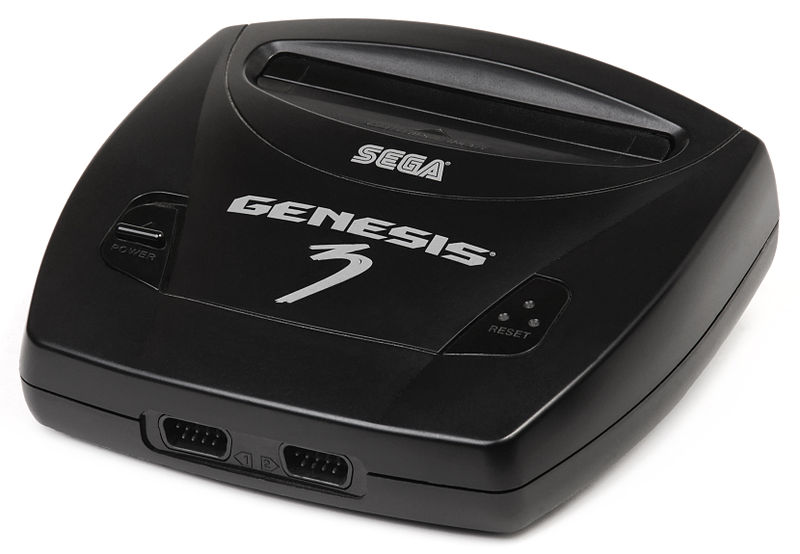
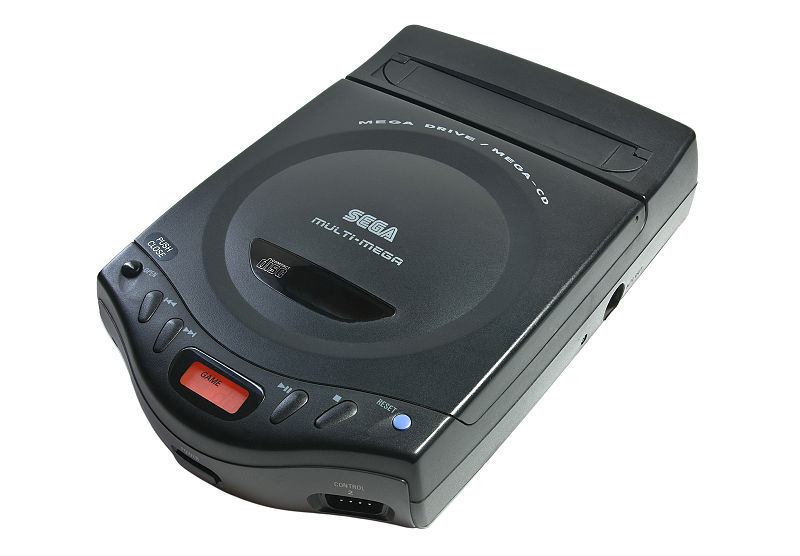

For a console that was only around for roughly six years, the Sega Genesis sure was releasing new iterations like there was a reason for all the updates. To be fair, every single one of these consoles changed something about the Genesis but not all of them for the best. Sega in the 90s was like an eager child, just ready to jump at the next opportunity to improve current technology and release new ones. This is why the Genesis had 5 different models, not including the many licensed models that also released from different companies, as well as two more add-ons. They would also jump the gun and release the Saturn less than a year after selling you the pricy 32x, which claimed to turn your Genesis into a 32-bit system and didn’t do a good job at it.
 Thankfully all of the standard Sega branded Genesis models ran the entire Genesis library (yes, some 3rd party consoles did not), but not all of them were compatible with Sega’s add-ons. It’s easy to imagine that the Nomad wouldn’t work with the Sega CD and 32x – at least not without a hardware hack – but the CDX, which already combined the Sega and Sega CD, you wouldn’t assume would be incompatible with the 32x. Even more odd was the fact that Genesis 3 was incompatible with both Sega CD and 32x due to hardware design. Furthermore, the 32x would be on store shelves with the CDX and Genesis 3, both consoles it was incompatible with. It was a nightmare for everyone involved from the marketing guy to the retailer and finally the parent. The only person who could keep it all straight was of course the gamer, the one person that couldn’t be involved in the transaction thanks to Christmas and gift giving. I’m sure there were at least a few massive $500 refunds after a rich parent purchased multiple incompatible parts. In those days if it didn’t work like it was supposed to right out of the box, who cared how cool it was, parents returned it.
I managed to get out mostly unscathed thanks to the gaming press, which kept me informed of the upcoming Saturn. I did ask for a 32x, which would end up being incompatible with my CDX, but I didn’t fret because I knew the next console generation was around the corner. I returned the 32x (and both games I got with it – Doom and Star Wars Arcade) and kept the money waiting in my dresser for the Saturn.
Day 1
On the first day of Christmas my memories gave to me…
A Wish List Catalog from JC Penny!

Catalogs are definitely not the rage today. Most likely those still utilizing them are the technologically inept or those that just cannot release their grasp on the past. In the 80s and 90s, however, these little guides were responsible for hours of enjoyment to me and my fellow gamers. If you were a good enough customer of certain departments stores – namely JC Penny, Sears and Montgomery Ward, although I’m certain there were others – a massive 500+ page catalog would adorn your mailbox around the end of November. Within it was a virtual form of pretty much everything available in that specific department store, including video games. I used to love going to department stores and bask in the glory of the video game section. There would always be a line of youngsters like myself, all bundled up and overheating in winter coats, affixed to whatever the demo game was. Unfortunately, being only like eight years old, going to the department store or toy store to peruse the video game aisle was not something my mother would do at my beckoned call. On the other hand, the various department store catalogs were always available and waiting on my family’s desk.
 If I haven’t made this clear enough, these catalogs were humongous, heavy books that rivaled War & Peace in size and featured glossy full color pages. Most of them would have a high price tag printed on, like $15 or $20, although I’m certain my family got all of them free because even in the 80s we were no stranger to ordering items remotely. Thanks to their massive size, these catalogs held nothing back even in the video game section, so most games on the market would appear in the catalog. If you were lucky there would be a screenshot and a little paragraph that was nothing but marketing drivel, which I always cherished as gospel, otherwise it was just box art and a price. Before Nintendo Power premiered in 1988 (and even then I didn’t have a subscription until late 1990), these catalogs were the only way to find out what great games were releasing for the holidays. I would come home from school and scour those pages, initially trying to figure out what games I wanted to ask for.
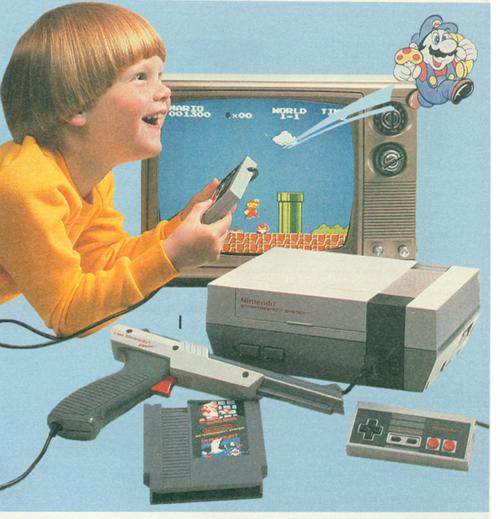 After the first week of browsing had passed and my want list written, the second function of the catalog was to create a list of all the items I would get if I were rich. Since anything and everything was in there I could sit back and imagine I had money for the SNES (about $200 at launch, out of my budget), Turbo Express (around $300) and even distant dreams of a Neo Geo (a whopping $650). Hell, even the games for the Neo Geo sold at ridiculous prices like $120, so there were times that I would list one or two of those titles and imagined I already had the system. There was often a “coming soon” section that featured upcoming titles, some of which would never see the light of day, that allowed me to assess what games were worth saving gift money for. After demand started skyrocketing for video games in the 90s, these catalogs would be excellent places to pre-order consoles and popular games as well as a last effort to grab items sold out in stores.
Catalogs from department stores were my first exposure to video game coverage, albeit a one-sided consumer driven version, but game coverage nonetheless. With parents who were against giving out personal information, even back then, I never got into the Nintendo Club by filling out a registration card. Thanks to an active imagination and a lot of free time, Christmas was celebrated over and over throughout the month of December before the actual gifts arrived.
Go on to the second day of Christmas ->
Gaming To-Go Part 3: Self-Reliance
Given the low price point for both games and hardware, massive amount of ports, and obvious room in the market for clones, portables were not hard to find. It wasn’t until the late 90s that they actually found their voice, though, starting with weak license translations and resulting in full-blown solid titles developed solely for portable platforms. At the same time, many developers would revert back to ports now that they could make long RPGs of yesteryear and games from last gen run in your hand.
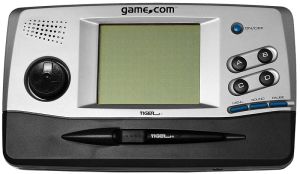
Game.com – Released: 1997
Pronounced “game com” and not “game dot com”, this newest handheld from Tiger Electronics was a clear attempt to make a cartridge-based handheld version of the games they popularized in the late 80s. Much like those old school handhelds, the games shared popular licenses of the time and similarities in gameplay, but for the most part were unique creations. Think of a company that only does book adaptations to film – the concept remains the same and the characters are familiar, but it’s essentially something new. This sounds like a good idea, but for some reason Tiger always seemed to miss the point of portable games and Game.com is no exception.
Gaming To-Go Part 2: Gameboy and beyond
For more than 10 years various portable games came and went, mostly focusing on a single title in custom hardware, then in 1989 it all hit at once. With such a small gap between releases it was clear that multiple companies were developing cartridge-based portable consoles. Most portable systems in history moving forward had one simple goal: to port home console games to handhelds as faithfully as possible. While some gems of creativity did spawn from portables that were clearly not ports, the main goal of many developers was always about getting those console ports in the palm of your hand.

Gameboy – Launch Price: $89.99 – Released: 1989
In every way shape and form, the Nintendo Gameboy was designed to be a portable NES. The brainchild of Gunpei Yokoi (Game & Watch series) and Nintendo Research & Development 1 (R&D1), known best for the creation of Metroid, the Gameboy was defined by one game: Tetris. Not only was the portable 8-bit console looking as promising as the NES – complete with launch titles Super Mario Land and a handful of all-too-familiar titles that launched the NES like Baseball and Tennis – but Nintendo picked the ultimate pack-in. With the Gameboy, Nintendo linked to a more casual market as well as the NES and gamer faithful, which was no more clear than the inclusion of Tetris, not Super Mario Land, in the box. Tetris fever was rampant in the United States at the time, some six or more versions were floating around on various platforms by 1989, and the Gameboy was a convenient and relatively inexpensive (Tetris was around $40 in most software versions) way to get a versatile version of the game. Starting in 1990, after many children and adults alike received a Gameboy for Christmas, it was not uncommon to see people in public grinding away the hours on a Gameboy. What was unique is that they almost always were playing Tetris and nothing else.
Generation Gap Pt. 3: 16-Bit
By 1989 the NES was a powerhouse not to be reckoned with. Sure, there were other consoles out there, but if you were doing home gaming it was predominantly on the NES. That is, until Sega introduced the first 16-bit system to the market. Billed as the Genesis (Mega Drive in other regions, but due to an US copyright it was renamed to the Genesis), Sega hit the ground running bringing near-perfect arcade ports of popular titles like Golden Axe and Altered Beast. This spawned the popular “Genesis does what Nintendon’t” campaign, the onslaught of the console wars, and the second true generation of consoles since the crash. For those simply wondering what 16-bit (and other “bits”) means is the type of processor working within the system at a given speed (think “Pentium 4” for a basic comparison).
16-bit Generation (1989 – 1999)
Sega Genesis – Launch Price: $189.99 – Released: 1989
It came literally out of nowhere. Back then the only place to purchase Nintendo games in the Chicago suburbs was Toys R Us – you’d go see a slew of Nintendo box art in closed plastic sleeves, remove a ticket with a large price on it, and take it up to a booth that was enclosed and caged like a casino redemption. There wasn’t a “video game” section, just a “Nintendo” section, because at that time Nintendo was synonymous with video game (and for my grandparents, it still is). On that faithful summer day in August 1989 I walked into the Nintendo section and a slot was missing from the game display, replaced by a big blue logo that read “Sega” and a television that had a commercial playing. In the commercial games like Golden Axe were getting compared to Bionic Commando, a truly unfair comparison from a graphics standpoint alone, despite hindsight revealing Bionic Commando the better title. This upbeat guy was chanting “Genesis…” and a bold deep voice finished the sentence “Does!” as the commercial cross-cut the great visuals of Sega’s new console versus Nintendo’s clearly dated NES. Then my eyes wandered down to the price: $189.99 – available soon! I immediately forgot about it.
 Gaming History 101