Archive for the ‘Reviews’ Category
Retro Game Night: Fahrenheit Indigo Prophecy Remastered
This week we take a look (in glorious 1080p) at the remastered edition of Fahrenheit (or Indigo Prophecy). After recently booting this up for our review, I’m not quite sure who this particular port is for. It looks just like Fahrenheit, plays just like it too, and I could be wrong but I think the original could be pushed to 1080p on PC (where this version is currently exclusive to) so I think they just did some re-rendering of textures, glossed it up, and slapped it online. Perhaps that was all we should expect, I don’t know. Anyway, check it out for yourself in the video below.
Fahrenheit (Indigo Prophecy) Review

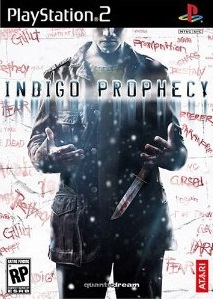 Platform: Xbox, Playstation 2, PC (both the original and the just released Remastered Edition)
Released: 2005 (worldwide)
Developer: Quantic Dream
Publisher: Atari
Digital Release? Yes – Available on Xbox 360 as an Xbox Original and Remastered is on Steam ($9.99 for all versions)
Price: $8.00 (disc only), $10.99 (complete), and $46.97 (new/sealed) per Price Charting (prices are for PS2 version, Xbox/PC versions a bit lower due to re-release)
Jam’s Take
Fahrenheit (aka Indigo Prophecy in America) is one of those games that attempted to create a interactive film experience. Some excepted this concept with open arms, some people frowned on it proclaiming it technically wasn’t a game. Well several years has passed since that fateful release in 2005 so lets see if Fahrenheit is still worth investing in.
Fahrenheit’s story has you following three character Lucas Kane a 9-to-5 IT worker who has a fondness for reading Shakespeare in diners, Carla Valenti a young cop who is claustrophobic and Tyler Miles, Carla’s police partner and your typical comic relief in a cop duo but he likes basketball, which is ok in my book. Essentially New York as well as the world is starting to get cold, really cold and bizarre murders are occurring round the city where normal folk are killing innocent people then themselves. I won’t spoil the story too much as it is the games strongest draw. What I will say is the game is filled with a fair few twists and turns playing out very much like a film, if it hooks you from the beginning it is very likely you will play through to the end.
Woah Dave! Review
 I first experienced Woah Dave! At EGX 2014. It was being demoed on the 3DS at the time and it was one of the few games that didn’t have a crazy long que. I enjoyed what I played but like a lot of the smaller indie games at the show I just forgot about it. Fast forward to today and we are given the game for free through Playstation plus. It’s surprising that this has released on the Playstaion Network before the Nintendo eshop. [Woah Dave! was released on the eshop in the US back in October 2014 – ed.]
Woah Dave! takes its inspiration from the original arcade classics like Mario Bros and Joust. You play a small pixel man and your objective is to collect as many pennies as you can, which then act as your overall score. To find the pennies you have to defeat enemies that start out as little eggs but soon hatch into alien looking baddies. To kill these enemies you have to pick up eggs or skulls and throw them at the target. But you have to be quick as the skulls explode after a short time and the eggs hatch. If this happens while your holding it you will loose a life. If the enemy manages to reach the lava below it will evolve into a stronger enemy. Each time the enemies reach the bottom they change into a faster and more difficult enemy until they become a flying eye ball which will literally pursue your character unless you defeat it. There is a lot of risk reward with the game. You can play it safe and destroy the eggs as soon as they drop but you will receive a minimum score. But, if you wait for the enemies to get stronger, they will drop more coins. You have to collect the coins to bank them into your score, so unless you play carefully your coins could end up in the lava and be useless. There is a single powerup which resembles the power block from Mario Bros (except it says Woah on it) that occasionally falls from the heavens. Picking this up and flinging it will destroy everything on the screen in a satisfying shower of coins.
Resident Evil HD Remaster Under 3 Hour Speedrun

Completing a longer game in a speedrun can be not only an accomplishment but also quite rewarding. In the case of Resident Evil, completing the game in a speedrun is literally built into the programming with the expectation that after you’ve explored the game a couple of times you will jump right into it. The recent Resident Evil HD Remaster came out and while I found the game quite difficult in my recent playthrough and it took me over 11 hours to complete, I dared leap into an under 3 hour speedrun (albeit with the gracious help of a guide from GameFAQs). I also decided to capture it and offer voiceover so that you can not only enjoy watching a speedrun, but see what is done and why to somewhat bend the timeline of the game to be as short as it is. I’ve embedded the first video below and you can see the entire playlist here.
Mini Podcast: The Legacy of Shinobi

For this week’s mini podcast Fred tackles the Sega franchise Shinobi, and more specifically the Joe Musashi games from the earliest years of the franchise.
Psychic World Review

 Platform: Game Gear (there is a European Master System version) – For the hardcore, the Japanese MSX version is worth looking up.
Released: 1991 (worldwide)
Developer: Hertz
Publisher: Sega
Digital Release? No
Price: $3.75 (cart only), $15.00 (complete), and $15.00 (new/sealed) per Price Charting
Psychic World is one of those old Sega games that just seemed to get lost in time. Originally called Psycho World, in Japan on the MSX computer, the game was brought over to Europe in 1991 and renamed the more suitable Psychic World. The game was released on the Master System and Game Gear, for this review well be delving into the Game Gear version (which did come out in the US). This was probably one of the first Game Gear games I ever played next to the original Wonder Boy.
Psychic World is set in the year 19XX. which no matter how you write that on paper now sounds like it’s in the past, even though the setting of this game feels far into the future. I guess the game developers thought we would enjoy the 20th century so much we wouldn’t want to leave it so they started sticking Roman Numerals at the end.
Retro Game Challenge: Shinobi (PS2), Part 2
More than a year ago, Fred featured the Playstation 2 game Shinobi on Retro Game Night. I was told that this is a brutally hard title that will test my skills. He put it to the back burner, but after recent feedback we’re returning to these games to take up the challenge. In his own words, here’s Fred’s reflection:
I remember playing it at first and didn’t understand what the big deal was. Shinobi’s battle mechanics are pretty basic, not even coming close to the skills required of games like Ninja Gaiden on the original Xbox. While the two games may be compared based on premise, time of release, and challenge, they couldn’t be more different. Shinobi is not hard at the beginning, it’s barely a challenge, while I know plenty who haven’t completed the first level (and specifically boss) of Ninja Gaiden. All of that changed with part 2 of this Retro Game Challenge. Shinobi ramps up fast and despite beating the level at the end, it made my blood boil and wasn’t worth the effort I put in. My conquest felt cheap, possibly even cheating. I’m not done with this title, but my skepticism on it’s fairness and ability to provide a proper challenge that I enjoy in gaming, is raised. I guess we’ll see. In the meantime, enjoy a video that starts very positive and ends with a nearly embarrassing response from me. As you may have already guessed beware of crass adult language near the end.
Mini Podcast: The Pages of Myst

For this special episode Fred flies solo to discuss Myst, it’s concept, and it’s rightful place as one of the “killer apps” for the CD-ROM format. Logic puzzles not included.
Just Because: Die Hard Arcade (Dynamite Deka) PS2 Complete Playthrough
Recently Fred played Die Hard Arcade on the Sega Saturn to show off one of the oddest directions licensed franchises have gone in games. Well the game was known as Dynamite Deka (Dynamite Cop) in Japan, but retained all the Die Hard similarities, and was re-made in arcade perfect form on the PS2 (only in Japan as part of the Sega Ages 2500 series). When Fred noticed it on the Japanese PSN for the PS3 – and at only ¥400 on sale, ¥823 normally – he had to pick it up and play through it. Feel free to grab it for yourself if interested, but without further ado we present the complete playthrough of Dynamite Deka.
Talking Ports: Half Life on the PS2
I’ve always wanted to dedicate an article to Half Life on the Playstation 2 (PS2). However, Half Life is one of those games I genuinely get a bit worried about when reviewing, since so much as mentioning anything negative about this series will cause the entire Valve fan base to storm on you with torches and pitchforks. No where is safe, you are screwed. But since so few people have even played Half Life on the PS2 hopefully, its safe to come out of my Half Life hermit cave and talk about it.

Now here is where I make my first shocking statement: Half Life on PS2 is the first time I ever played Half Life. One redeeming factor maybe that it did lead me to playing the game on the PC later when I was able to. Anyway, I was in day one for Half Life on console. I’d been anticipating the game since the hyped up Dreamcast port which never official surfaced outside of the homebrew scene (despite being advertised in leaflets that game with games at the time). It seems like a lot of the assets used to make the game on the Dreamcast surfaced on the PS2. Whether your a massive fan of the Dreamcast or not, its hard not to argue this game was much more suited to the PS2 due its its dual analogue sticks. This was the time where First Person Shooters (FPS) were finally getting easier to control on consoles, with thanks to Halo, gamers where just no longer stomaching the single analogue nub system famous on the N64 and Dreamcast.
 Gaming History 101