Archive for the ‘Reviews’ Category
Review: Castlevania: Symphony of the Night (PS1)
 Console: Sony Playstation (also released on Sega Saturn in Japan only)
Released: 1997
Developer: Konami
Publisher: Konami
Japan? Yes (as Akumajo Dracula X: Gekka no Yasokyoku Translation: Devil’s Castle Dracula X: Nocturne in the Moonlight)
Instruction Manual: Not necessary – Link
Difficulty: Moderate
Played it as a child? No
Value: $22.87 (used) $64.45 (new) (pricecharting.com) – NOTE: There are two versions: original and greatest hits. Original is much more rare and expensive, so adjust your buying habits appropriately.
Price: $15-25 (used GH) $35-$60 (used original) $90-$130 (new GH) $400 (new original) on eBay
Digital Release? Yes – released as PSOne title on PS3/PSP and on XBLA – $10.00 for all versions. Also available with Rondo of Blood in the Dracula X Collection for PSP – $15 digital, varies on UMD.
***We also did a podcast on this and other Castlevania titles like it here.***
While Rondo of Blood may be the hidden gem of the Castlevania series, Symphony of the Night is anything but. There wasn’t a Playstation gamer around that didn’t see this release back in 1997, bringing a much-needed change to the traditional formula. Every Castlevania game that released on consoles seemed to push the hardware to do things it was never intended to do and usually had amazing results, so it was interesting that in a world consumed by 3D polygonal graphics Symphony of the Night was a 2D side scroller. In Japan, the series has a much easier way to identify the games that go together – main campaign titles often wore Akumajo in the title and in this case Dracula X – but in America we had not received (and most of us had not played) Rondo of Blood. The game starts out with you climbing the stairs to Dracula’s chamber at the end of Rondo and you re-create the final fight with Dracula (of which you cannot die). Then a long bit of lore scrolls the screen and next thing you know you’re playing as Alucard, Dracula’s son, and you’re rushing to Castlevania to rescue Richter from its curse. It was like being dropped into the middle of an epic you had not previously learned the story of. Frankly, it didn’t matter, and even today playing Rondo of Blood only assists in giving you background detail because like all other Castlevania games it’s the gameplay and level design that keeps you hooked.
Review: Castlevania: Bloodlines (Genesis)
 Console: Sega Genesis
Released: 1994
Developer: Konami
Publisher: Konami
Mega Drive? Yes (as Banpaia Kira Translation: Vampire Killer, Castlevania: The New Generation in Europe)
Instruction Manual: Not necessary – Link
Difficulty: Hard
Played it as a child? No
Value: $23.07 (used) $59.99 (new) (pricecharting.com)
Price: $25-$50 (used) $60-$350 (new) on eBay
Digital Release? No
Just like today there was fierce competition between the two main 16-bit consoles, SNES and Sega Genesis, that necessitated exclusive games. Aside from the first party developed titles, third-party developers could opt to either create the same game for both consoles or create completely new ones. In the case of many Disney games, like Aladdin or The Lion King, different companies developed the game on each console but the basic concepts and level design would remain consistent regardless of which version you purchased. Konami, on the other hand, would usually make completely different exclusive titles that played to the strength of the specific console it was designed on. There was no way this developer, who was free to release games on any (and every) console not to create games for both. Castlevania: Bloodlines is a side story game, much like Rondo of Blood, that played to the audiences that came running to Sega’s edgy console.
Review: Dracula X: Rondo of Blood (PC-E CD)
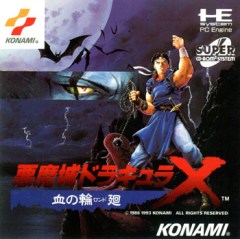 Console: PC-Engine CD (Japan)
Released: 1993
Developer: Konami
Publisher: Konami
Japanese Title: Akumajo Dracula X: Chi No Rondo – English Translation: Devil’s Castle Dracula X: Rondo of Blood
Instruction Manual: Not necessary – Link
Difficulty: Hard
Played it as a child? No
Value: $83.00(used) Unknown – this usually indicates none have ever been sold (new) (pricecharting.com)
Price: $90-$120 (used) N/A (new) on eBay
Digital Release? Yes – Virtual Console and remake on Dracula X Chronicles (PSP) – $9.00 (VC), $15.00 (PSP) digitally
Akumajo Dracula X: Chi No Rondo is one of those games that you either know about or you don’t. As a side story to the series, appearing on the PC-Engine CD no less, I don’t think Konami ever intended the game to be popular but what it does for the Castlevania formula is worth noting. Rondo of Blood (as it is known in English) follows Richter Belmont, a descendent of Simon and Trevor, in a side story where he seeks out Dracula to recover his girlfriend Annette. It takes place in Germany, I think (I’ve never played the game in English), and the cutscenes even contain German dialogue with Japanese subtitles. Thanks to the RAM and CD format of this title, it also features amazing sound design and an anime-like style. Oh yeah, and until recently it was never released outside of Japan.
Review: Super Castlevania IV (SNES)
 Console: Super Nintendo Entertainment System (SNES)
Released: 1991
Developer: Konami
Publisher: Konami
Super Famicom? Yes (as Akumajo Dracula – English Translation: Dracula’s Castle)
Instruction Manual: Not necessary – Link
Difficulty: Mild
Played it as a child? No
Value: $22.79 (used) $189.95 (new) (pricecharting.com)
Price: $20-$30 (used) $150.00 (new) and $500 for first edition (v-seam) on eBay
Digital Release? Yes – Virtual Console – $8.00
 It’s pretty much understood that Super Castlevania IV is merely a remake of the original Castlevania, however for many reasons it is a significant game in its own right. In Japan the game held almost the same name as the original (Akumajo Dracula) and in the lore and instruction manual in Japan it literally has the same plot. For the US release, Konami attached the “IV” as well as giving a slightly different story that suggests the events of this game take place immediately following the second game, Simon’s Quest. Even though both the developers and the fans agree it’s not a sequel, the two games have little in common with one another. While it’s a cool experiment with many gameplay characteristics, some that would never return and others became series staples, Super Castlevania IV was also a flagship title for the SNES to show off all the things the various modes (including the overhyped Mode 7) could do to a game. Think of it as a fleshed out action platformer tech demo that was far more interesting in retrospect than Pilotwings.
Review: Castlevania III: Dracula’s Curse (NES)
 Console: Nintendo Entertainment System (NES)
Released: 1990
Developer: Konami
Publisher: Konami
Famicom? Yes (as Akumajo Densetsu – English Translation: Devil’s Castle Legend )
Instruction Manual: Not necessary – Link
Difficulty: Moderate
Played it as a child? Yes
Value: $12.25 (used) $172.82 (new) (pricecharting.com)
Price: $15-$20 (used) $289.00-$500.00 (new) on eBay
Digital Release? Yes – Virtual Console (NES version) – $5.00
What are you supposed to do?
Castlevania III returns to its roots and is an action platformer. Unlike the original, the game isn’t entirely linear, giving you branching paths along your way. Of the game’s 15 levels, you will play 9-10 of them depending on your decisions, eventually making your way to Dracula.
Review
As one of the later games on the NES, Castlevania III: Dracula’s Curse is surrounded by technical mastery. In fact, it utilizes such an expansive amount of supplemental hardware (ie: chips) that the Japanese version isn’t even capable of working with the NES (unless you modify it, of course) and the US version is incompatible with “famiclone” systems. For all that work, however, Castlevania III is a great title that impresses on all fronts. Back to the extra hardware – the memory management controller chip, version 5 (MMC5) allowed the game to be playable on the NES albeit at the cost of some of the impressive sounds and graphics in the Japanese version. This doesn’t mean it’s bad by any means, the game still looks and sounds better than a majority of games ever released on the console, it’s just that the Japanese version is a bit better thanks to the VRC6 microprocessor. Normally I don’t gush on video game soundtracks, because save for a select few I don’t really consider it a notable factor. This is one of those rare cases that I must say the game sounds amazing, in any form. 1up’s own Jeremy Parish captured the difference in a YouTube video that I have provided below so you can hear the difference for yourself.
Review: Castlevania II: Simon’s Quest (NES)
 Console: Nintendo Entertainment System (NES)
Released: 1988
Developer: Konami
Publisher: Konami
Famicom? Yes (as Dorakyura Tsu: Noroi no Fuin – English Translation: Dracula 2: The Seal of the Curse )
Instruction Manual: Not necessary – Link
Difficulty: Moderate
Played it as a child? Yes
Value: $4.80 (used) $195.00 (new) (pricecharting.com)
Price: $15-$20 (used) $400.00-$1,000 (new) on eBay
Digital Release? Yes – Virtual Console (NES version) – $5.00
What are you supposed to do?
Control Simon Belmont through an open world and collect the five scattered body parts of Dracula and a magical cross. Once all of these items have been discovered, Simon returns to Dracula’s castle and assembles the parts to fight and kill Dracula, who has put a curse on Belmont. Depending on how fast you can complete the game, you will be given one of three endings.
Review
 In Konami’s follow-up to Castlevania, the developer attempts to refine the game mechanics and make the sequel quite different from the original, as many NES games at the time were doing, with RPG elements. Simon Belmont can level up, purchase upgrades and weapons from townspeople, and freely explore an open world. The gameplay of fighting enemies remains mostly the same, however with the new open world format there is little direction as to where to go but blocked paths and out of reach ledges due to not having the right item streamlines it into a somewhat linear experience. In addition, day and night cycles keep the player on their toes as night time removes the safety of villages and doubles the strength of enemies. At face value the concept of this game was great, but there are some big issues that prevented us from enjoying it then and now.
Review: Castlevania (NES)
 Console: Nintendo Entertainment System (NES)
Released: 1987
Developer: Konami
Publisher: Konami
Famicom? Yes (as Akumajo Dorakyura)
Instruction Manual: Not necessary – Link
Difficulty: Hard
Played it as a child? Yes
Value: $12.87 (used) $55,000.00 (new) (pricecharting.com)
Price (eBay): $15-$20 (used) $1125.00 (new) NOTE: This copy is revision A and thus has a lower value.
Digital Release? Yes – Virtual Console (NES version) – $5.00
What Are You Supposed To Do?
This is a linear action platformer. Many attribute the Castlevania series as an RPG or action RPG, whereas aside from the second title in the series, it has never really been. With no real inventory to maintain and no story elements to speak of, this original title is all about jumping and killing enemies.
Review
Castlevania released early in the NES life cycle and for that time seemed to be the culmination of everything you would want in a video game. Hitting store shelves early summer of 1987, most NES gamers had either just gotten or were hoping to get the console in the near future and word was getting around that this was one of the pivotal titles to play. You control a hero, Simon Belmont, who has vowed to hunt Dracula in his own castle. In the game you encounter all types of horror staples such as bats, zombies, and Medusa heads all while tackling large scale boss battles with famous monsters like Frankenstein, the Mummy, and even Death himself (aka: the Grim Reaper). As a young boy, this sounded like the most amazing game in the world and I was even happier to find out it delivered on all fronts. Castlevania is a difficult and wild ride through a haunted castle of horrors that holds up even today, albeit at the cost of your sanity with the Dracula battle.

Head to Head: Double Dragon
In many cases, games with the same name – and even the same game ported to various consoles – can be drastically different. This was especially true in the 8-bit era where plenty of popular arcade games were deemed too limited for a boxed release on consoles like the NES. Head to Head takes two particular games and explains the drastic difference between the two that often keep fans of each camp drastically divided. Aside from ports, you can also expect several other types of comparisons such as localization.

Double Dragon Arcade
VS
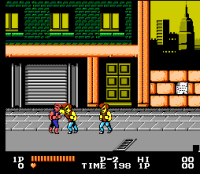
In 1987 Technos released a spiritual successor to its popular brawler Renegade (Nekketsu Kōha Kunio-kun) known as Double Dragon. It told the story of two brothers, Billy Lee and Jimmy Lee (Hammer and Spike in US arcades), who are fighting the mean streets of the Black Warriors turf to get back Billy’s girlfriend. It released first to arcades and eventually saw a port over to the NES, which drastically changed the game. Chances are if you are an American that played the game in your past, then you remember the NES version. Now that arcade ports of many games we loved on the NES are releasing on services like Xbox Live and Playstation Network, it’s important to know the drastic differences between the two because they are different games. Love ’em or hate ’em, here’s the Head to Head on Double Dragon.
Now & Then: American McGee’s Alice
Now & Then is a series where we dissect the culture of a specific series or genre or compare an influential game from the past and how it holds up today.
Then
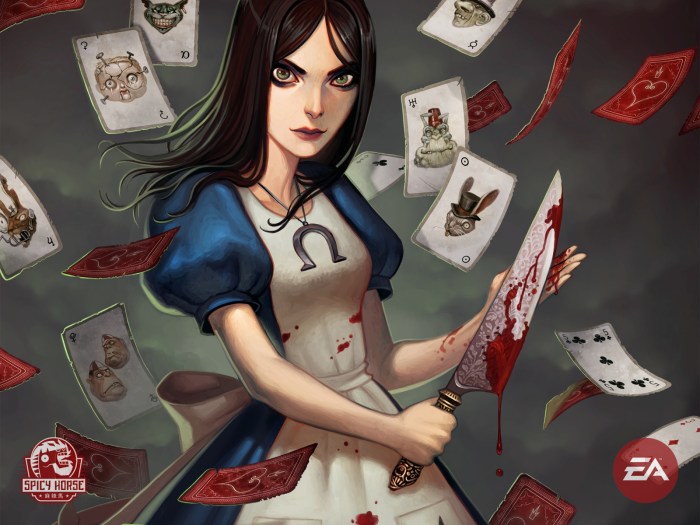
It’s a bit wierd that American McGee (yes, that’s his real name as far as I know) was given an opportunity to be a Creative Director on this ambitious project, even moreso as an early project with EA. He began his career at idworking mostly in level design for many of the first person shooter series that I grew up playing: Wolfenstein 3D, Doom, and Quake. He was fired from id for reasons not known and eventually ended up at Electronic Arts, where after a few sound design and writing projects he was given a large budget and the role of Creative Director for Alice. Why EA back then agreed to put his name as part of the title or allowed him to create such a vivid project (in the Quake III engine, for irony’s sake) is beyond me, but it was a solid and pivotal decision. American McGee’s Alice is one of the darkest, most twisted games I’ve ever played and takes the story begun by Lewis Carroll more than a century prior and turns it on its head. To be fair, Wonderland has never been a “normal” place, begot mostly of fantasy concepts and mind-altered states, but I never felt that violence, murder, and insanity were heavy themes. While the gameplay wasn’t spectacular even at the time, the imagery and graphics impressed gamers enough to sell more than 1.5 million copies.
Now & Then: Mortal Kombat II (Midway)

Midway must have known it had a hit on its hands with the original Mortal Kombat because no time was wasted creating the sequel. While most of us anticipated the home release of the first title, Mortal Kombat II (MKII) snuck into arcades and blew our minds. This game literally had it all – more characters, more fatalities/finishing moves, and more violence. For most MK series fans, myself included, this is considered to be the best and it’s one of the highest grossing video games of all time.
MK Meets its Match
The original Mortal Kombat was an impressive fighter, especially for one that was developed with digitized actors in only 10 months, but creator Ed Boon wanted to do more. “[MKII] had everything we wanted to put in the original MK but didn’t have time for,” he said in an interview with EGM2 (issue 5, Nov. 1994). It does seem like there’s some truth to his claim, especially with the introduction of more stage fatalities, a second fatality for each character, and even joke finishers “friendships” and “babalities”. I’m not so sure the roster was an initial idea, nor was the background concepts of Outworld, but I can definitely see the Midway team wanting to break away from the perceived reality of the original. Not only was MKII the definitive version of the original concept, but it continues to be the template for which all other titles in the series are based on.
 Gaming History 101