Supplemental: Remembering the Sega 32X

In 1994, the 16-bit generation in America was dwindling and gamers were ready for the 32-bit generation to emerge. With discussions of interactive CD-ROM consoles, the emergence of early 32-bit CD consoles like CD-i and 3DO and everyone wanted to know what Sega and Sony had in store for the future. Super Nintendo was only three years into its life and riding strong while the Genesis was having a tougher time competing. Not only did its age (it’s two years older than the SNES) hinder it, but with the introduction of the failing Sega CD, the Genesis still didn’t have the kick it wanted. In early January 1994, Sega CEO Hayao Nakayama wanted a 32-bit cartridge console to be released that Christmas, codenamed “Project Jupiter” (Sega used planets for its projects). Sega shortly decided that CD-based technology would be better suited for this project and it was renamed to “Project Saturn” – it would later go on to be the Sega Saturn console that released in 1995.
Emulation: The Secret Multiconsole
On our most recent episode of The B-Team Podcast a listener wrote in to ask about whether or not we consider it right to emulate a game that was more than eighteen years old. While my rant was less than ideal, I felt it was time to discuss the often unwritten world of emulation. We will discuss what emulation is, reasons why it exists and what ethical and legal choices you may need to make prior to diving in.
What is emulation?
The word itself says it all: emulation. Emulation is defined as “the act of imitating” and that is precisely what emulation means in terms of video games: different hardware attempting to imitate other hardware. In the beginning this was limited to computers because they were the only format capable of re-creating consoles effectively, but lately this has been expanded to portable and home consoles. Thanks to most consoles having limited hardware due to cost issues, early consoles were capable of being emulated on computers of the day. This all changed starting with the 3D generation, consoles like the Playstation and Saturn and technical specs. Recent consoles like the Playstation 3 and Xbox 360 strip away the processing power core and have high-end graphical processors, which makes emulation on computers difficult. It is true that Crysis looks better on PC, but to have a PC try to re-create a Playstation 3 and then try to run the PS3 version of Crysis is just an overuse of resources and requires too much power to be worth it.

ePSXe enhances Playstation graphics
Your 2012 History, on the 5s and 10s
Well here we are, 2012, and yet another prediction for the end of the world (haven’t we been getting those yearly since 1999?). But just like the world, history moves forward and everything gets another year older. In celebration – yes, I celebrate age, but I would as a retro gamer – I’m going to pick up an old Retronauts tradition: we’re celebrating the incremental years on the 5s and 10s. This means that we go all the way back in history as far as we can and reflect on the relevant years in 5 and 10 year intervals. In this year’s case it would be the 2s and 7s, for example: 1952, 1957, 1962, etc. I’m not sure if Parish and the crowd are doing an episode like this but I’m guessing they are not, however don’t hesitate to drop by the site and see if 1up is actually going to attempt a call in episode on this subject. Without further ado, I present your history on the 5s and 10s (or should it be 2s and 7s?):

Behold the EDSAC
1952: Debate over what the first video game was is endless thanks to the ambiguity of a video game itself. The technology is still so new that proper definition and documentation is mostly nothing more than a semantic debate amongst scholars rather than industry standard. Some people consider MIT’s Spacewar! to be the first video game, but prior to its inception came a little game called OXO or naughts and crosses in 1952. It was developed by Alexander S. Douglas at the University of Cambridge and is most notable for being the first game with a digital display. Basically an Electronic Delay Storage Automatic Calculator (EDSAC) had a stored program that allowed it to play tic-tac-toe, although I couldn’t find any confirmation I’m pretty sure it was you versus the calculator/computer. It used a rotary phone for its controller.
1957: Fairchild Semiconductor was established when eight very intelligent engineers left Shockley Semiconductor Laboratory after only one year. Shockley had assembled the best and brightest right out of engineering school to develop diodes that would work faster than traditional transistors. The “traitorous eight” (Julius Blank, Victor Grinich, Jean Hoerni, Eugene Kleiner, Jay Last, Gordon Moore, Robert Noyce and Sheldon Roberts) established the company with funding from Sherman Fairchild to make silicon transistors and eventually ended up making microprocessors and even an early video game console.
Dropping the Ban Hammer
Have you ever eagerly anticipated the release of a game only to find out it isn’t coming to the United States? Imagine if the reasoning wasn’t due to licensing issues or internal policies by the ESRB and console developers. Aside from Rapelay, a game I can barely give credit as a video game and was never intended to see a release anyway, I’ve never heard of a game that isn’t welcome in the US. It’s one of those great freedoms that we take completely for granted in this country – we don’t have our media banned or censored federally. This isn’t to say content isn’t stripped down, many of us remember Manhunt 2 getting an AO rating that rendered it unable to release on its intended platforms (PS2 and Wii). As a result, developer Rockstar released a “toned down” version that was approved with an M rating and saw retail release. The difference between this situation and the situation in other countries is that the industry self polices and decides what is allowed and what is not. Currently the major console manufacturers refuse to release AO titles, but that doesn’t restrict a developer from releasing on PC or an available platform. In some other countries, you’re given a stringent refusal to release your product after you’ve created it.
Converts
So now you want to import consoles and games, do you? Well you’ll be happy to know that it is entirely possible on most consoles, however there are some things you’ll have to be aware of before you do it. This article discusses the different things you have to do to both the electric and video signal of various imported consoles. It will also briefly discuss how to get foreign games to play on US consoles, if possible.
Electricity Differences
No matter what console you are using, it’s important to know the differences between electricity in the US, Europe and Japan.
Japanese Consoles in the US
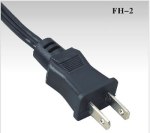 As you’ll see plenty of times in this article, Japan is quite similar to the United States in many ways, including power. We use 120 volts as our standard for power. Japan doesn’t appear to use a ground (or at least none of the Japanese consoles I’ve ever gotten do, never been to Japan itself), so all plugs from Japanese consoles will be two-pronged and fit in an US outlet. Also fortunate is the fact that most consoles, especially retro ones, will use AC adaptors that work in the US. Never interchange US power supplies into Japanese consoles, you could fry the console or worse. For example, if you import a Famicom, use that console’s AC adaptor and not an US NES one. For newer consoles like Japanese PS2s and PS3s, you may want to check the back of the console, but I think those are good for AC 100-240 volts for worldwide distribution, but I could be wrong. Basically if it generates heat, be very careful and do a search for advice from a reputable source (no, Yahoo! Answers is not a reputable source). Also if you want to be completely safe, there are Japanese voltage converters that allow use of Japanese products here.
Generation Gap: Import Edition
So you’ve decided you may be interested in this import scene, huh? You may want to see what the other regions have to offer? Perhaps you just don’t know what’s out there and you’re just curious. Well here you go – a wrap-up of some of the most popular consoles overseas that didn’t quite it over here.

Sega SG-1000 – Released in: Japan, Europe – Launch: 1983
Sega and Nintendo have been up against each other since day one, literally. While we didn’t see the NES over here until at least 1985, Sega’s first console, the SG-1000, released day in date alongside the Famicom (NES) in Japan. A cartridge based system that had nearly identical hardware to the ColecoVision, Sega’s first outing is most notable for having a solid Donkey Kong clone (Congo Bongo) and some of Sega’s top arcade titles. I’m fairly certain that Flicky made its first home appearance thanks to the SG-1000 as did Monaco GP.
Localization


Ghostbusters released on almost every platform in the 80s, but if you picked up the NES version you would be greeted with an all-too-common error: the completion screen proudly exclaims “Conglaturation!!!” Back in the late 80s I was a mere seven when playing NES games and improper spelling or verbage was something I shrugged off as not understanding. I never assumed the game was wrong, I just assumed that I didn’t get it. See, back in the 80s most games were lucky to get a decent translation, let alone a full localization, and it made playing many of the Japanese games difficult. Nowadays it’s a completely different world – pioneers like Atlas and Square Enix have full-blown localization departments that are hellbent on creating the best possible experience for a specific regional audience. It’s more than just a translation, it’s a retooling for another culture.
Day 12
On the twelfth day of Christmas my memories gave to me…
A Twelve Floppy Disk Game!
In 1994 my father decided that it was high time to replace that old Commodore 64 (which wasn’t even considered a PC anymore) with a brand new Pentium 90 mhz PC. I remember coming downstairs on Christmas morning and there it was, a beautiful boxy white machine with a VGA monitor, printer, and took up all the space our wide oak desk could spare. CD-ROM was brand new and this bad boy came equipped with it and a few initial CDs, including Myst and an Compton’s Interactive Encyclopedia. At that time, however, not every game came in the CD version and many PC gamers were selling off their floppy disc versions of games to upgrade. It was at this time that I became enamoured with PC gaming and began stopping by the used PC game shop near my part-time job and blowing my money on classics.
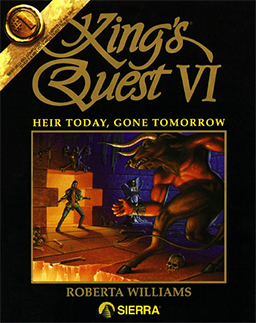
 Aside from the first-person shooters that my mother hated, think Doom and Duke Nukem 3D, I was very interested in any game that had a fantasy setting. While console games at the time had plenty of variety, true Dungeons & Dragons-style games seemed more fun to me in a point-and-click world. I first got my hands on Warcraft, which was fun online and all, but real-time strategy (RTS) games just weren’t my style. Then one of my friends introduced me to a little game called King’s Quest, one of the longest running Sierra point-and-click adventure games. It looked so cool and seemed to add a depth I had never seen before. I dropped by the used computer store and the newest game, King’s Quest VII, was available on CD for $40. That was way too high for my liking, so I looked to see if there were any games used. To my surprise there was King’s Quest VI: Heir Today, Gone Tomorrow on floppy for like $10, which intrigued me not only in price but with the clever pun. I bought it and brought it home.
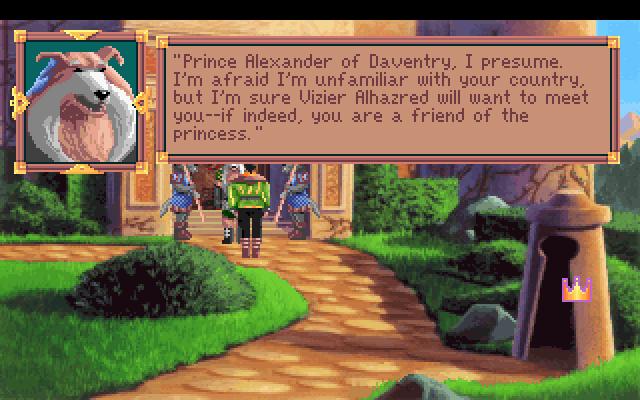 Floppy games that released near the CD age were always huge, many of them taking 9+ floppy discs to install under MS-DOS, an alternative mode to Windows 3.1 on early 586/Pentium PCs. King’s Quest VI was an enormous 12 floppy discs and took more than 20 minutes to install. The wait was worth it, though, because the game opened with a fully animated cutscene, complete with voice acting, and the entire game looked to me like Dragon’s Lair in a playable form. I would also later discover that the writer of the game, the amazing Roberta Williams, also had some horror games including Phantasmagoria, a massive 7 CD title in its own right. King’s Quest VI wasn’t the only game this large, either, many titles from the early days of PCs were purchased or traded in floppy disk form. You would always want to back up your disks, twice, because the damn things had a tendency to go bad and that was usually on disk 11 of 12, when you had already wasted so much time.
Day 11
On the eleventh day of Christmas my memories gave to me…
11 Different Gameboy Advance Colors!

Gameboy Advance (GBA) was not the first console to offer multiple colors. In fact, it wasn’t even the first Nintendo or even Gameboy console to do so, but it definitely was the first to push variety. Releasing with seven initial colors, the GBA created the first Christmas where it wasn’t just about getting the right portable for your child, but also the right color. Of course the really popular ones, fuchsia and arctic come to mind, were the first to sell out and the most common, indigo, was the only color left in every retail outlet. Not only did they feature various normal colors, but limited edition colors were offered worldwide, creating a high demand to grab all the various rare (and expensive) GBAs for collectors.

I’d love to say that I’m not guilty of this, but back in 2001 when I went out to purchase a GBA with my Christmas money I hunted at a bunch of stores and didn’t buy the portable for 2 weeks because I didn’t like any of the colors I found. My heart was set on the midnight blue color, which I later discovered was only available at Toys R Us and had its horrendous logo above the screen. I quickly settled for one in glacier, but not before finally finding a midnight blue – in hindsight I probably could have made some money re-selling that thing.
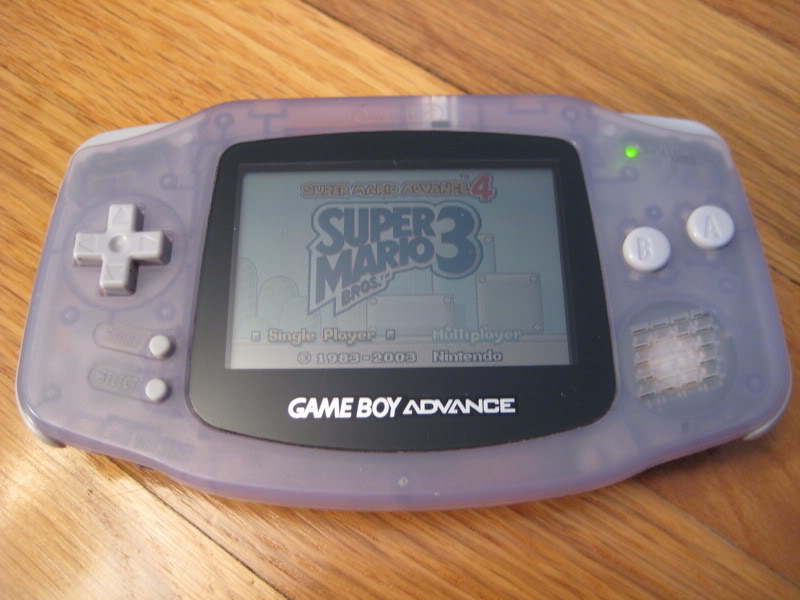
I still think fondly on those times, despite the fact that the GBA would start the trend of console iterations – the GBA SP being such an improvement over the original I couldn’t help but pick it up as well. Anytime I go to a used game store I always browse the GBA consoles for that random shot I could get my hands on the limited Japanese clear orange or spice colors. I think it was the only console cycle where I never had to hunt for a specific game but I always had to hunt for a specific colored console.
Day 10
On the tenth day of Christmas my memories gave to me…
10 Turbografx-16 Cards!

I know the picture has more than 10 games, but I just recently found a bunch of old Turbografx-16 games from my youth and I don’t have all of the original “big 10”, sue me. Back in 1992 Toys R Us decided it was high time to get rid of the Turbografx-16 and clearance priced both the console and the games. I’m fairly certain the console dropped down to $49.99 and I know the games were all $9.99. I had no idea what the heck a Turbografx-16 was but the graphics definitely looked like Sega Genesis and Super Nintendo so I grabbed it and five games for Christmas. This was an even bigger deal when you consider that my Toys R Us only had 10 games for the console. I was hoping that I could find other stores or places downtown (I lived in a suburb of Chicago) but to no avail. After two weeks of searching I finally gave up and decided to ask for the other five games for my birthday to at least have my strong 10 game collection.
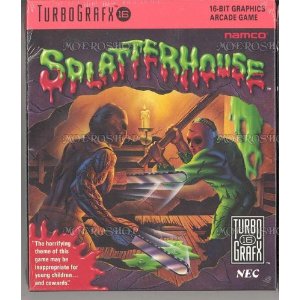 That ended up being one of the most worthwhile Christmas gifts I could have possibly asked for. The back of the box was adorned with games I had never heard of, like Bloody Wolf, that looked absolutely amazing. Unfortunately, I was limited to just the 10 games I could find but many of those were gems of the console: Keith Courage in Alpha Zones (pack-in), Legendary Axe, Splatterhouse, Devil’s Crush, Pac-Land, Vigilante, Aeroblasters, Bonk’s Adventure, Victory Run, and of course J.J. & Jeff made up my collection. Being only ten years old and getting my hands on a game like Splatterhouse, an action title where your character looks like Jason from the Friday the 13th series and explores a haunted house, I was blown away. Additionally the Turbografx-16 had a strong Japanese influence, so all games looked very cartoony and covered topics like graphic violence and adult situations.

I spent most of 1993 playing Turbografx-16 at home, but with my obsession with Mortal Kombat for Christmas the next year, my Genesis became the main console of my life after that. For the longest time the Turbografx-16 remained a vague memory gathering dust in my closet (much like my Wii was a year ago). I ended up selling off the console in college but the box containing my games remained untouched in my parent’s basement, which had more than tripled by the time I was 20. I recently found the games and picked up a used Turbografx-16 and upon that first boot-up of Keith Courage in Alpha Zones it was like being a kid again. I had no idea what a great part of gaming history I had stumbled upon for Christmas ’92.

