Posts Tagged ‘nintendo’
Podcast: Project Reality

It’s been nearly 20 years since the Nintendo 64 (N64) premiered in the United States. Aside from being Nintendo’s third console, it marked a lot of major changes for both the company and the industry as a whole. Fred and Jam look back on the console that started as Project Reality and eventually became one of the influential pioneers of 3D polygonal gaming.
New Podcast: Gaming Tech 101 (Episode 0)
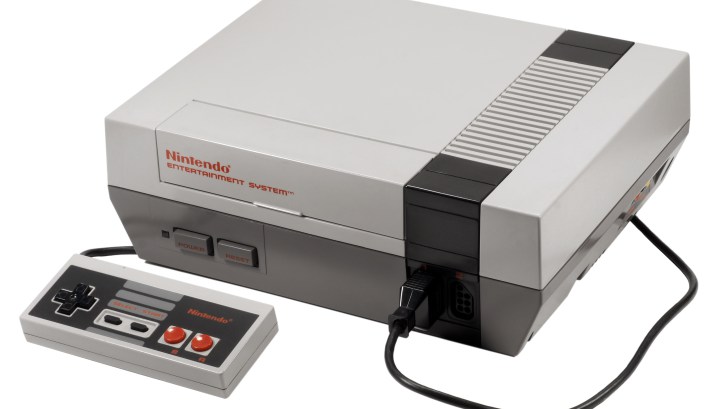
There has been much appeal to the hardware side of retro gaming and with so many new products coming out it’s time to get back to basics. While Gaming Tech 101 will have its own feed and episodes, Fred figured he’d give you a taste over here on the GH101 feed. In episode 0 Fred discusses what GT101’s intentions are and then delves into the growing world of NES clone consoles hitting the market. From NOACs to FPGAs and even Nintendo’s own “mini” slated for holiday, it’s all covered in this first preview episode. GT101 will be a bi-weekly podcast.
Podcast: Super Power

This week Fred and Jam celebrate the 25th Anniversary of the release of the Super Nintendo Entertainment System (SNES) in North America. The duo delve into the design, hardware, regional differences, and of course the games that defined a major portion of the 16-bit generation. As the show wraps the new game club title is chosen, what will it be?
Nintendo Announced the NES Mini and Here’s the Important Details

Update 09/30/2016 at 12:45 pm: Nintendo has released more information on the NES Classic Edition in conjunction with the announcement of Japan’s Famicom Classic Edition. The Classic Edition models will contain multiple visual modes: CRT Filter, 4:3, and Pixel Perfect. CRT Filter adds scanlines, 4:3 presents the game in its original aspect ratio, and Pixel Perfect upscales everything in a perfect square (which seems to suggest 720p output). In addition you can have up to 4 suspend points that act just like save states in emulators. You will also get a QR code on the screen with each game that will allow you to access the original manual. Bob Mackey at US Gamer also just did a write-up that claims the controller cords are short, like 3 feet or so short. You also have to reset the console to pick a new game, although those of us with flash carts should be used to that. This probably won’t change your opinion, but it does get closer to finally finding answers to these early questions from the summer.
Update 07/14/2016 at 12:45 pm: A reader (TeenNick) has mentioned that Nintendo Life has reported the device will not support additional games, either in cart form or other alternative forms. This better explains the list being so strong and varied. Not sure if this is still going to be of value to me, but for most fans of the NES as a child this is a quick and dirty solution for your favorite classics.
Original Story:
First of all, Nintendo, 5 am? Really? Clearly Reggie and the gang are up much earlier than I am – and for the record I work in healthcare so I have a bit earlier of a schedule than the typical games media writer. Either way, the great news came down with this announcement from Nintendo of America (NOA) that this November we will be getting the NES mini. I have an NES and I have a lot of games for it, not to mention the 100+ titles I also have on the Virtual Console, and lets not forget that a dozen or so clone consoles are just a used game store away, so why care? Well, on the surface of this announcement, you don’t. It’s not until you get the details, which I do have below, that suddenly this is an intriguing endeavor.
Thanks to Gamespot’s Eddie Makuch, who appeared to be equally inquisitive with Nintendo as opposed to most other sites who merely said “mini NES with games, isn’t that cool?” we have some important details. It will cost $60 in the US, releases November 11, and includes 30 games (the list is below). From what it sounds like the cart slot will support any NES game you put in there, but I have yet to see that actually stated, however you would hope. That will also be significant in the next paragraph. Nintendo confirmed that the console has HDMI out and uses a USB power adapter for AC, which is free and included in the US but not in Europe (and probably not in Japan as we traditionally see). The controller is a classic NES style and one is included in the box, but more can be purchased for $10 apiece. These use the classic controller port like we see on the Wiimote. Also Nintendo confirmed that “suspend points” will be available. This means a lot of things, so lets break down what this information seems to indicate and why you may want to purchase this, even if you own an NES.
Cross Talk: What You Should Know About Pokemon Go
Cross Talk is a blog that Fred writes that appears at the same time on both Gaming History 101 and The B-Team Podcast.

Unless you’ve been under a rock, it’s hard to ignore the presence of a game called Pokemon Go that released about a week ago to most mobile devices (July 6, 2016 in Australia and the United States). Those of you in Europe and Asia, don’t fret, it’ll be out in your neck of the woods hopefully by next week unless you’ve figured out the way to bypass iOS or Android region locks. If you’ve ever played a Pokemon game, then you basically know what to expect. The game uses your GPS and your phone camera to embed Pokemon in the real world, AR (augmented reality) style, and then have you go chase after them and capture them in your poke balls. You can level them up, keep collecting, and of course battle them. I cannot stress enough how ridiculously addicting and fun this is. Much like we have seen with other crazes, this transcends “gamers” and moves into the universal world of all mobile users as potential (and eager) customers. Pokemon Go manages to merge the popular concepts of Facebook, Twitter, Snap Chat, and even Tinder into one universal, easily used for free, app that has gotten it wide attention from games press and mainstream press. It also resulted in a surge in Nintendo (and other) stocks adding a reported $7.5 billion in net value yesterday. So it’s an essentially free social app – there are microtransactions but they can be easily avoided – that makes companies a ton of money and is a blast to play? Too good to be true, right? Yep, it totally is.
Now I’m going to go on record right now and say the point of this piece is to inform, nothing more. If you’re going to let a lowly retro blogger decide whether or not to put an app on your phone, you’re going to have trouble with your security. I’m merely pointing out what has been brought up as a point of concern and inform my readers of the potential ups and downs of this game. It is up to you whether or not you want in, but at least you’ll be prepared for the decision. If it sounds like I’m making a big deal out of downloading a simple app, you should probably read on.
E3 2016: All Games Zelda Treehouse Impressions

Nintendo has finally broken its silence and after a whole year of waiting, we now have good idea of what to expect from the next title in The Legend of Zelda. For starters, a name: Breath of the Wild. In this podcast the All Games team takes in the many demos coming out of Nintendo’s Treehouse streams and discusses what we can expect when the game finally lands next year.
Check This Out: Play NES Games Rendered in 3D
Overnight there was apparently a craze regarding 3DNes, a project capable of re-living your favorite NES games in a browser and now in 3D. This isn’t those 3D games that appear on the 3DS either, it’s a seemingly re-rendered version of the game to support depth (or volume). Originally this is what I imagined voxels (volumetric pixels) to look like and it’s somewhat like the aesthetic of 3D Dot Game Heroes but in your favorite NES games. In order to play you need to be on the 64-bit version of Mozilla’s Firefox web browser, have the NES rom you want to play uploaded to a linked location online (they recommend cloud storage), and you can only play online. A downloadable version will be available soon.
It’s super cool to see these classics with new life in 3DNes and while I messed around with it a little, I have to admit I would probably prefer a downloadable version. You are welcome to head on over to the developer, Geod Studio’s site and play around with it yourself or merely watch the video at the top of the page. Now you’re playing with 3D power.
It’s Not “Wii U” It’s “Me, U, and Nintendo”
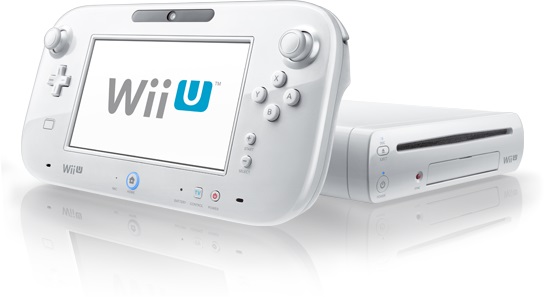
With the arrival of Zelda Twilight Princess HD being released on Wii U this week and ever circulating rumours that that next Zelda game will be released to the Wii U and Nintendo’s follow up console (codename NX), I though this would be an opportunity to review just what has happened with the Wii U and why Nintendo seems keen to move on from this console despite pockets of success.
 First off it’s worth acknowledging that the Wii U is far from a failure and this console will not be the end of the company. After all, if Nintendo can survive the awful Virtual Boy it can survive most things. The Wii U is a console that had the best intentions behind it: it wanted to bring the tablet experience to the living room along with exclusive Nintendo IPs that you can’t play on any other system. I initially always felt the Wii U was like the DS of video game consoles, where you would have two screens to look at. Unlike the portable, though, you would have to do some significant head movements to view the different screens. There are games made for this console both first and, yes, third party that really made the most of this set up. Despite the criticism ZombiU was a very clever experiment in having the player manage inventory on the tablet screen while action was happening in real time on the TV adding to the horror and tension of the experience. Rayman Legends (a game I adore across all platforms) was originally a Wii U exclusive and it shows on other ports of this game. If you play the game with other people, one player can use the tablet control to manipulate the environment and assist the other players. Another example is Unepic, a very cool indie title which uses the tablet to allow you to manage inventory. Yes, all of these titles were released to other platforms, but they’re examples where developers made the most of the hardware without making it feel like a tacked on gimmick.
Book Review: Legends of Localization Book 1: The Legend of Zelda

Like all great media, video games transcend the restriction of language. Thanks to standardized interfaces, albeit complicated and vast, one can easily pick up a game in any language and navigate it. Whether or not you absorb the key gameplay concepts or the story, however, still comes down to understanding the written or spoken words. This is especially true of retro video games since a majority were born in Japan and then exported to various countries and languages (the most common being English). Unfortunately the process of translating a game requires more care than simply asking what a word or written symbol converts to in another language. Localization is a more appropriate term for what video game translation is really all about. Clyde “Mato” Mandelin has actually done it and continues to document various changes and localization between video games in Japanese and English in his wonderful Legends of Localization site. He recently took the next step and published his first hardcover book, Legends of Localization Book 1: The Legend of Zelda, which does a few things I never thought possible. For one, it taught me a bunch of stuff about The Legend of Zelda that I never knew.
Podcast: Play It Loud!

This week Fred and Jam are discussing the development, release, and games behind Nintendo’s most popular portable: the Game Boy. Released under the concept of keeping it addicting and inexpensive, the Game Boy was the first video game system to be embraced by the mainstream and thanks to a little game called Tetris was a must own for the 90s.
 Gaming History 101