Archive for the ‘Reviews’ Category
DoDonPachi Resurrection Review

For whatever reason, the West gave up on the scrolling shooter genre back in the 90s. Sure, games came and went after the 32-bit generation, but for the most part series that had existed for decades like Gradius, Darius, and even R-Type ceased development. In Japan, however, the shooter – sometimes called shoot-em-up or the divisive shorthand of shmup – has evolved along with new franchises and coveted developers. Otaku, weeaboo (foreigners obsessed with Japanese culture), and shoot-em-up fans like myself remain aware and hungry for the new and challenging titles that come from the East. Of those modern franchises, there are few developers more notable than Cave and there are few franchises more recognizable than DoDonPachi. The name is a pun on both the literal meaning, angry leader bee, and the fact that “don” is onomatopoeia with bullet fire in Japanese. The story is somewhat irrelevant at this point, mostly because we never saw a release of any of the DoDonPachi series outside of limited release in arcades, but suffice to say it revolves around fighting various human fighters under the control of a large bee set on world domination. The “don” is fitting as well because your ship will be putting out literally hundreds of bullets every second and a sea of bright pink and blue bullet-fire will be coming back at you in retort. This sub-genre is known as danmaku (“bullet hell”), which is a fitting name given the minute-by-minute gameplay. Why does any of this matter? Because we’re finally getting a Western release of DoDonPachi DaiFakkatsu (aka Resurrection) on Steam that is part of an impressive resurgence of the genre for this region. DoDonPachi Resurrection is gorgeous, brutal, and feature packed to the point that both the veteran shooter fan and newcomers can find plenty to do and enjoy every potentially frustrating second.
Podcast: Call of Cthulhu Dark Corners of the Earth Game Club

There is no writer quite like H.P. Lovecraft and there’s definitely not a whole lot of games like Call of Cthulhu: Dark Corners of the Earth. A divisive title that is seen by some a tiresome game of pointless challenges while others revere it as the quintessential horror video game. Fred and Jam delve into the design, development, and campaign of this unique horror title.
Retro Game Night 10/07/16 – Laplace No Ma (English Patch) and Shadowhawk (Prototype)
For Fred’s triumphant return to streaming with Retro Game Night with two games you’ve (probably) never played.
First up, in honor of horror and October, is Laplace no Ma (loosely translated to Laplace’s Demon) that is a hybrid survival horror and dungeon crawling RPG. Developed by Group SNE and published by Vic Tokai on the Super Famicom, this is a unique 16-bit follow-up to the concept first started by Sweet Home. Thanks to a fan translation, it is now playable in English.
To wrap up the show, Fred takes a look at the recently unearthed prototype cart of Shadowhawk, based off the Jim Valentino comic of the same name. Originally planned to release on the SNES in the early 90s, this 2D side scrolling platformer was lost to time and lack of a publisher only to be discovered nearly two decades later. You can find this ROM here and it is playable in emulators or on actual hardware via flash cart.
Policenauts Has Been Translated on Saturn
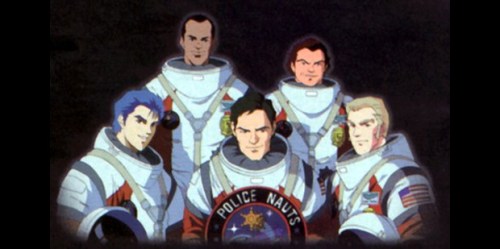
A fan translation of the Sega Saturn version of Policenauts has been released. It can be found here. There you will also find the original Playstation translation as well, but read on to discover why you may want to go with the Saturn.
We love Policenauts here at Gaming History 101. You can read a review on it, listen to a game club, and even hear a choice song from the soundtrack in one of our music episodes. This is significant because the Hideo Kojima title was never released outside of Japan and never officially translated to English. There was a fan translation of the version on the original Playstation in 2009, but it has some compatibility issues that can arise and the shooting sequences don’t support light guns, making them brutal. On the other hand, the Saturn version is a bit more of a remake than a port with better graphics and even light gun support. As of yesterday you can now get an English translation patch for the Saturn version and get to play the most definitive version of this great title.
Fred’s Take: This news is huge to me. First off, it allows me to play (and hopefully finish) the game on an actual console. I started a video capture of the PS1 version, but struggled greatly with the shooting sequences. Upon beating the highway scene at the end of Act 2, I was then confronted with a save bug that I never could figure out how to overcome. I was able to complete the game thanks to emulation, but it never felt right with a keyboard, mouse, and save states. Hopefully with the help of my chipped Saturn and trusty Virtua Cop light gun I can finally play Policenauts as intended on original hardware.
DoDonPachi Resurrection Quick Look
DoDonPachi Resurrection will premiere on Steam October 14, a title previously exclusive to Japan. Here Fred takes a look at the initial stages and describes basic gameplay. This footage was captured at 4K/UHD resolution (3840×2160) and then downsampled to 1080p.
This quick look was originally posted on The B-Team Podcast (www.thebteampodcast.com) and have partial co-ownership with this site. This is re-posted with permission.
Dissecting Nintendo’s Famicom Classic Edition (Mini) Differences

This week, Nintendo announced the Eastern component to the NES Classic Edition (or NES Mini) that most of us knew were coming. Nintendo did allow some hands on time and offer new information on the NES Classic that will probably apply to the Famicom Classic as well, so check that link above if you haven’t already. The delightful Famicom Mini is officially called the “Family Computer Classic Edition” and it appears to be quite similar to the Western version save for the obvious aesthetic difference, but also with some details and games. Like the NES Classic Edition it will contain 30 games, it does not accept cartridges, and it will retail for ¥5980 (which at time of writing is literally $59.80). Those of you already hoping to import should expect international shipping to be approximately $20-$30 depending on the speed of shipment and retailer. I’ve already checked and no one currently has it on pre-order, although some bigger import sites do have pages for it, but I suspect it will not have a supply problem as the price point for these consoles suggests it needs to sell a large quantity.
Now there are some notable differences that you should be aware of. Of course the games will all be the Japanese counterpart and contain the Japanese versions, but the universal HDMI out means that any HDTV worldwide should easily support either console. On the other hand the USB power supply is not included in the Family Computer Classic Edition and can be purchased for ¥1000 ($10) if needed. Those picking up both versions can most likely use the included NES Classic Edition cable and it’s probably the common micro-USB plug type. Also the Famicom Mini, like the original Famicom, has two controllers wired directly into the console and are not removable. As for games, 8 titles are unique to each region, so 22 of these titles are on both consoles. Here’s a quick list of those and you can expect a video of these region specific titles coming soon.
Podcast: Donkey Kong 64 Game Club

Donkey Kong 64 has got to be one of the most divisive titles to be released both by Rare and on the Nintendo 64. Depending on how you came to play it, you either love it or hate it. While Jam had tackled this title back when it released, even getting the coveted 101% completion, Fred had never touched it. Thanks to listener Blake (jedislurpee) we played through the game in its entirety and go back to dissect the development, gameplay, and key factors of a title that probably gets more hate than it deserves.
Podcast: Project Reality

It’s been nearly 20 years since the Nintendo 64 (N64) premiered in the United States. Aside from being Nintendo’s third console, it marked a lot of major changes for both the company and the industry as a whole. Fred and Jam look back on the console that started as Project Reality and eventually became one of the influential pioneers of 3D polygonal gaming.
Podcast: The Astyanax or Lord of the Kings
Developer Aicom had a slew of interesting titles in the late 80s and early 90s, one of which was called The Astyanax or Lord of the Kings in Japan. Oddly enough the game also had one of those infamous ports to the NES that changed and extended the original arcade concept, which Fred loved as a kid. In this episode Jam and Fred discuss their discovery of the arcade original and a replay of the Nintendo port.
New Podcast: Gaming Tech 101 (Episode 0)
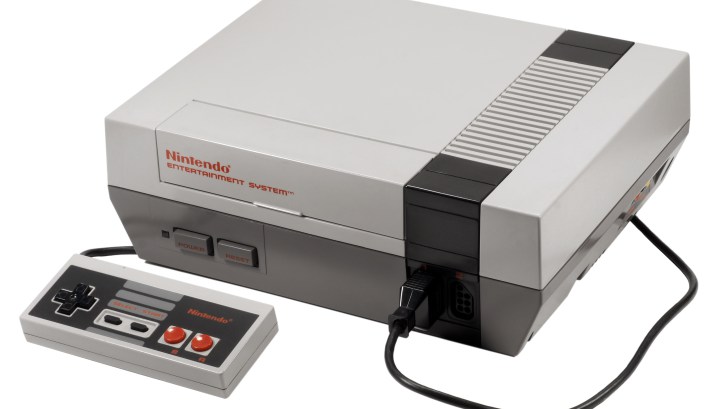
There has been much appeal to the hardware side of retro gaming and with so many new products coming out it’s time to get back to basics. While Gaming Tech 101 will have its own feed and episodes, Fred figured he’d give you a taste over here on the GH101 feed. In episode 0 Fred discusses what GT101’s intentions are and then delves into the growing world of NES clone consoles hitting the market. From NOACs to FPGAs and even Nintendo’s own “mini” slated for holiday, it’s all covered in this first preview episode. GT101 will be a bi-weekly podcast.
 Gaming History 101