Posts Tagged ‘sony’
Day 3
On the 3rd day of Christmas my memories gave to me…
Three New Consoles


When you look up the Playstation 2 in either gaming history books or Wikipedia, you’ll notice a late 2000 release date that seems to suggest the PS2 had a year head start on the Gamecube and Xbox. What they won’t tell you was that those who experienced its release in person knew better than to even suggest the PS2 was on store shelves in 2000. In fact, it took until about holiday season 2001 for PS2s to reappear at retail and have a few decent games. This resulted in the first time all consoles of a specific generation were initially available together, despite release dates. Christmas 2001 was a wild cluster and there we were wrapped up in it and trying to presume which console would be the best.
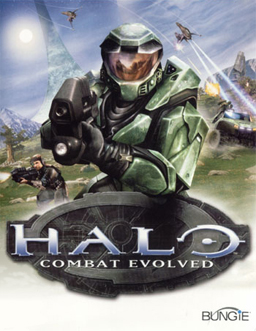
Ironically this generation would end up with all three consoles having similar libraries save for the Gamecube versions of games being mildly stripped. Given the scant launch selection, it really came down to what you thought the console could offer in the future. Nintendo and Sony touted the strength of their first party titles while Microsoft had only one ace in the hole: Halo. Debates among my friends waged for days, fanboys coming out of the woodwork and fighting with everyone because they didn’t agree on which console was worth it. The only reason everyone cared what their friends were buying was because the college atmosphere thrived on borrowing your friends’ games and for the first time there was a lot of variety.

In the end the Gamecube remained the outlier with its cheaper price tag, lack of a DVD player and no true Mario game in sight. Of course I decided to ask my parents for it because it fit within the budget of a Christmas present and it was going to be the home of a Resident Evil remake and future series titles. Although the PS2 clearly won the overall generation by a landslide, it was a pretty split world on college campuses. Sure, you could play your old Playstation library and watch DVDs, but the Xbox allowed for Halo LAN parties. In true hindsight, Halo aside, there was very little difference between each console. With simultaneous launch windows being the ideal situation for competition, all that resulted was overall conformity within each console. Funny, isn’t it?
Generation Gap Pt 5: “Last” Gen
This installment will conclude our Generation Gap coverage. Please note that upcoming coverage on handhelds, arcades and microcomputers will follow. A lot happened just over a decade ago – the gaming market changed and one strong competitor bowed out as another took to the plate.
Fifth Generation – 1999 – Present (technically)

Sega Dreamcast – Launch Price: $199.99 – Released: 1999
Launch dates are getting more technical by this time, so from a Japanese standpoint the Dreamcast was a 1998 launch but we didn’t get it here until much later in September 1999. Although it is a 128-bit system, consoles had stopped toting the strength of “bits” and instead focused on a sleek design – most likely because Sony did it with Playstation and it worked. Dreamcast was Sega’s final nail before bowing out of hardware manufacturing and has been argued to also be its best offering. Regardless, the Dreamcast was definitely ahead of its time. It featured things that no console would dare launch without today and basically had the same features that Microsoft would include in its console just a few years later. A few years, that’s the difference between success and failure.
Until the Dreamcast most video game consoles were specified hardware that was far behind PCs. By all accounts the Dreamcast was a simplified PC, even running Windows CE, a modified version of the operating system that would be put to greater use on later pocket PCs. The Dreamcast had a built-in modem on all consoles, which supported the earliest form of online console gaming and provided a web browser service to those fortunate or rich enough to afford the high cost of long phone calls. Furthermore a keyboard attachment allowed players to truly use their console as an Internet device and even gave way to early MMOs on the console. Memory cards included LCD dot matrix screens and were called “visual memory units” or VMUs that not only held data but gave the player on-the-go mini games and Gigapet-style games. Aside from that Dreamcast boasted higher storage with the proprietary GD-rom format (1.2 GB of storage space), impressive graphics, and a slew of solid titles.
Generation Gap Pt. 4: 32-bit (with a dash of 64)
By the time the SNES was dominating and the Sega Genesis was locked in an endless sea of add-ons to save the dying console, electronics manufacturers began to step up and create many of their own consoles. As a result, the market was flooded with overpriced horrendous hardware. They seemed to have everything a gamer wanted: new media format (the cheaply priced cd was preferred by developers to reduce production cost and retail price), impressive graphics and processors, and lets not forget the large numbers like “32” and “64” prominantly displayed on the startup screens. Unfortunately they lacked one important thing: good games. Still, that didn’t prevent many manufacturers from creating a loose version of the video game crash of 1983. Thankfully one lone electronics company entered the foray with the next step in gaming – that company was Sony.
Electronics Companies Go Bananas (or Pre 32-bit Gaming)

JVC’s Xeye
I’m guessing somewhere around the Sega CD, boasting the ability to play your new audio CDs through your television as an added feature, electronic companies started to take notice of gaming systems. As you guide through the progression of consoles the consumer electronics market grows stronger with gamers – let’s face it, they’re the perfect early adoptors. Quickly companies scrambled to enter the gaming market including JVC, Phillips, Panasonic, Pioneer, Sony and even more. Some of these companies licensed existing hardware, like JVC did with the X’Eye, a Sega Genesis/Sega CD hybrid that was re-branded with JVC’s logo. On the other hand, Phillips, Panasonic and Pioneer – imagine keeping these companies straight as a consumer – released their own hardware with a (arguably) library of games. In the end, they all sucked and had ridiculous price tags pushing back the concept of consumer electronics meeting gaming for at least another six years. Below are the early disc-based consoles that failed so horribly.
Revisionist History
March 16, 2010 was an important day for Playstation manufacturer and video game publisher Sony Computer Entertainment. It marked the release of God of War III, a technological stunner that promised to be every bit as fun as it was beautiful. Not only was God of War significant for being the third in the series (and subsequent end to the second title’s cliffhanger), but it was to be the first outing for Kratos on the Playstation 3 console. God of War II had been slated for the PS3 at one point in development, but Sony opted to keep the title on PS2, marking it as one of the best titles on that console and a fitting end to usher in the PS3. There was just one big problem.
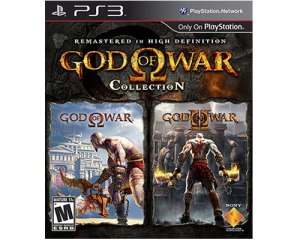
Starting in November, 2007, the Playstation 3 consoles had removed backwards compatibility with Playstation 2 titles, rendering them unable to play God of War or God of War II. When the decision was made to put God of War II on PS2, it was always thought that new PS3 buyers would be able to use this feature to replay the previous titles. In an era where storylines are significant and a series like God of War required you to know the storyline of the previous titles to understand the current one, Sony was in trouble. Fortunately a long rumored concept ended up coming to pass – a high definition remake of the first two games on one PS3 compatible blu ray, and at half the price of a contemporary release. In November of 2009 the God of War Collection was released to masses, an impressive appetizer to the third iteration, which still loomed more than four months away. Not only that, but it was a great deal, amassing an impressive 1 million+ sales to date and a solid holiday season. Not bad for two titles that had released a generation ago. At $30 apiece gamers (myself included) ate it up and IGN’s Chris Roper even declared it the “definitive way to play the game” (guessing he meant games) in his review.
Strength in Numbers
Anniversaries. As time progresses everything ages at the same pace and with each passing year a ton of video games hit new milestones. Popular titles from the past can be revisited in short periods of time for the sake of nostalgia or the chance to finally complete a difficult game for the first time¹. Since no one day can go by without something in the video game industry reaching a notable age, it’s no surprise that retro articles are riddled with regular anniversary celebrations. This site will be no exception.
 Gaming companies have now begun to celebrate series anniversaries themselves on a more consistent basis. In some cases I feel these creations are warranted, but I find myself frowning a bit when it’s a last-ditch effort to revitalize an intellectual property that should have died off long ago. I think the better anniversary is the for titles that stand on their own and you rarely think about until they are brought up. A perfect example of this is Chrono Trigger. Despite a few remakes and Square’s occasional interest in bringing attention to the title, it’s mostly one for the nostalgia vault. Thankfully, unlike so many other titles, Chrono Trigger holds up today and stands as an individual game even though it technically has two other entries in the series². Oddly enough, even though the game celebrated 15 years in 2010, it received a GBA port on its 13th birthday and didn’t come to virtual console and PSN until this year (its 16th anniversary). This only further proves that incremental numbers aren’t always on a publisher’s top priority list.
 Gaming History 101