Archive for the ‘PS2’ Category
Review: Project Zero (Fatal Frame) 2: Crimson Butterfly

 Console: Playstation 2, Xbox, Wii
Released: 2003
Developer: Tecmo
Publisher: Tecmo
Digital Release? Yes, PSN version compatible with PS3 for $9.99
Price: $24.77 (disc only), $26.88 (complete), $56.88 (sealed) per Price Charting
Jam’s Take:
Project Zero 2: Crimson Butterfly is a sequel to the original horror PS2 hit that brings more of everything. More ghosts, more places to wander around and more pictures than a bachelors degree in photography. But is this game a picture worth hanging on your wall or maybe more suitable as a Christmas greeting card?
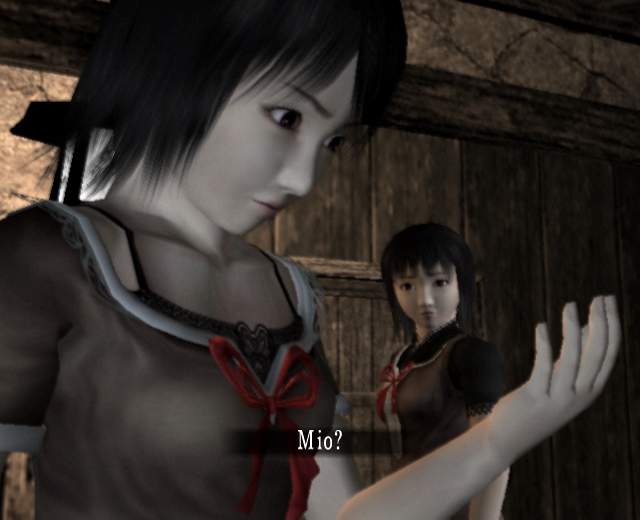
After surviving the mansion incident from the first game you find yourself now playing as a totally different character in a different setting. This time you play as a young girl called Mio Amakura and occasionally your messed up twin sister Mayu. After becoming lost in Minakami forest you stumble across a village. What could possibly go wrong here? Well it doesn’t take long for you to figure out that the place is haunted with the tortured souls of its dead inhabitants as well as that something weird is affecting your twin sister Mayo. The plot is completely separate from the original Project Zero title. The only main link being that you find the Camera Obscura, which is the same device in the first game, as a weapon. You use it to snap the things that go bump in the night – this time its an entire village as opposed to just a mansion. The plot of this game is rather complicated and felt quite hard to follow. Like the first game, there are several documents littered around the place providing you with some background information on what happened to the village and its inhabitants.
Podcast: Crimson Butterfly
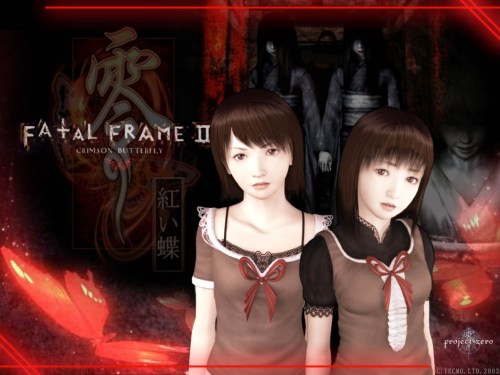
This week Fred and Jam tackle a horror game that is often mentioned as one of the scariest and best horror games to ever release. Oddly enough, neither of the guys have played it despite being self-proclaimed survival horror fans. Regardless, they tackle this popular title about a pair of twin girls who descend upon the spirit-infested Lost Village and uncover the tragedies that happened there.
Podcast: Zombies Ate My Podcast
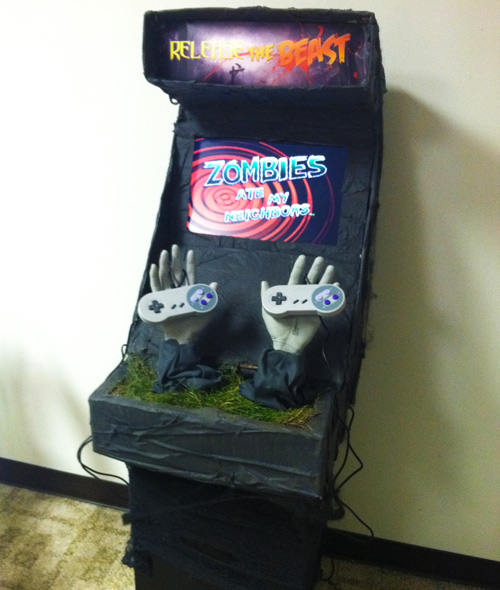
Traditionally horror and comedy are entwined, faithfully representing a laughable moment of relief to accompany the graphic depictions of death that follow. Although more rare, there is also room for comedy with horror elements and this week Fred and Jam are celebrating the games that get it right. From some of LucasArts classic hybrids to bikini clad samurai warriors, there’s no lack of hilarity in gaming for those not looking for a scare.
Review: Project Zero (Fatal Frame)

 Console: Playstation 2, Xbox
Released: 2002
Developer: Tecmo
Publisher: Tecmo
Digital Release? Yes, PSN version compatible with PS3 for $9.99
Price: $15.65 (disc only), $23.99 (complete), $24.25 (sealed) per Price Charting
Project Zero (or Fatal Frame in America) is one of those horror series that has a small but dedicated fan base. It’s a horror game where you take pictures of ghosts to exorcise them. On paper, the game ticks all the boxes for a fresh and new design, but does it live up to its expectations?
The story entails a pretty typical horror cliché. You play a young girl (of course) named Miku Hinasaki heading into a dark scary mansion alone (as you do) looking for your brother Mafuyu who has gone missing. Of course the mansion is filled with a plentiful amount of disturbed souls and the only way to force them to rest in peace is to take pictures of them with an old antique camera called the “Camera Obscura.” As you venture through the mansion you discover more of the background story as to what is going on in this creepy place and there are various cutscenes regarding this. But the in-depth details to the tale are found in notes and diaries scattered around the game, which you can read at your leisure. Overall the story seemed hard to follow until the very end of the game where they tie up all of the loose ends – which is no pun intended should you be familiar with how this game concludes. Project Zero shares a similar tone to popular horror films like The Ring (Ringu) and The Grudge (Ju-On) especially with its use of girls with creepy long hair that covers their eyes. The game does seem to go for the obligatory jump scare a little too often to the extent it starts to become predictable (ex: “Oh I wonder if there is a ghost hiding behind this door, of course there is, but it’s okay it just wants me to take a picture”).
Podcast: Ghouls, Ghosts, ‘N Goblins
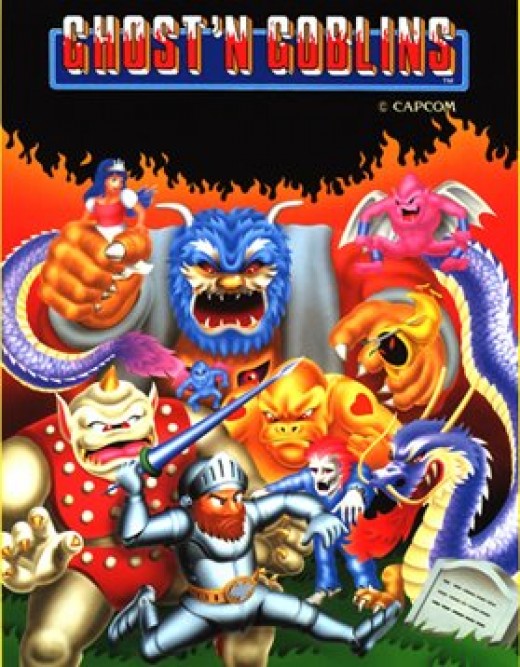
This week Fred and Jam are discussing the Capcom series Ghosts’N Goblins (or Makaimura if you prefer). Easily one of the most punishing franchises ever created, the boys tackle the trials and tribulations of Sir Arthur on a never ending quest to save his girlfriend. Along the path he will traverse to various worlds, see terrible beings, and of course battle the many derivatives of the Devil.
Download this episode (right click and save)
Subscribe: RSS iTunes Google Podbean
And just for fun, have a video of me cussing out the original for two hours:
Podcast: Silent 3vil: No Escape

This week Fred and Jam feature special guest Vos5 to discuss the third installment of both the Resident Evil and the Silent Hill series. Where RE3 was more of a side story to try out new mechanics, Silent Hill 3 returned to its roots to be the official sequel for the original and maintained most of the gameplay mechanics. Both have high regards with the fans but are also shadowed by the more popular predecessors.
Retrospective: Resident Evil 4
Now & Then is different from both a retrospective and a review. It tackles games you probably already know and is a place for gamers to discuss these games. Below is an overview of a game’s presence in the market then and now. Authors of these articles share their personal experience, so we encourage all of you to do the same in the comments.
Editor’s Note: Although I love classic games as much as the next guy, few games get to be restored as often as Resident Evil 4. Therefore, the recently released Ultimate HD Edition has the most cleaned up, 1080p native graphics to date and thanks to screenshot technology being what it is we were able to grab those assets directly from the game without any quality loss. We at GH101 have decided to feature screens from this version in the interest of clarity, despite the fact that they do not faithfully represent the graphical fidelity of the many previous versions. Hopefully purists will forgive us.
The Story of the Scrapped Versions
 Whenever a game sits in development hell for too long, it has an adverse affect on everyone’s feelings for the game. The examples are too many to count but a couple quick mentions are the likes of Diakatana, Too Human, and of course Duke Nukem Forever. With a few exceptions, games that take too long to make can’t help but not live up to the hype and therefore disappoint an all-too-eager audience. One of these exceptions is Resident Evil 4. Originally announced in 1999, the concept was a Playstation 2 game with a brutally strong protagonist that was more action focused per the ongoing desires of Shinji Mikami (series creator that has been trying to go more action oriented since Resident Evil 2). This new iteration was appropriately tasked to Hideki Kamiya, notable for his director work on Resident Evil 2, and in connection with Noboru Sugimura, writer of Resident Evil 2. After a European trip that netted a Gothic art style and given the goals of the game it was decided that the camera would have to be dynamic and movable (much like Capcom had started in Dino Crisis) and thus ditch the traditional pre-rendered background in exchange for a fully rendered world. Much of the development style, tone, and even Kamiya’s direction involved a what was described as a “cool” world and eventually it got so far removed from the roots of both the survival horror genre and Resident Evil series and instead integrated demons and a new protagonist, Dante. A small fraction of the Capcom Production Studio 4, named Little Devils, converted this new concept with the juggling bug this team had seen in Onimusha: Warlords and eventually renamed the project to Devil May Cry in November 2000. While it spun off to a good game and an ongoing franchise that still lives today, Devil May Cry left Resident Evil 4 in a rut without a dev team (and some hardcore RE fans still refer to the game as Resident Evil 3.5 since the core concepts remained intact).
Retro Game Night: Jaws Games
This week, for no particular reason, we decided to tackle Jaws games. There were three, but given time constraints we only tackled two: Jaws for the NES and Jaws Unleashed for the PS2. There may be a follow-up for Jaws: Ultimate Predator on the Wii.
Podcast: Final Fantasy X, X-2, and…XII?
 This week we are an ensemble cast with Andy from 42 Level One and Agents of Shieldcast as well as Eli from Knuckleballer Radio joining to discuss the main PS2 iterations of the Final Fantasy Series: X, X-2, and XII. As with all our FF eps, it’s a broad overview, but the discussion will help you understand what to expect from each iteration and what development changes were made. With the recent HD remakes of the X titles, you may just be tempted to give these titles a second glance.
Review: Shadow Of Rome
 Console: Playstation 2
Released: 2005
Developer: Capcom
Publisher: Capcom
Digital Release? No
Price: $6.99 (disc only), $20.00 (complete), $34.03 (sealed) – all prices according to Price Charting
I remember picking up Shadow of Rome in some pretty gloomy pawn shop a couple of years ago. It was a blind purchase, I knew nothing about the game, just read the blurb on the back thought it looked cool and saw Capcom made it which intrigued me. I started the game but soon after studies took priority and I just had to leave it to the side to return to later. Later become several years but I guess I got there in the end thanks to it being the latest entry in Gaming History 101’s Game Club series. So, lets see if Shadow of Rome is Capcom gold or an IP that should remain forgotten.
Shadow Of Rome, as the cover implies, is set in Rome. Julius Caesar has been murdered sending all of Rome into turmoil. You play as two characters – Agrippa the Roman Centurion and Octavianus, who looks very similar to another long blonde haired character in a infamous Metal Gear game. It’s up to these two characters to get to the bottom of this conspiracy. The setting is actually really well thought out, I genuinely wanted to go look up Roman history after playing this game. Despite the story of the game being a work of fiction, facts about the history of Rome are presented during loading screens. Names of characters in the game like Antonius and Pompey are also based on real characters in history. The game’s story loosely mirrors the actual fate of these characters in history as well. If nothing else Shadow of Rome will make you want to learn more about the Romans and maybe even go to a museum.

 Gaming History 101