Archive for the ‘PSP’ Category
Podcast: Final Fantasy VI Game Club
This week Fred and Eli (@Sodoom) discuss what many believe to be the best 16-bit RPG of all time: Final Fantasy VI (better known as Final Fantasy III on the SNES in the US). We discuss the combat system, characters, plot, and most memorable moment on this truly timeless RPG.
Killzone: Getting Caught Up With the Story
Normally we solely talk retro on this blog but with the upcoming PS4 I just can’t help but get everyone acquainted with the story of Killzone. While I’ve been a hardcore fan since the second game (I played the original but didn’t much care for it), most people managed to skip the series due to its long development delays, similar aesthetic to other shooters of the time, and much better marketed titles from both Sony internal (Resistance 2) and competitor Microsoft (Gears of War 2). It really is a shame because Killzone 2 is quite distinct from other shooters of the generation, but I will get into that later in the article. The focus of this is to get you caught up with the story and elements of each game in the series, so that you can jump into the latest iteration, Shadow Fall, at the PS4 launch without having to worry about everything that came before it. Given that Killzone covers three console generations now (PS2-PS4) and almost 10 years, it’s got quite a lineage for a series with three main titles and two portable side stories. Unlike most game franchises, the Killzone series stays mostly progressive with story and each new iteration directly follows its predecessor in the timelineso Shadow Fall takes place at the tail end of the current franchise. I have each game listed below along with a story synopsis and notable gameplay elements and updates to each in the order they take place in the Killzone universe. Without further ado, I give you the Killzone story so far:
Podcast: Generation in Review
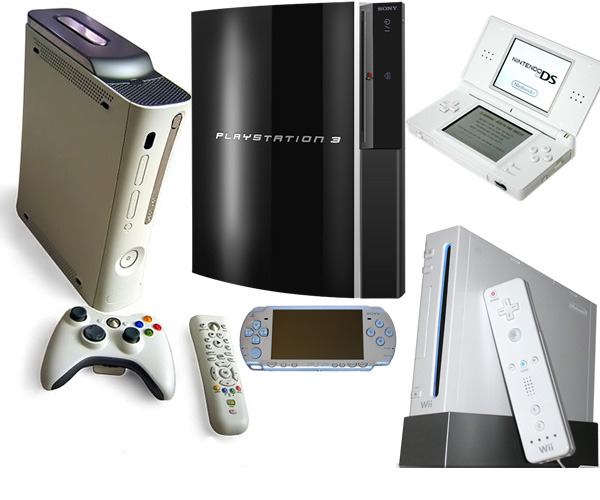
This week Fred welcomes listener Yuri (@JamesFortengard) and fellow podcaster Isaiah (@i_say_uh) from the Party Chat to discuss the console generation that officially comes to an end on 11/15/2013. They discuss innovations, trends, and passing fads of the longest generation ever in history that awarded gamers with some of the most dynamic experiences to date.
Podcast: Square’s Swan Song

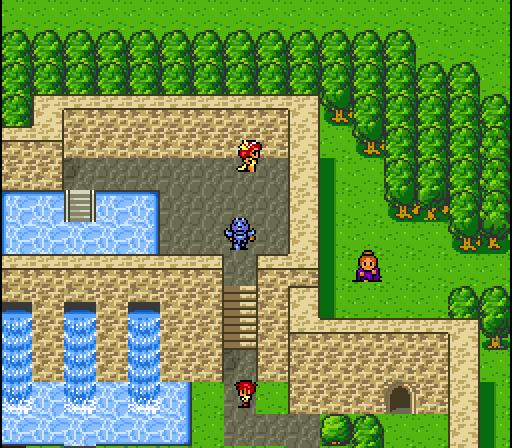
If you are going to talk significant JRPGs in America, one of the most influential series is Final Fantasy. Whether you believe that it was the last game Square may have ever made or that it was simply the last game designer Sakaguchi would be a part of, the massive success of this digital Dungeons & Dragons title started a strong fan base that continues today. In part one of our coverage, Fred and Eli “Sodoom” team up to discuss Final Fantasy I-VI including development, design, gameplay, and of course Cid.
Review: Final Fantasy IV
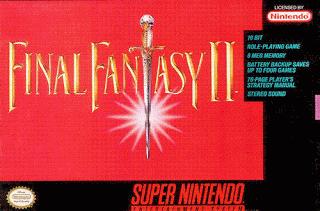 Console: SNES (as Final Fantasy II in the United States – title changed in later releases)
Released: November 1991
Developer: Square
Publisher: Square
Difficulty: Hard
Price: $24.67 (used, cart only), $70.57 (used, complete), $300.00 (new)
Additional Releases:Wonderswan Color (Japan only, updated graphics), Playstation (Final Fantasy Chronicles, new translation), Gameboy Advance (Final Fantasy IV Advanced, upgraded visuals, new translation/conversion to more closely resemble Japanese version), DS (full 3D remodeling, new dungeon), PSP (Final Fantasy IV: The Complete Collection, updated 2D visuals instead of 3D, includes The After Years and a new campaign Interlude to bridge gap between the events of IV and The After Years)
Digital Release? Wii Virtual Console (SNES version, $8), PSOne PSN (Playstation version, $10), PSN (PSP version, $30), iOS/Android (GBA version, $16)
Similar Titles: Dragon Quest (Warrior) franchise, Phantasy Star franchise, Vay, Ys I & II
Please note: This was originally released as Final Fantasy II in the United States and later re-named to the appropriate numbering system. The actual Final Fantasy II Japan-only Famicom (NES)release review will be live shortly.
 Despite the numbering of this game (and Final Fantasy VI) to be completely messed up in the US, Final Fantasy IV is a must play for fans of the series and JRPG genre. As George Lucas would put it, this is the “definitive version” of the game director (and series creator) Hironobu Sakaguchi originally wanted to make. It learns from its three predecessors and weaves in a powerful story almost unheard of at this point in gaming. Originally intended to be a final NES title in the series, budgetary and scheduling issues forced the 80 percent complete title to be scrapped and re-made on the new Super Nintendo (SNES) console with some of the original ideas integrated. The elemental concepts of the original, heavy story elements of the sequel, and job system of the third (it would be better utilized in Final Fantasy V however) were all mashed together with a new active time battle (ATB) system to create the most compelling game yet. ATB ditched traditional turn-based combat for a timer that allowed characters to attack at their own pace based on the type of warrior they were. This continues to be a staple of the series today and even snuck into other RPGs like Chrono Trigger. Final Fantasy IV hit early in the SNES and celebrated mass critical and financial success worldwide and is considered a favorite by many series fans.
Review: Final Fantasy
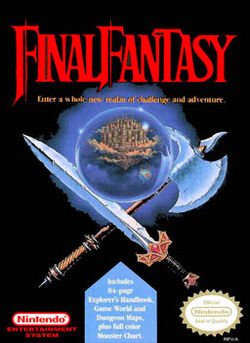 Console: NES
Released: 1990
Developer: Square
Publisher: Square
Difficulty: Moderate
Price: $13.49 (used, cart only), $48.50 (used, complete), $288.00 (new)
Additional Releases: MSX2 (Japan only), Wonderswan Color (Japan only), Playstation (Final Fantasy Origins, updated graphics), Gameboy Advance (Dawn of Souls, upgraded with additional dungeons, new translation), PSP (original title, includes Dawn of Souls content with updated visuals and soundtrack)
Digital Release? Wii Virtual Console (NES version, $5), PSOne PSN (Playstation version, $10), PSN (PSP version, $10), iOS/Android/Windows Phone (PSP version, $7)
Similar Titles: Dragon Quest (Warrior) franchise, Phantasy Star franchise, Vay, Ys I & II
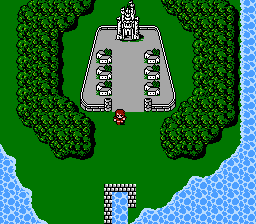 If you ask most Americans what the first true console RPG was probably one of the most common responses would be Final Fantasy. Not only is Square’s epic tale of four warriors taking on a timeless being that plans to destroy the world memorable, but it stood well above the competition of the time. The Legend of Zelda may have taken around 10 hours to complete, a size and scope only possible with the ability to save that was unheard of prior, but it was nothing compared to the massive world and 30-50 hours you may spend conquering Final Fantasy. Aside from that, the 1986 Famicom title Dragon Quest (changed to Dragon Warrior in the US for its earlier iterations) had just received a slight upgrade and released to North America in 1989, less than a year before Final Fantasy. It was great but couldn’t compete with a game that was made three years later with the lack of classes, a party system, and various other differences. It should be noted that in Japan Dragon Quest II had already released and Dragon Quest III came out in February 1988, a mere two months after Final Fantasy, which had slowly built up most of the game’s staples such as a party system, exploration, turn based battle system, and both games had similar class systems. That doesn’t mean that Final Fantasy doesn’t have its own identity, it’s far superior in terms of graphics, nothing like the airship showed in the first three Dragon Quest games, and instead of sending you back to town when you die like Dragon Quest you would instead get a game over and go back to where you last saved. Final Fantasy also shipped with a map and huge manual that got players more invested in exploring and completing the campaign, not to mention a cheap and huge Nintendo Power strategy guide that released shortly after. For me, it was the near perfect conversion of the Dungeons & Dragons universe – some of the characters are literally stripped from the Monstrous Manual – and converted it into a single player experience.
Review: Persona 3 (PS2)
 While it has celebrated decades of success in Japan, the Shin Megami Tensei series didn’t even come to America until Persona on the original Playstation. It wasn’t rebranded with the classic Shin Megami Tensei prefix until the release and mainstream love for Persona 3 and I can see why. If you read back to my Persona 1 & 2 review you will see that while I dug the direction it was going, I had major issues with both games that made the 50+ hour slogs through the campaigns less than enjoyable. All of these issues are addressed in Persona 3 without letting go of the core that got gamers interested in the first place. If you are a fan of JRPGs or have never played an epic dungeon-crawling quest, you should seriously consider giving Persona 3 a play because its modern setting, streamlined battle system, and socially integrated plotline will keep you playing for tens (if not hundreds) of hours.
The basic setup in Persona 3 is that you are a male (you have a female option as well in P3: FES and P3 Portable) second year high school student (think Junior in US terms) in Japan that has just transferred to a new school. As a student to a private academy, there are some differences to the public system: the only day off is Sunday, you wear a uniform, and students live in unisex dorms. Due to overcrowding, your character moves into an available dorm that is temporarily coed. It turns out that all of this dorm’s students have one thing in common: they are able to summon beings from within them named “personas”. These personas are capable of both physical and magical powers and are an extension of the individual controlling them. You also learn that each night at midnight an alternative realm known as “the dark hour” takes over the world and certain beings are allowed to roam freely while the rest of us reside in coffin-like structures, removed from this realm. Naturally persona users are one of the beings that can roam as are evil beings known as “shadows” that take on different forms. The goal of the shadows is to end the world and the persona users are rallied to prevent this. Wouldn’t you know, the main tower/source of evil is none other than the school, which transforms into a tall castle called Tartarus at night. Quite the setup, isn’t it?

Darkstalkers 3
 Also Known As: Vampire Savior: Lord of the Vampires in Japan
Console: Arcade
Released: 1997
Developer: Capcom
Publisher: Capcom
Ports: Playstation 1, Sega Saturn (as Vampire Savior: Lord of the Vampires in Japan only), PS2 (part of Vampire: Darkstalkers Collection, released only in Japan), Dreamcast (technically, see below, as Vampire Chronicle for Matching Service in Japan only), PSP (as Darkstalkers Chronicle: The Chaos Tower), PS3 (part of Vampire: Darkstalkers Resurrection, released to disc only in Japan)
Digital Release? Yes – As a PSOne game on PSN ($5.99) that works for PS3/PSP/Vita, as Darkstalkers: The Chaos Tower for PSP ($10.00), Part of Darkstalkers Resurrection in the US on XBLA or PSN ($15.00)
This is the game where Capcom went nuts. As the list above suggests, there were several ports of this game and in different forms. So many, in fact, that a brunt of this article is about the ports and differences themselves than the actual game. Darkstalkers 3 released to a very crowded arcade in 1997, most fighters at that time were also developed by Capcom might I add, and thus Darkstalkers 3 was almost unnoticed in an arcade in America. Furthermore, the dwindling US arcade market probably saw it releasing to fewer locations. Originally titled Darkstalkers: Jedah’s Damnation for the US, this title was dropped – I can think of a few reasons why – and the very generic Darkstalkers 3 replaced the title domestically. As it stood in 1997 you could walk into an arcade and choose between Street Fighter III, Street Fighter EX Plus, Marvel Super Heroes vs. Street Fighter, and that’s just the Capcom fighers.

Top 5 Shmups on Portable Consoles
Given the frantic and brief nature of most shmups, the genre is perfect for the portable platform, much like it was perfect for the arcade. For one reason or another, these titles can be rare to find on traditional handhelds and even harder to find actually good ones. On the other hand some of my favorite shmups are exclusive to portables (at least in the United States) so we’ve compiled a list of the portable shmups actually worth playing.
5. Space Invaders Extreme (Nintendo DS)
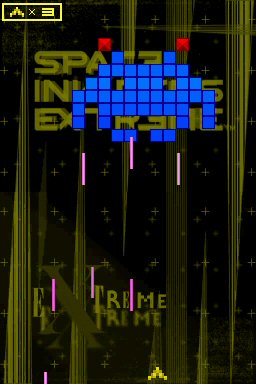 When Taito decided it would re-invent the Space Invaders formula I was skeptical. We were told in previews that the game would feature an upbeat techno soundtrack, plenty of screen tricks and explosions, dual screen integration on DS, and a hybrid between modern game mechanics and the original title. Just in case that sounds tempting to you, it’s almost verbatim what no gamer wants to hear when a beloved franchise is rebooting. Somehow Taito pulled it off and with no updates save for that fearful list Space Invaders Extreme was an addicting masterpiece. It released in a few forms on a few consoles but bar none the Nintendo DS version is the one to get. With non-linear level progression and utilization of dual screen to make the DS function more like a vertical arcade monitor, it’s like having Space Invaders on speed. Bonus rounds, boss battles, and power-ups were simple tweaks to the original formula that switched up gameplay without being a specific reason to play the game. Needless to say if you haven’t played Space Invaders Extreme, regardless of whether or not you’re a fan of the original, you should give this handheld game that’s easy to learn and brutal to master a try. It will keep you occupied for many a train, plane, or bus ride to come.
Perspective: Shin Megami Tensei: Persona 1 & 2 (PS1)

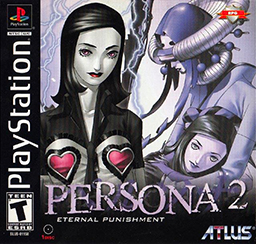

I’ve only just begun Persona 3 with about five hours under my belt, but already I can tell I’m going to like this game. It’s a massive hybrid of so many genres woven together in a nice JRPG shell that sucks you in and gets you hooked, fast – just one more day, am I right? I’m glad to see that, too, because having just completed both Shin Megami Tensei Persona and Persona 2 (both Innocent Sin and Eternal Punishment) I was beginning to fear I was missing something. That’s because by all accounts the first two installments in the Persona series (Persona 2 was split into two games and up until recently Innocent Sin was never technically available in the US) are a dated, rough ride through all of the confines and setbacks of traditional JRPGs along with a steep difficulty and very complex battle system to boot. From the start, both games are a daunting task and none of the remakes update the gameplay at all. In the end I only made it through with step-by-step instructions in a strategy guide, lots of patience, and a little luck. This is not what I signed on for and given the current landscape of this genre it appears that for most gamers the PS1 outings of Persona are caught between two amorphous worlds (much like the characters themselves) when the genre was drastically changing. After somewhere between 150-250 total hours to complete (there is no game clock, I’m completely guessing), a total of five different games, and an incredible hunger to extract the draw of the early iterations of the series I must issue a strong suggestion to bypass Persona’s roots and start with the third title, you’ll be thankful you did.
 Gaming History 101