Review: Castlevania II: Simon’s Quest (NES)
 Console: Nintendo Entertainment System (NES)
Released: 1988
Developer: Konami
Publisher: Konami
Famicom? Yes (as Dorakyura Tsu: Noroi no Fuin – English Translation: Dracula 2: The Seal of the Curse )
Instruction Manual: Not necessary – Link
Difficulty: Moderate
Played it as a child? Yes
Value: $4.80 (used) $195.00 (new) (pricecharting.com)
Price: $15-$20 (used) $400.00-$1,000 (new) on eBay
Digital Release? Yes – Virtual Console (NES version) – $5.00
What are you supposed to do?
Control Simon Belmont through an open world and collect the five scattered body parts of Dracula and a magical cross. Once all of these items have been discovered, Simon returns to Dracula’s castle and assembles the parts to fight and kill Dracula, who has put a curse on Belmont. Depending on how fast you can complete the game, you will be given one of three endings.
Review
 In Konami’s follow-up to Castlevania, the developer attempts to refine the game mechanics and make the sequel quite different from the original, as many NES games at the time were doing, with RPG elements. Simon Belmont can level up, purchase upgrades and weapons from townspeople, and freely explore an open world. The gameplay of fighting enemies remains mostly the same, however with the new open world format there is little direction as to where to go but blocked paths and out of reach ledges due to not having the right item streamlines it into a somewhat linear experience. In addition, day and night cycles keep the player on their toes as night time removes the safety of villages and doubles the strength of enemies. At face value the concept of this game was great, but there are some big issues that prevented us from enjoying it then and now.
Review: Castlevania (NES)
 Console: Nintendo Entertainment System (NES)
Released: 1987
Developer: Konami
Publisher: Konami
Famicom? Yes (as Akumajo Dorakyura)
Instruction Manual: Not necessary – Link
Difficulty: Hard
Played it as a child? Yes
Value: $12.87 (used) $55,000.00 (new) (pricecharting.com)
Price (eBay): $15-$20 (used) $1125.00 (new) NOTE: This copy is revision A and thus has a lower value.
Digital Release? Yes – Virtual Console (NES version) – $5.00
What Are You Supposed To Do?
This is a linear action platformer. Many attribute the Castlevania series as an RPG or action RPG, whereas aside from the second title in the series, it has never really been. With no real inventory to maintain and no story elements to speak of, this original title is all about jumping and killing enemies.
Review
Castlevania released early in the NES life cycle and for that time seemed to be the culmination of everything you would want in a video game. Hitting store shelves early summer of 1987, most NES gamers had either just gotten or were hoping to get the console in the near future and word was getting around that this was one of the pivotal titles to play. You control a hero, Simon Belmont, who has vowed to hunt Dracula in his own castle. In the game you encounter all types of horror staples such as bats, zombies, and Medusa heads all while tackling large scale boss battles with famous monsters like Frankenstein, the Mummy, and even Death himself (aka: the Grim Reaper). As a young boy, this sounded like the most amazing game in the world and I was even happier to find out it delivered on all fronts. Castlevania is a difficult and wild ride through a haunted castle of horrors that holds up even today, albeit at the cost of your sanity with the Dracula battle.

Feature: Castlevania Retrospective

Few titles that started life on the NES still exist today. Of those titles there are even fewer that weren’t developed by Nintendo. Konami is one of the few companies that has a list of titles like this, although many of them suffer from very few updates and recent iterations such as the Metal Gear (Solid) series and Gradius. Castlevania does not have this problem. In fact, it still seems to withstand the test of time and despite trying to reinvent itself so many times, celebrates at least mild success with each new iteration. As a gamer who got his first console, an NES, in 1988, I have literally grown up alongside the series and played most titles it has to offer. If you don’t know Castlevania or have never played a single game, this will hopefully explain why you need to.
Head to Head: Double Dragon
In many cases, games with the same name – and even the same game ported to various consoles – can be drastically different. This was especially true in the 8-bit era where plenty of popular arcade games were deemed too limited for a boxed release on consoles like the NES. Head to Head takes two particular games and explains the drastic difference between the two that often keep fans of each camp drastically divided. Aside from ports, you can also expect several other types of comparisons such as localization.

Double Dragon Arcade
VS
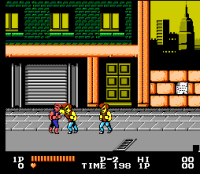
In 1987 Technos released a spiritual successor to its popular brawler Renegade (Nekketsu Kōha Kunio-kun) known as Double Dragon. It told the story of two brothers, Billy Lee and Jimmy Lee (Hammer and Spike in US arcades), who are fighting the mean streets of the Black Warriors turf to get back Billy’s girlfriend. It released first to arcades and eventually saw a port over to the NES, which drastically changed the game. Chances are if you are an American that played the game in your past, then you remember the NES version. Now that arcade ports of many games we loved on the NES are releasing on services like Xbox Live and Playstation Network, it’s important to know the drastic differences between the two because they are different games. Love ’em or hate ’em, here’s the Head to Head on Double Dragon.
Know This Developer: Radical Entertainment

It was announced on June 28, 2012, that after careful consideration Activision decided to disband most of Radical Entertainment (on a recent episode of Giant Bombcast it was discussed that the rumored remaining staff was 12) and basically close the studio. Granted, although the logo may appear on future games and thus be an argument to the fact that the studio is still open, Activision states that Radical remains a support studio with no ability to develop its own games. Cynics want to blame Activision for setting inappropriate goals for the Prototype developer and we all tend to believe that the remaining Radical staff will be assigned to a Call of Duty in the future, but that’s a different discussion for a different forum. Instead, I want to touch on how Radical Entertainment came to be and the games it has contributed to the industry.
Friday at the Movies: Street Fighter
Video games and movies, you would think the two would go hand-in-hand, but unfortunately given that the film medium is a passive experience and the gaming medium is an active experience, the hybrid of the two usually goes horribly (and laughably) wrong. This segment will be our weekly realm to appreciate the more “classic” medium of film. Of course, whenever possible I will review a “video game” movie.

It’s almost ironic to me that Jean-Claude Van Damme plays lead character Guile in this film because Mortal Kombat, direct competitor for the Street Fighter franchise, was originally supposed to be a Bloodsport video game. Despite that, and the fact that Mortal Kombat was also made into a film, Street Fighter released to American theaters on Christmas Eve in 1994 up against Dumb & Dumber and The Santa Clause. Director Steven E. de Souza was best known for penning action blockbusters like Die Hard and The Running Man as well as horribly written flops like Hudson Hawk. Street Fighter marked his most known directorial title (he also wrote the screenplay), which probably explains why he isn’t known as a director. In interviews de Souza explains that he did not want this movie to be a simple tournament full of fight scenes – side note: he stated that decision was due to the flop of Super Mario Bros. a year before and its apparent faithfulness to the game, which proves that Hollywood did not pay attention to video game details – and instead created an interesting international terrorist film. To its credit, the overarching plot isn’t bad, albeit quite overcomplicated and tries way too hard to integrate as many people fromSuper Street Fighter II as it can, not to mention Guile’s horrible lines. Despite being a worldwide commercial success (it made just under $100 million in combined worldwide theatrical release against its $35 million budget), the film was destroyed by critics and gamers alike for having slight nuances in both worlds but failing to implement either in a decent way. In fact, if it weren’t for all the praise to Raul Julia’s performance as M. Bison the film would have nothing positive for critics at the time to talk about.
Podcast: Emulation – Breaking the Law
This episode we have Derek from the Playground Podcast on to discuss the oh so controversial topic of video game emulation. Instead of describing what it is, which can be found here, we instead discuss our memories, stories, and wonderful benefits of a topic that has been shadowed by piracy.
Now & Then: American McGee’s Alice
Now & Then is a series where we dissect the culture of a specific series or genre or compare an influential game from the past and how it holds up today.
Then
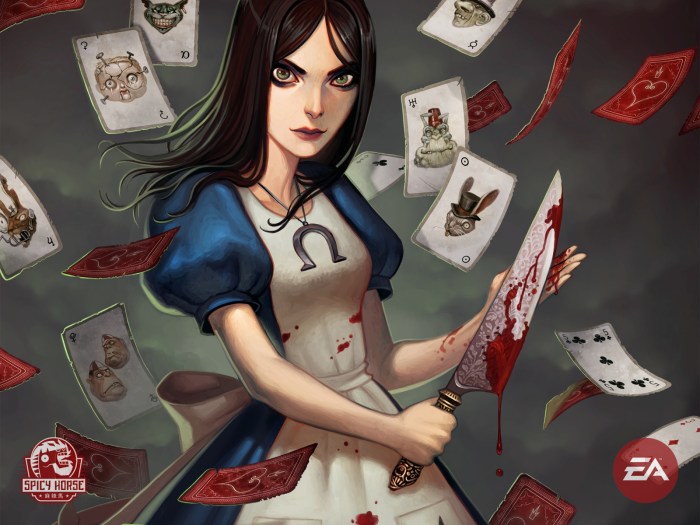
It’s a bit wierd that American McGee (yes, that’s his real name as far as I know) was given an opportunity to be a Creative Director on this ambitious project, even moreso as an early project with EA. He began his career at idworking mostly in level design for many of the first person shooter series that I grew up playing: Wolfenstein 3D, Doom, and Quake. He was fired from id for reasons not known and eventually ended up at Electronic Arts, where after a few sound design and writing projects he was given a large budget and the role of Creative Director for Alice. Why EA back then agreed to put his name as part of the title or allowed him to create such a vivid project (in the Quake III engine, for irony’s sake) is beyond me, but it was a solid and pivotal decision. American McGee’s Alice is one of the darkest, most twisted games I’ve ever played and takes the story begun by Lewis Carroll more than a century prior and turns it on its head. To be fair, Wonderland has never been a “normal” place, begot mostly of fantasy concepts and mind-altered states, but I never felt that violence, murder, and insanity were heavy themes. While the gameplay wasn’t spectacular even at the time, the imagery and graphics impressed gamers enough to sell more than 1.5 million copies.
Friday at the Movies: The Wizard
Video games and movies, you would think the two would go hand-in-hand, but unfortunately given that the film medium is a passive experience and the gaming medium is an active experience, the hybrid of the two usually goes horribly (and laughably) wrong. This segment will be our weekly realm to appreciate the more “classic” medium of film (thanks to the large number of hits my Prometheus review received). Of course, whenever possible I will review a “video game” movie.

This movie poster is exactly like the gaming magazines fo the time, busy as hell.
Oh, The Wizard, how I love you so despite what anyone tells me. Sure, it’s nothing more than a big commercial for Super Mario Bros. 3 and a blatant ripoff of Rain Man, but that doesn’t change the fact that I love this movie to death. Before the Internet, we gamers would soak up any and all forms of information on video games and due to the lack of content available to us (magazines cost money, you had to be registered for newsletters, and we couldn’t linger in the gaming area of Sears forever). I had a subscription to Nintendo Power and I knew that SMB3 would eventually grace our shores, but Japan got the game a whopping year and a half before us! As soon as they revealed that the game was going to be featured in the movie, it was an instant must see for my friends and I. It’s pretty hilarious too, because in the movie the big reveal is that the finals for the Nintendo World Championship would feature this game and everyone goes crazy given that it’s a never before played game. As an audience, we all knew the game would be in there and shredded through the first 90 minutes of exposition to get to that point. When Jimmy played those legendary first few levels of SMB3, though, the entire pathetic journey was well worth it. For fans of the film, how the hell does Haley know everything about this “unseen” game as Jimmy plays along, including what the flute does?
Feature: Remembering the Virtual Boy
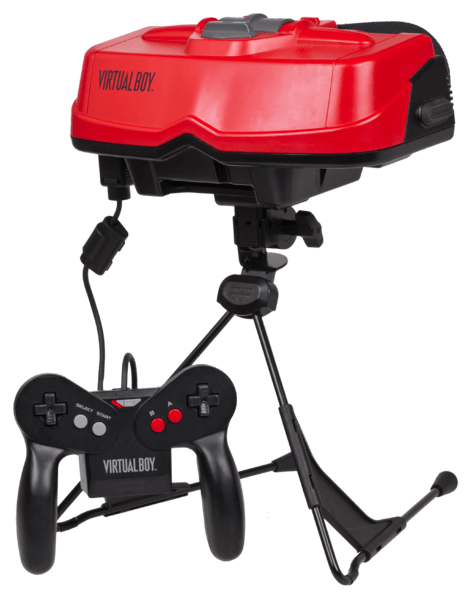
If you’ve been reading this site for a while you may remember my lesson sets on home consoles known as the “Generation Gap Series” or my portable series known as “Gaming To-Go“. In these two sets, only two consoles were unable to be categorized in either location: the 32x (which got its own feature as well) and the Virtual Boy. Why? Read on to find out.
 Gaming History 101