Now & Then: Mortal Kombat II (Midway)

Midway must have known it had a hit on its hands with the original Mortal Kombat because no time was wasted creating the sequel. While most of us anticipated the home release of the first title, Mortal Kombat II (MKII) snuck into arcades and blew our minds. This game literally had it all – more characters, more fatalities/finishing moves, and more violence. For most MK series fans, myself included, this is considered to be the best and it’s one of the highest grossing video games of all time.
MK Meets its Match
The original Mortal Kombat was an impressive fighter, especially for one that was developed with digitized actors in only 10 months, but creator Ed Boon wanted to do more. “[MKII] had everything we wanted to put in the original MK but didn’t have time for,” he said in an interview with EGM2 (issue 5, Nov. 1994). It does seem like there’s some truth to his claim, especially with the introduction of more stage fatalities, a second fatality for each character, and even joke finishers “friendships” and “babalities”. I’m not so sure the roster was an initial idea, nor was the background concepts of Outworld, but I can definitely see the Midway team wanting to break away from the perceived reality of the original. Not only was MKII the definitive version of the original concept, but it continues to be the template for which all other titles in the series are based on.
Podcast: The Final Countdown Pt. 1

Fred Rojas from Gaming History 101 and the B-Team podcast is joined by Josh “Colm” from the T4 show and Rob “Trees” from EZ Mode Unlocked to discuss the games in G4’s recent top 100 games of all times. We start by discussing some of our issues with the games in the list and then hit the ground running talking about our personal experiences with many of the great games on the countdown. Due to time constraints this first part covers games 100-60 with more to come in future weeks. Check it out!
Friday at the Movies: Prometheus Review
So technically this has nothing to do with video games, and in the past I tried to avoid off topic articles, but then I realized I own and maintain this site and can therefore do whatever I want. As a result, here’s a movie review!
 Not another prequel. That’s all I could think when I first heard of Prometheus, which started life as a prequel to the movie/series Alien. Don’t get me wrong, I love Alien and the series that followed, but prequels always exploit countless plot holes, look so much better than the originals that supposedly happened after said prequel, and origin stories such as this are doomed to disappoint. Fortunately, this isn’t as much a prequel as it is a separate story that crosses paths with the Alien series and holds its own when considered a standalone film. I need to be very clear when I say this because it seems few who went to the movie this weekend seem to understand it: this is not intended to be a prequel to Alien nor is it part of the Alien series despite having many obvious connections. In fact, this was a great sci-fi romp that is recommended for most film fans other than those seeking an Alien film.
Now & Then: Mortal Kombat (Midway)
Last week Mortal Kombat released for the Playstation Vita and while I was playing it for review I couldn’t help but notice that the series has not changed much since it first released. Normally this is a bad thing, but in the case of this series its strength relies on its simplicity. Mortal Kombat is a game all about beating the crap out of your opponent and then topping it all off with a finishing move that is extremely violent in nature.

First Impressions
I still remember the day that I saw the first Mortal Kombat arcade out in the wild. It was 1992, I was 10 and frequented the local roller rink where I could meet up with friends and play arcade games. Yeah, even in 1992 the roller rink was still alive and well in Chicago’s northern suburbs. At that time the arcade was dominated by Street Fighter II, a cartoon-like fighter from the geniuses at Capcom, but I wasn’t all that good at it and truthfully had little interest in fighters. That is, until I walked in and saw a new game that prominantly displayed the title “Mortal Kombat” in bright yellow letters. My first thought was how stupid it was that the word “combat” was misspelled, but then I noticed that the game used digitized realistic looking actors. Even more impressive was when the first uppercut made contact and a shower of blood erupted from the opponent’s face. I was intrigued.
Rayman 2: The Great Escape (Ubisoft)
Four years after the release of the original Rayman and plenty of celebrated success, Ubisoft released a sequel that changed the concept of the series entirely. Unlike the original cartoon-like platformer that was tough as nails, we were greeted with a dark, 3D rendered platformer. While the jump to 3D was hit or miss for various gaming staples, Rayman found a welcome home with Rayman 2: Great Escape, touted by many (myself included) as one of the best 3D platformers ever developed.
If I mention a cutesy 3D platformer that stars evil robots and pirates it would be hard to tell if I was talking about a Ratchet & Clank, Rayman, or even Conker because the idea is so recycled. While the plot may remain the same, that’s where the comparisons end. Instead of the aggressive worlds that had one goal – to kill you – of the original, we are now given fully rendered open environments that crave exploration. For the most part you are tasked with going from the beginning of any level to the end, but along the way you also collect the glowing lums from the original. For the lums that are on your path and along the way this is no big deal and it will surely get you to end of the game, but if you want to unlock everything you will have to find all 1,000 lums. That is where the game goes from a simple level-to-level game and becomes a test of platforming abilities and risky gameplay. It felt a lot like the convention we saw in Super Mario Galaxy, where the game can literally be as hard or as easy as you like, but back in 1999 this was a new concept. Rayman 2 is also much easier as a whole, which allows you to appreciate the game and environment instead of threatening to destroy your controller with every new turn. It’s just a fun ride with enough levels to secure a 6-10 hour campaign.

Is the Wii Really a Toy?
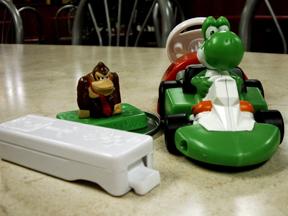
Yesterday it was announced by Beamdog’s co-founder Trent Oster that the anticipated Balder’s Gate: Enhanced Edition would not be making a trip to the Wii or Wii U. Some thought that because of Beamdog’s decent port of MDK2 on WiiWare that they might also bring the newest project to Nintendo’s next console. Oster went on a bit of a tweeting rant to Eurogamer that included the following statements: “We don’t do Nintendo development. Our previous experience with Nintendo was enough to ensure there will not be another.” Many assumed that this was in response to the experience Beamdog’s Overhaul Games had with MDK2 that was further backed by his continued statements: “My problems with Nintendo are: requiring 6000 unit sales before payment, a certification process that took 9 months and a 40 mb limit.” This is nothing new, Nintendo has historically been known to screw over 3rd party developers and include rules and business practices that net no risk to Nintendo while also reaping the benefits of successful titles. I may discuss that more in a future article but what struck me was Oster’s final statement, “[Wii] is a toy, not a console.”
Rayman (Ubisoft)
Rayman wants to be a strong classic platformer, and it’s really a shame that the steep difficulty curve will turn off even the most determined of contemporary gamers, because from an aesthetic and game design perspective this game should be appreciated. Alas Rayman has been ported to console after console and seen commercial success, but I wonder how many people have actually experienced most of what this title has to offer.
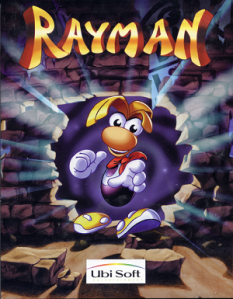
During the mid 90s there was no shortage of consoles – both the 16-bit generation and 32-bit generation were coming to be, not to mention CD consoles – and Rayman was caught right in the thick of it. Not only that, but thanks to Mario and Sonic, platformers were among the highest in popularity behind fighting games. The title began life as a brainchild of Ubisoft creative director Michel Ancel (who is also responsible for cult favorite Beyond Good & Evil) and the then struggling developer/publisher bet the house on his creation and won. Rayman started life on the Super NES as a two-player title based on various cultural fairy tales and eventually it was decided that the game would receive a cartoon makeover with better animation and subsequent move to the Playstation CD add-on for the SNES (read that story here). When Nintendo announced the cancellation of both the Playstation and Phillips CD projects Ubisoft wanted to move to the Jaguar thanks to its specs and eventually chose the Sony Playstation as the lead console. As you can see, the game was already bouncing from console to console.
Shmup Podcast
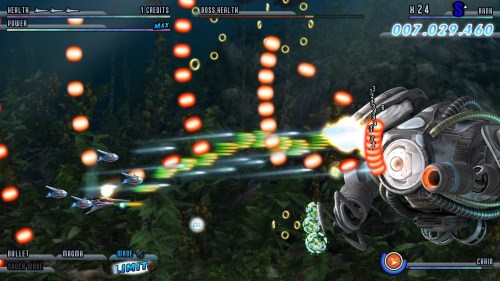
Derek from the Playground podcast joins us to talk about the wonderful world of the shoot ’em up (aka “shmup”) and the amazing games that owned his soul over the years.
April Fools: Best Video Game Industry Pranks
April Fools Day. This was probably my favorite holiday growing up because you could be truly cruel and no one would call you on it because you were still a young buck. Well, as much as we in the video game industry (this includes fans) try to fight the fact that our hobby is seen as child’s play, there’s no reason to believe we wouldn’t run with it. Here are some of the best (and most cruel) April Fools Day pranks played over the years (and yes, I’m aware they’re all EGM pranks, sue me):
1992 – Sheng Long
 It was probably the first or second year that Electronic Gaming Monthly (EGM) began doing the April Fools Pranks that they introduced the legendary character Sheng Long in Street Fighter II. The way it came about dealt with the English localization of the arcade game, which changed Ryu’s message after a win from “If you cannot overcome the Rising Dragon Punch you cannot win!” to “You must defeat Sheng Long to stand a chance!” See, Ryu’s Dragon Punch is “sheng long” in Chinese and the translators mistook the converted name of the attack for a person. Since Ryu was supposedly trained by a great karate master, we were to assume that was who Sheng Long was. Capcom even corrected the mistake in the SNES version, changing the phrase from “Sheng Long” to “Dragon Punch” but the instruction manual explained Sheng Long to be the master of Ken and Ryu. After that it was only one quick clever plan and EGM had people believing he could be unlocked! According to the article, you would have to beat all 11 fighters without taking a hit and get 9 draws against M. Bison and you could fight Sheng Long. Let this be a lesson, if it seems impossible, it is. It was even funnier when the April Fools Contest appeared just under the article. Ironically there is speculation that character Akuma was created based on the prank and Capcom has admitted that Gouken from Street Fighter IV is a spiritual version of Sheng Long.
Last Hope (NG:Dev.Team)
Under most circumstances, console games are licensed to be released on consoles (meaning the manufacturer sold the right to create a game on its console), however in the case of Last Hope, lead development console Neo Geo was completely out of print. Furthermore the game has seen much more success as a Dreamcast title, where it was more appropriately tweaked and cost a hell of a lot less than the 128 mb carts (basically a small arcade board) they originally produced the game on. This is often the case when a developer makes a game for a system long past its prime, we’ve also seen similar unlicensed titles from indie devs like the recent Genesis/Mega Drive release of Pier Solar. Last Hope is a surprisingly fun shmup in the vein of R-Type that really captures the feel of a classic 80s arcade game based almost purely on score. It’s even more significant that it was originally developed on the Neo Geo, a console fully capable of supporting large sprites in busy shmups but few developers created these types of games for.
To even touch the plot at this point is pretty stupid because you know the drill and can probably guess by the title alone: aliens invade and you are the last hope. What is impressive is that this shmup contains six levels, four difficulties, hand drawn backgrounds (this is a big part of my love for it) and I believe sprite-based ships and enemies. Furthermore the game runs at a silky smooth 60 frames per second, both the Neo Geo and Dreamcast versions are identical (including identical pixel-to-pixel count in 320×240) and all versions are region free (European players will need to support 60 hz on whatever display device they use). In short, it is programming a game with love for the console and game in mind, not profit.
 Gaming History 101