Now & Then: Resident Evil
Now & Then is different from both a retrospective and a review. It tackles games you probably already know and is a place for gamers to discuss these games. Below is an overview of a game’s presence in the market then and now. Authors of these articles share their personal experience, so we encourage all of you to do the same in the comments.

“You have once again entered the world of survival horror…”
Those famous words set up a genre that has undergone more definitions than probably any other in video games. Depending on your personal taste in titles, survival horror can mean different things but it was used first and defined by Resident Evil¹. This game was basically a haunted house brought to life and has spawned a series that many gamers, myself included, follow endlessly. Despite the direction of the series not holding well with fans of the originals and a slew of poorly made films, Resident Evil lingers on, if only in our nostalgic minds.
Generation Gap Pt. 2: 8-Bit
Amidst the video game crash of 1983, it seemed pretty unlikely that home consoles would have a future. Fortunately a Japanese toy maker had figured out how to re-sell video games to the masses despite the world economy turning its back. That company was Nintendo.
8-bit Generation (1985 – 1995)
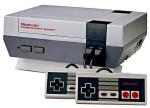
Nintendo Entertainment System – Launch Price: $200 – Released: 1985
Depending on your age, the Nintendo Entertainment System (NES) probably needs the least introduction or background, but there were many things going on behind the scenes that assisted this console in becoming the giant it was. Initially Nintendo had to figure out how to overcome the world economy’s opinion on video game consoles, which the Famicom/NES clearly was. In Japan, where personal home computers were all the rage, it was marketed as a computer for your family, hence the name Famicom (for “family computer”). In America the better way to sell it was as a toy, which everything from the console’s marketing to the simple boxy aesthetic suggests. It worked and in both regions this little 8-bit system assisted Nintendo in virtually running the 8-bit era.
Generation Gap Pt. 1
It’s difficult to understand and discern the various console generations that have existed, so here’s a brief overview of each one and the consoles that spawned in North America during these generations. Please note that these posts cover home consoles only (and goes into broad detail on specific larger market share, not every console that released) – while arcades and PCs were a signficant part of gaming in the respective 80s and 90s, they will be covered in different posts.
First Generation (1972 – 1983)
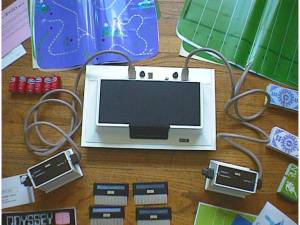
Magnavox Odyssey – Launch Price: $75-$100 (retail dependent) – Released: 1972
Designer Ralph Baer’s team started working on the console, codenamed “brown box”, in 1966 and completed a prototype in 1968. I wasn’t even remotely alive when the Odyssey was on the market, so my experience with the console is limited to a few brief and clumsy plays of Ski at various Midwest Gaming Classic conventions.
The Odyssey had interchangeable cartridges that were purchased individually, much like more modern consoles, and also included an overlay for the television. Since it was unable to generate graphics necessary for the games itself, it would instead use the TV overlay to create the playfield and dots or lines would be the only true visual created by the console. Each cartridge would trigger jumpers in the console to generate the desired images or items on the screen. Some games would also include dice and various other items, creating a virtual board game of sorts. One of the most popular among the Odyssey titles was of course Pong, which was actually named Tennis on the console. Unfamiliarity with a device of this sort and co-branding with Magnavox stores created a public perception that the Odyssey would only work with Magnavox televisions, which wasn’t true.
Revisionist History
March 16, 2010 was an important day for Playstation manufacturer and video game publisher Sony Computer Entertainment. It marked the release of God of War III, a technological stunner that promised to be every bit as fun as it was beautiful. Not only was God of War significant for being the third in the series (and subsequent end to the second title’s cliffhanger), but it was to be the first outing for Kratos on the Playstation 3 console. God of War II had been slated for the PS3 at one point in development, but Sony opted to keep the title on PS2, marking it as one of the best titles on that console and a fitting end to usher in the PS3. There was just one big problem.
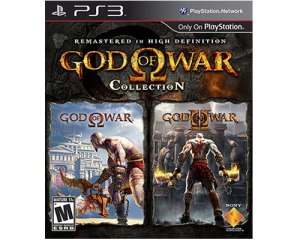
Starting in November, 2007, the Playstation 3 consoles had removed backwards compatibility with Playstation 2 titles, rendering them unable to play God of War or God of War II. When the decision was made to put God of War II on PS2, it was always thought that new PS3 buyers would be able to use this feature to replay the previous titles. In an era where storylines are significant and a series like God of War required you to know the storyline of the previous titles to understand the current one, Sony was in trouble. Fortunately a long rumored concept ended up coming to pass – a high definition remake of the first two games on one PS3 compatible blu ray, and at half the price of a contemporary release. In November of 2009 the God of War Collection was released to masses, an impressive appetizer to the third iteration, which still loomed more than four months away. Not only that, but it was a great deal, amassing an impressive 1 million+ sales to date and a solid holiday season. Not bad for two titles that had released a generation ago. At $30 apiece gamers (myself included) ate it up and IGN’s Chris Roper even declared it the “definitive way to play the game” (guessing he meant games) in his review.
Strength in Numbers
Anniversaries. As time progresses everything ages at the same pace and with each passing year a ton of video games hit new milestones. Popular titles from the past can be revisited in short periods of time for the sake of nostalgia or the chance to finally complete a difficult game for the first time¹. Since no one day can go by without something in the video game industry reaching a notable age, it’s no surprise that retro articles are riddled with regular anniversary celebrations. This site will be no exception.
 Gaming companies have now begun to celebrate series anniversaries themselves on a more consistent basis. In some cases I feel these creations are warranted, but I find myself frowning a bit when it’s a last-ditch effort to revitalize an intellectual property that should have died off long ago. I think the better anniversary is the for titles that stand on their own and you rarely think about until they are brought up. A perfect example of this is Chrono Trigger. Despite a few remakes and Square’s occasional interest in bringing attention to the title, it’s mostly one for the nostalgia vault. Thankfully, unlike so many other titles, Chrono Trigger holds up today and stands as an individual game even though it technically has two other entries in the series². Oddly enough, even though the game celebrated 15 years in 2010, it received a GBA port on its 13th birthday and didn’t come to virtual console and PSN until this year (its 16th anniversary). This only further proves that incremental numbers aren’t always on a publisher’s top priority list.
 Gaming History 101