Archive for the ‘Reviews’ Category
Clock Tower: The First Fear Gets Fan Translation
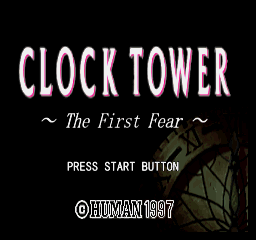
A fan translation of the enhanced PS1 port of Clock Tower, known as Clock Tower: The First Fear and only released in Japan, has been released in a patch from user “arcraith” on romhacking.net.
I don’t know if you’re as big a fan of Clock Tower as I am, but unlike the 3D installments that existed on the Playstation 1 and 2 in the US my big draw is the original released on Super Famicom (SNES) and only in Japan. What sticks out about this title is that unlike the sequels it’s a 2D point-and-click adventure that has lots of scares, intense moments, and violence. This makes it somewhat of a successful version of what games like Phantasmagoria were hoping to accomplish. A fan translation of that version is available if you’re interested, but there was a Playstation re-release that had enhanced graphics, new scenes, and – my personal favorite – FMV sequences added in. Unfortunately just like its original Super Famicom release, this was the only game in the series not to make it to the west yet again (probably due to the translation/localization cost). Thanks to a new English localization, you can easily patch an ISO to play the game localized, in English. If you missed it, the link for that is in the opening sentence of this post. Hopefully this works well on a modded console and I can enjoy this game on real hardware, otherwise I will most likely stick to my flash cart translated version on the SNES, but it’s a great game that everyone should play. Perhaps it would make a good game club?
May the Fourth Be With You: Super Empire Strikes Back (SNES)
Here it is, the challenge that spawned from Fred’s mystery game 3-pack in March. It was brutal, it was frustrating, it was on easy…but Fred has beaten Super Empire Strikes Back and what better time to reveal the video but May the Fourth. Enjoy.
Dance Central 3 Review
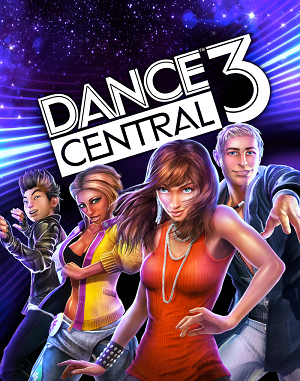 Platform: Xbox 360
Released: 2012
Developer: Harmonix
Publisher: Harmonix
Digital Release? Yes, Xbox Live ($29.99)
Value: $11.99 (disc only), $14.00 (complete), $14.99 (sealed, retail price)
Dance Central is one of the few reasons people actually wanted to pick up a Kinect for their 360. Harmonix really brought a unique dance experience to the table that felt like it was just made for the Kinect motion sensor. Finally a game where you could literally dance like a loon in front of your game console and not have to worry about dance mats or plastic instrument peripherals. It was just you and the music. I have only briefly played the original Dance Central game which I actually kind of enjoyed so there was this part of me that was keen to see how the series had developed in Dance Central 3.
 One of the biggest jokes I used to make about the Kinect was how you could only blame yourself for being bad in Kinect games because of the “you are the controller” slogan Microsoft used to advertise. Dance Central has you attempt to mirror the dance moves from the avatar on screen who performs the dance moves perfectly. Cue cards on the side of the screen will display how the Kinect is detecting you as well as what arm leg movements your supposed to perform to get the dance move down. If your jumping into this game you may find this quite tricky as the game moves quite fast and it can be quite hard to keep up. The kinect essentially detects the movements you make and if they match that of the cue cards you score more points and rack up chain combos (like Guitar Hero or Rock Band). I actually found it quite stressful trying to follow the cue cards and actually enjoyed the game a lot more following the cartoon styled avatar. This of course usually lead me to getting a terrible score at the end but I had more fun. This really is a game that if you want to go into it to score points you need to invest time into it, learn the dance moves and keep playing the songs over and over again to get it right. However, if you don’t care about score and you just want to jump in front of a Kinect and look stupid then you can absolutely have a ton of fun by just jumping into this game. With the Kinect not being completely accurate at detecting movement its likely this will also lead to frustration if your trying to score more points and match the moves perfectly.
NHL 2002 Quick Look
Of Fred’s 3 random games he has to cover this month, one was a sports game that apparently was the best hockey game on the PS2. NHL 2002, developed and published by EA, touts funny announcers, crazy gameplay mechanics, and some of the smoothest action for the generation. Fred gives it an initial go and if nothing else, exploits the unbalanced nature of the AI on both sides of the difficulty spectrum. More coverage and a review to follow, but here’s the initial 30 minutes and it ends with a Sum41 song, woo hoo game license cross-promotion!
Bust-A-Move 2 Arcade Edition Review
 Platform: Arcade, Playstation, Saturn, N64, Gameboy
Released: 1996-1998
Developer: Taito/Probe
Publisher: Taito/Acclaim
Digital Release? Yes, but only on the Japanese PSN (of PS1 version)
Value: $3.50-$10 (disc/cart only – all platforms), $7-$15 (complete, all but N64)/$25 (complete N64), $30-$40 (sealed)
Bust a Move 2 Arcade Edition was a popular title released on the Sony Playstation, Sega Saturn and N64. While the concentration of these systems was to move gaming into 3D, Bust a Move was a game that kept its feet firmly in the 2D realm, and it still does to this day. All versions are ports of the very popular arcade game and all versions are arguably fantastic ports, bringing that vintage arcade experience home. For this review I’ll specifically be covering the Playstation version.
 I have always enjoyed the Bust a Move series. I have played the majority of the entries on home consoles and arcades. The most memorable game from my younger days was Bust a Move 2. This was literally in every arcade in my area. It ran on Taito’s F3 hardware and could be found in dedicated arcade cabinets and later the Neo Geo cabinets which were becoming increasingly popular. Bust a Move 2 was one of those arcade game where I would literally watch the demo screen over and over again even after I ran out of money to sink into the cabinet. There was something rather hypnotic about watching, maybe because I have always had a fascination with arcade puzzle titles, or maybe its because I’m a utter fan boy for Taito games, especially the Bubble Bobble games of which this series is a spin off from.
Podcast: Rocket Knight Adventures Game Club

Rocket Knight Adventures came out during the apex of Genesis/Mega Drive game design. Developed by Konami with roots in the Contra franchise, this cute possum with armor and a jet pack was a charming action platformer. Unfortunately given main character Sparkster’s mascot status and the trends on consoles at the time, this is probably one of the best games you’ve never played. Join Fred and Jam on a journey through a true Sega classic.
Rocket Knight Adventures Review
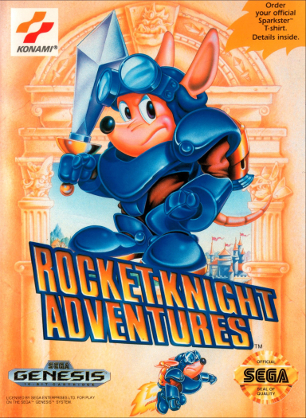
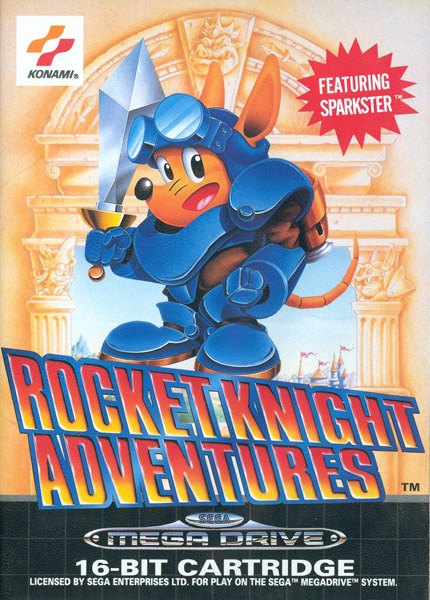 Platform: Sega Genesis/Mega Drive
Released: 1993
Developer: Konami
Publisher: Konami
Digital Release? No
Other Games in the Series: Sparkster: Rocket Knight Adventures 2 (Genesis/Mega Drive), Sparkster (SNES – yes, it’s a different game), Rocket Knight Adventures (2010 – technically a sequel to Rocket Knight Adventures 2)
Value: $13.51 (cart only), $29.99 (complete), $78.00 (sealed) – per Price Charting
Jam’s Take
Rocket Knight Adventures is one of those games that you’ve probably heard of but never played. Those that did play it generally spoke very highly of the experience and I found most other people say, “yeah, I really need to get round to trying that.” Now I personally have a lot of nostalgia for this game. This was one of the very few games I received for my birthday that was to my knowledge brand new. But more importantly a game for me and not my brothers. I had no idea what to expect when I unwrapped this game. But I immediately popped the game into my Mega Drive, heard that sweet Konami tune and lets just say things just got better and better from there. Now this is our game club for April and its time to revisit and see if it’s just as great as I remember or if it was one of those titles that looked better through my younger gamer eyes.
Finding the Diamond in the Rough: Sega Master System

Now for a game console that’s relatively rare and worth some money itself in this country. In fact, most of the games on this list are worth less than a complete copy of the console itself. If you don’t have a heavy collection, have a power base converter, or even own a Game Gear, you may want to consider moving this product to collectors for some extra cash. That said, if you live in Europe, there is a massive library of available titles for this great system.
Mini Podcast: Bust-A-Move 2

This month we have been tasked with covering three games and Jam was the first into the gate with his Playstation 1 reflection of Bust-A-Move 2. The follow-up to the original game, better known as Puzzle Bobble in arcades, this was one of the many instances where home console ports began to catch up with and properly port over the arcade experience. Jam and his special guest delve into their reflections on this classic cooperative puzzle game.
Finding the Diamond in the Rough: NES
We’ve had quite a few articles about game collecting lately, most notably the process of how to find and get games from various locations with little to no issues. One thing that was not as highly discussed is knowing how much items are worth/cost, especially because games’ values vary depending on re-releases and upcoming releases. At the Midwest Gaming Classic 2015 I got to see first hand how that works and factors you may have never imagined can jack up the value of random items. For example, Legend of Zelda: Ocarina of Time on the 3DS was readily available when the game launched in 2011 at the retail price of $39.99. These days it’s worth quite a bit more at $50 for a loose cart and $65 complete – I’ll get to these price trends in a sec – due to the fact, according to many of the booth vendors I spoke to, that in January of this year the carts became extremely rare on store shelves and it spiked a bit more when the Zelda Wii U delay was announced. Looks like Nintendo decided to go more digital as the game can be easily purchased on the eShop for MSRP, but if you’re a tangible collector that game has outlived its apparent welcome. Also it appears that gamers have begun to want that game back in their collections because of the delay of the Wii U title so they have something to be all nostalgic about until that game finally arrives. These are things I neither knew about nor cared about, but they are important. A while back I wrote an article on knowing the difference between different games and what games fetch high value, well today I decided to get a little more specific and show you some of the coveted titles that fetch a large sum of money on retro consoles. Keep in mind this was written in April 2015 and a lot can happen with each passing day as of the writing of this article. Please keep in mind all prices are based on Price Charting, a US-based price guide that compares eBay, Amazon, and third party sites for what games actually sell for as opposed to what they are listed for.
Note: Due to the size this article has become, I’ve broken it up into several articles that will go live throughout the rest of the week. I will also feature each article under its appropriate console(s) for easier access. So lets kick this off with the Nintendo Entertainment System (NES):
 Gaming History 101