Archive for the ‘Reviews’ Category
Retro Game Night: Sonic Xtreme and Sonic Blast
This week we play the two 3D Sonic titles most of you have never touched. First up is the unreleased demo of Chris Coffin’s late in the development cycle version of Sonic Xtreme as discussed on this week’s podcast:
And next is the Brazilian Master System port of the Game Gear’s final Sonic title, Sonic Blast, which utilized much of the same technology as Donkey Kong Country:
Review: 9 Hours, 9 Persons, 9 Doors (DS)
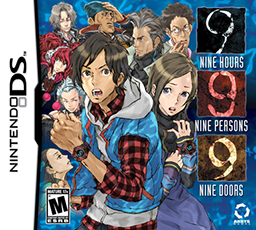 Also Known As: Kyokugen Dasshutsu (Extreme Escape in English, later re-branded to Zero Escape)Release Date: 11/16/2010
Developer: Chunsoft
Publisher: Arksys Games (US), Spike (Japan)
Value: $17.50 (used – pricecharting.com), $19.74 (new – Amazon.com)
Similar Games: Sweet Home (Faimcom), Clock Tower series (SNES-PS2), S.O.S. (SNES), Corpse Party (PSP)
 9 Hours, 9 Persons, 9 Doors (999) is one of those games you’ve always been told to play, but many haven’t pulled the trigger. Upon the release of the sequel, Zero Escape: Virtue’s Last Reward, that premiered late 2012 this title has been re-branded as the predecessor and seen a bit more love. That still doesn’t change the fact that few have experienced this hybrid between classic point-and-click adventure puzzles and Choose Your Own Adventure storytelling. It’s a very Japanese concept that may not capture many, but those willing to put in the time and effort will find an intriguing mature form of an interactive book. Yes, you read that right, 999 is basically an interactive work of fiction.
This is probably the biggest hurdle to getting into 999, after that just sit back and enjoy the ride. You play as Junpei, a young man who awakens on a ship that is sinking and must assist 8 other people to get through a total of 9 doors in 9 hours (see the title significance) in the “Nonary Game” set up by a gas masked kidnapper known only as Zero. Along the way you will see death, betrayal, and plenty of twists concluding in one of six endings – 5 bad, one good. Bring a pen and paper, you’ll need it, and an FAQ upon completing a few endings, it’s a complicated ride to the perfect end. After the tens of hours to get through the entire adventure, the unfolded plot impressed a novel reader like myself quite a bit. If you have 20-30 mins a day for portable gaming, this is a new take on two classic genres of storytelling, and worth it for those that find that kind of thing intriguing.

Score: 4/5 (see our review policy for what each score means)
Due to the title’s late release only a few years ago, there is currently no historical significance to date. It was reviewed due to its classic style and was purchased by the reviewer.
Podcast: Xtreme – The Story of Sonic (Part 2)
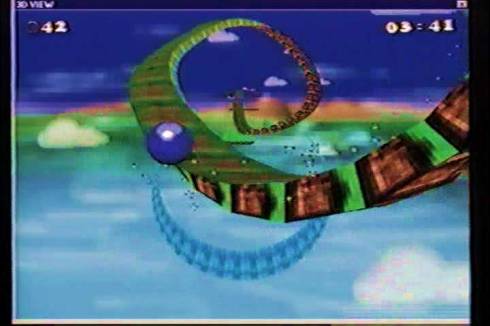
Screen capture from Sonic Xtreme
This week Fred is teamed up again by Andy (@damien14273) and Ali (@thealmiesta) of the 42 Level One podcast (@42levelone) to discuss the second and final part of the history of Sonic the Hedgehog. For the second part we cover Sonic’s 3D outings including the sordid tale of Sonic Xtreme (and its many other project names and iterations) as well as all other 3D Sonic titles up to 2006 (Sonic the Hedgehog on 360/PS3/PC). Although it ends badly, trust us, it’s a great ride.
Opening Song – Living in the City from Sonic R (Saturn)
Closing Song – Sonic X Theme from Sonic X cartoon show
Gaming Coverage and Review Policy
Greetings retro gamers and readers of Gaming History 101,
Normally I do not find the following information necessary or standard, but the fact of the matter is that the world of video game coverage has changed. With most of my written reviews, articles, and stories there is a small amount of traffic that aggregates to the wonderful number of views this site receives everyday and I have no one to thank but all of you. Breaking it down, each video receives about double to triple the views and article would receive and the podcast blows all of them away by literally hundreds of times. At this point I cannot ignore the data, nor would I ever fight it, and concede that audio is the most popular medium for retro, followed by some following for video, and lastly with written. It then occurred to me that perhaps the volume of coverage I put into each game far surpasses the interest of most of you readers and, in truth, probably surpasses the volume I care to read in articles myself. For this reason I have decided to alter written coverage in the following ways:
Retro Game Night: Fatal Labyrinth and Call of Cthulhu Dark Descent
In what is easily the two hardest game titles to spell, we are going dark for this week’s Retro Game Night.
First up is user @NeoJakeMcC requesting one of the first ever rogue-likes from the Genesis/Mega Drive: Fatal Labyrinth.
Next up is the relatively rare hybrid between survival horror, first-person shooter, and adventure: Call of Cthulhu Dark Descent.
Retro Game Night: Sonic the Hedgehog, 8-bit Edition
This week in honor of our Sonic podcast, I’m playing the 8-bit (Master System/Game Gear) outings of Sega’s mascot. If you’ve never seen them before, they are drastically different than the 16-bit versions.
First up is the original Sonic the Hedgehog:
Next is, obviously Sonic 2:
And finally, Sonic Chaos (Sonic & Tails in Japan), which was to be the 8-bit companion to Sonic 3 had it not been delayed:
Review: Final Fantasy Adventure (Gameboy)
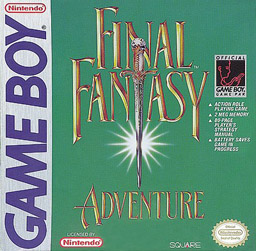 Console: Gameboy
Released: 1991 (1993 in Europe)
Developer: Square
Publisher: Square/Sunsoft
Instruction Manual: Link for manual, link for map (both helpful)
Difficulty: Moderate
Played as a child? No
Value: $14.49 (used), $77.49 (new) on pricecharting.com
Also Known As: Mystic Quest (Europe), Seiken Densetsu: Final Fantasy Gaiden (Japan), Sword of Mana (GBA)
Digital Release? No
To fully understand the mystery and headaches surrounding Final Fantasy Adventure, you must first understand the massive differences between the names, although not the content, around the world. Times have changed and these days for uniformity (and the much more widespread import scene) most games retain their original title or some semblance of it. Square in particular was very forward thinking in terms of translation and localization, which resulted in games being renamed and more properly translated in different regions. Enter the portable debacle with the Final Fantasy name. On Gameboy there was a single title named Final Fantasy Adventure, this title, and another trilogy called Final Fantasy Legend (I, II, and III); Adventure is in fact the first entry into the Mana series (known as Secret of Mana Zero for a while and now officially renamed to Sword of Mana) and Legend is better known as the SaGa series, which has continued like Mana outside of portables. Legend wasn’t very widely regarded, SaGa has always been a bit of a so-so series, because it didn’t do anything new and was a simplified RPG by all accounts. Final Fantasy Adventure was a bit more interesting because it took the RPG-like elements of a Final Fantasy (the term “gaiden” in Japan relates to a “side story” so the title is fitting over there) and combines it with the action/map/exploring elements of Legend of Zelda. In short, it’s a hybrid of the most popular RPG and adventure titles on the NES now moved to the portable. It was popular then, too, spawning a long running series and the sequel, Secret of Mana, is an SNES favorite to most gamers.
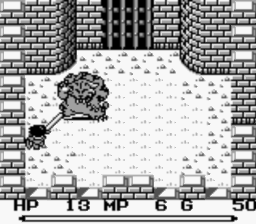 Final Fantasy Legend involves a story about a boy, you name him, and a girl, also named by you, that are brother and sister. Bound by an interesting connection with the Mana Tree, the adventure begins with an evil presence named, get this, the Dark Lord, and his plans to destroy the world. In order to prevent it, our duo sets out on a quest to eliminate him. You will journey to many towns, meet plenty of people that will either help or inform you, and of course at some point the girl gets kidnapped by a man named Julius, the Dark Lord’s advisor. This is just a simplified version of the first third of an adventure that spans tens of hours, a time hard to pin down because like Legend of Zelda your progress depends on how fast you can navigate the map and know what to do next. Trust me, print up the map in the link above and bring a FAQ with you – there are a few moments where you can get stuck unable to beat the game.
Podcast: Blast Processing – The Story of Sonic

This week Fred is joined by Ali (@thealmiesta) and Andy (@damien14273) from the 42 Level One podcast to discuss Sonic the Hedgehog. With a heavily documented history, Sega’s official mascot to combat Mario had quite the history. In part 1 we discuss the origins of Sonic and all of his 16-bit era outings (which include his 8-bit Master System/Game Gear titles, spin-offs, and his CD outing), complete with the games themselves and the stories of development. While long, there’s no lack of content or stories tethered with the beloved hedgehog.
Opening Song – Sonic Theme (from Sonic the Hedgehog on Genesis/Mega Drive)
Closing Song – Sonic Boom (from Sonic CD on Sega CD/Mega CD)
Retro Game Night: Adventures of Lolo and Joe & Mac
This week’s retro game night had two requested classics:
First up is the puzzle platformer from Kirby developer HAL Laboratories (also where Nintendo CEO Iwata got his start) entitled Adventures of Lolo. This title predates Kirby’s Adventure by a few years, but the basic concept of his design are very apparent (Lolo and girlfriend Lala are also enemies in a Kirby title). Requested way back when in our forums by IzzleMoxle, here’s an NES classic:
Immediately following is our second title, the action platformer Joe & Mac (sometimes with the subtitle Caveman Ninjas) on the SNES. As a near launch title, this is one of many arcade ports that showed off Nintendo’s 16-bit console’s big impressive sprites while somewhat showing off its impressive Sony sound chip. I remember dumping hours into what is a moderately difficult, but wonderfully addictive game:
If you would like to see a classic game played for retro game night or beaten for our occasional retro game challenges, just hit me up in the contact section.
Retro Game Night: Expendable and Street Fighter The Movie: The Game
This week’s double dose comes from our 9/9/99 podcast and Twitter user @UselessBug. During that podcast I purchased a Dreamcast launch game, Expendable, that looked like a 3D violent Smash TV, check out the video to see if that’s what it actually is.
And the second game came from one of our readers/listeners that requested Street Fighter The Movie: The Game based on the glorious movie of, well, another game. He challenged me to complete it, but he failed to mention a large catch in the game’s design. Can I do it?
 Gaming History 101