Archive for the ‘PS2’ Category
Retro Game Night: RE Gun Survivor 2 and Michigan
For this week’s video and Retro Game Night we are playing requested titles Biohazard (Resident Evil) Gun Survivor 2 (Japanese Version) and Michigan: Report from Hell (European English Version). Both titles only released in Japan and Europe so here they are in all your viewing glory. Michigan is a complete let’s play series. Due to language and violence both of the games and the commentary, viewer discretion is advised.
First Timers: Shinobi (PS2)
Per a request by listener Yuri (@JamesFortengard), Fred plays the Playstation 2 title Shinobi. In First Timers we play a movie for roughly 30-60 minutes and decide whether or not we want to continue. This opinion can be approved or vetoed by the audience with comments here or on the video as well as thumbs up on YouTube or likes on this article.
Podcast: You Are Go For Launch

This week we are joined by Chip Cella (@CaptinChaos) to discuss listener William’s topic: What makes a successful console launch? It all ends up being more stories of console launches and discussions on killer apps, but we do manage to cover most mainstream consoles.
Killzone: Getting Caught Up With the Story
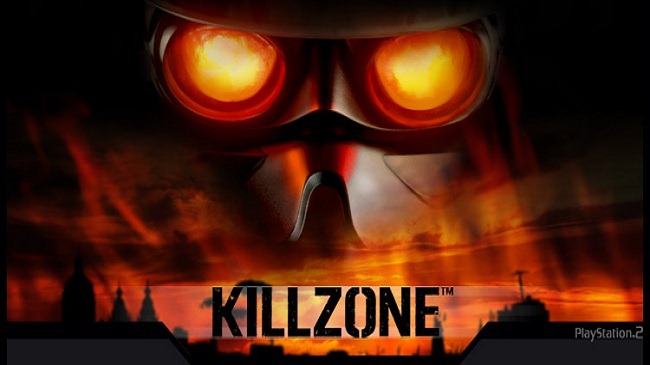
Normally we solely talk retro on this blog but with the upcoming PS4 I just can’t help but get everyone acquainted with the story of Killzone. While I’ve been a hardcore fan since the second game (I played the original but didn’t much care for it), most people managed to skip the series due to its long development delays, similar aesthetic to other shooters of the time, and much better marketed titles from both Sony internal (Resistance 2) and competitor Microsoft (Gears of War 2). It really is a shame because Killzone 2 is quite distinct from other shooters of the generation, but I will get into that later in the article. The focus of this is to get you caught up with the story and elements of each game in the series, so that you can jump into the latest iteration, Shadow Fall, at the PS4 launch without having to worry about everything that came before it. Given that Killzone covers three console generations now (PS2-PS4) and almost 10 years, it’s got quite a lineage for a series with three main titles and two portable side stories. Unlike most game franchises, the Killzone series stays mostly progressive with story and each new iteration directly follows its predecessor in the timelineso Shadow Fall takes place at the tail end of the current franchise. I have each game listed below along with a story synopsis and notable gameplay elements and updates to each in the order they take place in the Killzone universe. Without further ado, I give you the Killzone story so far:
Podcast: Legends of Rayman

This week Fred is joined by Chip Cella of the B-Team Podcast to discuss one of the few colorful platformers born completely from the 3D generation, despite the first game playing on a 2D plain. Ubisoft’s Michel Ansel all but saved the then struggling developer/publisher and gave way to a challenging but fun series starring a character with no limbs.
Opening Song – Rayman Theme from the original Rayman on PS1
Closing Song – Madder by Groove Armada (Fred incorrectly refers to this song as Hoodlum in the show)
Review: Persona 3 (PS2)
 While it has celebrated decades of success in Japan, the Shin Megami Tensei series didn’t even come to America until Persona on the original Playstation. It wasn’t rebranded with the classic Shin Megami Tensei prefix until the release and mainstream love for Persona 3 and I can see why. If you read back to my Persona 1 & 2 review you will see that while I dug the direction it was going, I had major issues with both games that made the 50+ hour slogs through the campaigns less than enjoyable. All of these issues are addressed in Persona 3 without letting go of the core that got gamers interested in the first place. If you are a fan of JRPGs or have never played an epic dungeon-crawling quest, you should seriously consider giving Persona 3 a play because its modern setting, streamlined battle system, and socially integrated plotline will keep you playing for tens (if not hundreds) of hours.
The basic setup in Persona 3 is that you are a male (you have a female option as well in P3: FES and P3 Portable) second year high school student (think Junior in US terms) in Japan that has just transferred to a new school. As a student to a private academy, there are some differences to the public system: the only day off is Sunday, you wear a uniform, and students live in unisex dorms. Due to overcrowding, your character moves into an available dorm that is temporarily coed. It turns out that all of this dorm’s students have one thing in common: they are able to summon beings from within them named “personas”. These personas are capable of both physical and magical powers and are an extension of the individual controlling them. You also learn that each night at midnight an alternative realm known as “the dark hour” takes over the world and certain beings are allowed to roam freely while the rest of us reside in coffin-like structures, removed from this realm. Naturally persona users are one of the beings that can roam as are evil beings known as “shadows” that take on different forms. The goal of the shadows is to end the world and the persona users are rallied to prevent this. Wouldn’t you know, the main tower/source of evil is none other than the school, which transforms into a tall castle called Tartarus at night. Quite the setup, isn’t it?

Podcast: It’s Pronounced La-Ra

This week Fred and Trees are talking about the Tomb Raider series and its busty protagonist Lara Croft that shadowed the video game as a pop culture icon in the late 1990s. We discuss development, creation, and production of both Core and recent Crystal Dynamics’ vision for Lara and her many adventures.
Getting It Backwards
 Video game consoles are one of the most interesting electronics items on the market for several reasons. Probably the most prolific is the fact that there are frequent hardware upgrades, which we call generations, that move home consoles forward. Because each new console is basically a piece of hardware frozen in time, the need to innovate and improve on future games demands that they be constantly updated. This works counter to movies or music, which see improvements from new hardware but don’t require the upgrade to enjoy the medium. Imagine if you could play Super Mario Bros. on the Wii but with drastically upgraded visuals or Dead Space on the original Playstation with the juxtaposed setback, this is exactly what we see when we watch Ghostbusters on VHS versus DVD versus Blu Ray. As a result new consoles come out all the time, typically in 5-8 year intervals, and usher in a more interactive experience – it’s important to note that the greatest difference between games and other media is that they are active, not passive experiences – and with it comes a new format for software.
Enter the concern of the consumer. It can be frustrating for both gamers and parents of gamers alike to purchase a new console, especially when it renders an entire collection on an older console useless. As retro gamers I’m sure we see the value in it, but for the majority there’s a want to move forward and never look back. Well, that is until there are enough new games to get me to migrate over. This is another slow start that prevents all but early adopters to purchase new hardware, which can then result in fewer sales. With fewer sales comes more canceled projects on new hardware, which then results in fewer sales of the hardware and the cycle continues until a console is considered dead in the water. Just look at the Virtual Boy, Jaguar, and possibly even the WiiU about this problem; developers have enough to worry about, they can’t also deal with poor penetration rate due to a false start console. One excellent solution to help usher in that awkward period between consoles is the concept of backwards compatibility, or a new console that can play a previous generation’s games.
Operation Wolf (Arcade)
 Console: Arcade
Released: 1987
Developer: Taito
Publisher: Taito
Ports: NES (1989), Sega Master System (1990), DOS (1991), PC-Engine (Japan Only, 1992), Microcomputers (varies), PS2 (in Taito Legends, arcade version), Xbox (in Taito Legends, arcade version)
Digital Release? Yes – NES Version on Virtual Console (no light gun support, see below)
Operation Wolf is a game I can’t help but associate with Pizza Hut. Taito’s introduction and unique take on the light gun shooter flooded the American franchise so much in the late 80s that I can think of no other place I’ve actually played the game. Of course being a pizza franchise and not an arcade the difficulty was always cranked to the highest and I swear they timed the machine to play approximately half the time it took to cook a pizza so that families with two kids would each play one credit before the food was ready. This title brought more realism to the light gun shooter as you play a member of special forces diving behind enemy lines in Cuba to extract five hostages. Aside from the realistic violence of invading and destroying enemy encampments, this was the first light gun shooter to feature a plot and natural progression as well as a moving, scrolling stage instead of a fixed location. Did I mention it was addicting too?
 Mind you, we are still back in 1987, where arcade games were more about providing a specialized challenge with amazing graphics instead of explicitly drinking as many quarters as you’ll offer. The cabinet had a large mounted Uzi machine gun that could only swivel slightly with forced feedback to emulate gunfire kickback, pretty nifty for games of that time. At first glance it seems like a spray & pray title, but as you run out of ammo, die, and get captured you begin to realize you might need a slight bit of strategy. If you die, even if you have another quarter in the machine, you will still need to complete the current level from scratch (although you will now have full ammo and life). Innocent people are thrown into the mix, which you should not shoot, and animals, which you should shoot, for bonus items. Early on there’s not much penalty (as I prove in the video below) for blasting civilians or missing a vulture flying overhead, but by the final levels your screen will have a literal 50/50 spread of civilians and enemies with these animals being mostly your only source of ammo and power. I only do one playthrough in the video, but in truth I replayed this game for a couple of hours of fun. Unlike other light gun shooters before it, this game was less about accuracy and more used the gun as a placeholder for an invisible reticule. This is why most home ports and conversions don’t suffer from controller porting and in truth this type of game has proven to be just as effective, if not more so, with a reticule and controller as opposed to a light gun (which I cover in the home ports below).
For the Love of the Light Gun
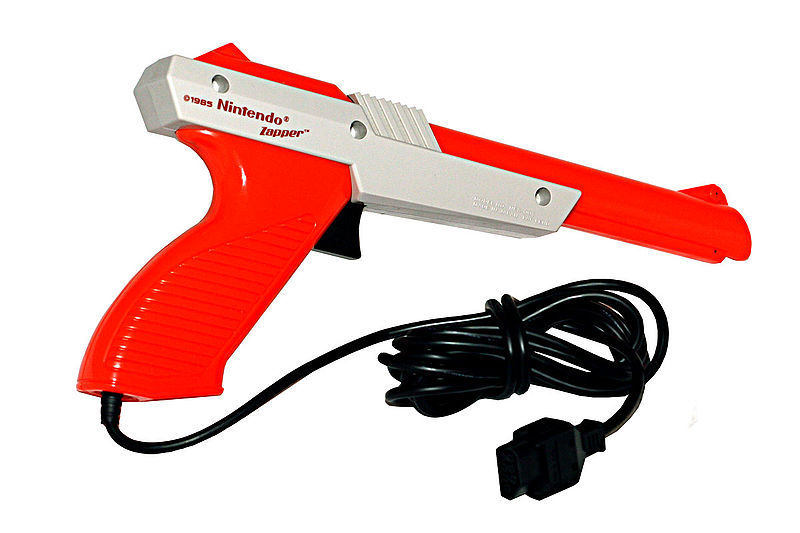 I can’t explain my love for the light gun. It’s one of the oldest forms of interactive entertainment, dating back to the carnival days where you would fire air rifles at a metal bullseye to make an old man’s hat pop up or a dog bark. Once the gun made the transition to video games it honestly became one of the most lifelike and violent gaming tropes throughout history. Not to get deep with it, but you are pointing a gun at a target, usually alive, and shooting it. There is not other gesture like it, you are shooting a modern device to kill something, virtual or not. At the same time it also doubles as the most simple form of proficiency. I don’t think anyone will claim that being good at Duck Hunt or Lethal Enforcers relates to being a good shot in a shooting range, but it’s got a much higher chance of significance than being able to get a headshot in Call of Duty. Whereas the FPS emulates the concept of aiming and firing a gun with 1:1 responses from a controller, a light gun truly simulates the experience.
 Light gun games have been a niche genre, but that doesn’t prevent them from withstanding the test of time and being available on most home consoles and one of the most popular games, even today, in arcades. I guess it’s because despite the maturity implied behind firing a gun, it’s one of the easiest concepts for us to pick up. I’ve been on many adventures thanks to light gun games – whether it’s cleaning up the future in T2: The Arcade Game, battling zombies in a haunted house through House of the Dead, or enjoying some of the worst acting of all time in Mad Dog McCree.
It’s also significant because the light gun is a genre nearly impossible to emulate and doesn’t translate well in today’s technology. While there are exceptions, you will have a hard time playing Crypt Killer properly on a PC running MAME and most HDTV technologies don’t support light guns from the past. Authenticity is as important as the genre itself. This month I’ve decided to dedicate to a timeless style of video game that I always make first priority when buying a new (or old) system: the light gun shooter. Come join me to learn about some of the best, worst, funniest, and definitely weirdest titles to ever grace the hobby of video games. Thanks to my huge CRT television and original hardware, I can even show you videos.
 Gaming History 101