Archive for the ‘SNES’ Category
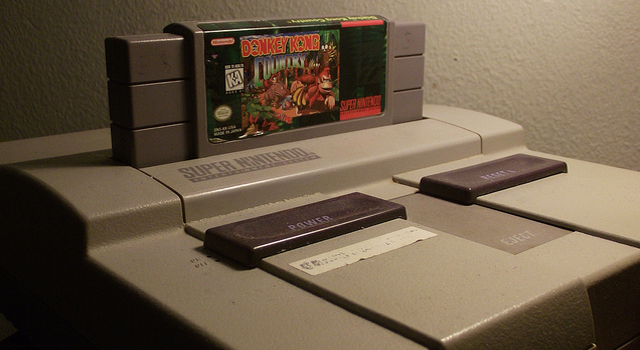
Donkey Kong Country SNES Review
 Platform: Super NES, Gameboy Color, Gameboy Advance – Note: Portable versions have compromised graphics and performance
Released: 1994
Developer: Rare
Publisher: Nintendo
Digital Release? Yes, 800 points on the Virtual Console for Wii and Wii U (optimized for Wii U)
Value: $18.52 (SNES)/$6.51 (GBC)/$10.00 (GBA) – cart only, $38.97 (SNES)/$16.24 (GBC)/$20.00 (GBA) – complete, $80.00 (SNES)/$53.07 (GBC)/$51.00 (GBA) – sealed – According to Price Charting
Donkey Kong Country (DKC) on the SNES is a game held in high regard by a lot of Nintendo fans. Developed by Rare, who at the time was a second party developer to Nintendo and consistently releasing new and unique IPs, which only got better when it came to the follow up console the N64. Nintendo was quite happy for Rare to develop a game starring Donkey Kong, who up to this point was just sitting on Nintendo’s shelf not really doing a lot (development on this title began before the Gameboy re-hash of Donkey Kong ’94). Rare came up with an idea for a platformer that proved to be very successful and led to two additional sequels being developed on the SNES and then a 3D iteration on the N64. It is now time to peel back a banana and see if this SNES game still holds up today.
Now & Then: Mortal Kombat 3

Switching It Up
 A lot happened both in the talent pool of Mortal Kombat players and in the game design overall between the release of Mortal Kombat II and Mortal Kombat 3 (MK3). For starters there was a mass exodus of on screen talent due to royalty disputes, so almost no one from the original two games returned for the third release. In addition, Boon and his team were trying to turn Mortal Kombat into a viable fighting game with things no one had ever seen before and mechanics that could compete with the massive rush of fighters in arcades. The game was completely Americanized, with all hints of Eastern influence including symbols, locales, and the soundtrack completely absent without a trace and instead replaced by urban stages, 90s hip-hop soundtracks, and cyborgs replaced the signature ninjas. These locations were now composed of pre-rendered 3D backgrounds and the character sprites were almost totally digitized as opposed to the digitized/hand drawn hybrid of the previous games. Along with it came an overhaul of the controls, including combos and a “run” button to address rightful claims that defensive players ruled the previous title. It’s all one giant 90s metaphor but that doesn’t change the fact that MK3 (and it’s update Ultimate MK3 or UMK3) stands as the moment I felt the series went into the mainstream fighter territory. Couple this with the fact that it was on just about every console that existed at the time, still dominated arcades, and had more content than rival Street Fighter II could ever dream to do with its iterations and I see why it’s creator Ed Boon’s favorite. Mortal Kombat 3 definitely upped the ante.
Smash TV Review
 Platform: Arcade, microcomputers, NES, Master System, Game Gear, SNES, Genesis/Mega Drive, Xbox/Gamecube/PS2/PSP (part of Midway Treasures)
Released: 1990
Developer: Williams
Publisher: Williams/Midway
Digital Release? Yes, it had a digital release on XBLA (360) but was delisted in Feb. 2010
 These days there is a good chance any gamer is familiar with the “twin stick shooter”, a concept where you move with the left stick and shoot with the right. Back in 1982 when fantastic game designer Eugene Jarvis premiered the concept in Robotron: 2084, it was unlike anything we had ever seen. The merits of that game, and what it brought to video games, cannot be denied and if you want an idea of how Robotron played you need look no further than recent neo-retro release Rock Boshers Dx. It wasn’t until almost a decade later, in 1990’s fantastic Smash TV, that Jarvis along with a talented team at Williams created one of the most addicting arcade games from my youth. Set in the year 1999 – oh how we thought so much was going to change with the year 2000 back then – Smash TV has you and potentially one other person shooting it out in a room-to-room TV studio playing the most violent game show of all time (Running Man anyone?). It takes the building blocks of Robotron: 2084 and brings it into the nineties by giving you a second player, having you kill tons of humans instead of rescue them like in Robotron, and of course you’re doing it all for cash prizes to selfishly grow your wealth. I loved it then and I love it now.
SimCity Review
 Platform: PC (but was ported to almost everything)
Released: 1989
Developer: Maxis
Publisher: Maxis (later part of EA before closing this year)
Digital Release? Yes, far too many to count
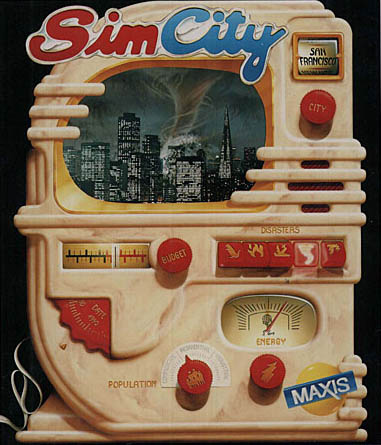
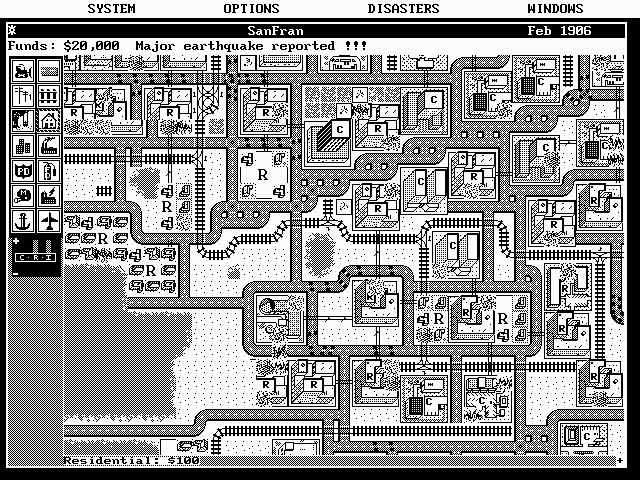 With the regretful closing of Maxis this year and the recent discussions of the value of city simulation games, I thought it was appropriate to return to Will Wright’s massively successful city simulation game that started it all. Although this game was not the first of Wright’s, that was a so-so top down shooter called Raid on Bungeling Bay for the Commodore 64 in 1984, this seemingly tame and rote concept came from that initial title when Wright was developing map builders for its levels. From there a few engineering books and some other research led to the genesis of Micropolis, the game about miniature versions of cities and managing the development and monthly activities. The title was supposed to release years earlier on the Commodore 64 by publisher Broderbund, who had handled Bungeling Bay, but they could not see the value in trying to market and sell a game like this – I wouldn’t have either – so it remained unreleased. It wasn’t until the late 80s that Wright had a meeting with Maxis founder Jeff Braun and secured the license for a Macintosh port that eventually released in 1989.
Secret of Mana Review
 Platform: Super NES
Released: 1993 (Japan, US) 1994 (Europe)
Developer: Squaresoft (aka Square)
Publisher: Square
Digital Release? Yes, Secret of Mana is available on the Wii Virtual Console for $8.00 or iOS/Android for $3.99
Price: $45.75 (cart only), $99.99 (complete), and $999.99 (new/sealed) per Price Charting
Please Note: As discussed in both reviews, we played through this game on the Wii Virtual Console and not the SNES.
Jam’s Take
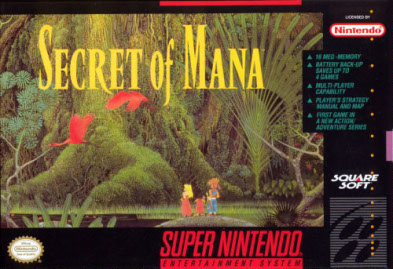
This year I’m finally catching playing games on that much loved system, the Super Nintendo. So far I’ve been very happy with the games I have played. Earlier in the year on GH101 I managed to finally playthrough the fantastic Super Metroid. Its amazing how well these games play today despite never owning a SNES back when I was younger and better looking. For this November/December game club I played through Secret of Mana. This game is uncommon and kind of forgotten in Europe. Released from Squaresoft the game came out very late in the SNES life cycle, so its time to get ready to grind and see how Secret of Mana fairs today. Since I don’t own a SNES I played through Secret of Mana on the Wii virtual console.
Podcast: Secret of Mana Game Club

This week Fred and Jam re-live the adventures of Hero, Girl, and Sprite as they uncover the mana sword and take on a dark empire. Originally developed as the first SNES Playstation CD game, business decisions obviously forced this back onto a cartridge with impressive results. Oh yeah, and we never played it in full until now.
Primal Rage Retrospective and Comparison Video
Primal Rage was one of the more notable Mortal Kombat clones in arcades in 1994. The popularity of this Atari Games fighter secured multiple ports to the home consoles of the time, a true cross-gen title that was on most portable, 16-bit, and 32-bit CD consoles. GH101 looks into the history, gameplay, and home console versions of this dinosaur brawler.
Podcast: Ready, Aim, Fire!

This week Fred and Jam tackle the wonderful world of light gun shooters. What started as a mere carnival game evolved into one of the more interactive – and for some of us fun – genres that has not withstood the test of time. With the advent of newer screens, the technology that made light guns possible is now ruined by delays of no more than a fraction of a second. In this episode we discuss the history, technology behind, and our fondest memories of the games that utilized the light gun peripheral.
Podcast: Test Your Might

This week Fred and Jam are throwing around fighters of the 90s (that aren’t Street Fighter II or Tekken, we did a show for those already). In the 1990s, the fighter genre was the most popular type of game available (like First Person Shooters today), and among those that have withstood the test of time there were plenty of others that played the field. From Mortal Kombat to Soulcalibur you had plenty of arcades (and home ports) to drink your quarters in arcades.
Retro Game Night: Contra 3, Contra Hard Corps, and Contra Rebirth
This week Fred goes 16-bit and beyond with his Contra. Having spent literally decades conquering the first two, it appears he doesn’t fair so well into the next generation.
 Gaming History 101