Day 9
On the ninth day of Christmas my memories gave to me…
A 9-in-1 Game Cart!

My father was born and raised in Costa Rica (hence why I’m half Costa Rican), but I was pretty young for the first family vacations back “home”. Near the end of the NES era, a bunch of family members on my mother’s side as well as my immediate family celebrated Christmas in Costa Rica. There were lots of subtle differences to American culture there, but none more interesting to me than imported knock-offs. If you were to enter little toy shops in and around central hub city San Jose, you could expect to see items cheaply made and imported from Asia. I still remember the Teenage Mutant Ninja Turtles figures I picked up (all 4 for about $15) that had Chinese all over the box and looked a bit off-center with its paint job. They all broke by the end of the trip. There were also video games, of course, and I couldn’t help but check them all out.
For like $50 there was an NES that was painted all silver, more boxy (I later discovered it was the Famicom design) and had controllers and a zapper permanently wired into them. Not only that, when you turned it on it had 101 games built-in, which I didn’t pick up because I had an NES already and this console wouldn’t work with cartridges. What I also saw was a slew of “x-in-1” cartridges that contained some of the console’s best games all together. It was old school pirating at its best – take a bunch of smaller older games and thanks to new technology put them all into a single cartridge and sell them in foreign countries. I remember buying one for my NES, probably a 76-in-1, that I could have sworn had 76 individual titles but I later discovered there were only like seven games repeating on a list with different names. I also bought a Game Gear 9-in-1 (pictured above) for my buddy, which was amazing because it contained Sonic the Hedgehog and a handful of arcade ports. I wasn’t really trying to be kind, but it was like $20 and I used to love borrowing his Game Gear, now I gave him a reason to be forthcoming with it.
This trend would continue in gaming moving forward to as recently as this generation with Sonic’s Ultimate Genesis Collection and several others. In addition, I still see 30-in-1 Genesis systems and 50-in-1 Atari systems for roughly $30 at Walgreens, which are now legal items that these respective companies have approved. As is the case with most collections, they were as much a double-edged sword then as they are now. You have so much selection that you barely spend any time with a single game and never accomplish much other than beating the first level of each title before the system eventually dies. Costa Rica gave me lots of great memories and views, but it was also my first glimpse at how bad small countries got it in the video game market. No wonder the Master System and Genesis were so big in Brazil. Any one out there have some crazy unlicensed all-in-one pirate games?
Day 8
On the eighth day of Christmas my memories gave to me…
Eight Final Fantasy Titles!
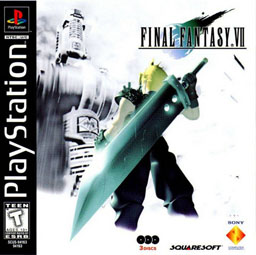
The Final Fantasy series has always been a staple in gaming since it was first introduced on the NES in 1990. While the series has undergone various changes, the basic format of multiple adventurers taking on opponents in turn-based combat was still around with each iteration on the Playstation. Final Fantasy VII released in January 1997 and at that point I didn’t yet own the console and couldn’t get the game everyone was talking about. I thought it was odd that every gamer I knew wanted to play this game – Final Fantasy games had always been big with some gamers, but it was never a universal series. After I got to see it in action in a local Babbage’s, I completely understood. FFVII was gorgeous – futuristic cutscenes, impressive graphics, a cyberpunk atmosphere and versatile battle system (including the infamous materia magic). Even more intriguing was the fact that this was on the Sony Playstation as Nintendo had been the sole home for Final Fantasy games in America for almost a decade. I got the game for Christmas in late 1997 and immediately began to play it, but with a 70+ hour campaign along with a girlfriend and school restarting, I only got as far as the big twist that concluded disc 1.
After the giant success of Final Fantasy VII, the Playstation quickly became the home of both role-playing games (RPGs) and Square Enix titles. I had always wondered why the Final Fantasy series had jumped from part three to seven, a common inconsistency for Japanese RPGs released in America. An article in Electronics Gaming Monthly about the series would reveal that in America we only got certain titles and Nintendo had chosen to number them differently for consistency with an America audience. It turns out that Final Fantasy II and III released on the Famicom in Japan but never made it stateside (probably the massive undertaking of regionalizing it and the fact that the SNES released only a year after the original FF). In America we got Final Fantasy IV, renamed to Final Fantasy II, and Final Fantasy VI, renamed to Final Fantasy III. How confusing, right?
As Final Fantasy fever hit the Sony Playstation and newfound gamers began to enter the magical worlds of RPGs, it seemed every Christmas had a Final Fantasy on shelves. Thanks to multiple teams working on projects, Final Fantasy VIII would grace store shelves of eager gamers in 1999 and Final Fantasy IX only a year later. At this point Sony ran into a similar problem that Nintendo had: the Playstation was coming to an end and by the following year the Playstation 2 would be available. In a genius decision taken straight from the book of Nintendo, Sony decided to continue to release classic Final Fantasy titles on the Playstation. Launching as dual-game collections, most games would give you a combination of a game US audiences had played along with one they hadn’t. Final Fantasy Anthology offered Final Fantasy V and VI, which would be most familiar to audiences of the time given the popularity of Final Fantasy III (VI) on SNES and introduce a cult favorite with V. Final Fantasy Collection would also release that year and include Final Fantasy IV, better known as II in America, to complete the SNES packaged offering. Those that didn’t catch the extremely rare and high-priced Collection could pick up Final Fantasy IV along with Chrono Trigger, an SNES classic from the makers of both Final Fantasy and Dragon Warrior, in Final Fantasy Chronicles. In the final days of the Playstation, Christmas 2003 would be adorned with Final Fantasy Origins, collecting Final Fantasy I and II. If you’re paying attention, that’s eight whopping Final Fantasy games and more than 500 hours of overall gameplay (and that’s not even counting Chrono Trigger).

Back then I remember a friend of mine that was so obsessed with the Final Fantasy games that his mother would just ask if he wanted the new Final Fantasy again that year. It was during those years that I wasn’t gaming often and when I did I definitely didn’t have time for a huge Final Fantasy game. Thankfully I recently picked up most of these titles on Amazon – yes, Amazon has new copies of these particular Playstation games on its site at this moment (and for cheap too!) – and will eventually try to find the time to work through them. Much like the HD remakes today, each title featured enhanced graphics and new CGI cutscenes. For many RPG fans the wonderful world of Final Fantasy opened up and they were given the ability to enjoy a whopping eight titles in one console generation, not to mention the fact that they would all still work on both Playstation 2 and Playstation 3.
Day 7
On the seventh day of Christmas my memories gave to me…
Mode 7 Graphics!

Mode 7 is a complicated process that is oh so easy to explain, the most notorious user of this graphical style being the SNES. It was impossible to not notice Nintendo’s push to boast mode 7 graphics in its advertising and even if you were able to ignore it, the launch games for Christmas 1991 and beyond. Basically the SNES was capable of seven different graphical modes, some adding multiple layers (up to 4) and others allowing you to manipulate and rotate a single layer (mode 7). It was a way to fake 3D and depth in early games and while Nintendo wasn’t alone, consoles like 3DO were expensive and the Genesis required the Sega CD add-on to feature graphics like mode 7. If that was all jargon to you, it was the ability to make the screen rotate and zoom on pixels.
 When you played Pilotwings, your character wasn’t actually falling into a perceived depth, the world that was created below was just zooming and rotating as you pressed d-pad buttons. If you pay attention you’ll notice your character stays fixed in the middle of the screen, like an early arcade racer. Pilotwings wasn’t alone either, almost every early SNES game had mode 7 graphics as some sort of flashy show-off gimmick. When Bowser flew at the screen in Super Mario World or a foot soldier was tossed toward you in Turtles in Time, these were mode 7 graphics at work. When the logo of Actraiser did a dance across the screen mode 7 was responsible. Most notably was the ability to see racers both close and off in the distance with a sense of realism in Super Mario Kart, especially with that technically stunning opening sweep of each racer from Lakitu’s camera perspective.
 As for me, when I finally got a SNES in 1994, the first game I wanted to play was none other than Super Castlevania IV. As an avid fan of the Castlevania series I had thoroughly played the first three games to their challenging conclusions. Even in early Nintendo Power issues I had been dazzled by the high-end graphical style of Castlevania IV and it remained a game I couldn’t wait to play. Not only did this title seem more manageable – the multi-directional whip made killing annoying enemies much easier, if not the entire game as a whole – but thanks to mode 7 every trick in the book was utilized. The world would turn upside down, the screen would rotate, Konami even had some tricks that created the crazy “in the barrel” effect that you see in the screenshot. One of the biggest trademarks of consoles were that software manufacturers made them do things they were never intended to do, from Atari to SNES and beyond. Mode 7, on the other hand, was specifically designed into the Super Nintendo and no title showed off all the crazy things that hardware could do better than Super Castlevania IV. If you still have an SNES and have not touched this technical gem, you owe it to yourself to see mode 7 in all its glory.
Day 6
On the sixth day of Christmas my memories gave to me…
Six Launch Games!

It’s almost sad how poor Sega handled the Saturn launch in America. Without delving too deep into the history of it, the console was supposed to release Saturday, September 2, 1995 – dubbed “Saturnday” by the various marketing items that hit toy and gaming stores in the Spring. At E3 that summer, they announced in their press conference that Saturn would be releasing the same day, Thursday, May 11, instead. Select retailers were let in on the event, but the many who weren’t, including my choice gaming store K.B. Toys, were so hurt they refused to carry the Saturn. As usual none of us regular kids who dropped by the mall were let in on the elaborate fights and decisions being made behind the scenes, so it wasn’t until I walked into a Toys R Us and saw it on shelves that I even noticed it was out. I was a Sega fan through and through back then, my devotion going so far as to keep me saving up paychecks from my crappy part-time job and even some Christmas money from a returned 32x. Since Sega was the only developer that knew the Saturn was releasing early, it was only Sega games available at launch.
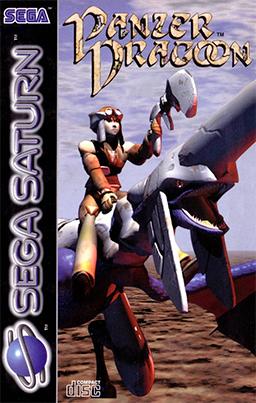 I purchased the console near the end of the summer for a whopping $400, my mother begging me not to waste my job earnings on it (I did save half my earnings for college, mind you). Saturn came bundled with Virtua Fighter and 5 other Sega properties joined it to be the six launch titles: Daytona USA, Clockwork Knight, Panzer Dragoon, Worldwide Soccer and Pebble Beach Golf Links. As a typical teenage gamer I couldn’t have cared less for the sports titles, leaving only three true titles available at launch. It didn’t matter anyway because all the money I had spent on the console, which didn’t even leave enough for a second controller to fight people in Virtua Fighter, left me broke all the way up to Christmas. By then there were supposed to be tons of launch titles from other 3rd party developers, Tomb Raider and X-Men: Children of the Atom were hyped, but the stores told a different tale. Since I only trusted games I knew for the console I asked for Daytona USA and Virtua Cop because I hadn’t had time to read reviews or see anything else I liked. Tomb Raider was supposed to be cool but full 3D titles still intimidated me and re-releases of FMV titles I already owned like Double Switch or Corpse Killer: Graveyard Edition couldn’t sell me.
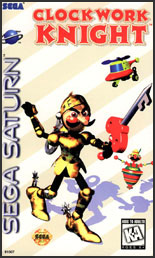 For all intents and purposes, the list of launch titles I so very much desired just weren’t there. I read in an issue of Electronic Gaming Monthly that there were some amazing Japanese Saturn titles, both launch and third-party, but almost none of them were coming stateside anytime soon. Later on it would turn out that none of them were coming, and to import required both hardware modification and the high expense to get these games stateside. Although Sega kept assuring us Saturn gamers that we would eventually be seeing non-launch Sega titles, the retail stores told a different story, especially for my Christmas shopping parents. Not only that, but I had to make the switch to Babbage’s for my video games since K.B. Toys refused to carry Saturn games.
Day 5
On the fifth day of Christmas my memories gave to me…
Five Genesis Models!


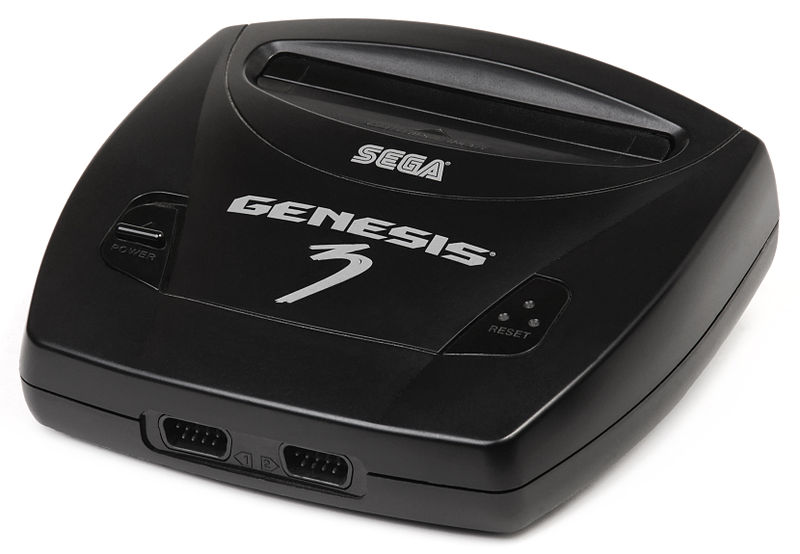
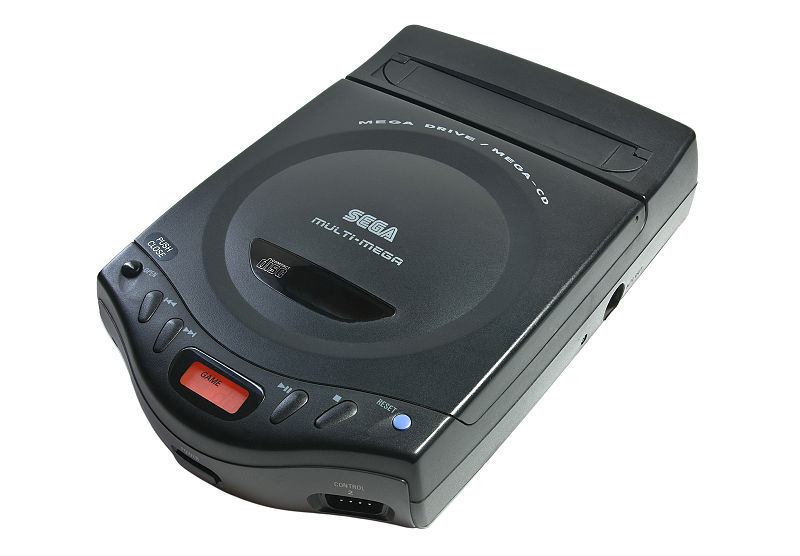

For a console that was only around for roughly six years, the Sega Genesis sure was releasing new iterations like there was a reason for all the updates. To be fair, every single one of these consoles changed something about the Genesis but not all of them for the best. Sega in the 90s was like an eager child, just ready to jump at the next opportunity to improve current technology and release new ones. This is why the Genesis had 5 different models, not including the many licensed models that also released from different companies, as well as two more add-ons. They would also jump the gun and release the Saturn less than a year after selling you the pricy 32x, which claimed to turn your Genesis into a 32-bit system and didn’t do a good job at it.
 Thankfully all of the standard Sega branded Genesis models ran the entire Genesis library (yes, some 3rd party consoles did not), but not all of them were compatible with Sega’s add-ons. It’s easy to imagine that the Nomad wouldn’t work with the Sega CD and 32x – at least not without a hardware hack – but the CDX, which already combined the Sega and Sega CD, you wouldn’t assume would be incompatible with the 32x. Even more odd was the fact that Genesis 3 was incompatible with both Sega CD and 32x due to hardware design. Furthermore, the 32x would be on store shelves with the CDX and Genesis 3, both consoles it was incompatible with. It was a nightmare for everyone involved from the marketing guy to the retailer and finally the parent. The only person who could keep it all straight was of course the gamer, the one person that couldn’t be involved in the transaction thanks to Christmas and gift giving. I’m sure there were at least a few massive $500 refunds after a rich parent purchased multiple incompatible parts. In those days if it didn’t work like it was supposed to right out of the box, who cared how cool it was, parents returned it.
I managed to get out mostly unscathed thanks to the gaming press, which kept me informed of the upcoming Saturn. I did ask for a 32x, which would end up being incompatible with my CDX, but I didn’t fret because I knew the next console generation was around the corner. I returned the 32x (and both games I got with it – Doom and Star Wars Arcade) and kept the money waiting in my dresser for the Saturn.
Day 4
On the fourth day of Christmas my memories gave to me…
Four AA Batteries!

I know they don’t look like much, but these little capsules of power are responsible for oh so many smiles and tears to gaming children. In the early 90s, everyone wanted a portable gaming system of some kind – Gameboy, Tiger handheld, maybe even an Atari Lynx – and they all had one thing in common: they needed batteries. Stories of whether or not any of these devices came with batteries are often passed around anecdotes of suburban myth, but regardless of that fact no child could survive Christmas weekend on one set of batteries alone. I know for a fact that the Gameboy did come with batteries, but any of the others is anyone’s guess. Either way, it was the beginning of a time where frantic holiday shopping parents coming to terms with $100 price tags were greeted with reminders to purchase bundles of batteries and most passed. Then on Christmas morning these parents realized how poor a choice that was.
 Nothing ruins a parents day like getting children a new toy, an electronic toy no less, that cannot run. In many cases the portable console would be the only thing they received for Christmas, and if not then various games may be the only other gift(s). As expected, there was almost nothing open on Christmas day – in 1990 in the suburb of Chicago I grew up in there weren’t even 24 hour Walgreens or gas stations nearby that opened on Christmas. If you didn’t have batteries and needed them, you were essentially screwed. Thankfully most remote controls used AA back then rather than the AAA they use now so it was a scavenger hunt for anything with a remote. If you were lucky enough to snag all 4 AAs, however, the batteries in those remotes were probably on the verge of death because the same type of parent that didn’t buy batteries at Christmas were also the kind that didn’t replace them until the remote was near death for at least a month. If you were lucky you got an hour out of the device before it died again. In the end it was a lesson that parents quickly learned, but the child gamer paid the price.
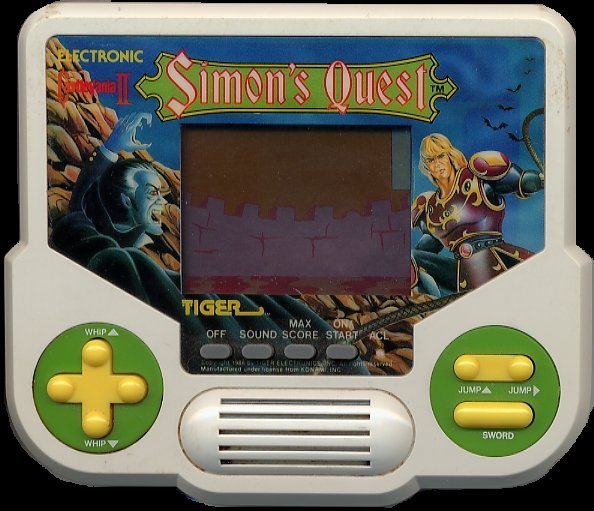
Thankfully by 1995 most stores and parents knew the best option was a rechargeable battery pack, AC adaptor, DC adaptor, or even a kit with everything for a low price. In fact, by 2000 many of the available versions in stores were bundles that included said kit as a way for the store to generate a profit on the console sale (if you’re unaware, most retailers make no profit on the sale of a console itself). Thankfully my parents also learned this lesson, but I still remember getting handhelds I couldn’t play right out of the box.
Day 3
On the 3rd day of Christmas my memories gave to me…
Three New Consoles


When you look up the Playstation 2 in either gaming history books or Wikipedia, you’ll notice a late 2000 release date that seems to suggest the PS2 had a year head start on the Gamecube and Xbox. What they won’t tell you was that those who experienced its release in person knew better than to even suggest the PS2 was on store shelves in 2000. In fact, it took until about holiday season 2001 for PS2s to reappear at retail and have a few decent games. This resulted in the first time all consoles of a specific generation were initially available together, despite release dates. Christmas 2001 was a wild cluster and there we were wrapped up in it and trying to presume which console would be the best.
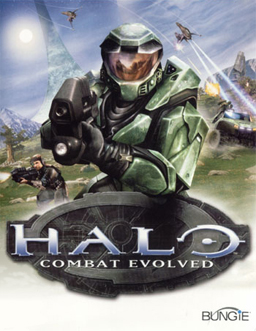
Ironically this generation would end up with all three consoles having similar libraries save for the Gamecube versions of games being mildly stripped. Given the scant launch selection, it really came down to what you thought the console could offer in the future. Nintendo and Sony touted the strength of their first party titles while Microsoft had only one ace in the hole: Halo. Debates among my friends waged for days, fanboys coming out of the woodwork and fighting with everyone because they didn’t agree on which console was worth it. The only reason everyone cared what their friends were buying was because the college atmosphere thrived on borrowing your friends’ games and for the first time there was a lot of variety.

In the end the Gamecube remained the outlier with its cheaper price tag, lack of a DVD player and no true Mario game in sight. Of course I decided to ask my parents for it because it fit within the budget of a Christmas present and it was going to be the home of a Resident Evil remake and future series titles. Although the PS2 clearly won the overall generation by a landslide, it was a pretty split world on college campuses. Sure, you could play your old Playstation library and watch DVDs, but the Xbox allowed for Halo LAN parties. In true hindsight, Halo aside, there was very little difference between each console. With simultaneous launch windows being the ideal situation for competition, all that resulted was overall conformity within each console. Funny, isn’t it?
Day 2
On the second day of Christmas my memories gave to me…
Two Amazing Sequels


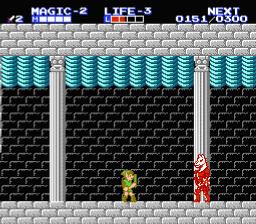
In the holiday season of 1988, the two biggest Nintendo properties released sequels at the same time. Super Mario Bros. 2 was clearly more popular than Zelda II given that Super Mario Bros. was the pack-in game for almost every NES sold. On the other hand, Zelda was a much deeper, and honestly better, game so those that had experience rightfully wished for Adventure of Link. Unfortunately the print run on Zelda II was small and resulted in less than enough copies hitting store shelves. On top of that, it released in December and at that time there was no gaming press and no official launch date for games. Parents, kids and gamers alike had to scramble to adjust their holiday wish lists and plans in order to get a copy. As a result, I’m sure there were at least a few parents that had to give a gift other than Zelda II despite many attempts to get their hands on it and a few tears from those that didn’t get what they wanted. Below is my personal experience with Christmas, 1988:
My favorite Christmas had to be in 1987, when the NES had dropped to $100 for the Super Mario Bros/Duck Hunt bundle and I finally received it as a gift. Lucky for me, my birthday comes just after Christmas, on January 6, so I was able to get another game for my NES as a birthday present. It was a tough battle between Castlevania and Legend of Zelda but most of my friends were exploring the world of Hyrule with Link so I went with Zelda. For the next year I spent countless hours conquering Bowser over and over again and trying to find all the hidden rock walls to bomb until finally going on to tackle Gannon. Even upon completing the Legend of Zelda, a second quest opened that was harder and moved everything around.

As the year came to a close, I prepared to attack the holiday catalogs and somehow got my hands on an advertisement for Super Mario Bros. 2. Well, that settled it, I was going to be getting the second Mario game for Christmas. Then, on a random December trip to Toys R Us I saw an unfamiliar gold box art next to the first Zelda title. That game was Zelda II: The Adventure of Link. My mind was blown. I had already asked for Mario 2 but I knew my birthday was coming up in January, so I figured I’d wait and get it then. As I walked away a younger employee that was probably no older than 16 approached me. He wanted to know if I was interested in Zelda II and if I had the first game. I told him I did and even described beating the second quest, at which point he handed me the slip of paper for the game – back in those days you would buy the game with a slip of paper and a caged area at checkout would give you the game after you paid for it. He told me that there were very few copies of the game in stock and if I wanted it for Christmas I should convince my mom to buy it that day. I told him, all coy like I was at nearly seven years old, that I have my birthday coming up and I would have my mom get it for me then. He turned to me like an idiot and said, “kid, they won’t be back in stock by then! These games always take forever to come back. Get it now and tell your mom to hold on to it for your birthday.”

Had that guy never talked to me I never would have begun a long tradition of begging my mother for multiple holiday releases in December that I intended to get as both Christmas and birthday presents. With some begging, we left Toys R Us with a shiny gold copy of Zelda II firmly placed in my mother’s grasp. In the week that followed the buzz on the playground was all about which game everyone was going to get and how to find Zelda II for the admitted minority that sought it. I was so pleased that this was not a problem I had, that is until my father took issue with my little combo plan. My father was a traditional hispanic that held firmly to the belief that a gift is intended to be given both at the appropriate time and without the receiver knowing what it was. Not only that, he said that he was going to take one of the two games back to the store and return it. I knew better than to make a big deal out it, but I quietly went to my room while I waited for dinner and tried to decide which game I wanted. I came to the conclusion that Zelda II would probably be the best route given that it may be hard to find and the fact that the original took much longer to beat than Super Mario Bros had. Besides, if I only asked for Super Mario Bros. 2 for my birthday, what choice would they have?
 I went to dinner and chose the appropriate moment to politely tell my father that I respected his decision and that I would like to get Zelda II and whatever happened for my birthday would be up to them, not me. My clever father dawned a smirk that would have made the Grinch jealous and explained to me that I must have missed the part about a gift being up to the giver to decide. He told me that he would be returning one of my games, but that he would be deciding which one it was going to be – and in truth, my father paid little attention to my requested games, especially the names of them. That night he emerged from the bedroom with a single present wrapped up in the shape of nothing other than a Nintendo game. I spent the next two weeks looking at that game, knowing that it would define the rest of my winter break. As both a collector and a gamer it wasn’t that I didn’t want Super Mario Bros. 2, most likely I would be playing that title first, but rather that if my father returned Zelda II it may not be on store shelves until far past my birthday and I knew he wouldn’t give me money.
On Christmas morning we opened our gifts and I was quite pleased with everything, but I saved the game for last. I’ve always done this in life, save the best for last, which explains why I eat the center of a Oreo last or save all the cereal marshmallows in until the end. I eagerly opened the game, ripping the paper as fast as I could and revealed the bright sky blue box for Super Mario Bros. 2. It was weird, if I went over it in my head I would have probably worried about looking unappreciative or displeased with the gift, but instead I was overcome with the rush of actually being able to play Mario 2 right then and there. I gave the expected happy response, hugged my parents and rushed out to play the game.

My father called to me and told me to wait, he was glancing at the corner of the tree with heavy focus. He asked me what that was in the back corner. I was sure there had been nothing back there, but of course when I went to the corner there was another gift wedged somewhat behind the stereo. It was the shape of a Nintendo game and I gleefully tore into the paper to reveal that shiny gold box of Zelda II. It was a wicked trick, but like all my father’s efforts it taught me a lesson and resulted in an ecstatic child so I suppose it was all worth it. Oddly enough both titles were completely different from their appropriate franchises. It would take more than 20 years for me to eventually beat Zelda II, but the much easier Mario 2 was completed by New Year’s Eve. Still, I thoroughly enjoyed the first sequels of my NES experience and can fondly remember that Christmas morning, even today.
<- Go back to the first day of Christmas Go on to the third day of Christmas ->
Day 1
On the first day of Christmas my memories gave to me…
A Wish List Catalog from JC Penny!

Catalogs are definitely not the rage today. Most likely those still utilizing them are the technologically inept or those that just cannot release their grasp on the past. In the 80s and 90s, however, these little guides were responsible for hours of enjoyment to me and my fellow gamers. If you were a good enough customer of certain departments stores – namely JC Penny, Sears and Montgomery Ward, although I’m certain there were others – a massive 500+ page catalog would adorn your mailbox around the end of November. Within it was a virtual form of pretty much everything available in that specific department store, including video games. I used to love going to department stores and bask in the glory of the video game section. There would always be a line of youngsters like myself, all bundled up and overheating in winter coats, affixed to whatever the demo game was. Unfortunately, being only like eight years old, going to the department store or toy store to peruse the video game aisle was not something my mother would do at my beckoned call. On the other hand, the various department store catalogs were always available and waiting on my family’s desk.
 If I haven’t made this clear enough, these catalogs were humongous, heavy books that rivaled War & Peace in size and featured glossy full color pages. Most of them would have a high price tag printed on, like $15 or $20, although I’m certain my family got all of them free because even in the 80s we were no stranger to ordering items remotely. Thanks to their massive size, these catalogs held nothing back even in the video game section, so most games on the market would appear in the catalog. If you were lucky there would be a screenshot and a little paragraph that was nothing but marketing drivel, which I always cherished as gospel, otherwise it was just box art and a price. Before Nintendo Power premiered in 1988 (and even then I didn’t have a subscription until late 1990), these catalogs were the only way to find out what great games were releasing for the holidays. I would come home from school and scour those pages, initially trying to figure out what games I wanted to ask for.
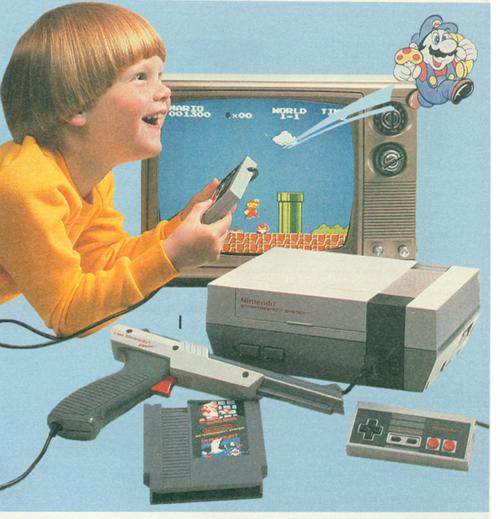 After the first week of browsing had passed and my want list written, the second function of the catalog was to create a list of all the items I would get if I were rich. Since anything and everything was in there I could sit back and imagine I had money for the SNES (about $200 at launch, out of my budget), Turbo Express (around $300) and even distant dreams of a Neo Geo (a whopping $650). Hell, even the games for the Neo Geo sold at ridiculous prices like $120, so there were times that I would list one or two of those titles and imagined I already had the system. There was often a “coming soon” section that featured upcoming titles, some of which would never see the light of day, that allowed me to assess what games were worth saving gift money for. After demand started skyrocketing for video games in the 90s, these catalogs would be excellent places to pre-order consoles and popular games as well as a last effort to grab items sold out in stores.
Catalogs from department stores were my first exposure to video game coverage, albeit a one-sided consumer driven version, but game coverage nonetheless. With parents who were against giving out personal information, even back then, I never got into the Nintendo Club by filling out a registration card. Thanks to an active imagination and a lot of free time, Christmas was celebrated over and over throughout the month of December before the actual gifts arrived.
Go on to the second day of Christmas ->
Gaming To-Go Part 3: Self-Reliance
Given the low price point for both games and hardware, massive amount of ports, and obvious room in the market for clones, portables were not hard to find. It wasn’t until the late 90s that they actually found their voice, though, starting with weak license translations and resulting in full-blown solid titles developed solely for portable platforms. At the same time, many developers would revert back to ports now that they could make long RPGs of yesteryear and games from last gen run in your hand.
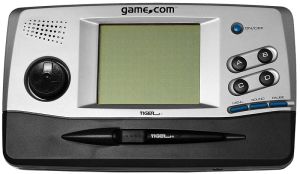
Game.com – Released: 1997
Pronounced “game com” and not “game dot com”, this newest handheld from Tiger Electronics was a clear attempt to make a cartridge-based handheld version of the games they popularized in the late 80s. Much like those old school handhelds, the games shared popular licenses of the time and similarities in gameplay, but for the most part were unique creations. Think of a company that only does book adaptations to film – the concept remains the same and the characters are familiar, but it’s essentially something new. This sounds like a good idea, but for some reason Tiger always seemed to miss the point of portable games and Game.com is no exception.
 Gaming History 101