Retro Game Night: Splatterhouse
This week Fred is playing two versions of Splatterhouse. The first is the US Turbografx-16 port of the Japanese arcade title, slightly modified to avoid lawsuits in regards to lead character Rick’s similarity to Jason Voorhees from Friday the 13th. The second was only released in Japan on the Famicom (NES) due possibly to some even more obvious legal concerns. It was titled Wanpaku Graffiti. Enjoy!
Podcast: Silent 3vil: No Escape

This week Fred and Jam feature special guest Vos5 to discuss the third installment of both the Resident Evil and the Silent Hill series. Where RE3 was more of a side story to try out new mechanics, Silent Hill 3 returned to its roots to be the official sequel for the original and maintained most of the gameplay mechanics. Both have high regards with the fans but are also shadowed by the more popular predecessors.
Podcast: It Is What It Is

This week Fred and Jam are talking about video games in the news. Whenever mainstream media, in both the US and the UK, decide to talk games it’s usually negative or violence based. Fortunately we’ve found plenty of instances where it wasn’t all school shootings and teen murder (although there are some), but generally when games make the news it’s rarely positive.
Now & Then: Silent Hill
 Console: Playstation
Released: 1999
Developer: Konami
Publisher: Konami
Digital Release? Yes, PSN version compatible with PS3, PSP, and Vita for $5.99
Price: $20.87 (disc only), $33.99 (complete), $130.00 (sealed) per Price Charting
Note: I did not have screen shots available from my last play and it appears all screens online are from emulation. This title does not look this good on the PS1.
Dichotomies exist in all forms of media. Whether it’s Elvis or the Beatles, Shakespeare or Marlowe, Alien or Aliens, and even Star Wars or Star Trek, the rule remains the same: you are allowed to like both but you always prefer one. In the realm of survival horror, the clear competition is Resident Evil or Silent Hill. Longtime readers and listeners know where I stand (RE), but that’s not to say the Silent Hill isn’t just as easily justified, if not moreso, as the better game even if it’s not necessarily the more popular one. Despite the original Resident Evil being a living haunted house, the game still rooted itself into a world of intense action, the ability to kill just about every opposing force, and a heavy science fiction/biological manipulation concept – proven even more by the game’s Japanese title Biohazard. Silent Hill, on the other hand, is classic unexplained horror and phenomena at its best. Where Resident Evil employed pre-rendered backgrounds and forced camera perspectives, Silent Hill was fully rendered and seemed to follow the player, thus linking the character on screen with the player. This makes it more terrifying because what happens to Harry (your playable character) seemingly happens to you as well. Not only that, but the perspective of the title is completely different. Harry is a regular guy, not a soldier, and he’s frantically trying to find his missing daughter, not to simply survive. It’s all just a different perspective to the horror game where instead of trying to scare you with jumps and big gross monsters (although you will get those in this title), Silent Hill thrives on the unknown and maintaining tension instead of random fear. In short, it’s Alien to Resident Evil’s style of Aliens.
Podcast: Now You’re Playing With Power
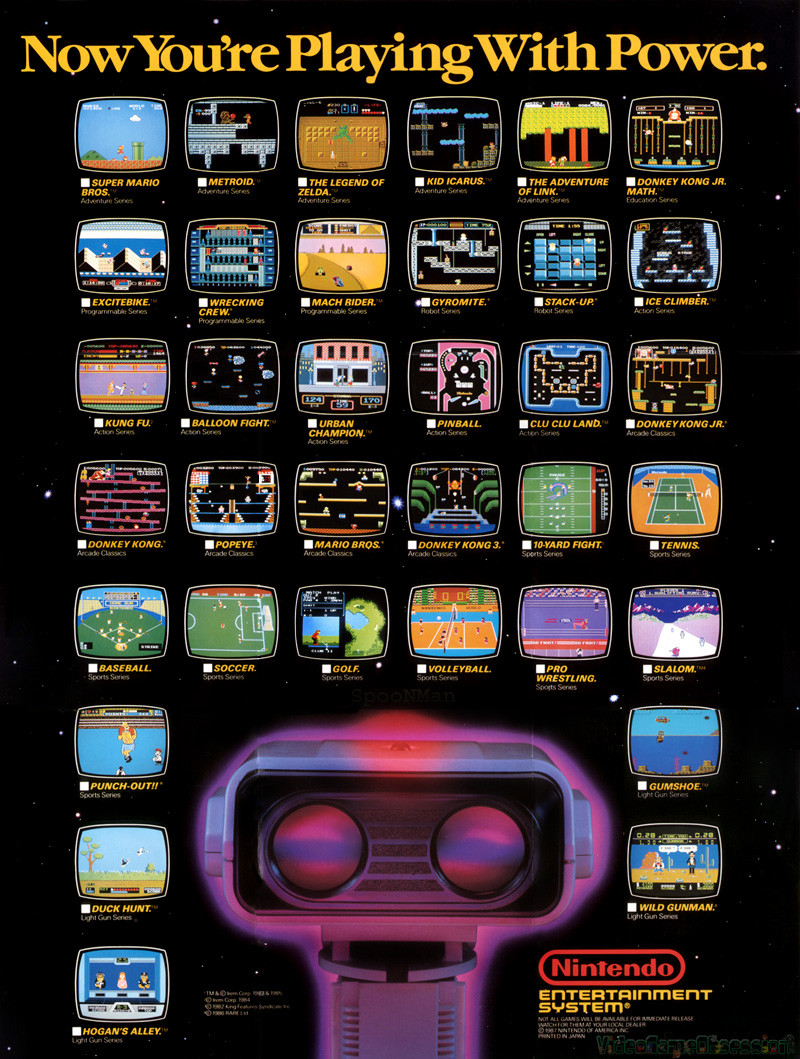
This week Fred and Jam are talking about the other 8-bit console that graced the late 1980s, the Nintendo Entertainment System (NES). While it was just another console option in Japan (albeit a massively popular one), the NES had a strong presence in Europe and a massive overtaking in the United States. It wasn’t just the games, business practices in the US and overall control over game development assisted in making the NES (and in Japan, Famicom) one of the most influential video game consoles of all time.
Podcast: Sega Hits the Third Mark

This week Fred and Jam are celebrating Sega’s first console attempt, the Master System. While a technical powerhouse against the NES, business practices in the US and insconsistencies in Japan made it a commercial failure. It did thrive in Europe and Brazil, not to mention it’s quite an enticing package in hindsight.
Review: Bioshock
 Bioshock was released all the way back in 2007 (which seems like quite a while in terms of game releases), near enough the same time as the launch of the Xbox 360. Before I re-played this game for the Game Club, my last save on the 360 was dated August 2009. So would you kindly take a seat and read on, as we see if Rapture is still a city worth re visiting or if it should stay at the bottom of the ocean.
In Bioshock you play as Jack, a character who doesn’t really say much. After surviving a plane crash and swimming to a lighthouse, you find underwater transportation to the city of Rapture, a so-called underwater utopia created by a man named Andrew Ryan. You quickly learn that Rapture is not the magical gum drop land it was probably intended to be because most of the residents have totally lost their minds and want to murder you. People seem to be hooked on something called ADAM which changes your genetic code, giving the recipient special powers. The game does a great job of explaining the story through use of audio diaries, which give audio-based background to the game while you are still playing. The story is filled with regular twists and turns that will keep you interested right up to the end. Since there is so much depth to the plot, I found I understood more when going through the game multiple times (not to mention these are hidden items that you can drudge for when not on an initial playthrough).
Bioshock plays as a first person shooter with role playing elements. The game gives very clear goals and even a quest marker for where to go. Don’t worry completionists, you have plenty of opportunity to explore the world and discover secrets and additional information of Rapture. You also find plasmids which unlock super powers for your character such as shooting electricity or even bees out your hands if you choose it. Alternatively you can use plasmids for more passive results such as improving your melee damage, healing abilities, and several other traits.

Version: Doom
I was gonna write a retrospective on this, but honestly in podcast form we’ve covered Doom not once, but twice! From those episodes came a project that has taken six months and over six hours to put together in one near 15 minute video. I compare the PC, 32x, Jaguar, SNES, PS1, 3DO, Saturn, and GBA versions of Doom so you don’t have to, complete with bad language and snarky remarks (sorry parents). Check out this version of Versions for Doom, but fair warning: there is some adult language.
Version: Wolfenstein 3D on 16-bit
This week we put the original SNES release of Wolfenstein 3D up against the recent homebrew port of the game on the Sega Genesis. How do you think it will work out?
Looking Back at Wolfenstein 3D
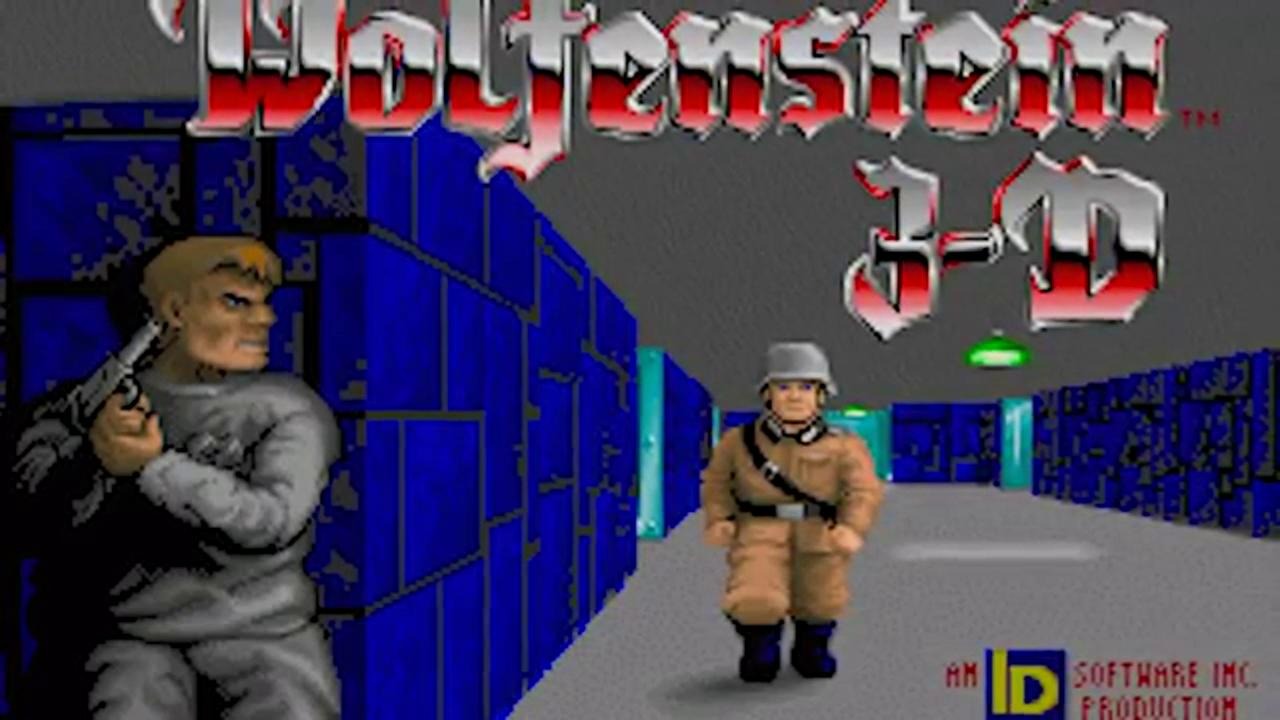
In truth the dawn of the first person shooter (FPS) and its popularity is more a case of luck as a group of intelligent designers got together and created pseudo-3D worlds. In 1991 John Carmack was accompanied by three others as the development team at id Software (that story was already told in our podcast) and funded by a company named Apogee (they also developed Rise of the Triad). Carmack had created the Catacomb 3D engine, which utilized ray casting to create 3D looking environments. In ray casting, basically lines are drawn in a grid and if they intersect a texture is placed at the intersection and over a grand enough grid, you get depth perception and a software-based flat image that looks like it’s in 3D. Combine that with the fact that Muse Software, developers of the innovative stealth-action Castle Wolfenstein title from the 80s, had let the license lapse and you have the building blocks of this innovation in game design. Apogee gave Carmack and his team $100,000 to develop a shareware title and they decided to move forward with Wolfenstein 3D.
 Gaming History 101