Posts Tagged ‘sega’
Wonder Boy Retrospective Part 3: Pea Shooters and Beach Balls
Wonder Boy III: Monster Lair
-
 Released: 1988
 -
Original hardware: Arcade
-
Other releases: Mega Drive (Europe/Japan only, no Genesis port), TurboGrafx-CD, Wii VC, Mega Drive/Genesis Classics Collection
-
How to play today: PC, Xbox One, PS4 and Switch (as Mega Drive/Genesis Classics Collection)

Wonder Boy III would serve as the Wonder Boy series’ final outing in the arcade world with only two console ports – sad times for microcomputer fans. But this was one hell of a note to end on for the arcade series and would serve as my favourite game in the arcade trilogy. I originally played this game on the Mega Drive (a NA Genesis version never released) as a rental and took to it very quickly. It was colourful, the music was catchy and the gameplay was fast frantic arcade fun. Strangely, when researching for this retrospective it appears the rest of the internet does not share my love. But this is my series not theirs so let the positivity begin.
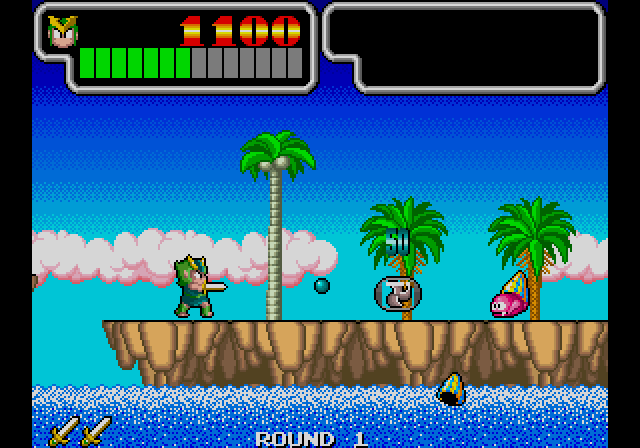 Monster Lair once again tore down the gamplay style from the previous two games and started with yet another fresh canvas with a few minor things fetched back from the bin. The main carry over being that it still a 2D platformer and the big change was that it was now a sort of side scrolling shooter. Your default weapon was a shooting sword, what I like to call the pea shooter. As you mow down cute monsters you will regularly pick up new weapons which would last temporarily. Each weapon felt quite unique and encouraged you to adjust on the fly to the given situation. Even if the weapon didn’t suit you, at least you knew it would only last for a very short period before you returned back to the pea shooter. The vitality meter would make its final return in the series from the very first game, fitting in quite well with the arcade action. As well as tripping on rocks, enemy projectiles would also assist in draining your vitality. The dreaded alarm sound would fire off once your bar hit the red and you were about to die. Not quite as memorable as Sonic’s infamous drowning music but it still haunts me today. Similar to the first game you’ll still die in a single hit accompanied by an amusing sound effect and your sprite rotating to the bottom of the screen. Additionally your odd avatar picture turns from a boy (or girl) into a creepy green skull temporarily. Unlike the first game you don’t restart the level, instead a handy dragon dumps you back into the game to continue where you left of. Be careful though because if your dumb like me you can sometimes get the dragon to drop you off in a bottomless pit instantly killing you again. This would be the first and only game in the Wonder Boy series to feature simultaneous cooperative play. One of you playing green haired Leo and the other the fabulous Princess Purapril (who would sort of feature in a later game).
Wonder Boy Retrospective Part 2: Boy Meets Sword
Wonder Boy in Monster Land
-
 Released: 1987
 -
Original hardware: Arcade
-
Other releases: Sega Master System, PC Engine, Atari ST, Amiga, ZX Spectrum, C64, Amstrad, mobile, Wii VC (arcade), Xbox 360 (arcade), PS3 (arcade)
-
How to play today: Xbox 360 (backward compatible with Xbox One, recently free as part of Games with Gold program)

My first venture into Monster Land was on a friends Master System a long time ago in a countryside village far away. I remember being wowed by the colour and hitting enemies with a sword. It doesn’t take a lot to impress me, I also don’t remember getting very far.
I didn’t get to really have a good old go at the game until it’s release on the Xbox 360. This version wasn’t even the Master System port, it was the English translation of the arcade port that was never released in the West. I have dabbled with the Master System port but this piece will mostly focus on my experience with the English arcade version.

Monster Land wiped the slate clean and started the series from scratch. The only main carry over being that the game was called Wonder Boy and it was a 2D platformer, otherwise a lot was thrown in the bin. No Vitality bar, no one hit deaths, no skateboard. Instead we got a health bar, swords, armour, a shield and even shoe upgrades, also you can drink alcohol in this game, yes… really. It’s a arcade game with RPG elements which still feels a little surreal thinking about it. This was one hell of a departure from the blonde kid in the green bush skirt. Of course if you played the arcade game you started out in what looked like a nappy (diaper) until you found your first suit of armour. The console versions showed more sympathy and your character was dressed in armour from the get go. Our hero is now called ‘Book’ or Bocke Lee Temjin if you manage to finish the arcade game or read the Master System manual.
Wonder Boy Retrospective Part 1: Grass Skirt Roots
One might argue that the Wonder Boy series has a more convoluted timeline than Zelda and since no one will make a book about it, I thought I would give it a bash in this series of articles. While this article series will explore the facts, it will be from my perspective, which means I’ll mostly be discussing the PAL (European) release of each game and only referencing other regions where necessary.
The Wonder Boy series holds an especially large place in my nostalgic heart. When I was growing up I didn’t have a Nintendo so the idea of the Zelda series being this amazing adventure title, was more of a myth that I’d only read about in magazines than a reality. For me, it was a very different kind of ‘Boy’ that took me on multiple adventures and filled my head with ‘wonder’ and captured my heart. I’ve wanted to delve into the Wonder Boy series for a long time so thank you for reading and I hope you enjoy it as much as I have.
Now without further adieu let me take you on a wonderful journey back to the first….
 Wonder Boy
Released: 1986
Original hardware: Arcade
Other releases: SG-1000, Sega Master System, Game Gear, ZX Spectrum, C64, Amstrad, mobile, Wii (Virtual Console)
How to play today: PS4 (Japanese Store Only)
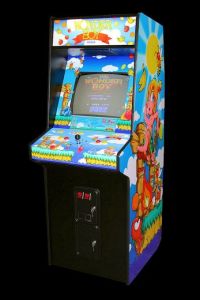
It seems appropriate that my introduction to Wonder Boy would begin with the very first game of the series. Although Wonder Boy did make it to the arcades in the UK my first experience of the game was on Sega’s portable system: Game Gear. Yes, that little portable system owners used to think was better than the Game Boy because it had colour! The Game Gear port was practically the same as the popular Master System port, the only main difference between them was that the screen size was adjusted for the portable system. A lot later down the road, at a retro convention in Blackpool, I was eventually able to appreciate the original arcade game. It was great to get that added wow factor of it being an arcade game, but I was more impressed by how similar the arcade was to the Game Gear version.
Retro Game Night: Sonic 3D Blast
Jam is sitting down and taking a trip down memory lane with Sonic 3D. Enjoy the fun and frolics in one of Sonic’s first jumps into a new dimension.
Wonder Boy: The Dragon’s Trap Review
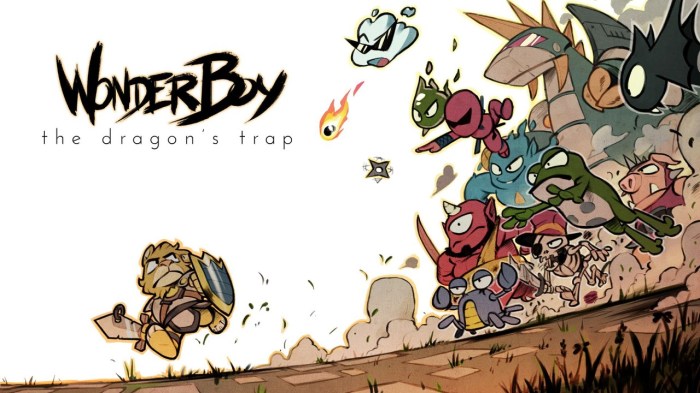
I’ve been waiting for a Wonder Boy revival ever since I saw that dammed “to be continued…” message at the end of Wonder Boy in Monster World on the Mega Drive. I did get some relief when the Wonder Boy Collection was released in 2012 for Xbox 360 and PS3, however. This game featured the localized version of Monster World 4 which was the sequel to the beloved game from my childhood. Of course this was just an English translation of a Japanese game that had been around for years. Some would be happy with this but, I wanted more Wonder Boy darn it! Which was why, last year I came over as giddy as a school kid when I heard Wonder Boy would be making a return in not one, not two but three games. One of these three games, Wonder Boy: The Dragons Trap developed by Lizardcube, is a remaster of the 1989 Sega Master System game. While not exactly a new entry into the Wonder Boy series, Lizardcube have put a lot of care and attention into this title, reviving a classic forgotten game to showcase to old fans and a potential new audience.
 The Dragons Trap is a beautiful remaster with hand drawn graphics, which brought Monster World to life by filling the 2D game with lots of detail in the backgrounds as well as the character sprites. The game allows you to instantly switch between the old and new graphics at the touch of a button. This simple effect doesn’t interrupt the gameplay and allows you to see just how much effort has been put into the remaster when held against the original. The soundtrack has also been updated this time with a full orchestra. The music is still reminiscent of the old 8 bit titles but has really been brought to life with the updated score. Just like the graphics you can also switch between the old and new soundtracks at the touch of a button.
Podcast: Beyond Oasis/Story of Thor Game Club
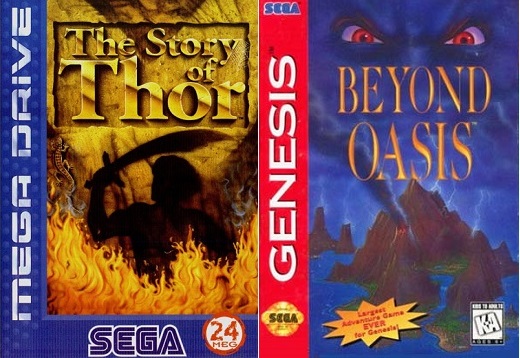
One of the latest Sega Genesis/Mega Drive releases is a top down action RPG and brawler from Ancient, the team also responsible for Streets of Rage 2. It was known as Beyond Oasis in North America and The Story of Thor in all other regions, and it tells the tale of Prince Ali as he recruits elementals to assist him in defeating an ancient evil. Jam and Fred delve deep into the development, gameplay elements, and main campaign of this late, but great, 16-bit Sega game.
Podcast: The History of CD-ROM Consoles, Part 2
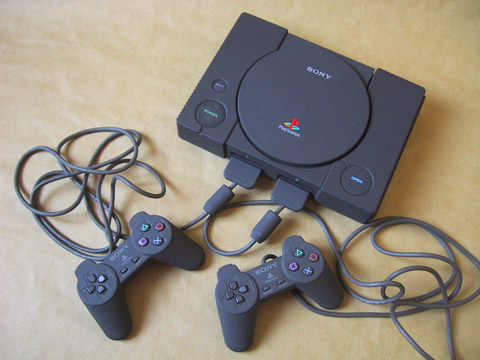
This week Fred sits down with Ali of 42 Level One to discuss the more popular 32-bit generation of CD-ROM consoles. What started as a disaster with the 3DO Interactive Player gave way to the big releases of the Sega Saturn and the Sony Playstation. While the Saturn may seem dead in the water for the West, it was a strong presence in the East. Finally everything wraps up with the beloved console that lacked sales: the Sega Dreamcast.
Podcast: Sonic the Hedgehog, Re-Hash
This is an update on a topic from the past. This week Fred and Jam are re-hashing the original episode Blast Processing: The Story of Sonic (Part 1) and discussing Sonic the Hedgehog. As a change of pace, they discuss the iconography of the blue hedgehog and how he evolved over time. Be sure to listen to the end of the show for a very special message from Jamalais.
The Horror Obscura 2016: Part 2
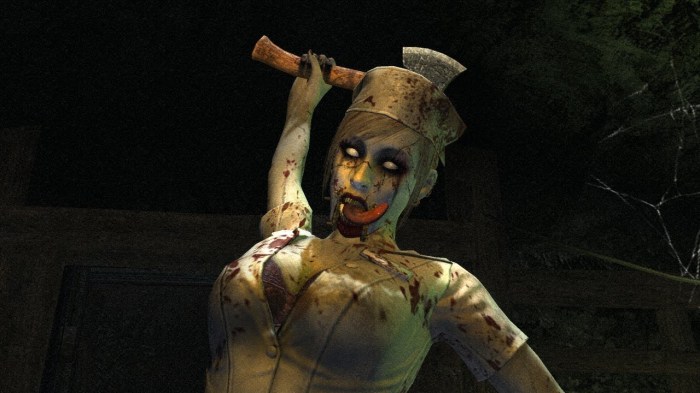
Rise Of Nightmares
The Xbox Kinect 1.0. Yes I’m talking about Microsoft’s first attempt at motion controls on the fantastic Xbox 360 console. The device actually sold pretty well to begin with people seemed to buy into Microsoft’s marketing for the device for about 5 minutes and then people left it on the side lines only to pull it out from the dusty corner of the living room when a new entry in the Dance Central series released. Then Kinect 2.0 happened and no one cared, so the real horror here is Kinect’s failure to capture an audience. Of course you’d have seen the title and you know that’s not what we’re here to talk about. No horror fans, today we are going to talk about the reason I kinda wanted to buy a Kinect for the Xbox 360 in the first place a little Sega title called Rise of Nightmares.
Rise of Nightmares to me is House of the Dead for the Kinect. Now I know that’s an incredibly bold statement to make since the House of the Dead series is just light gun zombie shooting bliss and Rise of Nightmares, well its a Kinect game and that just makes people just groan generally. We’re gamers right? we don’t like standing up and flailing our arms around we like to sit on sofa and be lazy. Unless of course your like Fred and you stand up to play games anyway in which case buy this game and enjoy.
Podcast: Psychic World
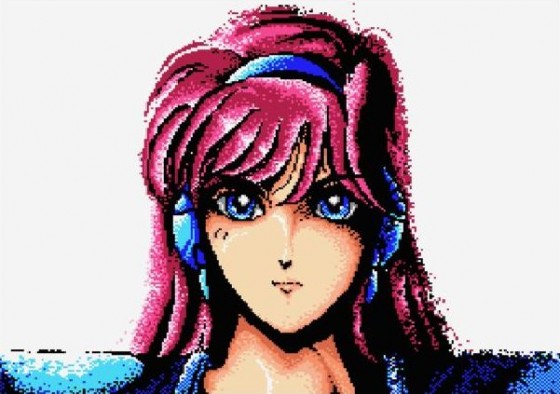
This week Jam’s pick was Psychic World. An action platformer originally released on the MSX as Psycho World (it was Japan only), this title received wider regard in the West as a Game Gear title and those in Europe may have also played the Sega Master System version. Fred and Jam dissect the development, gameplay, and version differences between this largely forgotten title by an almost unknown developer.
 Gaming History 101