Posts Tagged ‘sega’
Review: Sewer Shark (Sega CD)
 Console: Sega-CD/Mega-CD
Released: 1992
Developer: Digital Pictures
Publisher: Sony Imagesoft
Instruction Manual: Helpful – Link
Difficulty: Moderate
Played it as a child? Yes
Value: $0.87 (used), $20.00 (new) (pricecharting.com)
Price: $3-$10 (used) – Since this game was a pack-in, almost never seen sealed outside console bundles
Other Releases: 3DO
Digital Release? No
Sewer Shark is another converted game from the canceled Hasbro NEMO console and was intended to be played using a VHS (just like Night Trap) although how they were going to do it is completely beyond me. Most of the games I covered last week were good concepts that resulted in okay launch games that were flawed either by long load times or just not fully fleshed out. I would argue that among the launch window titles, Sewer Shark is the exception. It is a complete video game that utilizes the video functionality of the console and combines it with simple gameplay mechanics to make a solid experience.
 Set in a post-apocalyptic world, the surface of Earth is unlivable and creatures are forced underground to dwell in drab conditions. Not only that but the creatures of the sewers have mutated, causing larger sizes (scorpions and bats) and hybrids (ratigators – a hybrid of rats and alligators) that make sewers a dangerous world to trek on foot. As a result, little ships that can navigate the sewers, known as Sewer Sharks, navigate the tunnels to get people around, hunt for food, and offer a promise of the one haven left on the planet: Solar City. In Sewer Shark you play a new pilot recruit (nicknamed “sewer jockey”) that has the overall goal of retiring in Solar City. Unfortunately almost every jockey that attempts the trek dies in a sewer crash or by the hands of some mysterious danger in Sector 19, the final stretch before Solar City. As best put by your co-pilot Ghost in the beginning, you receive, “a name, a boss, a friend, and a reason to live…a million pounds of tubesteak, that’s all you gotta deliver today hotshot!” in order to make it to the end. This is important because the game has a very simple task – navigate the sewers, kill enemies to collect points (pounds of tubesteak), and once you hit a million you get the final encounter. It’s a pretty decent setup and definitely a concept not overused in games at that point, unfortunately to collect all this information you have to read the manual and play close attention to the introduction that can be skipped by simply pressing start.
Review: Make My Own Music Video (Sega CD)
 Console: Sega-CD/Mega-CD
Released: 1992
Developer: Digital Pictures
Publisher: Sony Imagesoft
Instruction Manual: Not necessary
Difficulty: Non-existent
Played it as a child? Yes
Value: pricecharting.com has hilarously not even covered these games
Price: Don’t even bother
Other Releases: Absolutely Not
Digital Release? No, aside from how horrible they are, the music is timely
 There is just no getting around this, these are terrible video games. Not only are they pop groups that only existed in the early part of the 1990s, but they aren’t games at all. You goal is just as it sounds: make a music video. It’s a crash course in linear digital editing where three streams of video appear on the screen at once and you use the A, B, and C button to select the “active” feed that will become your master video. Unfortunately the three feeds are made up of a random lot of public domain videos from the first half of the century, sometimes altered slightly for the beat, and the original music video for the game. I’m not saying that these videos are directorial masterpieces, but when combined with the patethic hodgepodge of public domain video, they’re the next Star Wars, I have never once wanted to leave the feed of the main video. Having said that, they are amazing fun at a party when you want to laugh your head off at how pathetically cheesy this generation of pop music was.
Review: The Adventures of Willy Beamish (Sega CD)
 Console: Sega-CD/Mega-CD
Released: 1993
Developer: Dynamix
Publisher: Sierra
Instruction Manual: Not necessary
Difficulty: Moderate
Played it as a child? Yes
Value: $8.99 (used) $15.01 (new) (pricecharting.com) – Price for Sega CD version only
Price: $6.00-$10.00 (used) $88.00 (new) on eBay
Other Releases: Amiga, PC, Mac
Digital Release? No
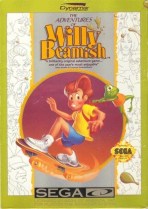
Another early Sega CD release, while most of the games that came out near launch were cool new CD-ROM interactions and FMV games, The Adventures of Willy Beamish was a port of an Amiga point-and-click adventure title that received several enhancements on Sega’s system. Published by Sierra, one of the two major producers of the adventure genre at the time, Willy Beamish totes you along on an adventure of a nine-year-old boy and the several decisions and influences you will deal with. Beamish is somewhat of a troublemaker as established by the opening scene in detention on the final day of school before summer break, which begins your adventure by sneaking past your ancient teacher and getting home. In typical Bart Simpson emulation for the time, Willy rides a skateboard, has a pet frog, and is prone to causing problems for any adults in his wake. From then on an amusing tale of a young boy saving his town unfolds that has you doing everything from the mundane – playing with your younger sister on the swingset – to the completely crazy – combat with a vampiric babysitter. As much as many critics have compared this game to a storybook come to life, little touches like a playable video game console in your bedroom and somewhat brancing plot paths show impressive game design for the time.

Review: Sherlock Homes Consulting Detective (Sega CD)
 Console: Sega-CD/Mega-CD
Released: 1992
Developer: ICOM Simulations
Publisher: Sega (Sega/Mega-CD)
Instruction Manual: Not necessary
Difficulty: Moderate
Played it as a child? Yes
Value: $5.99 (used) $11.99 (new) (pricecharting.com) – Price for Sega CD version only
Price: $5.00-$10.00 (used) N/A on US Version (new) on eBay
Other Releases: FM Towns (original release, Japan only), DOS/MAC, Commodore CDTV, Turbografx-16 CD
Digital Release? Yes – an updated version with better video quality released on PC, Mac OS X, and iPad in late Sept. 2012
Sherlock Holmes Consulting Detective is a bit of an anomaly in the realm of video games. Much like Myst, the game premiered on CD-based consoles and computers to show off the benefits of the new technology, but was much less of a game than it was an interactive form of media. A basic interface allowed the player to navigate various options and view content (mostly video) in order to solve one of the popular cases that originally appeared in the novel by the same name. To show off all of the fancy marvels of a multimedia CD-ROM title there was complete focus on showing off content rather than optimizing any aspect of the game for quick playing, resulting in a few simple actions taking ridiculous amounts of time to accomplish. I was recording gameplay videos for this article last night and it took more than 30 mins just to capture the “tutorial” that includes many icons, each with its own slow loading audio (no subtitles) background, and a video from Sherlock Holmes himself. It was so slow-paced and boring to capture, I made the executive decision that it would be even more boring to watch and scrapped the video. Don’t let this discourage you, especially with the re-releases likely having no load times, Sherlock Holmes Consulting Detective is a thought-provoking hybrid between the adventure genre and the full motion video (FMV) game.
Podcast: Obscure Survival Horror Games
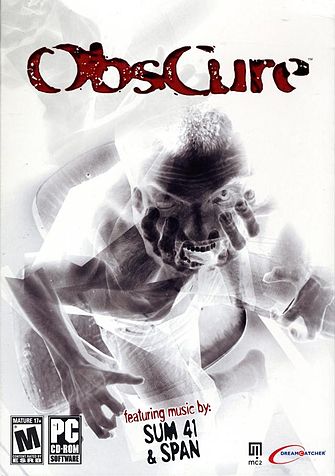
This week Fred goes solo to discuss obscure survival horror games Overblood, Enemy Zero, ObsCure, and Rule of Rose. He discuss many aspects about the games without spoiling most of the plot and help you consider whether you’d ever want to play them. Fred also announces October’s contest winner, announces a new contest, and sets up the game club titles for the upcoming months.
Download this episode (right click and save)
Happy 20th to the Sega CD

Sega CD Model 2 with Genesis Model 2, the most common setup
Okay, I know the Sega CD actually turned 20 exactly one week ago on October 15, but we’ve been very busy over here so we regretfully missed the window. Fortunately we are making up for that with tons of Sega CD coverage for the month of November, check in to see write-ups and gameplay on many of the titles that made Sega’s overpriced add-on a temptation in 1993. Now I know it is popular opinion to crap all over the Sega CD and in full disclosure I’m an avid fanboy of this specific system, but somewhere in between lies its true value. Someone once told me that any console with at least three good games is worth being in existence and under that theory the Sega CD justifies itself at least three times over. In recent days the Sega CD has also dropped in price/value so it’s quite possible to get your hands on a Genesis/CD combo for roughly $50-$75, which isn’t too shabby even by today’s standards.
In truth the Sega CD (Mega CD in Japan and Europe) wasn’t designed for our market. It was developed in Japan to compete with the PC-Engine CD (Turbografx-16 Duo in our country) and hopefully migrate the consumers of the time into the CD generation as an unassuming add-on instead of a full-blown machine. In the end both consoles did make their way stateside (NEC being very conservative with Turbo Duo distribution and Sega liberally releasing any and all hardware in every market) with hefty price tags ($300-$450). Sega CD emerged victorious but many would argue its victory was due more to the fact that almost every game that released in Japan came over here whereas an extremely meager amount of PC-Engine CD titles ever made it stateside. Like the PC-Engine CD, the Sega CD was able to upgrade visuals, considerably upgrade audio quality (especially with straight CD tracks in red and yellow book audio format), and increase capacity of discs to 600 mb when compared to the frail 32 megabit capacity of the Genesis. Sega CD was kept under wraps so tightly that aside from technical specs, many developers of early games had no idea what console they were developing for.
Feature: Mascots
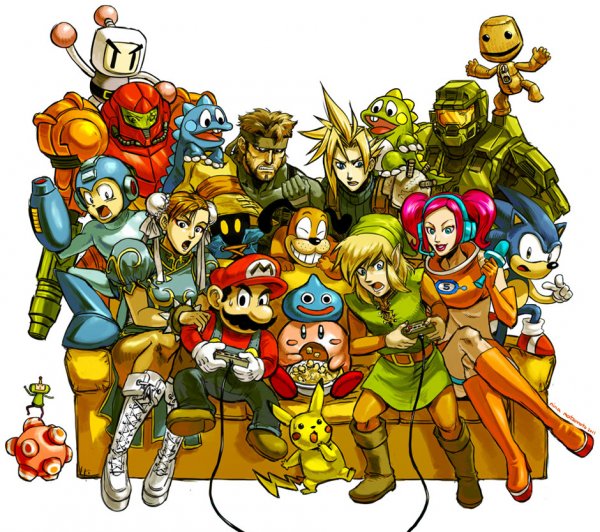
Mascots, you have to love them. No, wait, you don’t. For the most part mascots have been one of the dark spots on a game publisher’s marketing blitz. At first there was only one iconic mascot, Mario from Super Mario Bros., and frankly he was an accidental mascot that Nintendo had never imagined would become its poster child. After Mario other companies were consistently trying to establish mascots no matter the negative cost to the consumer. Mario is an exception not because he’s a particularly good or mistakenly genius mascot, he’s just iconic because his game was the catalyst to the return of video games after the crash of 1983. During the mid 80s Nintendo established a handful of strong franchises that are beloved by many fans and despite Mario being the “leader” per se, he’s definitely not alone when Nintendo wants to sell a product. I would argue that Link (from Legend of Zelda), Kirby (from Kirby’s Dream Land), Pikachu (from Pokemon), and to certain extent Donkey Kong (from Donkey Kong/Donkey Kong Country) and Samus (from Metroid). Much like Disney, Nintendo brings with it a cast of characters and franchises that all assist the overall brand in creating long running quality games. Everyone wanted to have that same wonderful family in the 90s (all of the above named characters had at least one title on the NES by 1992), but they seemed to miss the point that these characters were not created to be mascots, they just happened to get popular enough to become mascots.
Review: Castlevania: Bloodlines (Genesis)
 Console: Sega Genesis
Released: 1994
Developer: Konami
Publisher: Konami
Mega Drive? Yes (as Banpaia Kira Translation: Vampire Killer, Castlevania: The New Generation in Europe)
Instruction Manual: Not necessary – Link
Difficulty: Hard
Played it as a child? No
Value: $23.07 (used) $59.99 (new) (pricecharting.com)
Price: $25-$50 (used) $60-$350 (new) on eBay
Digital Release? No
Just like today there was fierce competition between the two main 16-bit consoles, SNES and Sega Genesis, that necessitated exclusive games. Aside from the first party developed titles, third-party developers could opt to either create the same game for both consoles or create completely new ones. In the case of many Disney games, like Aladdin or The Lion King, different companies developed the game on each console but the basic concepts and level design would remain consistent regardless of which version you purchased. Konami, on the other hand, would usually make completely different exclusive titles that played to the strength of the specific console it was designed on. There was no way this developer, who was free to release games on any (and every) console not to create games for both. Castlevania: Bloodlines is a side story game, much like Rondo of Blood, that played to the audiences that came running to Sega’s edgy console.
Silpheed (Game Arts)
If I mention the game Silpheed, those who aren’t Sega CD fans probably won’t be familiar with the game. On the other hand, if I mention a very similar title that came out at about the same time I know most gamers will instantly recognize it, Star Fox. While both are on-rails shmups, Star Fox had a new perspective directly behind the ship or in the cockpit, not to mention that there were many more SNES consoles than Sega CDs at the time. That doesn’t mean that Silpheed should be discredited; it offers some of the best polygonal graphics of the time without the groggy slowdown and keeps the traditional vertical shmup perspective. Oh yeah, did I mention it originally came out in 1986?
As a brainchild of Takeshi Miyaji (you know him better for his RPG franchises like Lunar and Grandia), this title released on the Japanese PC-8801 in 1986 and in 1988 made the jump to the Fujitsu FM-7. At that time Sierra took notice of it and ported it to the US (along with a rough translation) for the MS-DOS format. At the time the game featured pre-rendered graphics to create the polygonal effects we see in early 3D games like Star Fox. It wasn’t until the game was ported to the Sega CD/Mega CD in 1993 and actually featured polygonal graphics for all of the ships in the game, a feat for the time that was somewhat common in Sega CD titles.
At this point Silpheed is a rudimentary and quite easy shmup, but it retains the roots of the genre better than titles it’s often compared to like Star Fox or Star Wars Arcade. I’m still amazed with the graphics, especially when you know the game was already 7 years old when it came to the Sega CD and yet has a lot of similar dialogue to Star Fox – is there really a chance Nintendo “borrowed” choice phrases? If you have a Sega CD and you’ve avoided this title because it either didn’t look fun or had some of the most generic cover art you’ve ever seen, it might be worth giving this inexpensive game a chance.
Fantasy Zone (Sega)
So many shmups have heavy music, vast spacescapes and horrid alien bosses, but not Fantasy Zone. One of Sega’s first shooters to grace arcades in 1986 it’s also one of the best titles that explains exactly what you’re going to get. Fantasy Zone breaks the mold for such a popular title – it was ported to almost everything imaginable in the late 80s – and still manages to be a fun and addicting shmup. Forget the brutal challenge and seriousness of other shmups (like Gradius, which has been owning my soul all morning) and instead wander over to a colorful bubbly world with protagonist Opa-Opa.

Looking like a hybrid between a space ship and a small winged creature with legs, Opa-Opa has been somewhat of a sidekick for Sega, even getting an appearance in Sonic and Sega All-Stars Racing. In Fantasy Zone you will control this little ship in a scrolling world (think Defender) while defeating bad guys to collect money and upgrade your ship. As you move along certain boss battles will unlock that move you on to the next world, each new one as unique as the one before it. Fantasy Zone is littered with bright colors and funny looking enemies that get it categorized as more of a “cute ’em up”. To this day I still don’t know exactly where to unlock each boss, but I do know that they appear before you have spent too much time thinking about it. That’s the thing, unlike many other shmups you’re not trying to reach a goal per se, but rather exploring a world and letting it take you on a ride. I know plenty of people who didn’t think there even was a world beyond the first and still pumped quarters into the machine to play it anyway.
 Gaming History 101