Archive for 2016
Monster Boy is Coming Sometime in 2016
This is probably my most anticipated game of 2016. A new game for the Wonder Boy, well its spiritual successor. The latest trailer for Monster Boy looks like a love letter to Wonder Boy III: The Dragons Trap by featuring animal transformations in the game. Inspiration and love from both Wonder Boy in Monster Land and Wonder Boy in Monster World by featuring the infamous merchant sections from Land. It was interesting to see the trailer features animated cutscenes which look kinda cute. The developers have been allowed to practically mimic the formula made famous by the Wonder Boy series, Sega just didn’t want to give up the name for some reason. I guess Sega’s just going to sit on that IP and do nothing with it while other developers work around them, thanks Sega stay classy.
Interesting to note the game is going to be released to PS4, Xbox One, and PC but it has been rumoured the game will come to Wii U and PS Vita if the game does well. Not only would I love for this game to come to a portable device but I want Sega to release a complete Wonder Boy Collection. We were fortunate enough to get a Wonder Boy Collection of three games on PC, Xbox 360 and PS3 but there are still several games on the series that very much need a re release. Wonder Boy III: The Dragons Trap one of the best Sega Master System (and Game Gear) games for the system can only be found on the original Wiis virtual console which is quite disappointing. The only glimmer of hope is Monster Boy sells 40 billion copies and Sega at least considers releasing the old games. But I guess I’ll keep dreaming.
At the end of the day I’m hugely excited for Monster Boy. Hopefully the game will do well and we will see ports to other consoles but more importantly I want to see sequels. I want more games like this and hopefully it will encourage more developers to attempt to bring back for forgotten gems from the past, even if they can’t use the name. If you can’t call it Kid Chameleon call it Power Helmets ….. anyone buy that?
It’s Not “Wii U” It’s “Me, U, and Nintendo”
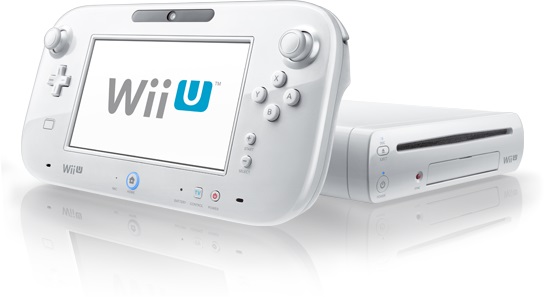
With the arrival of Zelda Twilight Princess HD being released on Wii U this week and ever circulating rumours that that next Zelda game will be released to the Wii U and Nintendo’s follow up console (codename NX), I though this would be an opportunity to review just what has happened with the Wii U and why Nintendo seems keen to move on from this console despite pockets of success.
 First off it’s worth acknowledging that the Wii U is far from a failure and this console will not be the end of the company. After all, if Nintendo can survive the awful Virtual Boy it can survive most things. The Wii U is a console that had the best intentions behind it: it wanted to bring the tablet experience to the living room along with exclusive Nintendo IPs that you can’t play on any other system. I initially always felt the Wii U was like the DS of video game consoles, where you would have two screens to look at. Unlike the portable, though, you would have to do some significant head movements to view the different screens. There are games made for this console both first and, yes, third party that really made the most of this set up. Despite the criticism ZombiU was a very clever experiment in having the player manage inventory on the tablet screen while action was happening in real time on the TV adding to the horror and tension of the experience. Rayman Legends (a game I adore across all platforms) was originally a Wii U exclusive and it shows on other ports of this game. If you play the game with other people, one player can use the tablet control to manipulate the environment and assist the other players. Another example is Unepic, a very cool indie title which uses the tablet to allow you to manage inventory. Yes, all of these titles were released to other platforms, but they’re examples where developers made the most of the hardware without making it feel like a tacked on gimmick.
Book Review: Legends of Localization Book 1: The Legend of Zelda

Like all great media, video games transcend the restriction of language. Thanks to standardized interfaces, albeit complicated and vast, one can easily pick up a game in any language and navigate it. Whether or not you absorb the key gameplay concepts or the story, however, still comes down to understanding the written or spoken words. This is especially true of retro video games since a majority were born in Japan and then exported to various countries and languages (the most common being English). Unfortunately the process of translating a game requires more care than simply asking what a word or written symbol converts to in another language. Localization is a more appropriate term for what video game translation is really all about. Clyde “Mato” Mandelin has actually done it and continues to document various changes and localization between video games in Japanese and English in his wonderful Legends of Localization site. He recently took the next step and published his first hardcover book, Legends of Localization Book 1: The Legend of Zelda, which does a few things I never thought possible. For one, it taught me a bunch of stuff about The Legend of Zelda that I never knew.
Let’s Play Bio Hazard (Japanese version of Resident Evil)
On the 24 hour live stream Fred and the group decided to randomly start Bio Hazard, the Japanese version of Resident Evil. After breezing through the mansion in less than 90 minutes, Fred and Jam decided to get together a second round and play through the rest of the game. Unfortunately much of the game audio in the first half of the second video was muted, but the important parts and of course the ending portion, are all intact, loud, and clear. Also Fred and Jam have a running commentary the whole time that was not muted so it’s not so bad. We decided to do the full Mo Disk, save everyone, ideal Jill ending and wrapped the whole thing in just over 4 hours total (over 2 videos). The play list is found above, enjoy.
Lost Treasures of Gaming: Boulder Dash (NES)
A classic on consoles, microcomputers, and arcades alike, Boulder Dash took many concepts from the past and turned them into a puzzle game all its own. Whether you’re watching for falling objects coming from most directions or avoiding enemies to unleash a flurry of rocks at them, Boulder Dash keeps you on your toes. This week Syd and Sean interviewed developer Chris Gray and I got an opportunity to dig out my old NES copy.
Head on over to omgnexus.com for the Lost Treasures of Gaming podcast.
Podcast: Introducing the Homer!

The Coleco Chameleon has had a long, hard journey. Starting out as the Retro VGS and a failed IndieGoGo, the company eventually repurposed and rebranded the console as the Coleco Chameleon (yes, that Coleco). In this episode Fred and Jam get into what the Chameleon is, why it’s controversial, and why its Kickstarter was delayed. The majority of the show is then spent talking about what the Chameleon is attempting to do and how viable that is in today’s gamespace.
How Bad Could It Be: Sonic the Hedgehog (2006)
Formerly known as “Is it Kusoge?” the series has changed to “How Bad Could It Be?” and we’re playing notoriously bad games. In addition, these videos are more brief cut together highlight reels to determine what Fred thinks of the game. This time he’s looking at the 2006 release of Sonic the Hedgehog on Xbox 360 and Playstation 3. How bad could it be?
Warning: This video contains adult language.
Resident Evil 0 HD Remaster Review
You know, I was actually really looking forward to playing through Resident Evil 0 HD Remaster. I thought to myself, “sure I’ll be part of the problem and buy this game I already own,” and the fact that the physical copy also came with Resident Evil Remake (in glorious HD) only sweetened the deal. I am a Resident Evil fan and I am not ashamed to a admit it. Has time been good to Resident Evil 0? This review will explore how the game stacks up on today’s consoles.
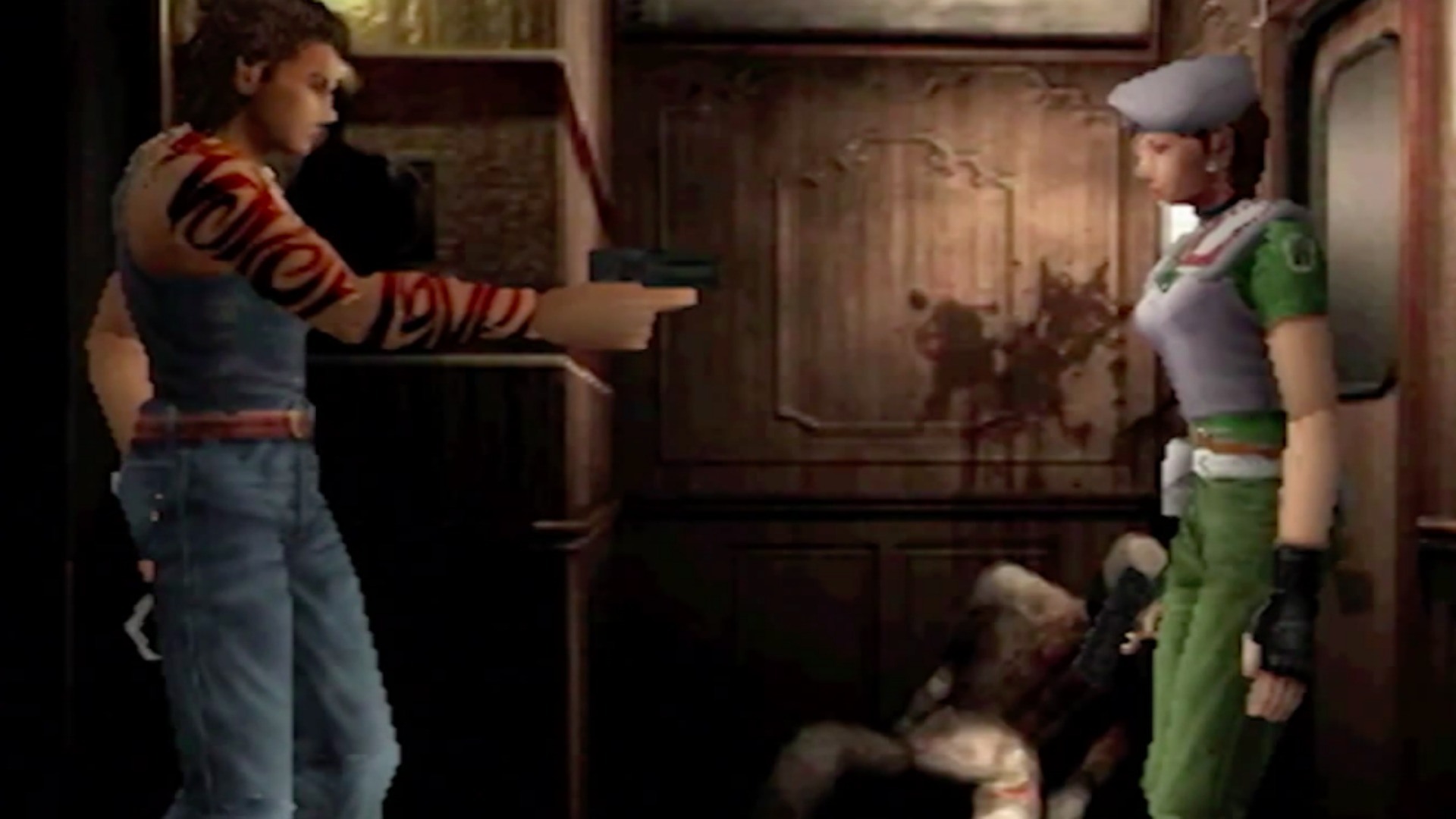 The background of this game is something that has always fascinated me mostly surrounding its release and how things in gaming were back then. Originally pitched for the N64 and getting as far as a prototype being made for the train segment of the game, this was Nintendo inviting Capcom to team up for the first time since those cool Mega Man games and Disney titles on the NES/SNES. In an offered deal, the two companies had planned for a Resident Evil game that will come out nowhere else. Well this invitation did intrigue Capcom and especially sat well with Shinji Mikami (the creator of the series). Capcom would go on to develop three exclusive Resident Evil games for the Gamecube as well as release three other cannon titles on the platform as well. The exclusives were Resident Evil Remake and Resident Evil 4, arguably two titles that became incredibly memorable, and inbetween this we saw the release of Resident Evil 0 (Zero). This game really was Capcom’s last hurrah of the pre-rendered background style game with a fixed camera and those tank controls which we all just love to joke about today. It was also the last game in the series where you could get mad about a key taking up an entire slot in our inventory. After this game things changed dramatically with Resident Evil 4. Resident Evil 0 was released at a time were people were a little burned out on the traditional style of the series (and it had been in development almost 5 years when it came out) so although it received decent reviews, it is often considered a low point.
Podcast: Genre Study – Platformers (Part 2)

This week Fred and Jam wrap up the platformer genre study. They start with analysis the 16-bit era, which many consider to be the pinnacle of 2D platforming, and then move on to 3D. 3D platformers were an interesting impasse in that they marked the future of game technology and design while also making way for a strong batch of platformers that refused the third dimension.
Collector’s Cache: Interview with Heidi
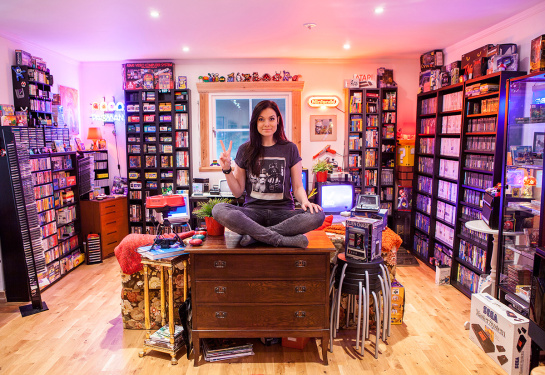
Meet Heidi. She is sometimes known as “stopXwhispering” and she runs the site retro-video-gaming.com. Oh that? Well she also has amassed an impressive collection of over 200 consoles, 5300+ games, and designed that sweet game room. With all that in mind, we just had to interview her and see how she views video games as both a player and a collector. It’s a great conversation that puts the balance of collecting and gaming into perspective.
Download this episode (right click and save)
If you want more photos (and I know you do) of all her finds head over to her site to see photos and information on her collection. It’s worth subscribing too because she’s always on the hunt and documenting every step of the way. You can also follow her on Instagram, Twitter, and YouTube (she’s got more links on her site).
 Gaming History 101