Archive for the ‘Gameboy’ Category
Podcast: Me Money Bin
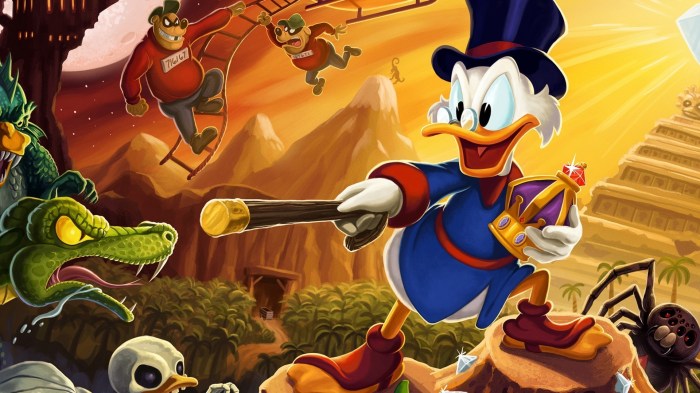
This week Fred and Trees are discussing Capcom’s Disney games. In the 8-bit era Capcom received the Disney license and created a little game called DuckTales based on the popular Saturday morning cartoon. Not only was it a mass success, but it was an excellent game that gave way to a whole slew of 8-bit and 16-bit gems on Nintendo and Sega consoles.
Hardware Profile: Game Cartridges

It’s hard to believe, but the typical cartridge game began to phase out of gaming in 1995 when the new wave of consoles and the subsequent movement to disc-based media began. I’m sure plenty will be quick to point out that the N64 was a cartridge-based console, but I truly believe this decision was the result of Nintendo not wanting to give up the control over manufacturing and sordid history making a machine that read discs. This change happened 18 years ago, which means there is a significant number of gamers that are now in their early to mid 20s that have never played games on a cart. This is truly a shame because the versatility of cartridges is much more abundant than most people realize, but the crutch will always be that carts offer little storage for massive prices. In today’s lesson we will discuss what makes up a cartridge, benefits/setbacks, and how the cartridge was used to literally upgrade consoles for more than two decades.
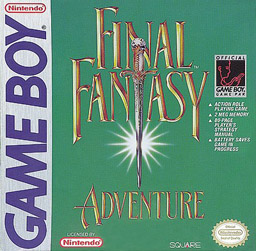
Review: Final Fantasy Adventure (Gameboy)
 Console: Gameboy
Released: 1991 (1993 in Europe)
Developer: Square
Publisher: Square/Sunsoft
Instruction Manual: Link for manual, link for map (both helpful)
Difficulty: Moderate
Played as a child? No
Value: $14.49 (used), $77.49 (new) on pricecharting.com
Also Known As: Mystic Quest (Europe), Seiken Densetsu: Final Fantasy Gaiden (Japan), Sword of Mana (GBA)
Digital Release? No
To fully understand the mystery and headaches surrounding Final Fantasy Adventure, you must first understand the massive differences between the names, although not the content, around the world. Times have changed and these days for uniformity (and the much more widespread import scene) most games retain their original title or some semblance of it. Square in particular was very forward thinking in terms of translation and localization, which resulted in games being renamed and more properly translated in different regions. Enter the portable debacle with the Final Fantasy name. On Gameboy there was a single title named Final Fantasy Adventure, this title, and another trilogy called Final Fantasy Legend (I, II, and III); Adventure is in fact the first entry into the Mana series (known as Secret of Mana Zero for a while and now officially renamed to Sword of Mana) and Legend is better known as the SaGa series, which has continued like Mana outside of portables. Legend wasn’t very widely regarded, SaGa has always been a bit of a so-so series, because it didn’t do anything new and was a simplified RPG by all accounts. Final Fantasy Adventure was a bit more interesting because it took the RPG-like elements of a Final Fantasy (the term “gaiden” in Japan relates to a “side story” so the title is fitting over there) and combines it with the action/map/exploring elements of Legend of Zelda. In short, it’s a hybrid of the most popular RPG and adventure titles on the NES now moved to the portable. It was popular then, too, spawning a long running series and the sequel, Secret of Mana, is an SNES favorite to most gamers.
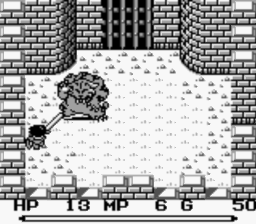 Final Fantasy Legend involves a story about a boy, you name him, and a girl, also named by you, that are brother and sister. Bound by an interesting connection with the Mana Tree, the adventure begins with an evil presence named, get this, the Dark Lord, and his plans to destroy the world. In order to prevent it, our duo sets out on a quest to eliminate him. You will journey to many towns, meet plenty of people that will either help or inform you, and of course at some point the girl gets kidnapped by a man named Julius, the Dark Lord’s advisor. This is just a simplified version of the first third of an adventure that spans tens of hours, a time hard to pin down because like Legend of Zelda your progress depends on how fast you can navigate the map and know what to do next. Trust me, print up the map in the link above and bring a FAQ with you – there are a few moments where you can get stuck unable to beat the game.
Getting It Backwards
 Video game consoles are one of the most interesting electronics items on the market for several reasons. Probably the most prolific is the fact that there are frequent hardware upgrades, which we call generations, that move home consoles forward. Because each new console is basically a piece of hardware frozen in time, the need to innovate and improve on future games demands that they be constantly updated. This works counter to movies or music, which see improvements from new hardware but don’t require the upgrade to enjoy the medium. Imagine if you could play Super Mario Bros. on the Wii but with drastically upgraded visuals or Dead Space on the original Playstation with the juxtaposed setback, this is exactly what we see when we watch Ghostbusters on VHS versus DVD versus Blu Ray. As a result new consoles come out all the time, typically in 5-8 year intervals, and usher in a more interactive experience – it’s important to note that the greatest difference between games and other media is that they are active, not passive experiences – and with it comes a new format for software.
Enter the concern of the consumer. It can be frustrating for both gamers and parents of gamers alike to purchase a new console, especially when it renders an entire collection on an older console useless. As retro gamers I’m sure we see the value in it, but for the majority there’s a want to move forward and never look back. Well, that is until there are enough new games to get me to migrate over. This is another slow start that prevents all but early adopters to purchase new hardware, which can then result in fewer sales. With fewer sales comes more canceled projects on new hardware, which then results in fewer sales of the hardware and the cycle continues until a console is considered dead in the water. Just look at the Virtual Boy, Jaguar, and possibly even the WiiU about this problem; developers have enough to worry about, they can’t also deal with poor penetration rate due to a false start console. One excellent solution to help usher in that awkward period between consoles is the concept of backwards compatibility, or a new console that can play a previous generation’s games.
Friday at the Movies: Terminator 2: Judgment Day (Arcade)
 Console: Arcade
Released: 1991
Developer: Midway / Probe Software (console)
Publisher: Midway / Acclaim (console)
Ports: Gameboy, Game Gear, Master System, Genesis, SNES, PC/DOS (all as T2: The Arcade Game)
Digital Release? No (probably due to license issues)
In 1991, the sequel to Jim Cameron’s film Terminator hit theaters and literally launched the careers of Edward Furlong and Robert Patrick as well as ushering in a new generation of computer generated image (CGI) effects. With a monster budget the film was accompanied by a marketing blitz like no other. At that time making an arcade game for the movie was a great and potentially cost-free endeavor (it would make as much in revenue that it cost to produce), which resulted in one of the heaviest cult following of a licensed game I’ve ever experienced. Not only was it a licensed arcade game, but it was also a bolt-on light gun game (which I describe in my Operation Wolf article) that made it significantly more approachable than any other format. For me, it was the “why can’t I beat the damn third level!” game.
 It’s quite an expansive experience that takes you through most of the pivotal moments of the movie, including several levels that take place in the post-apocalyptic future and subsequent present day challenges. Like other shooters of its type, you have a primary machine gun weapon and bombs that can be fired off for some of the stronger enemies or to take out clusters. I must admit that at the time it was awesome taking out the original T-800 cyborgs we first saw in the original Terminator and the neo-future setting. Then you hit level three. Most people don’t remember and even fewer talk about the fact that unlike arcade quarter-swallowing titles like Revolution X, level three requires skill to complete and no amount of money in the world will get you past it. This is why most people who have played this game get hung up on or never see beyond the third level. It’s a protection mission where you literally have to memorize the spawn points of the oncoming enemies that seek to destroy the truck John Connor is fighting in. This vehicle is very susceptible to damage and if you can’t intercept the airborne enemies right as they appear you have no chance of completing the level. If John dies, you have to restart with no true penalty. This resulted in long, repetitive, and frustrating replays of an escort mission you never wanted to play. It’s really disappointing too, because the remaining seven levels are both fun and provide much more fan service for those that have seen the movie. These levels are also brutally difficult to the point that I don’t think it’s possible to pass on consoles and requires more than 50 credits on arcades/MAME.
Top 5 Shmups on Portable Consoles
Given the frantic and brief nature of most shmups, the genre is perfect for the portable platform, much like it was perfect for the arcade. For one reason or another, these titles can be rare to find on traditional handhelds and even harder to find actually good ones. On the other hand some of my favorite shmups are exclusive to portables (at least in the United States) so we’ve compiled a list of the portable shmups actually worth playing.
5. Space Invaders Extreme (Nintendo DS)
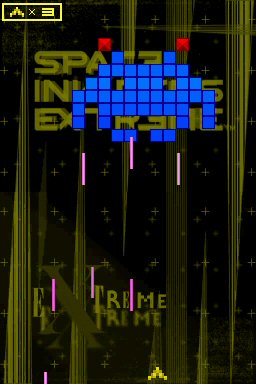 When Taito decided it would re-invent the Space Invaders formula I was skeptical. We were told in previews that the game would feature an upbeat techno soundtrack, plenty of screen tricks and explosions, dual screen integration on DS, and a hybrid between modern game mechanics and the original title. Just in case that sounds tempting to you, it’s almost verbatim what no gamer wants to hear when a beloved franchise is rebooting. Somehow Taito pulled it off and with no updates save for that fearful list Space Invaders Extreme was an addicting masterpiece. It released in a few forms on a few consoles but bar none the Nintendo DS version is the one to get. With non-linear level progression and utilization of dual screen to make the DS function more like a vertical arcade monitor, it’s like having Space Invaders on speed. Bonus rounds, boss battles, and power-ups were simple tweaks to the original formula that switched up gameplay without being a specific reason to play the game. Needless to say if you haven’t played Space Invaders Extreme, regardless of whether or not you’re a fan of the original, you should give this handheld game that’s easy to learn and brutal to master a try. It will keep you occupied for many a train, plane, or bus ride to come.
Now & Then: Mortal Kombat II (Midway)

Midway must have known it had a hit on its hands with the original Mortal Kombat because no time was wasted creating the sequel. While most of us anticipated the home release of the first title, Mortal Kombat II (MKII) snuck into arcades and blew our minds. This game literally had it all – more characters, more fatalities/finishing moves, and more violence. For most MK series fans, myself included, this is considered to be the best and it’s one of the highest grossing video games of all time.
MK Meets its Match
The original Mortal Kombat was an impressive fighter, especially for one that was developed with digitized actors in only 10 months, but creator Ed Boon wanted to do more. “[MKII] had everything we wanted to put in the original MK but didn’t have time for,” he said in an interview with EGM2 (issue 5, Nov. 1994). It does seem like there’s some truth to his claim, especially with the introduction of more stage fatalities, a second fatality for each character, and even joke finishers “friendships” and “babalities”. I’m not so sure the roster was an initial idea, nor was the background concepts of Outworld, but I can definitely see the Midway team wanting to break away from the perceived reality of the original. Not only was MKII the definitive version of the original concept, but it continues to be the template for which all other titles in the series are based on.
Now & Then: Mortal Kombat (Midway)
Last week Mortal Kombat released for the Playstation Vita and while I was playing it for review I couldn’t help but notice that the series has not changed much since it first released. Normally this is a bad thing, but in the case of this series its strength relies on its simplicity. Mortal Kombat is a game all about beating the crap out of your opponent and then topping it all off with a finishing move that is extremely violent in nature.

First Impressions
I still remember the day that I saw the first Mortal Kombat arcade out in the wild. It was 1992, I was 10 and frequented the local roller rink where I could meet up with friends and play arcade games. Yeah, even in 1992 the roller rink was still alive and well in Chicago’s northern suburbs. At that time the arcade was dominated by Street Fighter II, a cartoon-like fighter from the geniuses at Capcom, but I wasn’t all that good at it and truthfully had little interest in fighters. That is, until I walked in and saw a new game that prominantly displayed the title “Mortal Kombat” in bright yellow letters. My first thought was how stupid it was that the word “combat” was misspelled, but then I noticed that the game used digitized realistic looking actors. Even more impressive was when the first uppercut made contact and a shower of blood erupted from the opponent’s face. I was intrigued.
 Gaming History 101