Archive for the ‘Reviews’ Category
Buying Guide: 3DO

We all love our retro consoles, but in many cases the consoles we are buying are because they are cheap enough or we have enough money to purchase what we never were able to in our youth. Unfortunately the business of making used retro items available to the masses can at times be a money grubbing market where consumers are deceived by people they will never meet in real life. As an individual who has spent the last decade scouring the local area, conventions, eBay, and the internet as a whole I have learned many valuable lessons. For that reason I present my buying guide series, which is a handy quick guide to knowing what to purchase and what will cost an arm and a leg to replace.
Historically the 3DO, most commonly associated with Panasonic’s license because it had the largest manufacturing numbers and advertising campaign, is the most expensive video game console of all time. Trip Hawkins, founder of Electronic Arts (EA), formed the 3DO company for software development and developed a hardware spec that could be licensed to companies for manufacturing, much like companies have done with VCRs and DVD players. Unfortunately since the profit for manufacturers had to come from the sale of the hardware itself – all other consoles were sold at a reduced price for a loss and software sales would close the gap for profits – and the 3DO sold for the staggering price of $700. As a result, few consoles were actually sold and three companies (Panasonic, Sanyo, and Goldstar) had already manufactured units that weren’t selling. This balance of supply and demand results in the 3DO being the much more reasonable $100-$150 on the used console market these days, but few know what actually came in the box. Here’s what you need to get it working:
Buying Guide: Jaguar

We all love our retro consoles, but in many cases the consoles we are buying are because they are cheap enough or we have enough money to purchase what we never were able to in our youth. Unfortunately the business of making used retro items available to the masses can at times be a money grubbing market where consumers are deceived by people they will never meet in real life. As an individual who has spent the last decade scouring the local area, conventions, eBay, and the internet as a whole I have learned many valuable lessons. For that reason I present my buying guide series, which is a handy quick guide to knowing what to purchase and what will cost an arm and a leg to replace.
The Atari Jaguar just can’t get a break. Touted as a technological breakthrough of its time, this holiday 1993 console may have been a commercial failure but it was clearly a hardware powerhouse. Sure, it may not have been a true 64-bit console just because the twin Tom and Jerry chips were 32-bit co-processors (more on that in our podcast), but for $250 you were getting a lot for your money (estimates claim the Jaguar cost up to $400 to manufacture). As far as exclusives go there’s not really much to tell. You’ve basically got Aliens vs. Predator, Tempest 2000, Breakout 2000, and Kasumi Ninja – half of which are considered to be crap by most gamers – so finding the games on the Jaguar elsewhere will be easy to do. Couple that with the god awful controllers and the need (at least for me) to purchase all of the console games complete in box with the inserts for the controller (and essentially increasing the price anywhere from three to ten fold) and most people are probably going to walk away. In the event that you aren’t one of those people, just prepare for the fact that you will be spending on the upwards of $100-$200 just on a working console with a couple of controllers and then probably $30-$60 on each game if you want all the inserts and whatnot. What you will receive in return is an impressive experience for not only the exclusives, but also the definitive version of a lot of games that were ported all over the place. Doom, NBA Jam: Tournament Edition, Wolfenstein 3D, Raiden, Flashback, Primal Rage, and Rayman all look as good or better than their original arcade/PC versions and often have enhancements or extra content to justify the re-release on this console. Not only that but titles like Cannon Fodder, Syndicate, and Theme Park are identical to the 3DO versions of those games – which in and of itself was a much more expensive ($700) and disc-based console – so if you want to re-live those halcyon Windows 95 days you either have endless headaches with DOSbox or grabbing these decent controller-ready console ports. At this price point, you want to make sure you know what to get so here’s what you can expect when trying to grab a Jaguar:
Buying Guide: Super Nintendo

We all love our retro consoles, but in many cases the consoles we are buying are because they are cheap enough or we have enough money to purchase what we never were able to in our youth. Unfortunately the business of making used retro items available to the masses can at times be a money grubbing market where consumers are deceived by people they will never meet in real life. As an individual who has spent the last decade scouring the local area, conventions, eBay, and the internet as a whole I have learned many valuable lessons. For that reason I present my buying guide series, which is a handy quick guide to knowing what to purchase and what will cost an arm and a leg to replace.
There’s really no denying the popularity of the Super Nintendo Entertainment System (SNES for short). Despite Sega taking a temporary lead over Nintendo in the early 90s, there’s no denying that the SNES was the champion of the 16-bit console generation. This simple machine managed to introduce us to hardcore JRPGs, mode 7 graphics, early polygonal 3D (Starfox), and even faked 3D environments (Donkey Kong Country), all without the multiple add-ons and disc-based media of other consoles at the time. If you’re discouraged in the least by yellowing of the plastic casing for the console, don’t be, it’s a mere chemical reaction with age and actually speaks to the durability of the product. On that same note it’s pretty doubtful that you would need a buyers guide for the SNES as just like most other Nintendo consoles there are few parts, but all the same here’s what you will definitely need:
Buying Guide: Sega Genesis (plus Sega CD and 32X)

Behold “Frankenconsole”
We all love our retro consoles, but in many cases the consoles we are buying are because they are cheap enough or we have enough money to purchase what we never were able to in our youth. Unfortunately the business of making used retro items available to the masses can at times be a money grubbing market where consumers are deceived by people they will never meet in real life. As an individual who has spent the last decade scouring the local area, conventions, eBay, and the internet as a whole I have learned many valuable lessons. For that reason I present my buying guide series, which is a handy quick guide to knowing what to purchase and what will cost an arm and a leg to replace.
We have finally come to the console I started this entire buying guide series for: the Sega Genesis (and its many add-ons). With a short period of its life having a 55 percent market share over the SNES (the year it launched, mind you), there were plenty of households who had a Sega Genesis. So many, in fact, that there were five different versions of the console and 3 iterations! Depending on the console version, your specs will vary but the list of what you need should stay the same so I’m going to run over the list.
First of all, figure out which model you want, here’s the gallery of what they look like:
Podcast: 4 White Buttons and 2 Joysticks

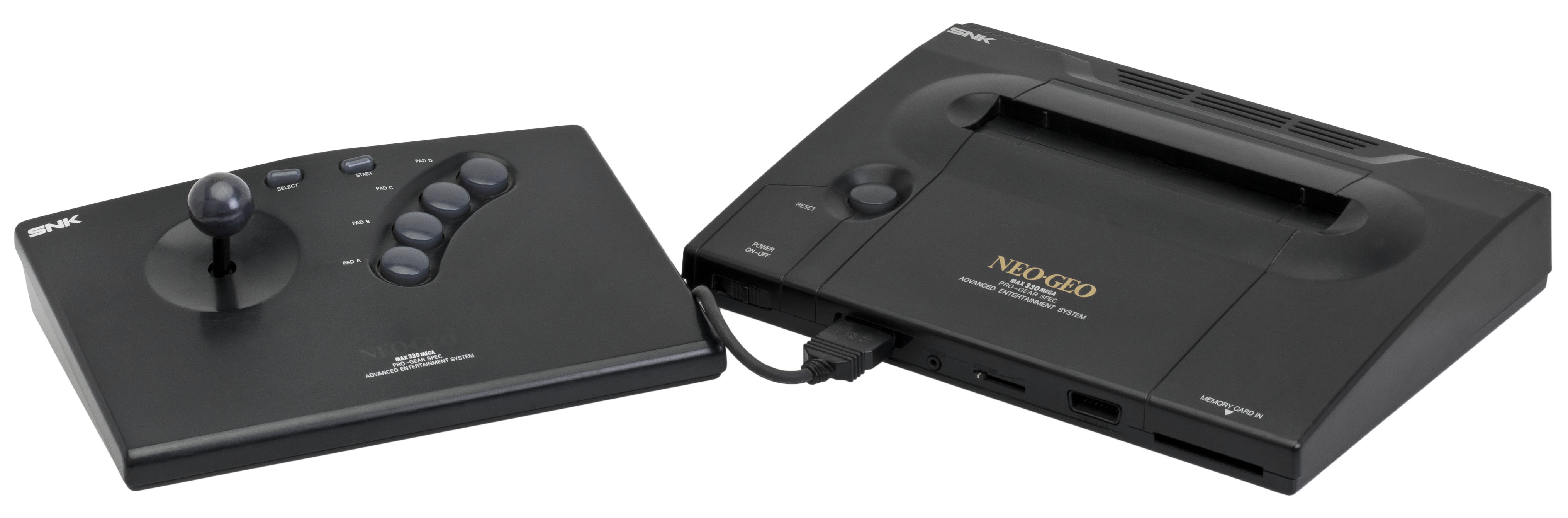
This week we celebrate the release of the Neo Geo X Gold by celebrating the original Neo Geo hybrid console/arcade. We discuss the launch, initial pricing, history and iterations of the console, and eventually get to the many games you can enjoy. As the holy grail of my 16-bit gaming as a child, I always dreamed of (and now currently cherish) my Neo Geo.
Song in the opening and closing is Keith Apicary’s Neo Geo Song (Music by FantomenK) and song info, album info, and music video can be found here.
Buying Guide: Turbografx-16

We all love our retro consoles, but in many cases the consoles we are buying are because they are cheap enough or we have enough money to purchase what we never were able to in our youth. Unfortunately the business of making used retro items available to the masses can at times be a money grubbing market where consumers are deceived by people they will never meet in real life. As an individual who has spent the last decade scouring the local area, conventions, eBay, and the internet as a whole I have learned many valuable lessons. For that reason I present my buying guide series, which is a handy quick guide to knowing what to purchase and what will cost an arm and a leg to replace.
There was this brief period of time when the store shelves of Toys R Us had Nintendo games, Sega Genesis games, and Turbografx-16 games. After the Super Nintendo ushered in a whole mess of games in the holiday season of 1992 (the console premiered in 1991 but it had significant presence the following year) and the Turbografx-16 consoles moved to that dreaded area in the middle of the aisle. Before you knew it they were stacking up boxed consoles at discounted $99.99 price tags (the console originally was either $199.99 or $149.99, although I forget which) and in 1993 it was down to $49.99 with free games and all at once disappeared. Due to the fact that NEC’s “in between” console only moved at that exremely low price point, most people that owned the console kept it, which makes for a bit of scarcity on today’s market. Fortunately I have this buying guide here to assist you and aside from games, there really isn’t a lot to the accessories or hook-up of a TG-16.
You will want to make sure your console has:
Buying Guide: Sega Master System

We all love our retro consoles, but in many cases the consoles we are buying are because they are cheap enough or we have enough money to purchase what we never were able to in our youth. Unfortunately the business of making used retro items available to the masses can at times be a money grubbing market where consumers are deceived by people they will never meet in real life. As an individual who has spent the last decade scouring the local area, conventions, eBay, and the internet as a whole I have learned many valuable lessons. For that reason I present my buying guide series, which is a handy quick guide to knowing what to purchase and what will cost an arm and a leg to replace.
Oh the Master System, the red-headed step child of the 8-bit era. Not only were Sega products unknown to American markets – Japan had seen several iterations of the Sega Mark consoles, the Master System known as the Mark III – but it released alongside the NES in America and had nothing to show for it. The two biggest problems with the Master System today is that it’s relatively expensive for a working consoles itself, there are ways to play many of these games on the Game Gear or Genesis (with the Power Base Converter), and not too many good games (many arcade games also got ported to Genesis with better quality). For those that aren’t aware, Nintendo also had developers and publishers locked into license agreements that didn’t allow games to be released on another console and basically had the Master System in checkmate in the US. Still, I have the console and love some of the games/ports that are available on it (like Ghostbusters) and plenty of collector’s are curious what the console looks like. Aside from the video provided below, make sure the consoles you get have the following:
The Hobbit Review
 Console: Xbox
Released: October 24, 2003
Developer: Inevitable Entertainment
Publisher: Vivendi Universal
Instruction Manual: Not Necessary
Difficulty: Easy
Played it as a child? Yes
Value: $4-$10 (used), $10.49 (new) (pricecharting.com)
Other Releases: Yes – PS2, Gamecube, and PC and a modified version for the Gameboy Advance
Digital Release? No
No, sorry, this is not the ZX Spectrum game from 1983, but rather the more widespread console release from twenty years later, although I’ve never played the original so perhaps it’s garbage and this is the better choice. Back when the Lord of the Rings film trilogy was nearing its end, a slew of video games hoping to cash in on the wild success of Peter Jackson’s movies released. After sapping all of the film properties, the books themselves became source material for spin-offs and one of the first was based on Tolkien’s prequel book The Hobbit. As a mild fan of the series I always felt that The Hobbit was the better book and overall story, which explains the tale of how Bilbo Baggins became the first hobbit to embark on an adventure with 12 dwarves and wizard Gandolf the Grey. Not only that, but it introduces the ring, odd creature Gollum, and probably one of the only dragons in that universe, the unrivaled greedy dragon Smaug. Despite the semi-decent cartoon version of the book that I had seen in my youth, I was immediately drawn to the playful cartoon re-imagining of Tolkien’s book and despite some major snags in the gameplay department, I was pleasantly surprised.

Buying Guide: The Nintendo Entertainment System

We all love our retro consoles, but in many cases the consoles we are buying are because they are cheap enough or we have enough money to purchase what we never were able to in our youth. Unfortunately the business of making used retro items available to the masses can at times be a money grubbing market where consumers are deceived by people they will never meet in real life. As an individual who has spent the last decade scouring the local area, conventions, eBay, and the internet as a whole I have learned many valuable lessons. For that reason I present my buying guide series, which is a handy quick guide to knowing what to purchase and what will cost an arm and a leg to replace.
Most of us that are over 30 and grew up gaming had a Nintendo Entertainment System (NES) at one point or another in our collection, so it’s not that common to have a reseller screw you over with a used console. Still, I think it’s best to know exactly what you need to look for in your NES so here’s the official list of items that should be included in a used console:
The Japanese Always Get The Better Version: Contra (Famicom)
 Console: NES/Famicom
Released: 1988
Developer: Konami
Publisher: Konami
Instruction Manual: Not Necessary – Link
Difficulty: Moderate
Played it as a child? Yes
Value: $26.01 (used), $399.95 (new) (pricecharting.com)
Other Releases: Yes – Arcade, Microcomputers, PS2, DS (all are the Arcade version)
Digital Release? Yes – Virtual Console (NES version), XBLA/PSN (Arcade ver) ($5 on all platforms)
With box art that is clearly Arnold Schwarzenegger and Sylvester Stallone combining forces to be in a franchise that belongs to neither, Alien, this game has it all. For the most part you and potential partner rush through eight levels, including a jungle that is ripped straight out of Predator, to attack bad guys and eventually aliens. It’s a confusing game in America because nothing is spelled out for you, the game just drops you in the jungle without any plot, scene, or explanation. Now that I’ve played the Famicom version (and the video below will show the complete game to you as well), it looks like there’s a decent plot that unfolds. Since I don’t know Japanese nor can I read Kanji, what is actually conveyed is a mystery to me, but I’m sure the translated explanation is only a Google search away. Contra not only introduced us to a frustrating and fun franchise, but it’s also where most of us learned the Konami code (up, up, down, down, left, right, left, right, B, A, Start). If you put this into the title screen you would begin the game with 30 lives (if you instead end the code with Select before Start you can start a two player game with both players having 30 lives), which was the only way most of us could beat the game when we were younger. After years of practice I can now complete the game with the given 3 lives, although not flawlessly, and I prove it in the video below.

The Famicom version I’ve always heard is “enhanced” over the NES version and the two are worth roughly the same amount, so when I was picking up the title at a retro show I opted for the Japanese version. It’s not really that different, but the changes of note are the aforementioned cutscenes, moving backgrounds, and slightly easier difficulty. Either way it just goes to show that the Japanese version of most games will always be the better version. Then again when this title released in Europe it was renamed to Probotector and features robots instead of humans (although in either version the enemies pop and explode). Without further ado, I give you the completion video of Contra on the Famicom.
 Gaming History 101