Archive for the ‘Reviews’ Category
Podcast: Playstation 2 Top 10

40 games enter – 20 from each cohost – and only a fourth emerge in the coveted Top 10. We have various debate mechanics, odd conversations, and personal bias to get this unique take on a traditional topic. Don’t agree with us? Of course not. Please send us your own top 10 for the community episode in 2 weeks.
Hard Reset Redux Review

There’s this constant complaint heard all too often by the PC gaming crowd: why don’t more PC games come to consoles? The reality is some combination between controls, marketability, and code development, but I always like to say, “it’s just more of a PC game.” That wasn’t always the case though, as we’ve seen in the past with the original first person shooters like Doom and Duke Nukem 3D that seemed to have mass appeal beyond the keyboard and mouse. Hard Reset felt like it was airlifted out of that time period in the way it played and handled game design and it made more sense that developer Flying Wild Hog’s first effort come to console gamers. Now the updated Hard Reset Redux seeks to ask how interested console gamers really are. It has updated controls for gamepads, it has seemingly enhanced graphics (although PC players may disagree), and it has a re-balanced campaign all for the sake of the console gamer. This is a tailor-made conversion from the world of PC and if you’re wondering if it was all worth it the answer is a resounding, absolutely.
Dishonored Play Diary
Trying something new here. Dishonored is a game I (Fred) have not been able to play properly and the first video in this series shows why. As a result, I’m trying to be more laid back and complete the title without worrying about perfect stealth and perfect pacifism. Instead of a “Let’s Play” I’ve decided to do a new type of series called a “Play Diary” and here’s what these will be. This video series currently only has one video, but will update as it grows. No new posting will be created for each video. If you want updates, I recommend subscribing to Fred’s channel.
Let’s Play videos are tough because the person playing them has to constantly be speaking to an audience, it stifles gameplay, and it’s a bunch of work to get live. A longplay is easy because you just capture and upload, but only a handful of people watch it. We’ve noticed that the commentary gets more views, but that people watch them for short periods, whereas a longplay is only seen by a smaller group but they watch often to entirety. The Play Diary starts with a full length “quick look” of an hour or two with commentary followed by update videos that are about 5-15 minutes that cover several hours of gameplay and commentary. In addition, the entire longplay is uploaded as a playlist for those that want to see the full playthrough. Hopefully this is a more user friendly way for everyone to see what they want. This will not completely replace my “Let’s Play” videos because certain rare games will want to be viewed from start to finish. The video below is the playlist for the diary and the longplay playlist can be found here: https://www.youtube.com/playlist?list=PLlLaoX7aLm9_32Aqpog3OgW2ZenWg_mV8
Klonoa: Door to Phantomile Review
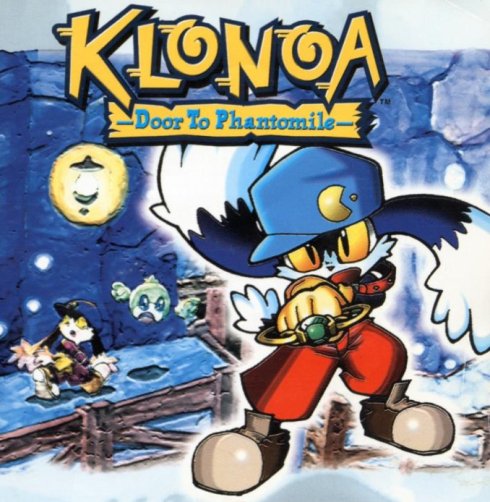
Some titles just never seem to fair well in the West. Klonoa is a cute cuddly anthropomorphic animal, he kinda looks like he’s a cross between a dog, a cat and maybe a rabbit. In Japan this cute fella was incredibly popular and his Playstation game rocketed to the top of the charts for sales. Then Klonoa made his happy debut in the West and things just didn’t seem to fair well for the poor guy. The problem you see is we are horrible people over here in the West. Gamers here are hungry for blood like vicious hyenas, and that’s why games like Tomb Raider did well. If we have a platformer it better have attitude like Crash Bandicoot or be in 3D like Spyro the Dragon. Klonona failed to perform well and in turn the game become very rare and sought after to Playstation collectors in the West. I was lucky enough to rent this game back in 1998. Fortunately with the power of PSN, I was able to download the game to my PSP and see what this cuddly adventure has to offer and what we folk in the West failed to see.
ChronCD Episode 2
The high quality version can be downloaded at: https://archive.org/details/chroncd_ep2
ChronCD is the comprehensive coverage of all CD-based console games in chronological order. Episode 2, while shorter, covers more games that make up the holiday season of 1989. More historical context is provided and a plan for regular future episodes is outlined.
00:00-00:42: Opening Credits
00:43-01:59: Episode 2 Intro
02:00-07:15: RomRom Karaoke (Vols. 1-5)
07:16-09:31: Gambler Jikochushinha
09:32-14:10: HyperDyne Side Arms Special
14:11-23:52: Ys Book I & II
23:53-26:08: RomRom Stadium
26:09-30:15: Last Alert
30:16-31:52: Closing Remarks and Future Episodes
31:53-32:17: Credits
CD player sound effect by user NLM from Freesound.org and used under Creative Commons license for non-commercial use. Sound can be found here: https://www.freesound.org/people/NLM/sounds/144054/
Origins of Shadow of the Beast

It all began in 1989 with developer Reflections Interactive showing a tech demo to British publisher Psygnosis. With Psygnosis impressed by what they saw Shadow of the Beast was originally released on the Commodore Amiga and was graphically mind blowing for the time. With several colours on screen at once as well as up to twelve levels of parallax scrolling backdrops, the game looked like it was from an arcade machine. Martin Edmonson, one of the founders of the company, was fond of very difficult video games. He wanted to be challenged and have to play a game multiple times to be able to master it. The score for the game was composed by David Whittaker, which was very atmospheric and left a lasting impression on fans. The cover art for the game was from the talented hands of Roger Dean who was well know for working on album covers for Yes, Asia, Budgie, as well as several others. Roger Dean merged a stone age look with technology to create a very unique look to the cover of Shadow of the Beast. He would also later go on to redesign the logo for Tetris.
Shadow of the Beast (2016) Review

Shadow of the Beast is a reboot of a 1989 Amiga title that I’m not quite sure ever released outside of Europe until the Genesis port hit North America in 1991. Even then, the port wasn’t given the proper shift from the base 50hz of Europe to the 60hz of North America, so this already difficult game ran 20 percent faster and was nearly impossible. I bring all of these factors up because it’s a weird title to reboot and an even weirder title to have the backing of a worldwide release from Sony, but that’s exactly what happened. I think I can see why. Shadow of the Beast is a timing-intense action title that manages to balance the nostalgia for the original while also retaining the changes in game design over the last 27 years to make a standalone experience everyone can appreciate. This is what it means to reboot a franchise and make it better than the original.

At its surface the game does retain its origins – and my American may be showing a little, but these are origins I was completely unaware of and I was still able to appreciate. You play as Aarbron, a warrior with an unknown past (you can unlock) that seems linked to the worlds you are exploring, however you have been changed. Now you are unable to understand the language of the beings that speak to you (also an unlock) and the only common tongue seems to be violence. You are a tall, fit warrior with twin spikes protruding from your hands that appear to be made of bone. Despite having modern 3D rendered graphics, Shadow of the Beast is a 2D side scroller that will frequently put your navigation and combat skills to the test in a balance of the left and right sides of the screen. I was impressed with how basic the combat system was until your realize that this game, like its protagonist, isn’t bogged down with complexity but rather tactics. You will have to think in the moment to react with the wave of enemies approaching you or you will suffer being volleyed back and forth from a series of foes. It’s daunting at first and by the end of the first level I thought I didn’t stand a chance against the reboot of a title already known for having a punishing difficulty and unfair traps. That’s not the case here, but you will need to practice and learn the full spectrum of your move set through advancement of the campaign and unlockables you purchase between levels. I wasn’t pleased with this decision at first – one my biggest gripes with the MetroidVania formula is that it gates you for not having what you don’t know exists – but these levels are brief and exciting enough that I managed to excuse this decision. By the end of the second level you won’t have the full body of options, but you’ll be robust enough to tackle a majority of the game’s challenges.
Podcast: Old Console, New Hardware (Part 2)
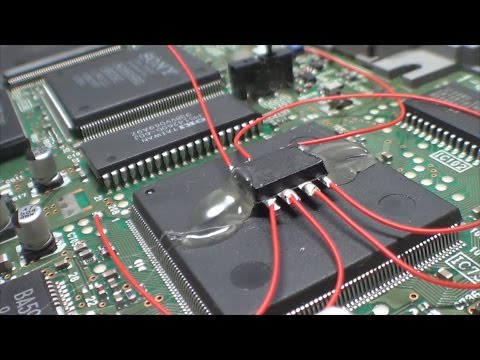
This week the mod conversation continues as the guys move into the CD-based consoles and the wonderful world of modchips. There were many ways to get different things done in the Playstation era and beyond. Finally the show wraps up with soft modding and the various things that can be done from consoles only a few generations old.
Doom Retrospective
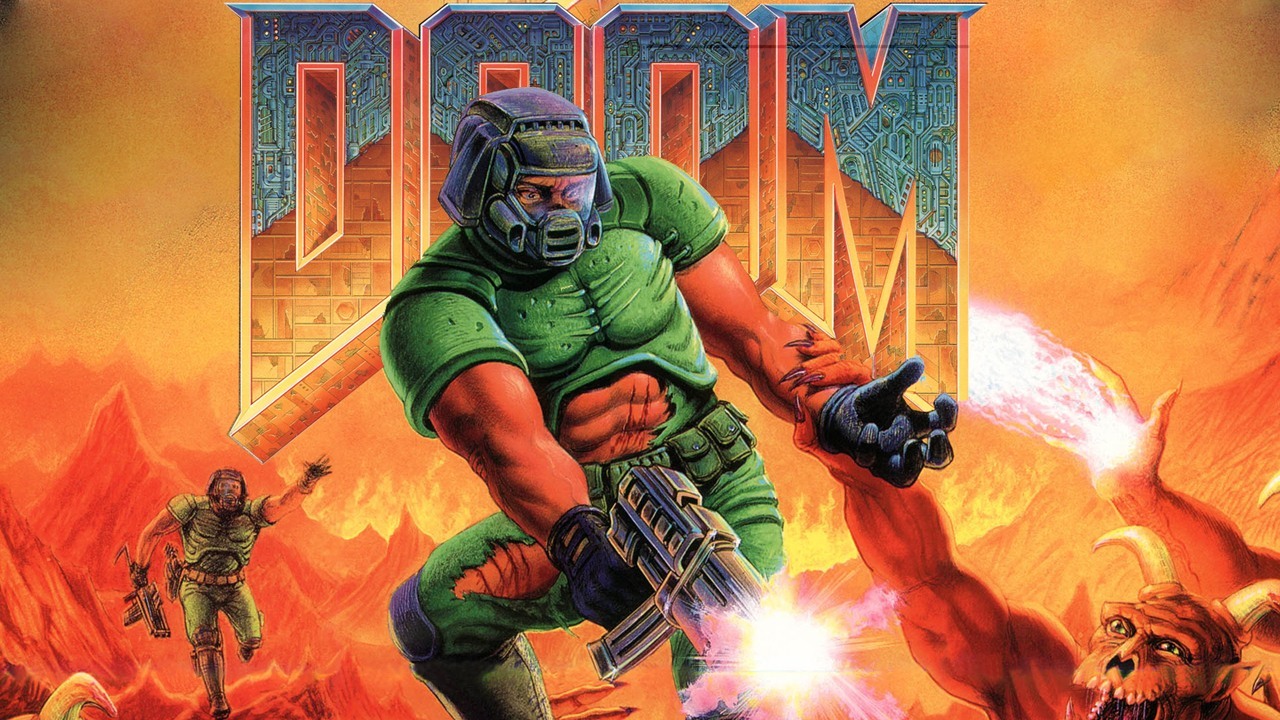
As I said in a previous article regarding Wolfenstein 3D, “Wolfenstein 3D did it first and Doom did it best.” The same team, id Software, created both games so it’s less of a competition and more of an evolution. While I agree that all games are a team effort, the technology that runs these games can sometimes be credited to one person. In the case of Doom that one person is none other than John D. Carmack. By this point most of us are aware of John Carmack and what he’s contributed to video games as a whole, but back in 1992 he was the guy creating a new engine for a new game. That engine was called the Doom Engine. Carmack claims the name Doom came from the movie The Color of Money in which Tom Cruise describes a custom pool cue as “doom” when questioned as to what’s in his case. It was created to enhance the first person shooter to include different heights, distances, and even sound effects in stereo for a more realistic type of game. In truth the hardware of the time couldn’t handle rendering a 3D world so the game is actually all on a flat plane in the code, which is why rooms never overlap and you can shoot a guy on a ledge by just aiming at the wall beneath him. I don’t know about the rest of you, but in 1993 I hardly noticed. Doom had positional breathing of mutant men, lighting effects (including dark rooms), a hybrid cyberpunk and distopian Hell setting, and a ton of violence. It was the rock star of the video game world.
Podcast: Old Console, New Hardware (Part 1)

We all love old video games, but the frank reality is that as they age our consoles run solely on obsolete technology. As the basic capabilities of modern hardware increases, so does the ability to mod classic consoles to keep up. In addition, new accessories also come on the scene to serve needs that were either impossible or too expensive in the past. This episode covers the earliest cartridge-based consoles and the many modifications and accessories you can get for them. In part 1 of this two-part series we get a bit technical, but also present the many options you can potentially research.
 Gaming History 101