Archive for the ‘Xbox’ Category
Know This Developer: Ubisoft Montreal

As I was looking into doing a history on this fantastic studio I came upon an excellent reference that was so good there’s no point in me doing one. While it’s easy to rag on big media conglomerates, IGN’s Mitch Dyer did a fantastic story of the origins of Ubisoft Montreal that includes stories of Splinter Cell‘s origin, the reinvention of Prince of Persia, and the visual treat that is Far Cry. It’s a fascinating story that documents the major franchises you can thank that studio for and a must read for gaming history buffs like ourselves. Head on over and check out House of Dreams: The Ubisoft Montreal Story when you can.
Review: Buffy the Vampire Slayer
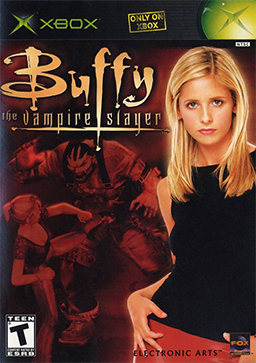 Into every generation a review is born, one review in all the world, a chosen one…that will play Buffy the Vampire Slayer on the original Xbox. If you haven’t already guessed I’m a huge fan of the original nineties TV show, so, was already quite excited to start playing this. TV to game conversions, similar to film to game conversions, are a rather common trend, especially if there is already a fan base behind the source material. However, again similar to film conversions, the outcomes of these games often have rather mixed results.
As you would expect you play as Buffy Summers, the chosen one, destined to take down all of the nasties that go bump in the night. One of the main highlights for me, was that the game brings in the main characters from the show. This includes main bad guy The Master who, of course, is up to no good and its up to Buffy and the Scooby gang to sort it out. Overall the story feels like a several part episode of the show and for those who are interested, the story sits within season three of the Buffy anthology. Despite being released in 2002 (season three aired in 1998) the plot of this game still ties in really well. The writers did a great job to make this appeal to fans, with characters regularly bringing up stories or incidents that happened in the TV show. If you are totally new to Buffy, on the other hand, it’s possible some of the dialogue and plot will throw you a bit as it doesn’t come across as particularly friendly for newbies. That said, the basic story is pretty straight forward and self contained: there’s a bad guy that needs taking down and you’re the good guy to save the day.

The game scores big right off the bat as the opening theme from the TV show is also in the game. Other than that the music wasn’t particularly engaging or memorable but it fit in well enough for the cutscenes and level design. The voice acting is just fantastic, pretty much every actor from the TV show lends voice talent to the game except for Sarah Michelle Gellar (reasons unknown), which is odd. Instead Geselle Loren provides the voice work for Buffy and does a fantastic job. The only problem with the voice work – and this was an issue for a lot of games from this era – is Buffy and other enemies will spurt out with the same one-liners constantly. Though its fun to hear Buffy say “Come on, kick my ass,” after hearing it several times in the same level it gets old really quick.
Perspective: The Guy Game
 There are times when a game comes around that is seemingly so transparent that the public can shun it on general principle. Perhaps it’s the fact that I can be more honest about my morbid curiosities or maybe it’s just the fact that I am into stupid things that the rest of the world can dismiss, but I still want to know if a game that has such a reputation is abysmal. One such title is The Guy Game. Developed by Top Heavy Studios – of which it shocks no one that this was the company’s only title – but what you may not know is that the man behind the studio is Jeff Spangenberg, most notable for Iguana Entertainment and Retro Studios. Take-Two Interactive released this title in 2004 and it was accompanied by the likes of Serious Sam and Manhunt, so the company wasn’t unfitting. Needless to say the game tanked, but not before strumming up a slew of controversy and had me interested in just what the hell it was. Now that I’ve gotten my hands on a copy I can sadly report that there is no meaningful purpose for this game to exist…well, except boobs.
As if Top Heavy looked at the worst stereotypes of gamers and “spring breakers” all at once and weaved them into a shallow shell of a game, this title offers little value even to those that accept its very nature. You and up to three other people get to compete in a sort of mini-game/quiz show hybrid where the stakes are topless young ladies. Outside of the actual program proper each player is given a series of mildly homophobic rules about how to behave while playing the game and it is expected that all other players in the room assist to police each person, the penalty being to drink. Even your player avatar reeks of desperation as you select one of eight models to represent you and if you play well enough, you guessed it, she too will get naked for you. There are a total of 20 episodes, each one containing three rounds, and of course the mini-game that makes up round two in some derivative of beer pong is entirely optional (there’s a “skip” button at round start). The other two rounds consist of watching young bikini-clad girls answering trivia questions that range from flat basic to college level academia. Your task is simple: answer the question and then guess in round one whether the girl gets it right or wrong and in round three what wrong answer she gave for each question. If you personally get the question right you get arbitrary points that hold no meaning to main game and by its own admission aren’t even considered. On the other hand if you guess what the girl is going to do correctly the reward is that you get closer to seeing her topless without the game’s signature censor bars or mosaic. So basically you’re playing a Magic 8 ball to hopefully see a set of breasts for one or two questions (it takes 8 perfect guesses out of 12 total questions to remove censorship). I guess the long term reward is that you permanently unlock censorship for that episode, but if you don’t you have to play every other episode before getting the opportunity to play again.

Podcast: Heroes in a Half Shell
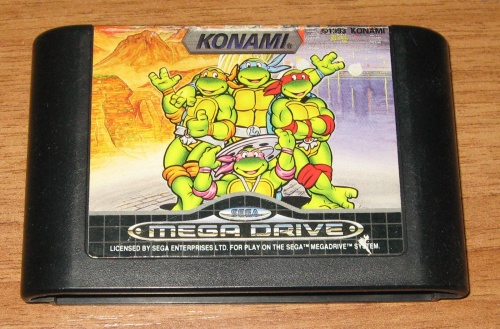
You can’t have grown up in the late 80s and not been struck by the Teenage Mutant Ninja Turtles. It apparently transcends geographic location as co-hosts Fred (@spydersvenom) and James (@Jamalais) both had similar experiences growing up in different parts of the world. In this episode we dissect TMNT’s roots, marketing, and obvious integration into video game culture, covering the games that made the surfer-style pizza-eating New York crime fighters a pop culture sensation.
Podcast: Excelsior!

This week Chip Cella (@CaptinChaos) and Andy Urquhart (@damien14273) from the Agents of Shieldcast join Fred to discuss retro titles featuring Marvel Characters. They learn that the distinction of titles early in gaming were almost nonexistent and perhaps Marvel having Disney behind it may actually be a good thing. Listen on true believers!
Podcast: You Are Go For Launch

This week we are joined by Chip Cella (@CaptinChaos) to discuss listener William’s topic: What makes a successful console launch? It all ends up being more stories of console launches and discussions on killer apps, but we do manage to cover most mainstream consoles.
Podcast: Legends of Rayman

This week Fred is joined by Chip Cella of the B-Team Podcast to discuss one of the few colorful platformers born completely from the 3D generation, despite the first game playing on a 2D plain. Ubisoft’s Michel Ansel all but saved the then struggling developer/publisher and gave way to a challenging but fun series starring a character with no limbs.
Opening Song – Rayman Theme from the original Rayman on PS1
Closing Song – Madder by Groove Armada (Fred incorrectly refers to this song as Hoodlum in the show)
Retro Game Night: Fatal Labyrinth and Call of Cthulhu Dark Descent
In what is easily the two hardest game titles to spell, we are going dark for this week’s Retro Game Night.
First up is user @NeoJakeMcC requesting one of the first ever rogue-likes from the Genesis/Mega Drive: Fatal Labyrinth.
Next up is the relatively rare hybrid between survival horror, first-person shooter, and adventure: Call of Cthulhu Dark Descent.
Getting It Backwards
 Video game consoles are one of the most interesting electronics items on the market for several reasons. Probably the most prolific is the fact that there are frequent hardware upgrades, which we call generations, that move home consoles forward. Because each new console is basically a piece of hardware frozen in time, the need to innovate and improve on future games demands that they be constantly updated. This works counter to movies or music, which see improvements from new hardware but don’t require the upgrade to enjoy the medium. Imagine if you could play Super Mario Bros. on the Wii but with drastically upgraded visuals or Dead Space on the original Playstation with the juxtaposed setback, this is exactly what we see when we watch Ghostbusters on VHS versus DVD versus Blu Ray. As a result new consoles come out all the time, typically in 5-8 year intervals, and usher in a more interactive experience – it’s important to note that the greatest difference between games and other media is that they are active, not passive experiences – and with it comes a new format for software.
Enter the concern of the consumer. It can be frustrating for both gamers and parents of gamers alike to purchase a new console, especially when it renders an entire collection on an older console useless. As retro gamers I’m sure we see the value in it, but for the majority there’s a want to move forward and never look back. Well, that is until there are enough new games to get me to migrate over. This is another slow start that prevents all but early adopters to purchase new hardware, which can then result in fewer sales. With fewer sales comes more canceled projects on new hardware, which then results in fewer sales of the hardware and the cycle continues until a console is considered dead in the water. Just look at the Virtual Boy, Jaguar, and possibly even the WiiU about this problem; developers have enough to worry about, they can’t also deal with poor penetration rate due to a false start console. One excellent solution to help usher in that awkward period between consoles is the concept of backwards compatibility, or a new console that can play a previous generation’s games.
Operation Wolf (Arcade)
 Console: Arcade
Released: 1987
Developer: Taito
Publisher: Taito
Ports: NES (1989), Sega Master System (1990), DOS (1991), PC-Engine (Japan Only, 1992), Microcomputers (varies), PS2 (in Taito Legends, arcade version), Xbox (in Taito Legends, arcade version)
Digital Release? Yes – NES Version on Virtual Console (no light gun support, see below)
Operation Wolf is a game I can’t help but associate with Pizza Hut. Taito’s introduction and unique take on the light gun shooter flooded the American franchise so much in the late 80s that I can think of no other place I’ve actually played the game. Of course being a pizza franchise and not an arcade the difficulty was always cranked to the highest and I swear they timed the machine to play approximately half the time it took to cook a pizza so that families with two kids would each play one credit before the food was ready. This title brought more realism to the light gun shooter as you play a member of special forces diving behind enemy lines in Cuba to extract five hostages. Aside from the realistic violence of invading and destroying enemy encampments, this was the first light gun shooter to feature a plot and natural progression as well as a moving, scrolling stage instead of a fixed location. Did I mention it was addicting too?
 Mind you, we are still back in 1987, where arcade games were more about providing a specialized challenge with amazing graphics instead of explicitly drinking as many quarters as you’ll offer. The cabinet had a large mounted Uzi machine gun that could only swivel slightly with forced feedback to emulate gunfire kickback, pretty nifty for games of that time. At first glance it seems like a spray & pray title, but as you run out of ammo, die, and get captured you begin to realize you might need a slight bit of strategy. If you die, even if you have another quarter in the machine, you will still need to complete the current level from scratch (although you will now have full ammo and life). Innocent people are thrown into the mix, which you should not shoot, and animals, which you should shoot, for bonus items. Early on there’s not much penalty (as I prove in the video below) for blasting civilians or missing a vulture flying overhead, but by the final levels your screen will have a literal 50/50 spread of civilians and enemies with these animals being mostly your only source of ammo and power. I only do one playthrough in the video, but in truth I replayed this game for a couple of hours of fun. Unlike other light gun shooters before it, this game was less about accuracy and more used the gun as a placeholder for an invisible reticule. This is why most home ports and conversions don’t suffer from controller porting and in truth this type of game has proven to be just as effective, if not more so, with a reticule and controller as opposed to a light gun (which I cover in the home ports below).
 Gaming History 101