Archive for the ‘Videos’ Category
Operation Wolf (Arcade)
 Console: Arcade
Released: 1987
Developer: Taito
Publisher: Taito
Ports: NES (1989), Sega Master System (1990), DOS (1991), PC-Engine (Japan Only, 1992), Microcomputers (varies), PS2 (in Taito Legends, arcade version), Xbox (in Taito Legends, arcade version)
Digital Release? Yes – NES Version on Virtual Console (no light gun support, see below)
Operation Wolf is a game I can’t help but associate with Pizza Hut. Taito’s introduction and unique take on the light gun shooter flooded the American franchise so much in the late 80s that I can think of no other place I’ve actually played the game. Of course being a pizza franchise and not an arcade the difficulty was always cranked to the highest and I swear they timed the machine to play approximately half the time it took to cook a pizza so that families with two kids would each play one credit before the food was ready. This title brought more realism to the light gun shooter as you play a member of special forces diving behind enemy lines in Cuba to extract five hostages. Aside from the realistic violence of invading and destroying enemy encampments, this was the first light gun shooter to feature a plot and natural progression as well as a moving, scrolling stage instead of a fixed location. Did I mention it was addicting too?
 Mind you, we are still back in 1987, where arcade games were more about providing a specialized challenge with amazing graphics instead of explicitly drinking as many quarters as you’ll offer. The cabinet had a large mounted Uzi machine gun that could only swivel slightly with forced feedback to emulate gunfire kickback, pretty nifty for games of that time. At first glance it seems like a spray & pray title, but as you run out of ammo, die, and get captured you begin to realize you might need a slight bit of strategy. If you die, even if you have another quarter in the machine, you will still need to complete the current level from scratch (although you will now have full ammo and life). Innocent people are thrown into the mix, which you should not shoot, and animals, which you should shoot, for bonus items. Early on there’s not much penalty (as I prove in the video below) for blasting civilians or missing a vulture flying overhead, but by the final levels your screen will have a literal 50/50 spread of civilians and enemies with these animals being mostly your only source of ammo and power. I only do one playthrough in the video, but in truth I replayed this game for a couple of hours of fun. Unlike other light gun shooters before it, this game was less about accuracy and more used the gun as a placeholder for an invisible reticule. This is why most home ports and conversions don’t suffer from controller porting and in truth this type of game has proven to be just as effective, if not more so, with a reticule and controller as opposed to a light gun (which I cover in the home ports below).
Hogan’s Alley (NES)
 Console: NES
Released: 1985
Developer: Nintendo R&D 1
Publisher: Nintendo
Difficulty: Easy
Instruction Manual: Not Necessary – Link
Played as a child? Yes
Price: $2.00 (used) $500.00 (new)
Famicom Version? Yes, as Hōganzu Arei
Digital Release? No
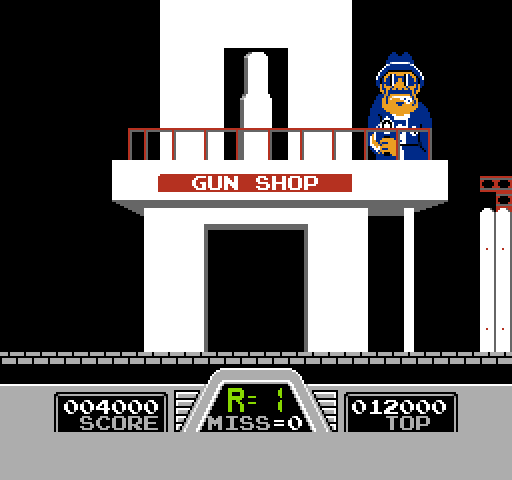 There’s more to Hogan’s Alley than it originally seems. If you’re doing a double-take and noticing considerable similarities (especially on the main screen) to Duck Hunt, that’s not a mistake. Considering it was developed by the same studio, in the same year, and a launch title for the initial NES, this was the next logical step for a light gun shooter. I was probably one of the few that picked this title up at its initial release but it impressed the hell out of me. It was a surprising simulation of the FBI training program with cardboard cutouts for new recruits. Basically, if you’ve ever seen a shooting range in a movie, this is the basic design for the program. When Duck Hunt and Wild Gunman were the only competition, Hogan’s Alley (especially in the cityscape “Game B”) was a breath of fresh air and gave way to the more popular Lethal Enforcers and Crime Patrol series.
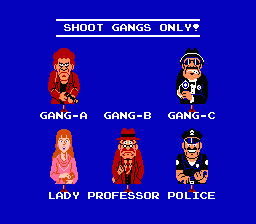 You have 3 games to choose from: one is a cardboard shooting range, one is a simulated town (complete with amazing music) where you take out the bad guys and spare the innocent, and finally a can shooting game that provides the most compelling gameplay of the mix. The game was apparently named for the FBI training program, which I was unable to validate, but I can confirm it was part of a Special Police training school at Camp Perry pre-World War II and an actual training camp name at the Quantico FBI training camp. While there’s not much else to say about the title, it’s just a fun time that demonstrates what we all love about light gun shooters.
Podcast: Game Club – Salamander/Life Force

This week Fred flies solo to discuss the shoot-em-up (shmup) series Salamander, better known as Life Force in the United States. He discusses the various games from the arcade titles to the NES/Famicom port, to even the MSX and PC-Engine (Turbografx-16) ports. Additionally the connections to series Gradius are discussed and the various ways to play the games today. He also announces April’s game club title.
Download this episode (right click and save)
Subscribe: RSS iTunes Google Podbean
Supplemental Videos:
Retro Game Challenge: Stinger (NES)
 Console: NES
Released: 1987
Developer: Konami
Publisher: Konami
Instruction Manual: Not necessary – Link
Difficulty: Moderate
Played it as a child? No
Value: $3.65 (used), ???? (new) (pricecharting.com)
Other Releases: Yes – as Muero! TwinBee in Japan on the Famicom Disc System and Famicom (cart version)
Digital Release? Yes – Virtual Console for Wii (Japan only)
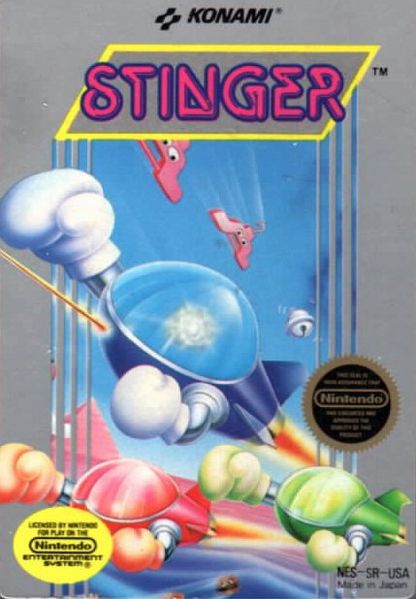
Below is the completion of the hybrid horizontal/vertical shmup Stinger, better known in Japan as Muero! TwinBee due to the fact that it is a sequel to the original TwinBee set 100 years after the events of the original. Since we did not get TwinBee in this country, the title was changed to Stinger and a different back story was given, the title belonging to the given name of the ship you pilot. It’s clearly a TwinBee title, though, with the distinctive bells that you juggle to gather power-ups and point bonuses. Other interesting differences between the American and Japanese version were multiple difficulty settings, selectable as medium or hard in Japan and eventually an easy option was added for the Famicom cart release. In America we only received one default difficulty (medium) but the game immediately starts over upon completion on the hard difficulty, easy does not exist in the US version. This title was intended to support up to three players and in Japan the cartridge had an extra controller port for the third player. Since carts loaded out of the top on the Famicom this was possible, however at this point there was only a side load for NES carts and thus the game was forced into a two player only mode. If you had the optional accessory, the four score, which added four more port to the console, Stinger would still only support two players. In the video below I complete the entire game although I do not replay the harder difficulty as it does not give more content or a different ending.
Games You’ve (Probably) Never Played: Tiny Toons Adventures: Defenders of the Universe (PS2)
If you’re not familiar with this Playstation 2 title it’s probably because it never came out. On our most recent podcast, we discussed the developer Treasure, responsible for a slew of great and popular titles but the company itself is quite lesser known to those in America. With a resume that spans almost every console from the 16-bit era on, there are some odd releases that Treasure is also responsible for, namely Tiny Toon Adventures: Defenders of the Universe (which will be referred to as DotU from now on and was also at one point Defenders of the Looniverse).
Conspiracy Games, a somewhat obscure publisher that is responsible for a bunch of licensed and lower budgeted projects on the PS2, Wii, and PSP, must have acquired the Tiny Toons license because it was and has developed a few games for the series. Conspiracy specifically works with developers that want to make a game but do not have the financial backing to do so. This title was to be a somewhat large collaboration that had Tetsuhiko Kikuchi (aka HAN), best known for the great Saturn brawler/RPG Guardian Heroes, as director and even its own web site: http://www.dotu.com. Very little is known about the development cycle, struggles, or overall issues about the development of this game, but what started as an early PS2 release in 2001 eventually was delayed 3 years into 2004 (according to IGN) and eventually canceled. Because deals with publishers and developers often result in delayed processes and forced decisions that the creative team does not like, it’s really anyone’s guess why this game spent so long in development and was eventually sapped.
Somehow, a prototype of the game was recovered and released on the Internet for all to enjoy. In order to play this “game” you need to either have a PS2 emulator on your computer (that runs marginally well) or burn the game to a disc and play it on a modded PS2. I have a modded PS2 so I check it out on the latter. Below is a video of the gameplay and pretty much the entire prototype (I was one or two screens from the end), which appears to be simply a demo. It’s pretty interesting that the game seems to support up to four players taking on each other in a hybrid co-op/competitive team game to save the Universe. DotU seems to harken back to the N64 days – at the time of initial development somewhere around 2000 this would make senses until a publisher comes in and explains that the N64 is dead and to release a game is far too great a risk and cost. I don’t even know if the 4 player multi-tap for the PS2 was out yet, but you can see where Treasure would have made great use of it. I wish there was more to this game – I’ve heard this is a nearly completed version, which sounds completely wrong since there’s only about half an hour of content on this disc and half of it is cutscene. Still, had they continued on and increased the dynamic of team play while also adding the challenges of beating the group, I could see this being one of those licensed games we discuss that was “ahead of its time.” As it stands the title remains unfinished and unreleased, lost to the annuls of history and just another holy grail of people like myself that want to experience as many prototypes as possible. If you have the capabilities to play it, especially with multiple controllers, you may want to check out this early knock-off of a Mario Party title. For the majority of you, here’s 18 minutes of a game that never saw the light of day.
Review: Espgaluda (PS2)
 Console: Playstation 2 (Japan Only)
Released: 2004
Developer: Cave (original arcade design, port by Arika)
Publisher: Arika (PS2 version only)
Difficulty: Moderate
Price: $60-$100 (used, unknown new)
Digital Release? No
Aside from its Japan only status and the incredibly difficult pronunciation, Espgaluda (pronounced “esu-pu-galuda” in English) has so much going for it. A second generation shmup from Cave, the development studio responsible for DoDonPachi, this is when the studio began to think outside the box and expand its audience to the masses. This game is made easier than most titles in its genre with the slowing of bullets and shields to assist the player in getting familiar with the danmaku (bullet hell) genre. Wrap it all together and it truly is a shame this title has never made its way stateside because it’s much more approachable than the titles we have received.
The roots of Espgaluda stem from the arcade (and Japan) only title ESP Ra.De. (pronounced “esu-pu-rye-do”) about a group of young girls with super human powers. It all takes place in the not-too-distant future (2018) on a remote island called Tokyo-2 off the shores of an overpopulated Japan. It appears the Japanese police force is hunting down these “ESPers” that are capable of psychic powers and the story takes place over a 24-hour period of time for three escaping females. None of this matters all that much since the game was only in Japanese (not localized on the MAME versions I’ve found), but the game is notable for several reasons. For starters the fact that you control a flying girl instead of a ship or vehicle will be the first thing you notice, and given the 1998 release of the title it’s quite possibly the first time this type of character is used in a shmup. Each girl has a barrier power, which allows them to temporarily absorb the power of the bullets coming at them and then release that energy back at their opponents. Aside from that the game is relatively a standard vertical shmup with plenty of explosions, bullets to dodge, and massive boss battles.
Retro Game Challenge: Super C (NES)
 Console: NES
Released: April 1990
Developer: Konami
Publisher: Konami
Instruction Manual: Not necessary – Link
Difficulty: Moderate
Played it as a child? Yes
Value: $9.03 (used), $179.95 (new) (pricecharting.com)
Other Releases: Yes – as Super Contra on arcade, PCs (microcomputer and IBM compatibles)
Digital Release? Yes – Virtual Console for Wii (NES version) and XBLA (arcade version)
Per a request from reader Quark, our follow up from the Contra retro review. Now we complete the sequel.
Podcast: Ultimate Play The Game
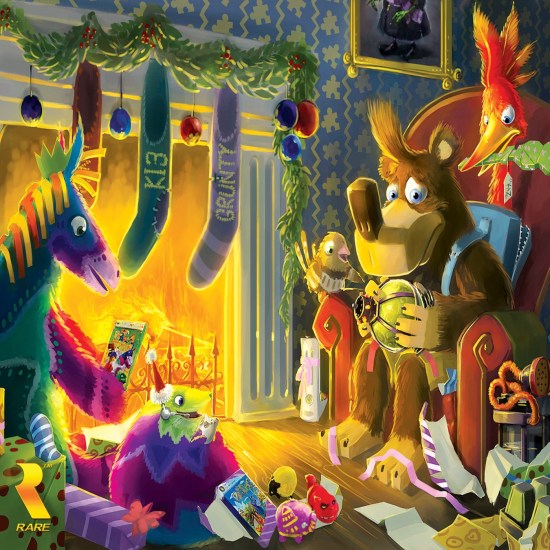
Fred and Rob “Trees” discuss Rare titles. We actually mean the developer Rare as opposed to video games that are considered “rare.” Originally formed as Ultimate Play The Game, we go over the history and game library of one of the most influential and abundant 2nd party developers on Nintendo’s platforms.
Download this episode (right click and save)
Subscribe: RSS iTunes Google Podbean
As promised, here’s gameplay footage of Nightmare on Elm Street for the NES:
Retro Game Challenge: Super Mario Bros.
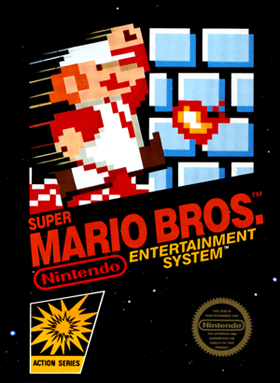 Console: NES
Released: September 1985
Developer: Nintendo Creative Department
Publisher: Nintendo
Instruction Manual: Not necessary – Link
Difficulty: Easy
Played it as a child? Yes
Value: $5.79 (used), $1,000.00 (new) (pricecharting.com)
Other Releases: Yes – SNES (Super Mario All-Stars), Gameboy Color (as Super Mario Bros. Deluxe), Gameboy Advance (Nintendo Classics), Wii (Super Mario All-Stars Wii)
Digital Release? Yes – Virtual Console for both Wii and 3DS
Review: Christmas Nights Into Dreams (Saturn)
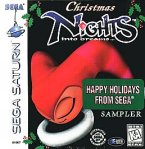 Console: Saturn
Released: December 1996
Developer: Sonic Team
Publisher: Sega
Instruction Manual: It did not have one – manual of the original game should suffice
Difficulty: Easy
Played it as a child? Yes
Value: $24.25 (used), $56.00 (new) (pricecharting.com)
Other Releases: Yes – A Japan only PS2 remake of Nights Into Dreams includes the Christmas content
Digital Release? Yes – included in the HD remake of Nights Into Dreams on XBLA and PSN, certain content removed (see below)
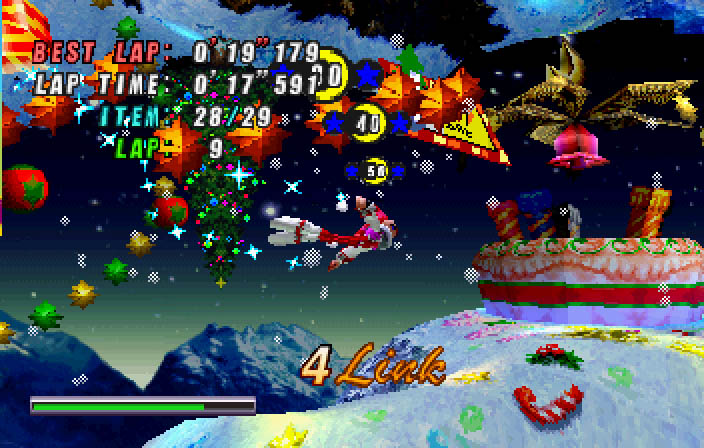
Christmas Nights Into Dreams is significant for several reasons, but most of all it’s one of the only Christmas themed games to ever come out. No, seriously, look through the vaults of retro console history, this is a holiday that is rarely celebrated save for games that focus on certain days (Animal Crossing, for example). In the winter of 1996 Sega was already in big trouble with the Saturn. At only about a year and a half old, Sony’s Playstation was killing it in terms of sales and there were few exclusive titles that generated any kind of buzz. Even Sonic, the faithful hedgehog that always seemed to sweep in and save Sega’s butt, hadn’t released a real game yet. Not only that, but this was the Christmas release of the Nintendo 64 and Mario 64 was selling out consoles nationwide. Nights Into Dreams was the only recent release on the Saturn that appealed to the typical gamer and with its colorful aesthetic, roots in platforming, and Sonic Team developer it was Sega’s best bet for the holidays. Under these circumstances Christmas Nights invaded the market in several forms from being a free pack-in with Christmas console bundles (that already included Nights), inside several magazines, a mail away/in store offer with certain game purchases, and even for rent at Blockbuster Video. This “sampler” title was everywhere, but only for about 45 days, and now it’s one of the more rare and sought after pieces of a retro gamer’s collection.
 Gaming History 101