Archive for the ‘Blog’ Category
Perspective: Video Games: The Movie
 I went into this film intending on writing a review, however after seeing what it has to offer I think the better article more discusses what you can expect and if, at this time, it’s worth the higher prices asked of a direct-to-digital (DTD) release.
I didn’t know about this movie until the day before it was released thanks to an interview between Giant Bomb’s Patrick Klepek and director Jeremy Snead. In their brief conversation, it becomes clear that Snead has chosen to tackle this documentary as a pop culture phenomenon and dissects it for the public. Knowing that I went into VGtM expecting it to be adjusted for a general audience and quite possibly learning nothing new that anyone who’s studied video game history didn’t already know (or could learn on this and other sites). That’s okay, as a retro gaming blogger and podcaster I know I’m working with a minority group (retro gamers) within a minority group (“core” gamers, for lack of a better term). To put it bluntly: if he made a movie specifically for us or people like us it would be a commercial failure. Not only that, but I got the feeling from some of Klepek’s line of questioning that Snead may not be quite up to snuff on his deep historical facts on gaming’s past. I’ll give him this though, his favorite video game of all time is Ikari Warriors on the NES, and that has to count for something. For appropriateness I invited over a couple of friends who are familiar with gaming but most likely knew little about the subject and also piggy-backed my wife into the audience, which is somewhat unfair because she has to listen to my historical gaming diatribes on a regular basis, and we watched this mainstream-safe documentary on more than four decades of my favorite hobby.
It wasn’t more than 10 minutes in (the film runs just around 90 mins) that I was already annoying people as I questioned, nitpicked, and vocalized by general dissatisfaction with the way Snead’s film tackled history itself. After a justified attack on my disposition, I shut the hell up and just watched the film for face value. To my surprise, I was entertained.
Mario Kart 64 vs. Diddy Kong Racing – The Ultimate Retro Racing Game Debate

The two notoriously addictive and challenging 3D racing games produced for the Nintendo 64 were Mario Kart 64, developed by Nintendo and released on February 10th 1997, and Diddy Kong Racing, developed by Rareware and released on the 21st of November 1997. Both games skyrocketed in sales and popularity, with Diddy Kong selling over 4.5 million copies and Mario Kart selling over 9 million copies. The outrageous sales of Mario Kart 64 was arguably due to the fact that the characters were previously known and established by Nintendo in previous games, whilst the characters featured on Diddy Kong Racing were generally new installments.
In fact, Nintendo used Diddy Kong Racing as a platform to set up new characters to be released in other Nintendo games; these were characters such as Banjo the bear (the Banjo Kazooie series following) and Conker the Squirrel (the infamous Conkers Bad Fur Day followed). But the age old debate between old school and retro gamers remains: which was better? There are hardcore advocates and arguments on both sides, some of which we will take a look at.
Wax Nostalgic Responsibly
 As time ticks by the threshold of what is considered nostalgic and retro grows exponentially. I dare not even define the term or the guidelines one may foolishly attempt to place on what would even be appropriate for a site like this. At the going rate of Internet coverage I could probably justify reviewing a game a month old or that has recently earned a price drop as retro, it’s all relative. Still, there is a place for looking fondly back at gaming days passed but it is important to realize that with the ongoing clutter of fan created gaming sites that we all do our part to stand out. I don’t want to read articles about things I already know, I want to read articles about things no one knows. This is why you don’t see much coverage of Super Mario World or reviews of the latest virtual console releases – too many have already done it before. When you set out to talk about the past, try to impress with what unique items you can bring to the table, not recycling.
It’s a hard road to figure out what to cover and frankly we tend to migrate to what we know best, but remember that as a consumer product there were so many copies of Super Mario Bros. 3 that perhaps one does not need to review it for the thousandth time. I may be off base, but I propose that anyone talking about old games either try to cover what has rarely been touched before or bring a new angle. Also it’s important to understand that with different eras ushers different players and neither is the correct opinion. I scoff at the people who played pinball in the 70s and 80s and tell me that I should play a real man’s game and put aside kiddie video games. In that same regard I know there are plenty of you out there who want to dismiss me immediately for feeling that N64 bred few winners, especially when you find out I like Shadows of the Empire and don’t much care for Goldeneye. It’s all perspective. So here is a fun list of rules I have created when delving into the games of the past that hopefully you will find helpful.
Rated M For Mature
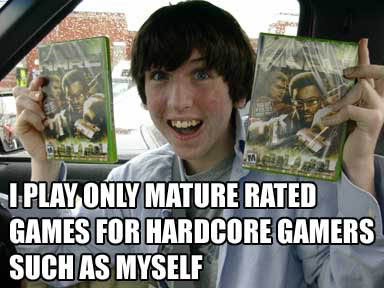
Today I’m going to touch on a topic that is near and dear to my heart: maturity. It’s quite a complex word and rarely is it defined correctly because the USA, and most of the world, like to gauge a work’s “maturity” by the quantitative amount of content that is unsuitable for public consumption. This does not make a mature game in my eyes. While it may be chock full of breasts, f-words, and toilet humor that literally  has you flinging feces, Duke Nukem Forever is not a mature game despite what its rating says. It is a reality of a world that is forced to categorize appropriateness of a medium, in this case software, for a quick guide to consumers on what’s appropriate. At the same time I do feel that games can and sometimes do represent true, mature scenarios that mix graphic content with justified plot. Sadly this is not the case for the majority of titles and the main focus of this article deals with the controversy surrounding Metal Gear Solid V: Ground Zeroes and specifically plot points that come about at the end of the 120 minute campaign. In writing this I first read articles by Lucy O’Brien of IGN¹, Cameron Kunzelman of Paste Magazine², and on a more informal note the talented Ria Jenkins of Introskeptive³ (article links at the bottom), who have dissected the ending in a much better way than I ever can. As you proceed forward, be warned that some of the topics of MGSV: GZ will be touched upon and the referenced articles definitely spoil these events in greater detail. It should also be noted that the following content, while not explicit, does discuss some gritty subject matter.
Progressive Challenge: A History of Game Difficulties

Zelda II: The Adventures of Link, Shin Megami Tensei Persona, Ikaruga, Dark Souls. All of these games have one thing in common: they are hard as hell. Since the genesis of the video game difficulty has existed to be the barrier to entry and the extension of game experiences. What is a video game if not a challenge? Originally technology had not caught up with the goals of the medium so games had to use difficulty to bridge the gap of a good experience where visuals and storytelling failed. Nowadays games are just as capable, if not more, than other media in being an interactive experience and therefore difficulty steps aside most times. I consistently hear that the concept of difficulty is dead, that a hard game dictates a good game, and that today’s gamers are weak and catered to. Frankly, I disagree with all of that. Gaming is typically tech dependent and with that dependence comes the evolution of experience, which results in the evolution of difficulty. Games haven’t gotten harder or easier, they have simply evolved.
How Product Design has Transformed the Amusement Industry

The term “arcade game” these days conjures up images of cutting-edge graphics and sound, combined with innovative and interactive technology that can bring any concept to life. However, good graphics and interactivity have not always been a necessity for a game that is both enjoyable and addictive. I dread to mention the recent phenomenon of the Flappy Bird app but it is an example of an outrageously faulty and basic game becoming extremely popular. This has been seen in the past with games like Space Invaders, Pac Man, Tetris and Asteroids following very basic concepts and graphics, but still being addictive and rewarding when completed.
The Really Early Days
The first arcade games kicked off at amusement parks and are still present at fairs and theme parks, but there’s nothing particularly sophisticated about them. Ring toss, throwing balls at stacked cans, shooting targets, and other simple challenges have been doing the rounds for hundreds of years and can still draw in the punters to this day. Just don’t go expecting an easy win. Perhaps this is what is indicative of a good game – making it appear simple whilst making it actually fiendishly difficult to win. Make it too hard, however ,and you are left with Zelda II.
Editorial – Nintendo’s Biggest Problem: Us

Normally I wouldn’t be speaking to the modern gaming scene, but the overall backlash toward Nintendo is that they are failing with the Wii U and they need to fix it now. The first statement is unarguably true, and despite the second statement being more of an opinion, it’s one that Nintendo also shares. From the outset of the Wii U’s supposed and later confirmed failure, my peers on the Internet and beyond that at larger video game media venues have taken it upon themselves to suggest what Nintendo should do to fix this problem (just look at this simple search). Needless to say the vocal minority in message boards have also role-played as CEO and declared their plans on how to “fix” Nintendo with suggestions that vary from practical to downright stupid. This illustrates one of the largest problems in gaming today: the public.
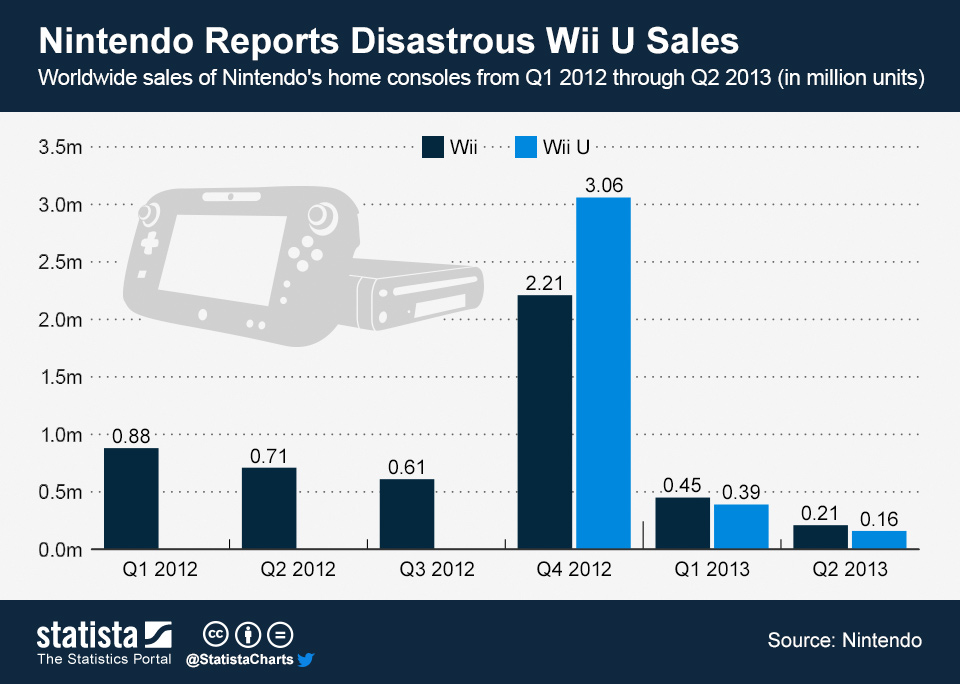 I’m not sure quite when the Facebook generation took over, but ever since social media has boomed it has been handled in a very irresponsible way. At first people were just plain rude due to anonymity, however now we see people who blatantly admit to their real names and even in public have brought out this behavior. Internet rudeness has become commonplace. With it so has any sort of credibility for sources of accurate information and inevitably the whole world thinking they are important. Well Nintendo doesn’t need your help and wouldn’t do well to follow it.
Re-Dissecting the Ouya


We are here, the moment has arrived, the hype machine open Android device for homes known as the Ouya was recently released to the masses. I haven’t heard much from the retail or consumer market yet, but it’s become abundantly clear that tech sites and gaming sites seem to have two different opinions when it comes to the palm-sized silver box. At $100 the promise of an HDMI compliant device on your television that plays games, this Kickstarter funded project has promise, but as far as practicality is concerned it’s far from impressive. The simple question is, “do I want it?” As a retro gamer (and a retro web site) Gaming History 101 is within that niche that can almost without a doubt say “yes,” but before you go running off to buy it, best you know what you’re actually getting first.
My thoughts on the design and innards of the Ouya have already been addressed on this site, so feel free to read about them and come back later. Nothing has changed; this console always was and continues to be an underperforming Android device that is further held back because of the tether to a controller. You cannot pick up the Ouya and download any Android app you want, they need to be reprogramed to support the controller, which the early software library reveals not many have jumped on board for. Furthermore the controller kinda sucks, but this opinion also has a mass split so feel free to try it out for yourself before trusting my judgement. Put it all together and you have nothing more than a lackluster console with a rubbish controller that only plays a handful of games (although some titles like TowerFall apparently help justify the potential). For the typical consumer, like my wife or mother, there’s no reason to get this – everything they want already plays on any Android device and no typical consumer is buying a $100 console for TowerFall.
Then there’s the caveat, the secret weapon, the compelling factor so necessary to the initial success of the Ouya that the creators casually make sure to mention it every time they are interviewed: it’s one hell of an emulation machine. My thoughts and feeling on emulation are quite clear, again feel free to read my detailed article and the more broad podcast on the subject for background, but when you deal with the expense of retro gaming $100 is a banger of a deal for a one-stop shop. In this regard, the underpowered Ouya rises above and emulates almost every video game from 1977-2000 with ease. Not only that, the openware apps that allow for emulation are provided, for free, in abundance, under the “retro” section of the Ouya’s menus. Additionally those unhappy with the controller can sync a Playstation 3 controller to the device with no modification (get the newest firmware) thanks to the bluetooth built into it. Couple that with emulators and you are ready to re-live your past with decent results on a dazzling big screen with a rock solid controller. There’s a flip side to this argument, and exactly why I won’t be picking it up, but for most people this is a great blast to the past on the cheap.
Now for the nerd stuff. Of course elitists in the retro gaming world will have their own opinions, I being one of them, that is a deal breaker. First of all, I feel that emulation was invented because gamers didn’t have a better option. There were times when finding retro consoles wasn’t easy, it was and still is very expensive, and many of the retro games we love never even came out here so fan translations are a must. That is where emulation is beneficial, that is why it’s promoted. By the very definition of what you will be playing (unreleased, rare, and non-English translated titles) you fall under the hardcore retro gamer category. That’s not what most Ouya buyers will want or use it for. Nope, they will download Super Mario 64, Sonic the Hedgehog, X-Men the Arcade Game, and Final Fantasy VII. The problem is that these games are already available in abundance and some people fought very hard to get them released on current platforms. These games are cheap, each one at or less than $10. As a result, using these games on Ouya is blatant piracy, enforceable by today’s laws because the companies that own them paid to get them converted to modern platforms. You aren’t finding a new way to enjoy your games, you’re too lazy to boot up your Wii and pay to download it. That’s a problem. If you were desperate to enjoy Mother, Policenauts, Sweet Home, or even unfinished demos of Resident Evil 1.5 then I’m totally on your side, but I have yet to see an Ouya video showing off these gems.
Then there’s the quirks of the emulation. I don’t particularly care for the framerate that most PCs and now the Ouya generate when trying to adapt to old school scrolling and resolution. Games look blurry, grainy, and have the stutter you see on games without v-sync or framerate locks on. You can literally watch Super Mario Bros. tear as you run from screen to screen. It’s just a reality of emulation, but one I can’t stand. Virtual Console and a few others have managed to remove this problem, but see the above paragraph as to why this isn’t going to be used by Ouya fans. I also see odd glitches, sounds, and the Playstation 3 controller, as nice as it is, is not an NES, SNES, or Genesis controller for those appropriate titles. For a nitpick like me, emulation is too frustrating to deal with (plus you should only play on a CRT, don’t you know people).
While the Ouya has some fascinating potential and tech fans may be keen on the emulation functions all wrapped into a $100 box, I find it to be a limited and niche product. Any PC built within the last 15 years is capable of the same emulation with no problem whatsoever so it’s not exactly reinventing the wheel. Furthermore the console has little to offer outside emulation and I have a personal issue with any company that’s willing to basically promote piracy in order to sell what is basically a limited all-in-one Android device. I wouldn’t take such issue with the salesmanship of emulation if the Ouya didn’t make it so damn obvious and user friendly to turn an everyday consumer into a rom-hungry pirate. On the other hand it was built for the tech junkies, hardcore gamers, hackers, and basically anyone who will sacrifice loads of time for miniscule dollars, to which I say have at it. For me it’s the opposite, I have almost no time and plenty of dollars so I’ll gladly pay for something that makes its worth obvious with unique software. At this point it belongs next to all those Hong Kong based devices that play illegal games for small prices you see on clearance at mall kiosks and flea markets. Still, this is a new device and it’s hopefully only a matter of time before a slew of justified personalized software hits and makes this more than the shiny piracy box.
Check This Out: Game Vault (Omaha, NE)

At first glance Game Vault, located just outside the core downtown area of Omaha, looks like another clone of GameStop. Upon entering, you may still feel that way as most of the walls are lined with modern PS3, 360, and Wii titles along with a large flat screen television that is displaying an endless playlist of gameplay videos. It wasn’t until I began to browse the large glass cases and have a brief chat with owner Scott, who was the only employee in his store on this brisk Saturday morning, that I learned Omaha has quite a great local game store.
 His featured glass case contained a few instantly recognizable gems of retro gaming, such as a boxed complete copy of Earthbound on the SNES (he also had a loose cart for the more budget-conscious), as well as other SNES classics like Super Metroid, Super Mario RPG, and Yoshi’s Island, all boxed and complete. Rarely have I entered a store that not only provided such care on these holy grails of gaming, a few of my friends have been searching for boxed complete copies of these games for years, but his prices were reasonable. It’s not just the SNES that he has to offer, I was stunned to find everything from a stack of Atari 2600 games to a batch of decent 3DO titles and even a Jaguar game or two. In fact, I don’t think it was possible to name a system this guy didn’t have at least a few games for (including PC games, new and old). He even had an import game section that had a mint copy of Dino Crisis on the PS1 from Japan, as if resting on the shelf just for me. Often times when you see stores like this, I remember one in particular in downtown Chicago and another in New York, that you expect heavily inflated prices. Not the case in Game Vault, Scott’s prices are fair, easily topping most of GameStop’s and eBay’s prices, and he doesn’t require a game club membership or anything to get the best price. All in all, Game Vault is one of the most diverse and well stocked used game stores around. I’m now saddened I don’t live in Omaha.
Adventure Gaming is Dead
Ron Gilbert, known mostly through the retro circles as the creator of Maniac Mansion and various other games that ran on the SCUMM (Script Creation Utility for Maniac Mansion) engine, said it best way back in 1989 when he wrote his rant entitled “Why Adventure Games Suck.” In it Gilbert attacks the myriad of tropes and issues he foresaw with the very genre that made him famous. It’s quite an impressive read and I suggest you all check it out because there are things he mentions within that piece that are still true today.
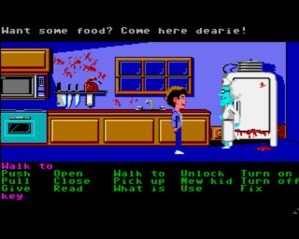 All snark aside the point-and-click adventure genre, which saw its largest degree of popularity in the mid-late 80s and early 90s, was always doomed to fail. Not quite a game, not quite a movie (Gilbert is the apparent father of the term “cutscene” because of script he wrote in Maniac Mansion referring to scenes you were forced to watch as “cut-scene”), and despite its general solid writing definitely not a book. It spins a yarn and in many cases tosses in some comedy as one of the only gaming genres that can still control timing without forcefully restricting the player. In concept the genre seems perfectly suited for being a form of interactive fiction and one who hasn’t played these titles may wonder why it performed so poorly and had such a short shelf life in the industry. This is because you haven’t played an adventure game. As enticing as the chuckle-filled story may seem, point-and-click adventure titles were still video games and thus had to adhere to certain rules. No one has quite found the balance and I do believe nostalgia is to blame for the reason anyone still likes these games, because the balance between telling a story and making a game has never found its happy medium. Before you kill me, let me explain.
 Gaming History 101