Archive for the ‘Playstation’ Category
Top 5 Shmups Worth Importing

Ah March, shmuppreciation is back and in full effect on Gaming History 101. If this is your first time hearing the phrase, shmuppreciation is for the love of the shoot-em-up genre (shmup for short) and is celebrated all March on the site. If you missed Shmuppreciation 2012 I highly recommend you check it out as we provided more than 30 articles dedicated to introducing you to genre specifics and the myriad of popular series in the most triumphant genre of all time.
This year we’re going past introductions and into the intermediate world of shmups, which requires more skill, dedication, and money than the games covered last year. While I would hardly call the games we will be covering obscure by any stretch, these titles are much less known outside of enthusiastic shmup fans. To kick it off we’re featuring the top 5 games worth importing. Shmups are of the most expensive games out there so you can expect a bit of sticker shock even with the games mentioned here. Just keep in mind that you’re currently dropping $60 for day one releases and sometimes even more if you’re into that special edition stuff. The titles in this list are unique because they have not seen a release, even digital, within the United States and thus require some sort of special circumstances to play today. There’s a great list of import games that have released digitally on PSN, XBLA, and Wii Virtual Console as well so be sure to check out our article on those titles as well. In order to play these games you have to either import them or get access to a digital service outside of your region. The links in each title will take you to the games’ review or video on our site.
Podcast: Game Club – Crash Bandicoot
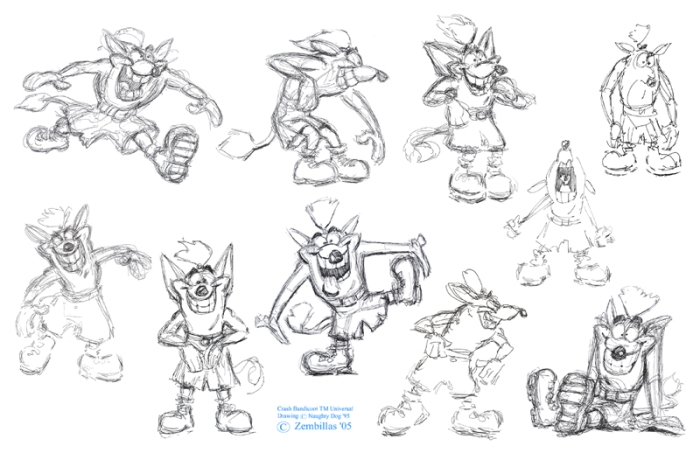
Fred Rojas and Rob “Trees” discuss the 3rd party Playstation 1 title that basically became the mascot for Sony throughout the generation. The sordid past and creation of the eventual bandicoot is discussed as well as the full campaign and relevance. We also announce this month’s game club title: Ico.
Perspective: Shin Megami Tensei: Persona 1 & 2 (PS1)


I’ve only just begun Persona 3 with about five hours under my belt, but already I can tell I’m going to like this game. It’s a massive hybrid of so many genres woven together in a nice JRPG shell that sucks you in and gets you hooked, fast – just one more day, am I right? I’m glad to see that, too, because having just completed both Shin Megami Tensei Persona and Persona 2 (both Innocent Sin and Eternal Punishment) I was beginning to fear I was missing something. That’s because by all accounts the first two installments in the Persona series (Persona 2 was split into two games and up until recently Innocent Sin was never technically available in the US) are a dated, rough ride through all of the confines and setbacks of traditional JRPGs along with a steep difficulty and very complex battle system to boot. From the start, both games are a daunting task and none of the remakes update the gameplay at all. In the end I only made it through with step-by-step instructions in a strategy guide, lots of patience, and a little luck. This is not what I signed on for and given the current landscape of this genre it appears that for most gamers the PS1 outings of Persona are caught between two amorphous worlds (much like the characters themselves) when the genre was drastically changing. After somewhere between 150-250 total hours to complete (there is no game clock, I’m completely guessing), a total of five different games, and an incredible hunger to extract the draw of the early iterations of the series I must issue a strong suggestion to bypass Persona’s roots and start with the third title, you’ll be thankful you did.
Podcast: Game Club – Chrono Trigger
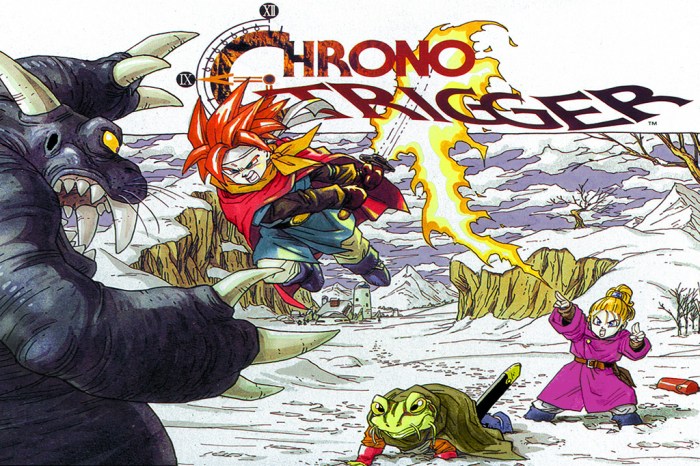
This week we celebrate our game club by discussing the entire plot of Chrono Trigger. We cover the game start to finish, touch on side missions, and discuss the universal ending. We also remind you of January’s game club and pose a question for the game club in February. This show is for those that have previously played Chrono Trigger or would like to hear the plotline in lieu of playing the game.
Review: Castlevania: Symphony of the Night (PS1)
 Console: Sony Playstation (also released on Sega Saturn in Japan only)
Released: 1997
Developer: Konami
Publisher: Konami
Japan? Yes (as Akumajo Dracula X: Gekka no Yasokyoku Translation: Devil’s Castle Dracula X: Nocturne in the Moonlight)
Instruction Manual: Not necessary – Link
Difficulty: Moderate
Played it as a child? No
Value: $22.87 (used) $64.45 (new) (pricecharting.com) – NOTE: There are two versions: original and greatest hits. Original is much more rare and expensive, so adjust your buying habits appropriately.
Price: $15-25 (used GH) $35-$60 (used original) $90-$130 (new GH) $400 (new original) on eBay
Digital Release? Yes – released as PSOne title on PS3/PSP and on XBLA – $10.00 for all versions. Also available with Rondo of Blood in the Dracula X Collection for PSP – $15 digital, varies on UMD.
***We also did a podcast on this and other Castlevania titles like it here.***
While Rondo of Blood may be the hidden gem of the Castlevania series, Symphony of the Night is anything but. There wasn’t a Playstation gamer around that didn’t see this release back in 1997, bringing a much-needed change to the traditional formula. Every Castlevania game that released on consoles seemed to push the hardware to do things it was never intended to do and usually had amazing results, so it was interesting that in a world consumed by 3D polygonal graphics Symphony of the Night was a 2D side scroller. In Japan, the series has a much easier way to identify the games that go together – main campaign titles often wore Akumajo in the title and in this case Dracula X – but in America we had not received (and most of us had not played) Rondo of Blood. The game starts out with you climbing the stairs to Dracula’s chamber at the end of Rondo and you re-create the final fight with Dracula (of which you cannot die). Then a long bit of lore scrolls the screen and next thing you know you’re playing as Alucard, Dracula’s son, and you’re rushing to Castlevania to rescue Richter from its curse. It was like being dropped into the middle of an epic you had not previously learned the story of. Frankly, it didn’t matter, and even today playing Rondo of Blood only assists in giving you background detail because like all other Castlevania games it’s the gameplay and level design that keeps you hooked.
Now & Then: Mortal Kombat II (Midway)

Midway must have known it had a hit on its hands with the original Mortal Kombat because no time was wasted creating the sequel. While most of us anticipated the home release of the first title, Mortal Kombat II (MKII) snuck into arcades and blew our minds. This game literally had it all – more characters, more fatalities/finishing moves, and more violence. For most MK series fans, myself included, this is considered to be the best and it’s one of the highest grossing video games of all time.
MK Meets its Match
The original Mortal Kombat was an impressive fighter, especially for one that was developed with digitized actors in only 10 months, but creator Ed Boon wanted to do more. “[MKII] had everything we wanted to put in the original MK but didn’t have time for,” he said in an interview with EGM2 (issue 5, Nov. 1994). It does seem like there’s some truth to his claim, especially with the introduction of more stage fatalities, a second fatality for each character, and even joke finishers “friendships” and “babalities”. I’m not so sure the roster was an initial idea, nor was the background concepts of Outworld, but I can definitely see the Midway team wanting to break away from the perceived reality of the original. Not only was MKII the definitive version of the original concept, but it continues to be the template for which all other titles in the series are based on.
Rayman 2: The Great Escape (Ubisoft)
Four years after the release of the original Rayman and plenty of celebrated success, Ubisoft released a sequel that changed the concept of the series entirely. Unlike the original cartoon-like platformer that was tough as nails, we were greeted with a dark, 3D rendered platformer. While the jump to 3D was hit or miss for various gaming staples, Rayman found a welcome home with Rayman 2: Great Escape, touted by many (myself included) as one of the best 3D platformers ever developed.
If I mention a cutesy 3D platformer that stars evil robots and pirates it would be hard to tell if I was talking about a Ratchet & Clank, Rayman, or even Conker because the idea is so recycled. While the plot may remain the same, that’s where the comparisons end. Instead of the aggressive worlds that had one goal – to kill you – of the original, we are now given fully rendered open environments that crave exploration. For the most part you are tasked with going from the beginning of any level to the end, but along the way you also collect the glowing lums from the original. For the lums that are on your path and along the way this is no big deal and it will surely get you to end of the game, but if you want to unlock everything you will have to find all 1,000 lums. That is where the game goes from a simple level-to-level game and becomes a test of platforming abilities and risky gameplay. It felt a lot like the convention we saw in Super Mario Galaxy, where the game can literally be as hard or as easy as you like, but back in 1999 this was a new concept. Rayman 2 is also much easier as a whole, which allows you to appreciate the game and environment instead of threatening to destroy your controller with every new turn. It’s just a fun ride with enough levels to secure a 6-10 hour campaign.

Rayman (Ubisoft)
Rayman wants to be a strong classic platformer, and it’s really a shame that the steep difficulty curve will turn off even the most determined of contemporary gamers, because from an aesthetic and game design perspective this game should be appreciated. Alas Rayman has been ported to console after console and seen commercial success, but I wonder how many people have actually experienced most of what this title has to offer.
During the mid 90s there was no shortage of consoles – both the 16-bit generation and 32-bit generation were coming to be, not to mention CD consoles – and Rayman was caught right in the thick of it. Not only that, but thanks to Mario and Sonic, platformers were among the highest in popularity behind fighting games. The title began life as a brainchild of Ubisoft creative director Michel Ancel (who is also responsible for cult favorite Beyond Good & Evil) and the then struggling developer/publisher bet the house on his creation and won. Rayman started life on the Super NES as a two-player title based on various cultural fairy tales and eventually it was decided that the game would receive a cartoon makeover with better animation and subsequent move to the Playstation CD add-on for the SNES (read that story here). When Nintendo announced the cancellation of both the Playstation and Phillips CD projects Ubisoft wanted to move to the Jaguar thanks to its specs and eventually chose the Sony Playstation as the lead console. As you can see, the game was already bouncing from console to console.
 Gaming History 101