Archive for the ‘PS3’ Category
Podcast: Final Fantasy VI Game Club
This week Fred and Eli (@Sodoom) discuss what many believe to be the best 16-bit RPG of all time: Final Fantasy VI (better known as Final Fantasy III on the SNES in the US). We discuss the combat system, characters, plot, and most memorable moment on this truly timeless RPG.
Podcast: You Are Go For Launch

This week we are joined by Chip Cella (@CaptinChaos) to discuss listener William’s topic: What makes a successful console launch? It all ends up being more stories of console launches and discussions on killer apps, but we do manage to cover most mainstream consoles.
Podcast: PS3 Retrospective

This week Fred is joined by 42 Level One host Andy (@damien14273) and Video Game Outsiders own Matt (@MattoMcFly) to remenisce on the Playstation 3 including the launch, early titles, and myriad of ups and downs that Sony struggled with on its third console.
Review: Pac-Man and the Ghostly Adventures
 Normally I wouldn’t see myself even taking a second glance at a title like this. Thanks to the re-invention of shovelware on the Wii and subsequent titles of its ilk, it’s not a good day to be a 3D rendition of a classic game. Couple that with Chip’s lackluster impressions of the multiplayer – which were spot on – and I did not go into Pac-Man and the Ghostly Adventures with high expectations. To my surprise this title is a rock solid 3D platformer that can almost serve as a pseudo Kameo 2, borrowing most of its gameplay elements from that title, but there just isn’t enough here to justify even the budget price associated with it.
Pac-Man has never done well as a platformer. Whether it’s with the 16-bit era titles in the Pac-Land series or really anything Namco has done with him other than re-creating the original game, there just doesn’t seem to be anything there to differentiate these games from all the rest, until now. Pac-Man’s world has changed quite a bit. He’s back in high school (and apparently appropriate age despite being older than I am), the four ghosts that plagued him in the original arcade title are now his friends, and he loves to wear different hats that grant him special powers. None of this begins to define a worthwhile game until you start playing the initial levels and using early hats like the frost beam or the iguana that have grounded but useful applications. Then you realize the level design compliments these powers well and a bit of Mario nostalgia sneaks in. Pac-Man retains the eating ghosts mechanic and can even use a “scare” power to turn them blue and devour them old school style. Before you know it you’re having a blast traversing the game’s six worlds, all borrowed from video game tropes of old, and you don’t want to stop playing.
Killzone: Getting Caught Up With the Story
Normally we solely talk retro on this blog but with the upcoming PS4 I just can’t help but get everyone acquainted with the story of Killzone. While I’ve been a hardcore fan since the second game (I played the original but didn’t much care for it), most people managed to skip the series due to its long development delays, similar aesthetic to other shooters of the time, and much better marketed titles from both Sony internal (Resistance 2) and competitor Microsoft (Gears of War 2). It really is a shame because Killzone 2 is quite distinct from other shooters of the generation, but I will get into that later in the article. The focus of this is to get you caught up with the story and elements of each game in the series, so that you can jump into the latest iteration, Shadow Fall, at the PS4 launch without having to worry about everything that came before it. Given that Killzone covers three console generations now (PS2-PS4) and almost 10 years, it’s got quite a lineage for a series with three main titles and two portable side stories. Unlike most game franchises, the Killzone series stays mostly progressive with story and each new iteration directly follows its predecessor in the timelineso Shadow Fall takes place at the tail end of the current franchise. I have each game listed below along with a story synopsis and notable gameplay elements and updates to each in the order they take place in the Killzone universe. Without further ado, I give you the Killzone story so far:
Podcast: Generation in Review
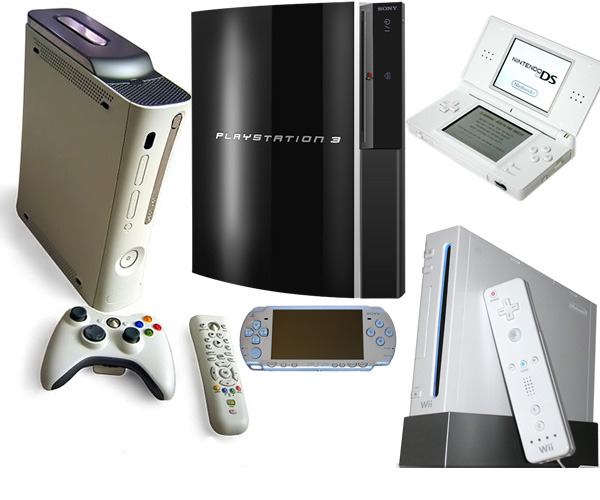
This week Fred welcomes listener Yuri (@JamesFortengard) and fellow podcaster Isaiah (@i_say_uh) from the Party Chat to discuss the console generation that officially comes to an end on 11/15/2013. They discuss innovations, trends, and passing fads of the longest generation ever in history that awarded gamers with some of the most dynamic experiences to date.
Review: DuckTales Remastered
 Release Date: August 13, 2013
Developer: WayForward
Publisher: Capcom
Price: $14.99
Platforms: Xbox 360 (XBLA), PS3 (PSN), WiiU (eShop), PC (Steam)
Most HD remakes require a certain degree of love for the original game, especially when you consider a brunt of them just increase the resolution on lower quality assets. In the case of NES classic DuckTales, this doesn’t really apply. It was a stunning game that had few flaws when placed up against other titles of its time. There was much work to do bringing it into modern times and if you are going to do this type of upgrade while still retaining sprites, WayForward is probably the best equipped for the job. The visual result is spectacular, justifying the somewhat melodramatic title of Remastered in a mere screenshot. Unfortunately it seems the team was so focused on keeping the aesthetics intact that they spent little time on gameplay. As a result DuckTales Remastered is a title that will tug at your nostalgic heartstrings before crushing them under the minor, but significant, tweaks of this modernization.

Review: Dungeons & Dragons: Chronicles of Mystara

Originally hitting arcades back in 1993, Dungeons & Dragons: Tower of Doom was quite the oddity. It prominently featured gameplay similar to that of its other brawler brethren, specifically the combat system of Final Fight mixed with the license quality of titles like The Simpsons, but also with the added benefit of being part of the complex D&D story. Not only was the game addictive but mild RPG elements, power-ups, and branching paths that had you etching a unique campaign were almost unheard of in arcades. Unfortunately this gameplay style and a long branching campaign required two important things: time and money. It probably costs somewhere between $5-$10 in quarters to conquer the first game, and probably twice that to take on the sequel Shadow Over Mystara and at least an hour of your time. As it stood, I never completed this game as a child, either due to lack of time or money, and I always wondered how fun it would be to have this title at home. Well finally Capcom has decided to bring this classic arcade duo in digital format and finally give free rein to a pair of arcade games that are among my favorite of all time.

Review: Persona 3 (PS2)
 While it has celebrated decades of success in Japan, the Shin Megami Tensei series didn’t even come to America until Persona on the original Playstation. It wasn’t rebranded with the classic Shin Megami Tensei prefix until the release and mainstream love for Persona 3 and I can see why. If you read back to my Persona 1 & 2 review you will see that while I dug the direction it was going, I had major issues with both games that made the 50+ hour slogs through the campaigns less than enjoyable. All of these issues are addressed in Persona 3 without letting go of the core that got gamers interested in the first place. If you are a fan of JRPGs or have never played an epic dungeon-crawling quest, you should seriously consider giving Persona 3 a play because its modern setting, streamlined battle system, and socially integrated plotline will keep you playing for tens (if not hundreds) of hours.
The basic setup in Persona 3 is that you are a male (you have a female option as well in P3: FES and P3 Portable) second year high school student (think Junior in US terms) in Japan that has just transferred to a new school. As a student to a private academy, there are some differences to the public system: the only day off is Sunday, you wear a uniform, and students live in unisex dorms. Due to overcrowding, your character moves into an available dorm that is temporarily coed. It turns out that all of this dorm’s students have one thing in common: they are able to summon beings from within them named “personas”. These personas are capable of both physical and magical powers and are an extension of the individual controlling them. You also learn that each night at midnight an alternative realm known as “the dark hour” takes over the world and certain beings are allowed to roam freely while the rest of us reside in coffin-like structures, removed from this realm. Naturally persona users are one of the beings that can roam as are evil beings known as “shadows” that take on different forms. The goal of the shadows is to end the world and the persona users are rallied to prevent this. Wouldn’t you know, the main tower/source of evil is none other than the school, which transforms into a tall castle called Tartarus at night. Quite the setup, isn’t it?

Podcast: It’s Pronounced La-Ra

This week Fred and Trees are talking about the Tomb Raider series and its busty protagonist Lara Croft that shadowed the video game as a pop culture icon in the late 1990s. We discuss development, creation, and production of both Core and recent Crystal Dynamics’ vision for Lara and her many adventures.
 Gaming History 101