Review: Life of Pixel
 Retro “style” has become exponentially popular these days. What started as an amusing aesthetic for Mega Man 9 or upgraded project like Retro City Rampage has spawned a rush of pixelated, sprite-based games that may look like they came from yesteryear but play like anything but. To the untrained eye (or non-technical gamer) these are nothing more than cash-in titles hoping to embrace the nostalgia of gamers like myself and strategically place a casual game in a 1985 wrapping. My only exception to this style probably lies in titles like Retro Game Challenge on the DS, which fully recreated new games that actually play like old games, or titles like Pier Solar on the Genesis, which is an actual title that plays on the console. Life of Pixel rests just in the middle because it plays completely like a game from the past, but also looks like a game of the past as well. The twist: it does this with eight different known consoles/microcomputers.

One of the first systems is the Atari 2600
Released on the Playstation Mobile platform, an odd choice at first but completely appropriate in hindsight, you follow a single pixel lost to the annals of history that rediscovers its value visiting a retro game museum. In this museum he discovers that he was quite useful on international consoles Atari 2600, Gameboy, and NES, along with five microcomputers that dominated 80s gaming in the UK. These work as “worlds” for the game, each containing eight levels of pure retro platforming bliss. In truth the levels are nothing special if not for the fact that each level and console looks and acts just like it did in the past, flaws and all. An easy example is that of the Atari 2600, which cannot scroll its screen in any way and thus the levels are contained in what you see. Additionally microcomputers could not scroll at will like the NES could so you have to move screen to screen. These are just a couple of examples of how the particular console you are on relates to the type of tactics you use in each level. This isn’t the only hook, as game design “grows up” as you progress in the consoles, so do the mechanics and gameplay styles. In the end you’re basically playing the same series and concept of game across 8 consoles and more than a decade of hardware and game design. If that doesn’t speak to the retro style I don’t know what does. Life of Pixel is a full retro experience, complete with visual styles that faithfully resemble the aesthetic of that console – you know how each console seemed to have a “look” – and properly credited music that holds as true as the graphics.
Podcast: The Treasure Box
This week Trees returns and we are talking about the Japanese developer Treasure, best known for some of the most impressive games on Sega’s consoles (Gunstar Heroes, Radiant Silvergun, Guardian Heroes, and Ikaruga) as well as Nintendo’s later consoles (Bangai-O and Sin & Punishment). We discuss the company origins, values, and of course the entire library of this impressive developer.
Download this episode (right click and save)
Subscribe: RSS iTunes Google Podbean
Below is a video of an unreleased (canceled) title, Tiny Toons: Defenders of the Universe. The beta that was presumably used as a trade show demo eventually leaked on the internet. We have acquired it and played it on an original, modded, PS2. Enjoy!
Review: Espgaluda (PS2)
 Console: Playstation 2 (Japan Only)
Released: 2004
Developer: Cave (original arcade design, port by Arika)
Publisher: Arika (PS2 version only)
Difficulty: Moderate
Price: $60-$100 (used, unknown new)
Digital Release? No
Aside from its Japan only status and the incredibly difficult pronunciation, Espgaluda (pronounced “esu-pu-galuda” in English) has so much going for it. A second generation shmup from Cave, the development studio responsible for DoDonPachi, this is when the studio began to think outside the box and expand its audience to the masses. This game is made easier than most titles in its genre with the slowing of bullets and shields to assist the player in getting familiar with the danmaku (bullet hell) genre. Wrap it all together and it truly is a shame this title has never made its way stateside because it’s much more approachable than the titles we have received.
The roots of Espgaluda stem from the arcade (and Japan) only title ESP Ra.De. (pronounced “esu-pu-rye-do”) about a group of young girls with super human powers. It all takes place in the not-too-distant future (2018) on a remote island called Tokyo-2 off the shores of an overpopulated Japan. It appears the Japanese police force is hunting down these “ESPers” that are capable of psychic powers and the story takes place over a 24-hour period of time for three escaping females. None of this matters all that much since the game was only in Japanese (not localized on the MAME versions I’ve found), but the game is notable for several reasons. For starters the fact that you control a flying girl instead of a ship or vehicle will be the first thing you notice, and given the 1998 release of the title it’s quite possibly the first time this type of character is used in a shmup. Each girl has a barrier power, which allows them to temporarily absorb the power of the bullets coming at them and then release that energy back at their opponents. Aside from that the game is relatively a standard vertical shmup with plenty of explosions, bullets to dodge, and massive boss battles.
Podcast: Game Club – Ico

This week Fred is joined by Chip Cella of the B-Team Podcast to discuss our February game club title Ico. We cover development, Team Ico studio, the campaign, and significance of this artistic early PS2 title.
Top 5 Shmups Worth Importing

Ah March, shmuppreciation is back and in full effect on Gaming History 101. If this is your first time hearing the phrase, shmuppreciation is for the love of the shoot-em-up genre (shmup for short) and is celebrated all March on the site. If you missed Shmuppreciation 2012 I highly recommend you check it out as we provided more than 30 articles dedicated to introducing you to genre specifics and the myriad of popular series in the most triumphant genre of all time.
This year we’re going past introductions and into the intermediate world of shmups, which requires more skill, dedication, and money than the games covered last year. While I would hardly call the games we will be covering obscure by any stretch, these titles are much less known outside of enthusiastic shmup fans. To kick it off we’re featuring the top 5 games worth importing. Shmups are of the most expensive games out there so you can expect a bit of sticker shock even with the games mentioned here. Just keep in mind that you’re currently dropping $60 for day one releases and sometimes even more if you’re into that special edition stuff. The titles in this list are unique because they have not seen a release, even digital, within the United States and thus require some sort of special circumstances to play today. There’s a great list of import games that have released digitally on PSN, XBLA, and Wii Virtual Console as well so be sure to check out our article on those titles as well. In order to play these games you have to either import them or get access to a digital service outside of your region. The links in each title will take you to the games’ review or video on our site.
Podcast: Video Game Capital of the Universe
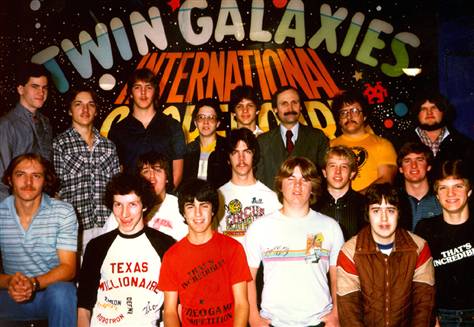
This week we have special guest Matt Bradford from Video Game Outsiders on to discuss his former employer Twin Galaxies. We cover the genesis of Walter Day’s high score database, the golden age of professional arcade gaming, controversy over the King of Kong, and future endeavors with new owners Jordan Adler and Richie Knucklez.
Opening song – You’re the Best by Joe Esposito
Closing song – High Score by Ski Beatz featuring Da$h
Review: Capcom Arcade Cabinet (XBLA/PSN)
 Whenever I hear about another announcement for another arcade collection to be released individually I always think back to Game Room. Here we go again. Not only that but you would be hard pressed to not point out that Capcom has released these arcade gems before, most if not all of them (there are some games I don’t yet know about) appearing on the Capcom Classics Collection that appeared on Xbox, PS2, and PSP. Despite all of that against it – your interest and want in the specific games notwithstanding – Capcom Arcade Cabinet offers exactly what retro gamers purchasing arcade games on today’s consoles look for and all at an easy impulse buy price.
At its core it’s a lot like Game Room in that you navigate a main screen that displays the available games you have to play. Games that you have not purchased or that aren’t available yet are blacked out. Of the titles you do have, you can read a quick background paragraph on the game or enter its specific menu. As of now the selection is an interesting mixed bag of highly popular and relatively unknown titles from 1984-1987 – currently the three titles from 1987 have been released: Black Tiger, 1943, and Avengers – and the overall package looks to be consistent with that structure moving forward. Whether or not you want these games is entirely up to you and probably responsible for whether or not you’ll pick up anything, but this review isn’t about each individual game but rather the options and package you get with Capcom Arcade Cabinet.

Podcast: 1 Coin = 1 Credit

Fred and Trees discuss the wonderful world of arcade games. As this is a broad topic, all format is thrown out the window and discussions include what makes up an arcade, arcade title eras, arcade games vs. home consoles, atmosphere of arcades, MAME, and of course more games than can rightfully be named here.
Intro song is Pac-Man Fever by Buckner & Garcia
Outro song is 1980 by Dirt Nasty
Podcast: Snake? Snake! Snaaake!

This week Fred and Trees celebrate the release of Metal Gear Rising Revengeance with a podcast about words that don’t exist… Er, scratch that. Instead, we discuss Hideo Kojima’s classic stealth franchise Metal Gear.
Retro Game Challenge: Super C (NES)
 Console: NES
Released: April 1990
Developer: Konami
Publisher: Konami
Instruction Manual: Not necessary – Link
Difficulty: Moderate
Played it as a child? Yes
Value: $9.03 (used), $179.95 (new) (pricecharting.com)
Other Releases: Yes – as Super Contra on arcade, PCs (microcomputer and IBM compatibles)
Digital Release? Yes – Virtual Console for Wii (NES version) and XBLA (arcade version)
Per a request from reader Quark, our follow up from the Contra retro review. Now we complete the sequel.
 Gaming History 101