Archive for the ‘Features’ Category
Know This Developer: WayForward

Yesterday I saw a tweet from WayForward, a games developer that specializes in a retro feel and hand drawn animation, that it was celebrating 25 years. That’s impressive, especially when you consider that 1990 predates the Super NES and also because the 16-bit style has been around now for two and half decades. If you fancy yourself a fan of that era, long for the days of gorgeous hand drawn animation with large sprite-based characters on screen, and a 2D plane then WayForward is just the developer for you. Oh yeah, and its strongest titles are typically tough as nails so just like back in the 90s you’re going to have to die a lot and restart before you ever think about beating one. It should also be noted that WayForward is of the few studios that can really get a licensed game right and with the amount of care and detail afforded to this company’s many licensed outings it is akin to the Capcom Disney games. All of these reasons and the fantastic original series Shantae make WayForward a developer that retro enthusiasts should definitely know.
I Love My MAME Cab
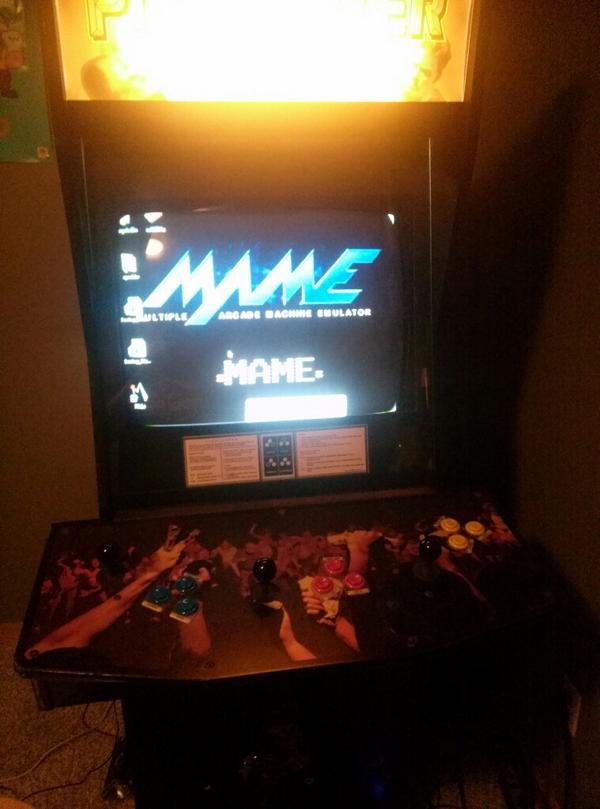 Man do I love my MAME cab. In the culture of emulation, I’m not too keen on the concept. I understand that emulation is necessary and that it has been an essential tool in not only archiving these great works of the past but also in allowing me to play import and fan translated games I otherwise never would have experienced. Still, I think that more often than not emulation gives way to piracy. If I want to go get Super Mario Bros 3 on NES, I’ve got a slew of choices: I can buy the original hardware and game, I can emulate illegally, or I can purchase legal emulated versions (Virtual Console). In most of those scenarios I opt to purchase the tangible hardware/game – but this is not always the case as I have never purchased a Turbografx-16 CD console to play the handful of favorites like Rondo of Blood and instead “settled” for emulated, legal, Virtual Console and PSN versions. On the arcade front the story is a bit different. Not only do I have to pony up large sums of money for the hardware/software – in this case being a working cabinet and PCB board – but I also have to make space, transportation arrangements, power consumption, safety, and in many cases repairs. It’s one thing to buy a PS1 game from Kentucky, have it shipped to you, resurface it if necessary, and then enjoy it. For a good working Salamander cab I may have to pay $500-$1,000 upfront on eBay, drive to Kentucky with a large truck, move the whole thing over 1,000 miles without damaging it and paying for gas/transport, move it into my house, and then most likely degauss a monitor, replace some wires, re-solder some button connections, and if I’m lucky I can play that single game for about 30 minutes before it’s time for my A.D.D. brain to move onto the next new thing.
Mario Kart 64 vs. Diddy Kong Racing – The Ultimate Retro Racing Game Debate

The two notoriously addictive and challenging 3D racing games produced for the Nintendo 64 were Mario Kart 64, developed by Nintendo and released on February 10th 1997, and Diddy Kong Racing, developed by Rareware and released on the 21st of November 1997. Both games skyrocketed in sales and popularity, with Diddy Kong selling over 4.5 million copies and Mario Kart selling over 9 million copies. The outrageous sales of Mario Kart 64 was arguably due to the fact that the characters were previously known and established by Nintendo in previous games, whilst the characters featured on Diddy Kong Racing were generally new installments.
In fact, Nintendo used Diddy Kong Racing as a platform to set up new characters to be released in other Nintendo games; these were characters such as Banjo the bear (the Banjo Kazooie series following) and Conker the Squirrel (the infamous Conkers Bad Fur Day followed). But the age old debate between old school and retro gamers remains: which was better? There are hardcore advocates and arguments on both sides, some of which we will take a look at.
Tetris Aid
How Tetris Has Been Used in Research To Help Health Problems

Tetris that famous game released in 1984. Beloved for its simplicity and addictive nature; but did you know that Tetris has actually been used in a variety of medical studies? There is plenty of research reporting the benefits of gaming despite the media having us believe playing video games turn us into serial killers and dysfunctional members of society. Today’s article focuses on the research studies performed using Tetris.
Tetris good for the eyes.
 One interesting study carried out in America and even in the UK is using Tetris to treat Amblyopia. You may know this condition more as a “lazy eye”, where one eye is not seeing as well as the other eye and can be accompanied by an eye turn. It usually occurs at a very young age and current treatment involves patching the good eye to force the bad eye to work. Spectacles are also given to aid this treatment. Unfortunately not all treatments are successful and the lazy eye can remain into adulthood; treatment for a lazy eye in adults is usually ineffective.
Progressive Challenge: A History of Game Difficulties

Zelda II: The Adventures of Link, Shin Megami Tensei Persona, Ikaruga, Dark Souls. All of these games have one thing in common: they are hard as hell. Since the genesis of the video game difficulty has existed to be the barrier to entry and the extension of game experiences. What is a video game if not a challenge? Originally technology had not caught up with the goals of the medium so games had to use difficulty to bridge the gap of a good experience where visuals and storytelling failed. Nowadays games are just as capable, if not more, than other media in being an interactive experience and therefore difficulty steps aside most times. I consistently hear that the concept of difficulty is dead, that a hard game dictates a good game, and that today’s gamers are weak and catered to. Frankly, I disagree with all of that. Gaming is typically tech dependent and with that dependence comes the evolution of experience, which results in the evolution of difficulty. Games haven’t gotten harder or easier, they have simply evolved.
How Product Design has Transformed the Amusement Industry

The term “arcade game” these days conjures up images of cutting-edge graphics and sound, combined with innovative and interactive technology that can bring any concept to life. However, good graphics and interactivity have not always been a necessity for a game that is both enjoyable and addictive. I dread to mention the recent phenomenon of the Flappy Bird app but it is an example of an outrageously faulty and basic game becoming extremely popular. This has been seen in the past with games like Space Invaders, Pac Man, Tetris and Asteroids following very basic concepts and graphics, but still being addictive and rewarding when completed.
The Really Early Days
The first arcade games kicked off at amusement parks and are still present at fairs and theme parks, but there’s nothing particularly sophisticated about them. Ring toss, throwing balls at stacked cans, shooting targets, and other simple challenges have been doing the rounds for hundreds of years and can still draw in the punters to this day. Just don’t go expecting an easy win. Perhaps this is what is indicative of a good game – making it appear simple whilst making it actually fiendishly difficult to win. Make it too hard, however ,and you are left with Zelda II.
Killzone: Getting Caught Up With the Story
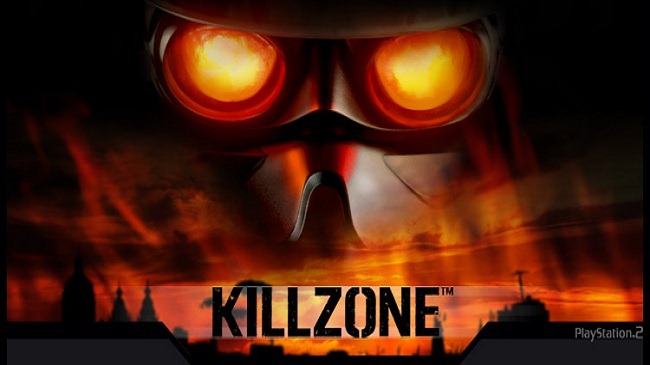
Normally we solely talk retro on this blog but with the upcoming PS4 I just can’t help but get everyone acquainted with the story of Killzone. While I’ve been a hardcore fan since the second game (I played the original but didn’t much care for it), most people managed to skip the series due to its long development delays, similar aesthetic to other shooters of the time, and much better marketed titles from both Sony internal (Resistance 2) and competitor Microsoft (Gears of War 2). It really is a shame because Killzone 2 is quite distinct from other shooters of the generation, but I will get into that later in the article. The focus of this is to get you caught up with the story and elements of each game in the series, so that you can jump into the latest iteration, Shadow Fall, at the PS4 launch without having to worry about everything that came before it. Given that Killzone covers three console generations now (PS2-PS4) and almost 10 years, it’s got quite a lineage for a series with three main titles and two portable side stories. Unlike most game franchises, the Killzone series stays mostly progressive with story and each new iteration directly follows its predecessor in the timelineso Shadow Fall takes place at the tail end of the current franchise. I have each game listed below along with a story synopsis and notable gameplay elements and updates to each in the order they take place in the Killzone universe. Without further ado, I give you the Killzone story so far:
Check This Out: Game Vault (Omaha, NE)

At first glance Game Vault, located just outside the core downtown area of Omaha, looks like another clone of GameStop. Upon entering, you may still feel that way as most of the walls are lined with modern PS3, 360, and Wii titles along with a large flat screen television that is displaying an endless playlist of gameplay videos. It wasn’t until I began to browse the large glass cases and have a brief chat with owner Scott, who was the only employee in his store on this brisk Saturday morning, that I learned Omaha has quite a great local game store.
 His featured glass case contained a few instantly recognizable gems of retro gaming, such as a boxed complete copy of Earthbound on the SNES (he also had a loose cart for the more budget-conscious), as well as other SNES classics like Super Metroid, Super Mario RPG, and Yoshi’s Island, all boxed and complete. Rarely have I entered a store that not only provided such care on these holy grails of gaming, a few of my friends have been searching for boxed complete copies of these games for years, but his prices were reasonable. It’s not just the SNES that he has to offer, I was stunned to find everything from a stack of Atari 2600 games to a batch of decent 3DO titles and even a Jaguar game or two. In fact, I don’t think it was possible to name a system this guy didn’t have at least a few games for (including PC games, new and old). He even had an import game section that had a mint copy of Dino Crisis on the PS1 from Japan, as if resting on the shelf just for me. Often times when you see stores like this, I remember one in particular in downtown Chicago and another in New York, that you expect heavily inflated prices. Not the case in Game Vault, Scott’s prices are fair, easily topping most of GameStop’s and eBay’s prices, and he doesn’t require a game club membership or anything to get the best price. All in all, Game Vault is one of the most diverse and well stocked used game stores around. I’m now saddened I don’t live in Omaha.
Interview: Super Icon

Claire Hill-Whittall

Richard Hill-Whittall

Super Icon is the independent developer responsible for the impressive retro flashback title Life of Pixel. Aside from developing this and a few other titles on the Playstation Mobile platform, this husband and wife duo has big plans afoot, not the least being a new kickstarter project to bring Life of Pixel to a wider audience on PC, Mac, iOS, and Android (with additional content). Recently Creative Director Richard Hill-Whittall and Claire Hill-Whittall in Business Development were kind enough to answer some questions that we at Gaming History 101 and you readers were wondering about this clear appreciation for early consoles and microcomputers.
Getting It Backwards
 Video game consoles are one of the most interesting electronics items on the market for several reasons. Probably the most prolific is the fact that there are frequent hardware upgrades, which we call generations, that move home consoles forward. Because each new console is basically a piece of hardware frozen in time, the need to innovate and improve on future games demands that they be constantly updated. This works counter to movies or music, which see improvements from new hardware but don’t require the upgrade to enjoy the medium. Imagine if you could play Super Mario Bros. on the Wii but with drastically upgraded visuals or Dead Space on the original Playstation with the juxtaposed setback, this is exactly what we see when we watch Ghostbusters on VHS versus DVD versus Blu Ray. As a result new consoles come out all the time, typically in 5-8 year intervals, and usher in a more interactive experience – it’s important to note that the greatest difference between games and other media is that they are active, not passive experiences – and with it comes a new format for software.
Enter the concern of the consumer. It can be frustrating for both gamers and parents of gamers alike to purchase a new console, especially when it renders an entire collection on an older console useless. As retro gamers I’m sure we see the value in it, but for the majority there’s a want to move forward and never look back. Well, that is until there are enough new games to get me to migrate over. This is another slow start that prevents all but early adopters to purchase new hardware, which can then result in fewer sales. With fewer sales comes more canceled projects on new hardware, which then results in fewer sales of the hardware and the cycle continues until a console is considered dead in the water. Just look at the Virtual Boy, Jaguar, and possibly even the WiiU about this problem; developers have enough to worry about, they can’t also deal with poor penetration rate due to a false start console. One excellent solution to help usher in that awkward period between consoles is the concept of backwards compatibility, or a new console that can play a previous generation’s games.
 Gaming History 101