Archive for the ‘Gameboy Advance’ Category
Getting It Backwards
 Video game consoles are one of the most interesting electronics items on the market for several reasons. Probably the most prolific is the fact that there are frequent hardware upgrades, which we call generations, that move home consoles forward. Because each new console is basically a piece of hardware frozen in time, the need to innovate and improve on future games demands that they be constantly updated. This works counter to movies or music, which see improvements from new hardware but don’t require the upgrade to enjoy the medium. Imagine if you could play Super Mario Bros. on the Wii but with drastically upgraded visuals or Dead Space on the original Playstation with the juxtaposed setback, this is exactly what we see when we watch Ghostbusters on VHS versus DVD versus Blu Ray. As a result new consoles come out all the time, typically in 5-8 year intervals, and usher in a more interactive experience – it’s important to note that the greatest difference between games and other media is that they are active, not passive experiences – and with it comes a new format for software.
Enter the concern of the consumer. It can be frustrating for both gamers and parents of gamers alike to purchase a new console, especially when it renders an entire collection on an older console useless. As retro gamers I’m sure we see the value in it, but for the majority there’s a want to move forward and never look back. Well, that is until there are enough new games to get me to migrate over. This is another slow start that prevents all but early adopters to purchase new hardware, which can then result in fewer sales. With fewer sales comes more canceled projects on new hardware, which then results in fewer sales of the hardware and the cycle continues until a console is considered dead in the water. Just look at the Virtual Boy, Jaguar, and possibly even the WiiU about this problem; developers have enough to worry about, they can’t also deal with poor penetration rate due to a false start console. One excellent solution to help usher in that awkward period between consoles is the concept of backwards compatibility, or a new console that can play a previous generation’s games.
Podcast: The Treasure Box
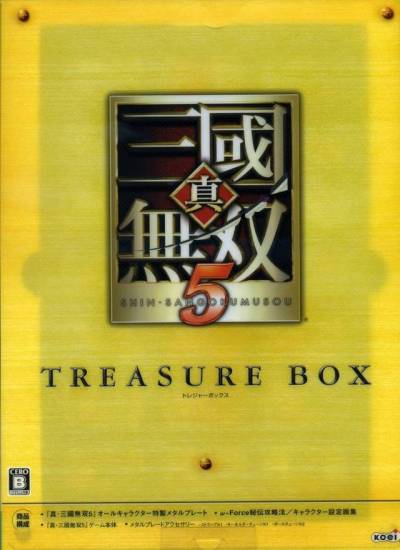
This week Trees returns and we are talking about the Japanese developer Treasure, best known for some of the most impressive games on Sega’s consoles (Gunstar Heroes, Radiant Silvergun, Guardian Heroes, and Ikaruga) as well as Nintendo’s later consoles (Bangai-O and Sin & Punishment). We discuss the company origins, values, and of course the entire library of this impressive developer.
Download this episode (right click and save)
Subscribe: RSS iTunes Google Podbean
Below is a video of an unreleased (canceled) title, Tiny Toons: Defenders of the Universe. The beta that was presumably used as a trade show demo eventually leaked on the internet. We have acquired it and played it on an original, modded, PS2. Enjoy!
Review: Mother aka Earthbound Zero (Famicom)
 Console: Famicom
Released: 1989
Developer: Ape
Publisher: Nintendo
Instruction Manual: None released outside of Japan
Difficulty: Difficult
Played it as a child? No
Value: N/A – No official US release, most versions are fan translations and prototype carts have no official price
Other Releases: Yes – This game was updated and re-released in Japan on GBA as Mother 1 + 2
Digital Release? Yes – Although technically not true. Digital fan translations to English are available but not really legal.
Thanks to a strong and devoted fan community and some odd ambiguity with Nintendo’s releases of this series, Mother (known as Earthbound Zero with most circles that play english translations) has got to be one of the hardest series to cover. Having never played Earthbound (Mother 2 in Japan) I did the traditional completionist thing and started with the original game, which is extremely dated by almost all RPG standards. Mother suffers from everything I dread about going into retro role-playing games: a ton of grinding (or “meat walls”), constant random encounters, no true direction as to where to go next, casual dungeons with incredibly hard boss battles, slow pacing, and a limited inventory system. Not only that, anytime you try to look up help on this game, everyone who’s written about it has played the game a million times and speaks so condescending of people who get stuck that you feel like an idiot. That’s because Mother has a small but incredibly devoted community that feels this game and its sequels are the apex of game design. Despite all these faults, the charm of the writing and what it was doing at the time was enough to keep me invested until the grueling end.
Review: Final Fight CD (Sega CD)
 Console: Sega-CD/Mega-CD
Released: 1993
Developer: Capcom
Publisher: Sega (Sega/Mega-CD, 32X CD)
Instruction Manual: Not necessary
Difficulty: Hard
Played it as a child? Yes
Value: $21.50 (used) $76.00 (new) (pricecharting.com) – Price for Sega CD version only
Price: $23-$60 (used) N/A on US Version (new) on eBay
Other Releases: Arcade, SNES, Gameboy Advance
Digital Release? Yes – SNES version on Virtual Console ($8), Arcade version on XBLA/PSN as Double Impact ($10)
Final Fight is a pivotal late 80s arcade release for Capcom for two reasons: it established the norms that would make up the concept of the “beat-em-up” genre for its short-lived life (although it oddly enough didn’t introduce any of them) and it created the aesthetic and building blocks of Street Fighter II. Anyone who has played this game or SFII will immediately be familiar with that semi-realistic semi-animated graphical style of Final Fight that remained exclusive to these two titles moving forward for a few sequels (I’m considering the numerous re-hashes of SFII to be sequels). In full disclosure this is my favorite brawler of all time and definitely ranks highly in my overall top games I’ve ever played despite the fact that Final Fight doesn’t translate well to home consoles because it’s intended to take your money and prompt more quarters rather than be completed in a finite number of lives/credits. In order to complete the game in the allotted five credits requires you to memorize the cheaper boss battles and exploit the collision detection. For me it was just repetitive stupid fun.
Rayman (Ubisoft)
Rayman wants to be a strong classic platformer, and it’s really a shame that the steep difficulty curve will turn off even the most determined of contemporary gamers, because from an aesthetic and game design perspective this game should be appreciated. Alas Rayman has been ported to console after console and seen commercial success, but I wonder how many people have actually experienced most of what this title has to offer.
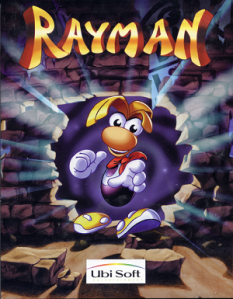
During the mid 90s there was no shortage of consoles – both the 16-bit generation and 32-bit generation were coming to be, not to mention CD consoles – and Rayman was caught right in the thick of it. Not only that, but thanks to Mario and Sonic, platformers were among the highest in popularity behind fighting games. The title began life as a brainchild of Ubisoft creative director Michel Ancel (who is also responsible for cult favorite Beyond Good & Evil) and the then struggling developer/publisher bet the house on his creation and won. Rayman started life on the Super NES as a two-player title based on various cultural fairy tales and eventually it was decided that the game would receive a cartoon makeover with better animation and subsequent move to the Playstation CD add-on for the SNES (read that story here). When Nintendo announced the cancellation of both the Playstation and Phillips CD projects Ubisoft wanted to move to the Jaguar thanks to its specs and eventually chose the Sony Playstation as the lead console. As you can see, the game was already bouncing from console to console.
 Gaming History 101