Archive for the ‘Playstation’ Category
Podcast: Final Fantasy VI Game Club
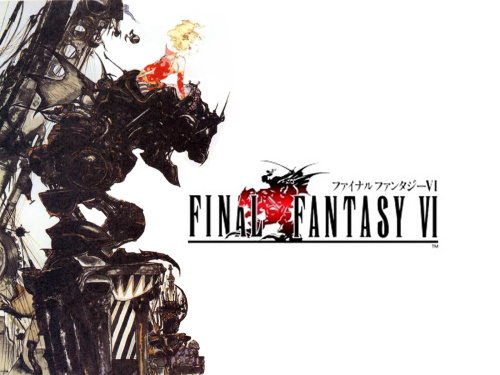
This week Fred and Eli (@Sodoom) discuss what many believe to be the best 16-bit RPG of all time: Final Fantasy VI (better known as Final Fantasy III on the SNES in the US). We discuss the combat system, characters, plot, and most memorable moment on this truly timeless RPG.
Podcast: Rock Man of Doom

This week Fred goes solo to celebrate Doom‘s 20th Anniversary and the Mega Man series. Keji Inafune’s legacy may live on through Mighty Number 9, but when he was a young new college grad Capcom employed him to create one of the most beloved and long running franchises of the company’s history.
Also if you want more Doom coverage, feel free to check out our podcast on Doom clones.
Podcast: You Are Go For Launch

This week we are joined by Chip Cella (@CaptinChaos) to discuss listener William’s topic: What makes a successful console launch? It all ends up being more stories of console launches and discussions on killer apps, but we do manage to cover most mainstream consoles.
Podcast: Silent Evil

This week Fred is joined by listeners Allen and Jamalais to discuss the Resident Evil and Silent Hill franchises. They do not get as far as planned, but the initial iterations of each series is thoroughly covered and a sequel is promised.
Podcast: Square’s Swan Song

If you are going to talk significant JRPGs in America, one of the most influential series is Final Fantasy. Whether you believe that it was the last game Square may have ever made or that it was simply the last game designer Sakaguchi would be a part of, the massive success of this digital Dungeons & Dragons title started a strong fan base that continues today. In part one of our coverage, Fred and Eli “Sodoom” team up to discuss Final Fantasy I-VI including development, design, gameplay, and of course Cid.
Review: Final Fantasy IV
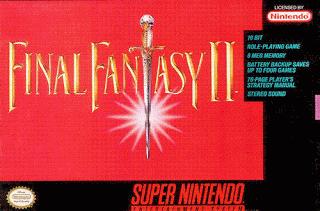 Console: SNES (as Final Fantasy II in the United States – title changed in later releases)
Released: November 1991
Developer: Square
Publisher: Square
Difficulty: Hard
Price: $24.67 (used, cart only), $70.57 (used, complete), $300.00 (new)
Additional Releases:Wonderswan Color (Japan only, updated graphics), Playstation (Final Fantasy Chronicles, new translation), Gameboy Advance (Final Fantasy IV Advanced, upgraded visuals, new translation/conversion to more closely resemble Japanese version), DS (full 3D remodeling, new dungeon), PSP (Final Fantasy IV: The Complete Collection, updated 2D visuals instead of 3D, includes The After Years and a new campaign Interlude to bridge gap between the events of IV and The After Years)
Digital Release? Wii Virtual Console (SNES version, $8), PSOne PSN (Playstation version, $10), PSN (PSP version, $30), iOS/Android (GBA version, $16)
Similar Titles: Dragon Quest (Warrior) franchise, Phantasy Star franchise, Vay, Ys I & II
Please note: This was originally released as Final Fantasy II in the United States and later re-named to the appropriate numbering system. The actual Final Fantasy II Japan-only Famicom (NES)release review will be live shortly.
 Despite the numbering of this game (and Final Fantasy VI) to be completely messed up in the US, Final Fantasy IV is a must play for fans of the series and JRPG genre. As George Lucas would put it, this is the “definitive version” of the game director (and series creator) Hironobu Sakaguchi originally wanted to make. It learns from its three predecessors and weaves in a powerful story almost unheard of at this point in gaming. Originally intended to be a final NES title in the series, budgetary and scheduling issues forced the 80 percent complete title to be scrapped and re-made on the new Super Nintendo (SNES) console with some of the original ideas integrated. The elemental concepts of the original, heavy story elements of the sequel, and job system of the third (it would be better utilized in Final Fantasy V however) were all mashed together with a new active time battle (ATB) system to create the most compelling game yet. ATB ditched traditional turn-based combat for a timer that allowed characters to attack at their own pace based on the type of warrior they were. This continues to be a staple of the series today and even snuck into other RPGs like Chrono Trigger. Final Fantasy IV hit early in the SNES and celebrated mass critical and financial success worldwide and is considered a favorite by many series fans.
Review: Final Fantasy
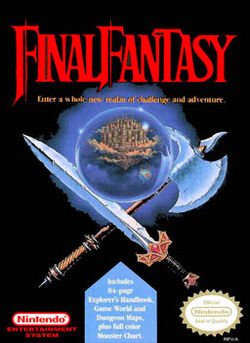 Console: NES
Released: 1990
Developer: Square
Publisher: Square
Difficulty: Moderate
Price: $13.49 (used, cart only), $48.50 (used, complete), $288.00 (new)
Additional Releases: MSX2 (Japan only), Wonderswan Color (Japan only), Playstation (Final Fantasy Origins, updated graphics), Gameboy Advance (Dawn of Souls, upgraded with additional dungeons, new translation), PSP (original title, includes Dawn of Souls content with updated visuals and soundtrack)
Digital Release? Wii Virtual Console (NES version, $5), PSOne PSN (Playstation version, $10), PSN (PSP version, $10), iOS/Android/Windows Phone (PSP version, $7)
Similar Titles: Dragon Quest (Warrior) franchise, Phantasy Star franchise, Vay, Ys I & II
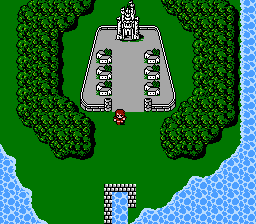 If you ask most Americans what the first true console RPG was probably one of the most common responses would be Final Fantasy. Not only is Square’s epic tale of four warriors taking on a timeless being that plans to destroy the world memorable, but it stood well above the competition of the time. The Legend of Zelda may have taken around 10 hours to complete, a size and scope only possible with the ability to save that was unheard of prior, but it was nothing compared to the massive world and 30-50 hours you may spend conquering Final Fantasy. Aside from that, the 1986 Famicom title Dragon Quest (changed to Dragon Warrior in the US for its earlier iterations) had just received a slight upgrade and released to North America in 1989, less than a year before Final Fantasy. It was great but couldn’t compete with a game that was made three years later with the lack of classes, a party system, and various other differences. It should be noted that in Japan Dragon Quest II had already released and Dragon Quest III came out in February 1988, a mere two months after Final Fantasy, which had slowly built up most of the game’s staples such as a party system, exploration, turn based battle system, and both games had similar class systems. That doesn’t mean that Final Fantasy doesn’t have its own identity, it’s far superior in terms of graphics, nothing like the airship showed in the first three Dragon Quest games, and instead of sending you back to town when you die like Dragon Quest you would instead get a game over and go back to where you last saved. Final Fantasy also shipped with a map and huge manual that got players more invested in exploring and completing the campaign, not to mention a cheap and huge Nintendo Power strategy guide that released shortly after. For me, it was the near perfect conversion of the Dungeons & Dragons universe – some of the characters are literally stripped from the Monstrous Manual – and converted it into a single player experience.
Podcast: CIB – Complete in Box

This week Fred is joined by Chip Cella of the B-Team and Derrick H of All Games and Dead Pixel Live fame to discuss how games used to come packaged. This includes the box, instructions, and a bunch of freebies we pay good money for today.
Opening Song – Joe Esposito You’re The Best
Closing Song – Iron Maiden Run to the Hills
Podcast: Legends of Rayman

This week Fred is joined by Chip Cella of the B-Team Podcast to discuss one of the few colorful platformers born completely from the 3D generation, despite the first game playing on a 2D plain. Ubisoft’s Michel Ansel all but saved the then struggling developer/publisher and gave way to a challenging but fun series starring a character with no limbs.
Opening Song – Rayman Theme from the original Rayman on PS1
Closing Song – Madder by Groove Armada (Fred incorrectly refers to this song as Hoodlum in the show)
Retro Game Night: Expendable and Street Fighter The Movie: The Game
This week’s double dose comes from our 9/9/99 podcast and Twitter user @UselessBug. During that podcast I purchased a Dreamcast launch game, Expendable, that looked like a 3D violent Smash TV, check out the video to see if that’s what it actually is.
And the second game came from one of our readers/listeners that requested Street Fighter The Movie: The Game based on the glorious movie of, well, another game. He challenged me to complete it, but he failed to mention a large catch in the game’s design. Can I do it?
 Gaming History 101