Archive for the ‘SNES’ Category
Podcast: Square’s Swan Song

If you are going to talk significant JRPGs in America, one of the most influential series is Final Fantasy. Whether you believe that it was the last game Square may have ever made or that it was simply the last game designer Sakaguchi would be a part of, the massive success of this digital Dungeons & Dragons title started a strong fan base that continues today. In part one of our coverage, Fred and Eli “Sodoom” team up to discuss Final Fantasy I-VI including development, design, gameplay, and of course Cid.
Review: Final Fantasy IV
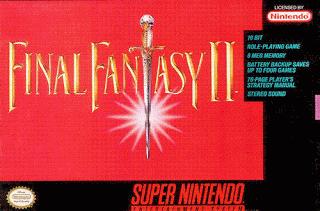 Console: SNES (as Final Fantasy II in the United States – title changed in later releases)
Released: November 1991
Developer: Square
Publisher: Square
Difficulty: Hard
Price: $24.67 (used, cart only), $70.57 (used, complete), $300.00 (new)
Additional Releases:Wonderswan Color (Japan only, updated graphics), Playstation (Final Fantasy Chronicles, new translation), Gameboy Advance (Final Fantasy IV Advanced, upgraded visuals, new translation/conversion to more closely resemble Japanese version), DS (full 3D remodeling, new dungeon), PSP (Final Fantasy IV: The Complete Collection, updated 2D visuals instead of 3D, includes The After Years and a new campaign Interlude to bridge gap between the events of IV and The After Years)
Digital Release? Wii Virtual Console (SNES version, $8), PSOne PSN (Playstation version, $10), PSN (PSP version, $30), iOS/Android (GBA version, $16)
Similar Titles: Dragon Quest (Warrior) franchise, Phantasy Star franchise, Vay, Ys I & II
Please note: This was originally released as Final Fantasy II in the United States and later re-named to the appropriate numbering system. The actual Final Fantasy II Japan-only Famicom (NES)release review will be live shortly.
 Despite the numbering of this game (and Final Fantasy VI) to be completely messed up in the US, Final Fantasy IV is a must play for fans of the series and JRPG genre. As George Lucas would put it, this is the “definitive version” of the game director (and series creator) Hironobu Sakaguchi originally wanted to make. It learns from its three predecessors and weaves in a powerful story almost unheard of at this point in gaming. Originally intended to be a final NES title in the series, budgetary and scheduling issues forced the 80 percent complete title to be scrapped and re-made on the new Super Nintendo (SNES) console with some of the original ideas integrated. The elemental concepts of the original, heavy story elements of the sequel, and job system of the third (it would be better utilized in Final Fantasy V however) were all mashed together with a new active time battle (ATB) system to create the most compelling game yet. ATB ditched traditional turn-based combat for a timer that allowed characters to attack at their own pace based on the type of warrior they were. This continues to be a staple of the series today and even snuck into other RPGs like Chrono Trigger. Final Fantasy IV hit early in the SNES and celebrated mass critical and financial success worldwide and is considered a favorite by many series fans.
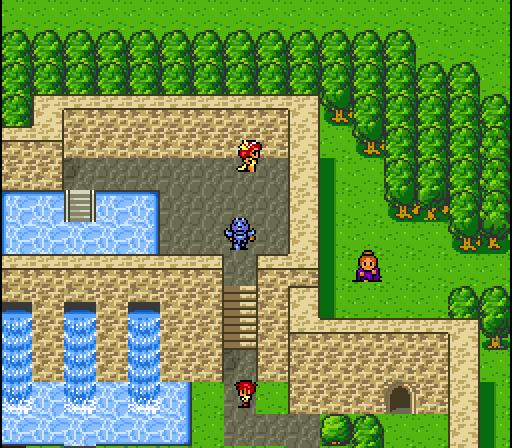
Podcast: CIB – Complete in Box

This week Fred is joined by Chip Cella of the B-Team and Derrick H of All Games and Dead Pixel Live fame to discuss how games used to come packaged. This includes the box, instructions, and a bunch of freebies we pay good money for today.
Opening Song – Joe Esposito You’re The Best
Closing Song – Iron Maiden Run to the Hills
Podcast: Me Money Bin
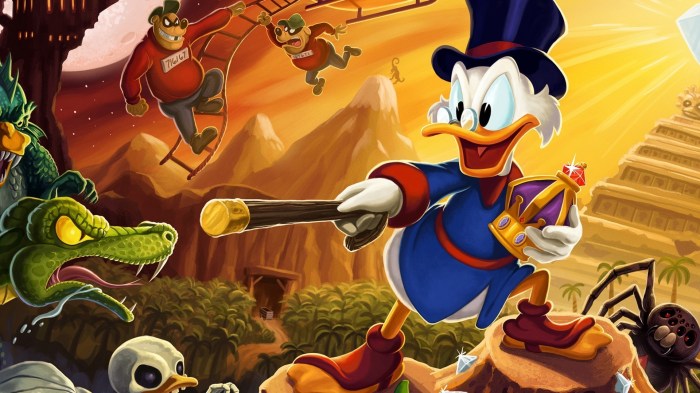
This week Fred and Trees are discussing Capcom’s Disney games. In the 8-bit era Capcom received the Disney license and created a little game called DuckTales based on the popular Saturday morning cartoon. Not only was it a mass success, but it was an excellent game that gave way to a whole slew of 8-bit and 16-bit gems on Nintendo and Sega consoles.
Hardware Profile: Game Cartridges

It’s hard to believe, but the typical cartridge game began to phase out of gaming in 1995 when the new wave of consoles and the subsequent movement to disc-based media began. I’m sure plenty will be quick to point out that the N64 was a cartridge-based console, but I truly believe this decision was the result of Nintendo not wanting to give up the control over manufacturing and sordid history making a machine that read discs. This change happened 18 years ago, which means there is a significant number of gamers that are now in their early to mid 20s that have never played games on a cart. This is truly a shame because the versatility of cartridges is much more abundant than most people realize, but the crutch will always be that carts offer little storage for massive prices. In today’s lesson we will discuss what makes up a cartridge, benefits/setbacks, and how the cartridge was used to literally upgrade consoles for more than two decades.
Retro Game Night: Adventures of Lolo and Joe & Mac
This week’s retro game night had two requested classics:
First up is the puzzle platformer from Kirby developer HAL Laboratories (also where Nintendo CEO Iwata got his start) entitled Adventures of Lolo. This title predates Kirby’s Adventure by a few years, but the basic concept of his design are very apparent (Lolo and girlfriend Lala are also enemies in a Kirby title). Requested way back when in our forums by IzzleMoxle, here’s an NES classic:
Immediately following is our second title, the action platformer Joe & Mac (sometimes with the subtitle Caveman Ninjas) on the SNES. As a near launch title, this is one of many arcade ports that showed off Nintendo’s 16-bit console’s big impressive sprites while somewhat showing off its impressive Sony sound chip. I remember dumping hours into what is a moderately difficult, but wonderfully addictive game:
If you would like to see a classic game played for retro game night or beaten for our occasional retro game challenges, just hit me up in the contact section.
Podcast: Adventures of Link
This week Fred is joined by Eli (@sodoom) and we are talking about the Legend of Zelda series. We delve into all of Link’s adventures across various platforms and the gaming significance of each.
Opening Song – Legend of Zelda Theme (NES)
Closing Song – Ocarina of Time Theme (N64)
Genre Study: Roguelikes and MetroidVania Games
Lately many games that embrace former genres that had fallen to the wayside are making a comeback. As a result lots of games press and developer media contacts like to coin phrases that are based on gameplay styles not many are familiar with. When someone tells you that Tokyo Jungle is a “roguelike” or that Guacamelee is a “MetroidVania” title, it’s entirely possible you have no idea what that means. After this article, you will no longer have that problem.
Roguelikes

Original Rogue on IBM compatible
You may or may not know that the roots of the roguelike come from a 1980 computer game called Rogue, which established the dungeon crawler. This game was considered genre-changing when compared to the slower paced text adventures such as Zork and Dungeons & Dragons video game ports like Wizardry and Ultima. Developers Michael Toy, Glenn Wichman, Ken Arnold, and Jon Lane site a hybrid between both types with influences from D&D as well as the text adventure Colossal Cave Adventure, which featured a detailed description of a cave system in Kentucky that was so precise it was used by a tourist to navigate parts of the actual caves it was based on. The result was a game where an adventurer explored a multi-floored dungeon, collecting items and facing enemies, in search of a final artifact (in this case the “Amulet of Yendor”) to complete the game. Each floor was more difficult than the last, you could not backtrack to a previous floor, and if you died you got a game over, simple as that. Additionally the layout of the dungeon, items, and enemies were all randomly generated, which meant you would ideally never play the same game twice. Despite the fact that you would have to start over, the experience of playing the game assisted you in handling enemies, utilizing items, and preparing for future encounters as such that you could eventually beat the game. Needless to say the game had a tough barrier for entry and popularized itself mostly on Unix systems in colleges across the country, but the public found it too complex and difficult.
Review: Revolution X
 Console: Arcade
Released: 1994
Developer: Midway / Rage Software (console)
Publisher: Midway / Acclaim (console)
Ports: Genesis, SNES, Playstation, Saturn, PC/DOS
Digital Release? No (probably due to license issues)
There are some games you can’t help but adore, even if they are completely without merit. Revolution X is definitely one of those games. When the title released to arcades in 1994, Aerosmith’s Get A Grip album was just around a year old and with solid hits like Living on the Edge and a slew of videos featuring Alicia Silverstone (who was discovered by the band and started her career in these initial videos). What originally started as a Jurassic Park game much in the same vein as previous title Terminator 2, Revolution X had to be retooled when Sega outbid Midway for the rights to Universal’s film. The result is a game with more off-the-wall and undeveloped ideas than a season of Lost that involves helping children around the world, saving the band, and stopping the New World Order and its leader Helga – a nazi-esque goth queen.
 Revolution X has a hell of an intro, but as we often see in games like this it’s only a matter of time until it all falls apart. Aerosmith is performing in some drab downtown Los Angeles club (Club X) and the New World Order shows up to kidnap the band. You start off shooting the endless supply of henchmen with CDs as your grenades and large blood spatters as you take out enemies. After all, this is the team that gave us Mortal Kombat. Before even entering the club you will face literally hundreds of enemies, large security bosses with shields and bulletproof armor, and a massive tank. Once inside you will blast away at (literally again) hundreds of NWO henchmen while destroying the intro lounge, complete with Kerri Hoskins (Sonya in MK3) as thonged dancers in cages, and eventually entire the massive main area where Aerosmith is jamming away to the song Eat the Rich.
Friday at the Movies: Terminator 2: Judgment Day (Arcade)
 Console: Arcade
Released: 1991
Developer: Midway / Probe Software (console)
Publisher: Midway / Acclaim (console)
Ports: Gameboy, Game Gear, Master System, Genesis, SNES, PC/DOS (all as T2: The Arcade Game)
Digital Release? No (probably due to license issues)
In 1991, the sequel to Jim Cameron’s film Terminator hit theaters and literally launched the careers of Edward Furlong and Robert Patrick as well as ushering in a new generation of computer generated image (CGI) effects. With a monster budget the film was accompanied by a marketing blitz like no other. At that time making an arcade game for the movie was a great and potentially cost-free endeavor (it would make as much in revenue that it cost to produce), which resulted in one of the heaviest cult following of a licensed game I’ve ever experienced. Not only was it a licensed arcade game, but it was also a bolt-on light gun game (which I describe in my Operation Wolf article) that made it significantly more approachable than any other format. For me, it was the “why can’t I beat the damn third level!” game.
 It’s quite an expansive experience that takes you through most of the pivotal moments of the movie, including several levels that take place in the post-apocalyptic future and subsequent present day challenges. Like other shooters of its type, you have a primary machine gun weapon and bombs that can be fired off for some of the stronger enemies or to take out clusters. I must admit that at the time it was awesome taking out the original T-800 cyborgs we first saw in the original Terminator and the neo-future setting. Then you hit level three. Most people don’t remember and even fewer talk about the fact that unlike arcade quarter-swallowing titles like Revolution X, level three requires skill to complete and no amount of money in the world will get you past it. This is why most people who have played this game get hung up on or never see beyond the third level. It’s a protection mission where you literally have to memorize the spawn points of the oncoming enemies that seek to destroy the truck John Connor is fighting in. This vehicle is very susceptible to damage and if you can’t intercept the airborne enemies right as they appear you have no chance of completing the level. If John dies, you have to restart with no true penalty. This resulted in long, repetitive, and frustrating replays of an escort mission you never wanted to play. It’s really disappointing too, because the remaining seven levels are both fun and provide much more fan service for those that have seen the movie. These levels are also brutally difficult to the point that I don’t think it’s possible to pass on consoles and requires more than 50 credits on arcades/MAME.
 Gaming History 101