Archive for the ‘Xbox 360’ Category
Podcast: The Treasure Box
This week Trees returns and we are talking about the Japanese developer Treasure, best known for some of the most impressive games on Sega’s consoles (Gunstar Heroes, Radiant Silvergun, Guardian Heroes, and Ikaruga) as well as Nintendo’s later consoles (Bangai-O and Sin & Punishment). We discuss the company origins, values, and of course the entire library of this impressive developer.
Download this episode (right click and save)
Subscribe: RSS iTunes Google Podbean
Below is a video of an unreleased (canceled) title, Tiny Toons: Defenders of the Universe. The beta that was presumably used as a trade show demo eventually leaked on the internet. We have acquired it and played it on an original, modded, PS2. Enjoy!
Review: Capcom Arcade Cabinet (XBLA/PSN)
 Whenever I hear about another announcement for another arcade collection to be released individually I always think back to Game Room. Here we go again. Not only that but you would be hard pressed to not point out that Capcom has released these arcade gems before, most if not all of them (there are some games I don’t yet know about) appearing on the Capcom Classics Collection that appeared on Xbox, PS2, and PSP. Despite all of that against it – your interest and want in the specific games notwithstanding – Capcom Arcade Cabinet offers exactly what retro gamers purchasing arcade games on today’s consoles look for and all at an easy impulse buy price.
At its core it’s a lot like Game Room in that you navigate a main screen that displays the available games you have to play. Games that you have not purchased or that aren’t available yet are blacked out. Of the titles you do have, you can read a quick background paragraph on the game or enter its specific menu. As of now the selection is an interesting mixed bag of highly popular and relatively unknown titles from 1984-1987 – currently the three titles from 1987 have been released: Black Tiger, 1943, and Avengers – and the overall package looks to be consistent with that structure moving forward. Whether or not you want these games is entirely up to you and probably responsible for whether or not you’ll pick up anything, but this review isn’t about each individual game but rather the options and package you get with Capcom Arcade Cabinet.

Review: Christmas Nights Into Dreams (Saturn)
 Console: Saturn
Released: December 1996
Developer: Sonic Team
Publisher: Sega
Instruction Manual: It did not have one – manual of the original game should suffice
Difficulty: Easy
Played it as a child? Yes
Value: $24.25 (used), $56.00 (new) (pricecharting.com)
Other Releases: Yes – A Japan only PS2 remake of Nights Into Dreams includes the Christmas content
Digital Release? Yes – included in the HD remake of Nights Into Dreams on XBLA and PSN, certain content removed (see below)
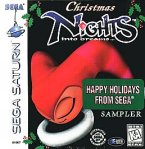
Christmas Nights Into Dreams is significant for several reasons, but most of all it’s one of the only Christmas themed games to ever come out. No, seriously, look through the vaults of retro console history, this is a holiday that is rarely celebrated save for games that focus on certain days (Animal Crossing, for example). In the winter of 1996 Sega was already in big trouble with the Saturn. At only about a year and a half old, Sony’s Playstation was killing it in terms of sales and there were few exclusive titles that generated any kind of buzz. Even Sonic, the faithful hedgehog that always seemed to sweep in and save Sega’s butt, hadn’t released a real game yet. Not only that, but this was the Christmas release of the Nintendo 64 and Mario 64 was selling out consoles nationwide. Nights Into Dreams was the only recent release on the Saturn that appealed to the typical gamer and with its colorful aesthetic, roots in platforming, and Sonic Team developer it was Sega’s best bet for the holidays. Under these circumstances Christmas Nights invaded the market in several forms from being a free pack-in with Christmas console bundles (that already included Nights), inside several magazines, a mail away/in store offer with certain game purchases, and even for rent at Blockbuster Video. This “sampler” title was everywhere, but only for about 45 days, and now it’s one of the more rare and sought after pieces of a retro gamer’s collection.
The Japanese Always Get The Better Version: Contra (Famicom)
 Console: NES/Famicom
Released: 1988
Developer: Konami
Publisher: Konami
Instruction Manual: Not Necessary – Link
Difficulty: Moderate
Played it as a child? Yes
Value: $26.01 (used), $399.95 (new) (pricecharting.com)
Other Releases: Yes – Arcade, Microcomputers, PS2, DS (all are the Arcade version)
Digital Release? Yes – Virtual Console (NES version), XBLA/PSN (Arcade ver) ($5 on all platforms)
With box art that is clearly Arnold Schwarzenegger and Sylvester Stallone combining forces to be in a franchise that belongs to neither, Alien, this game has it all. For the most part you and potential partner rush through eight levels, including a jungle that is ripped straight out of Predator, to attack bad guys and eventually aliens. It’s a confusing game in America because nothing is spelled out for you, the game just drops you in the jungle without any plot, scene, or explanation. Now that I’ve played the Famicom version (and the video below will show the complete game to you as well), it looks like there’s a decent plot that unfolds. Since I don’t know Japanese nor can I read Kanji, what is actually conveyed is a mystery to me, but I’m sure the translated explanation is only a Google search away. Contra not only introduced us to a frustrating and fun franchise, but it’s also where most of us learned the Konami code (up, up, down, down, left, right, left, right, B, A, Start). If you put this into the title screen you would begin the game with 30 lives (if you instead end the code with Select before Start you can start a two player game with both players having 30 lives), which was the only way most of us could beat the game when we were younger. After years of practice I can now complete the game with the given 3 lives, although not flawlessly, and I prove it in the video below.

The Famicom version I’ve always heard is “enhanced” over the NES version and the two are worth roughly the same amount, so when I was picking up the title at a retro show I opted for the Japanese version. It’s not really that different, but the changes of note are the aforementioned cutscenes, moving backgrounds, and slightly easier difficulty. Either way it just goes to show that the Japanese version of most games will always be the better version. Then again when this title released in Europe it was renamed to Probotector and features robots instead of humans (although in either version the enemies pop and explode). Without further ado, I give you the completion video of Contra on the Famicom.
Review: Sonic CD (Sega CD)
 Console: Sega-CD/Mega-CD
Released: 1993
Developer: Sonic Team
Publisher: Sega
Instruction Manual: Not Necessary – Link
Difficulty: Moderate
Played it as a child? Yes
Value: $11.99 (used), $23.50 (new) (pricecharting.com)
Other Releases: Yes – PC, PS2/Gamecube (Sonic Gems Collection)
Digital Release? Yes – Steam, Xbox 360, PS3, Android, iOS ($5 on all platforms)
Sonic CD is one of those games that it’s just popular to like. I don’t want to start on a negative note, the game does have some merit, but it’s not a particularly good Sonic game and doesn’t quite change the universe like many will claim. Before Sega decided to blitz every console on the market with the digital version, Sonic fans were gnawing at the bit for a decent port (sadly the Sonic Gems Collection ports had emulation issues). Now that it’s everywhere the gaming community seems to have adjusted to a more realistic view of the CD adventure that throws a few imaginative ideas at relatively lackluster level design.

At one point you’re forced to beat Metal Sonic in a race.
For those that aren’t up on their Sonic history, the hedgehog was co-created by Naoto Oshima and his more known partner Yuji Naka. After the release of the first game, Naka and several members of that team moved to the United States and joined with STI (Sega Technical Institute) to create Sonic the Hedgehog 2. Meanwhile the remaining developers, including Oshima, took the concepts that were in early development for Sonic 2 and expanded upon them into what eventually became Sonic CD. This is why despite coming out around the same time as Sonic 2, Sonic CD looks graphically more like the original and doesn’t seem to adapt some of the great ideas of the sequel. Still, it does feature some interesting gameplay mechanics, like the ability to move into the past and future with two full versions of the many levels. This dual expansion of the campaign does have a casualty: level design. Many of the levels in Sonic CD feature plenty of wasted real estate in the interest of moving quickly to the right, odd gimmicks that net death if you don’t tolerate the so-so platforming, and several instances where Sonic’s momentum is completely spoiled by a random ramp or springboard. Despite these layout flaws I still contest that the boss designs are superior over Sonic 2 and prove that not all of the talent in Sega’s Japanese team migrated to America.
Review: Final Fight CD (Sega CD)
 Console: Sega-CD/Mega-CD
Released: 1993
Developer: Capcom
Publisher: Sega (Sega/Mega-CD, 32X CD)
Instruction Manual: Not necessary
Difficulty: Hard
Played it as a child? Yes
Value: $21.50 (used) $76.00 (new) (pricecharting.com) – Price for Sega CD version only
Price: $23-$60 (used) N/A on US Version (new) on eBay
Other Releases: Arcade, SNES, Gameboy Advance
Digital Release? Yes – SNES version on Virtual Console ($8), Arcade version on XBLA/PSN as Double Impact ($10)
Final Fight is a pivotal late 80s arcade release for Capcom for two reasons: it established the norms that would make up the concept of the “beat-em-up” genre for its short-lived life (although it oddly enough didn’t introduce any of them) and it created the aesthetic and building blocks of Street Fighter II. Anyone who has played this game or SFII will immediately be familiar with that semi-realistic semi-animated graphical style of Final Fight that remained exclusive to these two titles moving forward for a few sequels (I’m considering the numerous re-hashes of SFII to be sequels). In full disclosure this is my favorite brawler of all time and definitely ranks highly in my overall top games I’ve ever played despite the fact that Final Fight doesn’t translate well to home consoles because it’s intended to take your money and prompt more quarters rather than be completed in a finite number of lives/credits. In order to complete the game in the allotted five credits requires you to memorize the cheaper boss battles and exploit the collision detection. For me it was just repetitive stupid fun.
Podcast: (Re)Visiting Silent Hill 2
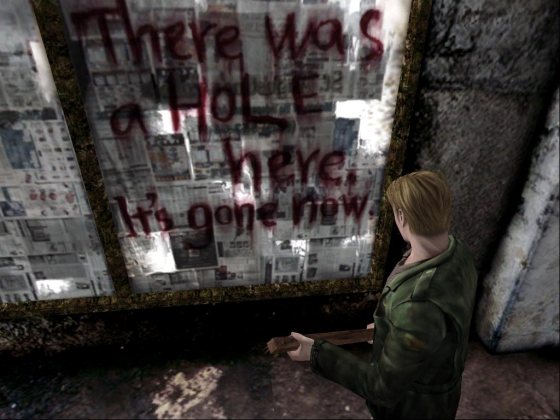
This week Fred reflects back on survival horror favorite Silent Hill 2. This is his first time playing the game and he discusses the atmosphere, gameplay, and plot of Konami’s unnerving title.
 Gaming History 101