Posts Tagged ‘nintendo’
Games You’ve (probably) Never Played: Zombie Nation (NES)
 Console: Nintendo Entertainment System (NES)
Released: 1991
Developer: KAZe
Publisher: Meldac
Famicom? Yes (as Abarenbou Tengu Translation: Hooligan Tengu)
Instruction Manual: Not necessary – Link
Difficulty: Moderate
Played it as a child? No
Value: $187.49 (used) $127.61 (new) (pricecharting.com)
Digital Release? No
Aside from the steep price tag, there are few games on the NES that are like Zombie Nation. Not only is it it an original horizontal scrolling shmup, but it does many technical tricks not often seen on the console. Starting with the title screen, which has a line effect that resembles many arcade shmups of the time period, there is a lot happening onscreen at any given time. The NES would often suffer stuttering or slowdown when the screen was flooded with only a few enemies – heck, Double Dragon couldn’t have more than three characters on screen at once! Zombie Nation has far more than that with little slowdown and even background effects with everything from burning buildings to guiding lasers. Additionally the boss battles and frantic later levels would dowse the screen in bulletfire, making it a precursor to the popular “danmaku” genre of shmups that emerged in the mid 90s. Did I also mention it’s fun as hell?
Podcast: Birth of the Playstation

This week Fred goes solo and discusses the new format for the podcast, promises more media content on the site, and then tells the history of Sony’s famous powerhouse the Playstation, which premiered this week 17 years ago.
Download this episode (right click and save)
Visit the Podcast Site
Head to Head: Super Mario Bros. 2
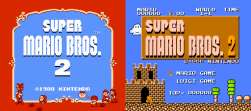
Ask anyone who grew up playing NES games and they will tell you that Super Mario Bros. 2 was somewhat of an anomaly. It is completely unlike the other games in the series, complete with an Arabian theme, veggie-pulling, the option to select one of four protagonists, and Bowser (King Koopa) is nowhere to be seen. Fortunately for Nintendo it blended right in with sequels to various other popular franchises in the console, including the radically different Zelda II: Adventures of Link and Castlevania II: Simon’s Quest. As a seven-year-old gamer back then I shrugged it off and said, “why not?” It may shock you to discover that the American version of Super Mario Bros. 2 is not actually the intended sequel to the original Super Mario Bros., nor is it in Japan. The true Super Mario Bros. 2 is better known as Lost Levels in America and our Super Mario Bros. 2 began life as the game Yume Kojo: Doki Doki Panic! and based on a Saturday morning cartoon in Japan and was later re-worked, improved, and re-released as Super Mario Bros. USA. Both versions of Super Mario Bros. 2 are as different as two games can get and thus warrant a head to head.
Feature: Mascots
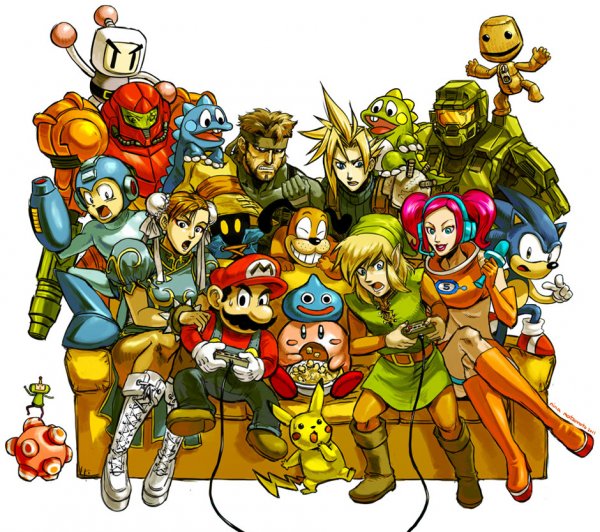
Mascots, you have to love them. No, wait, you don’t. For the most part mascots have been one of the dark spots on a game publisher’s marketing blitz. At first there was only one iconic mascot, Mario from Super Mario Bros., and frankly he was an accidental mascot that Nintendo had never imagined would become its poster child. After Mario other companies were consistently trying to establish mascots no matter the negative cost to the consumer. Mario is an exception not because he’s a particularly good or mistakenly genius mascot, he’s just iconic because his game was the catalyst to the return of video games after the crash of 1983. During the mid 80s Nintendo established a handful of strong franchises that are beloved by many fans and despite Mario being the “leader” per se, he’s definitely not alone when Nintendo wants to sell a product. I would argue that Link (from Legend of Zelda), Kirby (from Kirby’s Dream Land), Pikachu (from Pokemon), and to certain extent Donkey Kong (from Donkey Kong/Donkey Kong Country) and Samus (from Metroid). Much like Disney, Nintendo brings with it a cast of characters and franchises that all assist the overall brand in creating long running quality games. Everyone wanted to have that same wonderful family in the 90s (all of the above named characters had at least one title on the NES by 1992), but they seemed to miss the point that these characters were not created to be mascots, they just happened to get popular enough to become mascots.
Feature: Castlevania Retrospective

Few titles that started life on the NES still exist today. Of those titles there are even fewer that weren’t developed by Nintendo. Konami is one of the few companies that has a list of titles like this, although many of them suffer from very few updates and recent iterations such as the Metal Gear (Solid) series and Gradius. Castlevania does not have this problem. In fact, it still seems to withstand the test of time and despite trying to reinvent itself so many times, celebrates at least mild success with each new iteration. As a gamer who got his first console, an NES, in 1988, I have literally grown up alongside the series and played most titles it has to offer. If you don’t know Castlevania or have never played a single game, this will hopefully explain why you need to.
Know This Developer: Radical Entertainment

It was announced on June 28, 2012, that after careful consideration Activision decided to disband most of Radical Entertainment (on a recent episode of Giant Bombcast it was discussed that the rumored remaining staff was 12) and basically close the studio. Granted, although the logo may appear on future games and thus be an argument to the fact that the studio is still open, Activision states that Radical remains a support studio with no ability to develop its own games. Cynics want to blame Activision for setting inappropriate goals for the Prototype developer and we all tend to believe that the remaining Radical staff will be assigned to a Call of Duty in the future, but that’s a different discussion for a different forum. Instead, I want to touch on how Radical Entertainment came to be and the games it has contributed to the industry.
Friday at the Movies: The Wizard
Video games and movies, you would think the two would go hand-in-hand, but unfortunately given that the film medium is a passive experience and the gaming medium is an active experience, the hybrid of the two usually goes horribly (and laughably) wrong. This segment will be our weekly realm to appreciate the more “classic” medium of film (thanks to the large number of hits my Prometheus review received). Of course, whenever possible I will review a “video game” movie.

This movie poster is exactly like the gaming magazines fo the time, busy as hell.
Oh, The Wizard, how I love you so despite what anyone tells me. Sure, it’s nothing more than a big commercial for Super Mario Bros. 3 and a blatant ripoff of Rain Man, but that doesn’t change the fact that I love this movie to death. Before the Internet, we gamers would soak up any and all forms of information on video games and due to the lack of content available to us (magazines cost money, you had to be registered for newsletters, and we couldn’t linger in the gaming area of Sears forever). I had a subscription to Nintendo Power and I knew that SMB3 would eventually grace our shores, but Japan got the game a whopping year and a half before us! As soon as they revealed that the game was going to be featured in the movie, it was an instant must see for my friends and I. It’s pretty hilarious too, because in the movie the big reveal is that the finals for the Nintendo World Championship would feature this game and everyone goes crazy given that it’s a never before played game. As an audience, we all knew the game would be in there and shredded through the first 90 minutes of exposition to get to that point. When Jimmy played those legendary first few levels of SMB3, though, the entire pathetic journey was well worth it. For fans of the film, how the hell does Haley know everything about this “unseen” game as Jimmy plays along, including what the flute does?
Is the Wii Really a Toy?
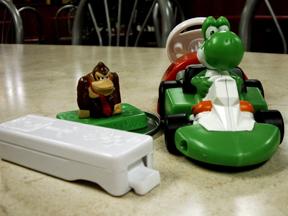
Yesterday it was announced by Beamdog’s co-founder Trent Oster that the anticipated Balder’s Gate: Enhanced Edition would not be making a trip to the Wii or Wii U. Some thought that because of Beamdog’s decent port of MDK2 on WiiWare that they might also bring the newest project to Nintendo’s next console. Oster went on a bit of a tweeting rant to Eurogamer that included the following statements: “We don’t do Nintendo development. Our previous experience with Nintendo was enough to ensure there will not be another.” Many assumed that this was in response to the experience Beamdog’s Overhaul Games had with MDK2 that was further backed by his continued statements: “My problems with Nintendo are: requiring 6000 unit sales before payment, a certification process that took 9 months and a 40 mb limit.” This is nothing new, Nintendo has historically been known to screw over 3rd party developers and include rules and business practices that net no risk to Nintendo while also reaping the benefits of successful titles. I may discuss that more in a future article but what struck me was Oster’s final statement, “[Wii] is a toy, not a console.”
Death of the Portable
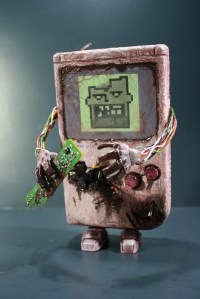
Portable gaming has been around almost as long as gaming as a whole. Since the first moment bleeps and bloops could be captured on a screen, engineers have been hard at work trying to recreate the same experience on the go. Now with both the Playstation Vita and Nintendo 3DS this goal has, for the most part, become a reality. While neither is quite on par with the likes of their HD gaming counterparts, there’s no doubt that the smaller screen does make the distinction difficult. Having personally played Resident Evil: Revelations, Super Mario Land 3D, Wipeout 2048 and Uncharted: Golden Abyss, I admit that I feel these games are nearly identical both in gameplay and graphics to home console titles. This is nothing new, in fact many would argue that the Playstation Portable was nothing but a slew of PS2-style titles both unique and ported. Unlike the PSP, though, it appears that the gaming public claim this is what they want. The sales, of course, tell a different tale.
Storytelling: How Shigeru Miyamoto Saved NOA

When Nintendo decided to move over to America, it wasn’t to begin the world of the NES but rather to establish a market for arcade games. Nintendo of America (NOA) had struggled ever since it migrated to the United States, complete with difficulty finding a home base in both New York and New Jersey, eventually staying for good in the Seattle area. At the time Nintendo’s owner, a gruff businessman by the name of Hiroshi Yamauchi, had inherited the company and vowed to make it into the powerhouse it eventually became. Yamauchi recently warmed up to his son-in-law, Minoru Arakawa, and decided to make him in charge of Nintendo’s American migration thanks to his free-spirited nature, familiarity with the country and ability to overwork himself. Now Arakawa was attempting to find the big arcade game that would put NOA on the map like Space Invaders had done for Taito. That game was to be a linear space shooter called Radarscope.
 Gaming History 101