Archive for 2016
Documentary: G4’s “Icons” The History of Doom and Making of Doom 3
0:00-21:59 – G4’s “Icons” Documentary on Doom and the Making of Doom 3
22:00 – 26:23 – Developer Interviews
26:23 – 30:08 – Concept Art and Creature Development
Back when G4 was a thing, the channel would often delve into these short half hour documentaries on the making of upcoming games. Companies liked to include these documentaries in special editions of Xbox games. One of those is found on the special edition of Doom 3 for the original Xbox.
While it’s an interesting look at Doom 3, I have to apologize for the quality, which is a blown up and upscaled version of the video on the disc. That video takes up a small portion of real estate on the screen and the Xbox only outputs it at 480p. Either way, it’s fun and interesting so lets take a look at G4’s coverage of the History of Doom and the Making of Doom 3.
Podcast: Old Console, New Hardware (Part 2)

This week the mod conversation continues as the guys move into the CD-based consoles and the wonderful world of modchips. There were many ways to get different things done in the Playstation era and beyond. Finally the show wraps up with soft modding and the various things that can be done from consoles only a few generations old.
Doom Retrospective
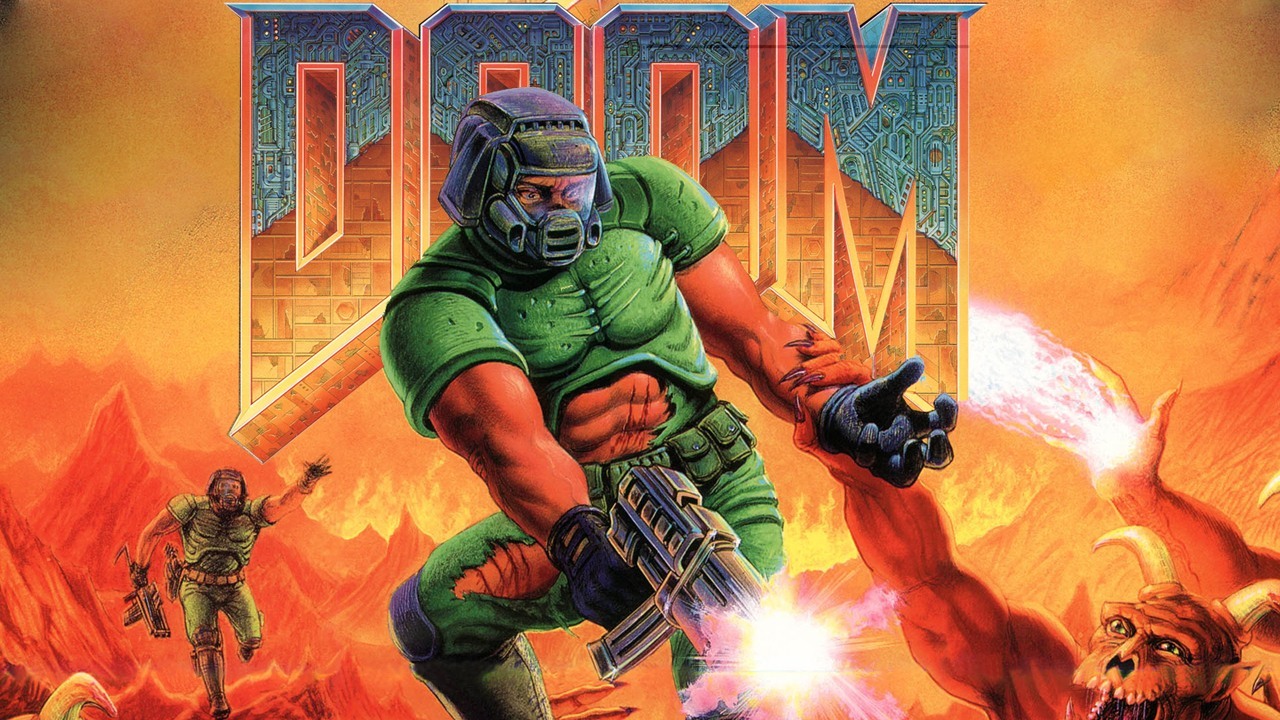
As I said in a previous article regarding Wolfenstein 3D, “Wolfenstein 3D did it first and Doom did it best.” The same team, id Software, created both games so it’s less of a competition and more of an evolution. While I agree that all games are a team effort, the technology that runs these games can sometimes be credited to one person. In the case of Doom that one person is none other than John D. Carmack. By this point most of us are aware of John Carmack and what he’s contributed to video games as a whole, but back in 1992 he was the guy creating a new engine for a new game. That engine was called the Doom Engine. Carmack claims the name Doom came from the movie The Color of Money in which Tom Cruise describes a custom pool cue as “doom” when questioned as to what’s in his case. It was created to enhance the first person shooter to include different heights, distances, and even sound effects in stereo for a more realistic type of game. In truth the hardware of the time couldn’t handle rendering a 3D world so the game is actually all on a flat plane in the code, which is why rooms never overlap and you can shoot a guy on a ledge by just aiming at the wall beneath him. I don’t know about the rest of you, but in 1993 I hardly noticed. Doom had positional breathing of mutant men, lighting effects (including dark rooms), a hybrid cyberpunk and distopian Hell setting, and a ton of violence. It was the rock star of the video game world.
Friday at the Movies: Captain America Civil War

Video games are an interactive experience and whether it’s that fact or something completely unrelated the stories in them, well, mostly suck. Comic books (as well as other media) somehow get lumped into the same world, which is completely without merit. Perhaps it’s that both started off as a target for kids, but whatever the reason this is a myth that is often regarded as fact. Comic books have incredible story lines, character development, and even rival contemporary films in terms of quality content. Captain America Civil War has to be one of the best translations from comic book to screen I have ever seen.
Podcast: Old Console, New Hardware (Part 1)

We all love old video games, but the frank reality is that as they age our consoles run solely on obsolete technology. As the basic capabilities of modern hardware increases, so does the ability to mod classic consoles to keep up. In addition, new accessories also come on the scene to serve needs that were either impossible or too expensive in the past. This episode covers the earliest cartridge-based consoles and the many modifications and accessories you can get for them. In part 1 of this two-part series we get a bit technical, but also present the many options you can potentially research.
Extra Credit: Gamecube Community Top 10
The GH101 community chimes in on its choices of the top 10 games on the console. Some are unique but clearly many in the final result are crowd pleasers.
Unreleased: Resident Evil 1.5 Video Walkthrough
The Resident Evil 2 (or Biohazard 2 in Japan) that was released was not the original version. Series creator Shinji Mikami took on a producing role that it appears was heavily micro-managed and director Hideki Kamiya disagreed with a lot of his decisions. Eventually Mikami dubbed the game boring and without the strength of the original and it was scrapped completely, resulting in the delay of the game another year and a complete reworking. This is an exploration of the leaked 40 percent complete version of that original game, often dubbed Biohazard 1.5 in Capcom and also Resident Evil 1.5 online.
Back in 1995 Review
This review originally appeared on The B-Team Podcast site but given the fact that the author of that review owns Gaming History 101, it was also posted over here with permission. All of the content remains identical.
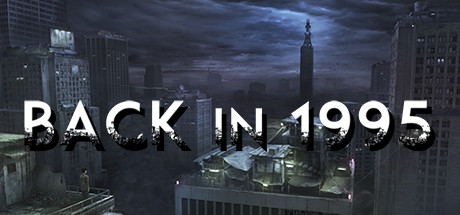
If you grew up in the mid-late 90s as a gamer, you have a certain affinity to the awkward early polygonal styles of games that graced consoles like the Sega Saturn, Sony Playstation, and Nintendo 64. Given the fact that most people born around the time to start gaming on these consoles are nearing their mid-late 20s, not to mention those in their 30s like myself, the time was right to have an indie era piece. More importantly was the fact that these consoles ushered in the more refined years of the survival horror genre that would become the template for that genre even today. Back in 1995 is acutely aware of this and developer Throw The Warped Code Out, which is mostly a single developer by the name of Takaaki Ichijo, has gone out of its way to recreate that time period. This will surely get many nostalgic gamers excited, as I was, with visions of Resident Evil and Silent Hill in their heads, but those games are a couple of years off from the era in this game. Back in 1995 is from an earlier era that is even more archaic and hearkens to Alone in the Dark 2 or for obscure Japanese fans, Dr. Hauzer on the Panasonic 3DO. It’s a technical marvel to me that the look and feel of those games is so perfectly crafted, but it all falls apart when you get down to the actual playing of the game. It turns out Back in 1995 is little more than a tech demo in a game’s clothing.
Podcast: Web Browser Included (Online Gaming Part 2)
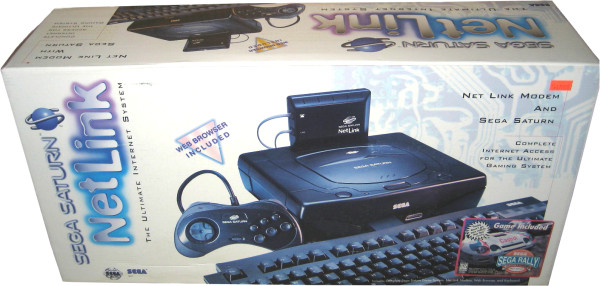
This week Fred and Jam continue with the discussion of online gaming and focus more on consoles. After going back in time to cover some forgotten console online services, the duo continue into the mid 90s gaming, the genesis of MMOs, and eventually the transition to online console gaming.
Jam’s Collecting Story

The great thing about video game collecting is there are all sorts of collectors with different goals and different reasons for getting into the hobby. If your new to the hobby this article is a introduction into my own personal story in collecting.
I have been playing games since the UK’s micro computer boom period but I didn’t start purchasing games myself till I owned a Sega Mega Drive. That is how I managed to build my first collection. I brought games and just never really sold them. I was always just kinda nostalgic for the system even before it got old. I was still playing on the system long into the original Playstation‘s life cycle. Being a generation behind is a pattern that remains today. Up to this point I was by no means a hardcore collector I pretty much just brought games I wanted to play and didn’t mind if they were cart only. When it came to the PS2 era I started delving into selling games. If you collect games you will probably be familiar with this tale, I sold my entire Dreamcast collection just to get a PS2. This was decision I still regret to this day as I haven’t been able to salvage some of the games I sold on. I would continue to trade games well into the PS2 life cycle I infamously brought the Onimusha series and sold it on twice. I now own a copy of the complete collection which I will not sell due to the likely pattern I’ll miss the game and want to play it again. When I went to University I did not care for collecting any more which was a little silly of me as it meant my brother could do as he pleased with my Mega Drive collection. During this five year vacation from gaming I lost some treasures like Sunset Riders and one of my all time favourites Rocket Knight Adventures. I also lost my entire N64 collection which included several cart only games and the expansion bay. I had left it at home so it meant anyone could have at it. Of course at the time I didn’t care but to this day I am yet to find a reasonably priced Sunset Riders on Mega Drive and replace many of the N64 carts I had collected.
 Gaming History 101