Archive for the ‘Playstation’ Category
Podcast: E3 Revisited

This week Fred (@spydersvenom) is joined by Rob “Trees” (@TreesLounge00) and special guest Chip Cella (@CaptinChaos) of the B-Team to discuss the summer gaming event that wraps Christmas and Birthday all into one package: E3. We discuss the convention’s roots, establishment, and of course the wild and crazy happenings that accompanied each glorious year from 1995-1999.
Podcast: It’s Pronounced La-Ra

This week Fred and Trees are talking about the Tomb Raider series and its busty protagonist Lara Croft that shadowed the video game as a pop culture icon in the late 1990s. We discuss development, creation, and production of both Core and recent Crystal Dynamics’ vision for Lara and her many adventures.
Genre Study: Roguelikes and MetroidVania Games
Lately many games that embrace former genres that had fallen to the wayside are making a comeback. As a result lots of games press and developer media contacts like to coin phrases that are based on gameplay styles not many are familiar with. When someone tells you that Tokyo Jungle is a “roguelike” or that Guacamelee is a “MetroidVania” title, it’s entirely possible you have no idea what that means. After this article, you will no longer have that problem.
Roguelikes

Original Rogue on IBM compatible
You may or may not know that the roots of the roguelike come from a 1980 computer game called Rogue, which established the dungeon crawler. This game was considered genre-changing when compared to the slower paced text adventures such as Zork and Dungeons & Dragons video game ports like Wizardry and Ultima. Developers Michael Toy, Glenn Wichman, Ken Arnold, and Jon Lane site a hybrid between both types with influences from D&D as well as the text adventure Colossal Cave Adventure, which featured a detailed description of a cave system in Kentucky that was so precise it was used by a tourist to navigate parts of the actual caves it was based on. The result was a game where an adventurer explored a multi-floored dungeon, collecting items and facing enemies, in search of a final artifact (in this case the “Amulet of Yendor”) to complete the game. Each floor was more difficult than the last, you could not backtrack to a previous floor, and if you died you got a game over, simple as that. Additionally the layout of the dungeon, items, and enemies were all randomly generated, which meant you would ideally never play the same game twice. Despite the fact that you would have to start over, the experience of playing the game assisted you in handling enemies, utilizing items, and preparing for future encounters as such that you could eventually beat the game. Needless to say the game had a tough barrier for entry and popularized itself mostly on Unix systems in colleges across the country, but the public found it too complex and difficult.
Review: Revolution X
 Console: Arcade
Released: 1994
Developer: Midway / Rage Software (console)
Publisher: Midway / Acclaim (console)
Ports: Genesis, SNES, Playstation, Saturn, PC/DOS
Digital Release? No (probably due to license issues)
There are some games you can’t help but adore, even if they are completely without merit. Revolution X is definitely one of those games. When the title released to arcades in 1994, Aerosmith’s Get A Grip album was just around a year old and with solid hits like Living on the Edge and a slew of videos featuring Alicia Silverstone (who was discovered by the band and started her career in these initial videos). What originally started as a Jurassic Park game much in the same vein as previous title Terminator 2, Revolution X had to be retooled when Sega outbid Midway for the rights to Universal’s film. The result is a game with more off-the-wall and undeveloped ideas than a season of Lost that involves helping children around the world, saving the band, and stopping the New World Order and its leader Helga – a nazi-esque goth queen.
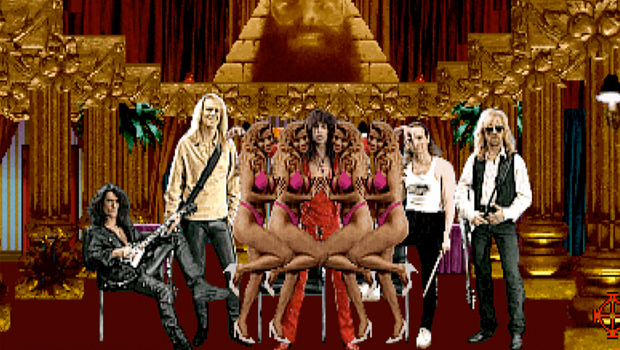 Revolution X has a hell of an intro, but as we often see in games like this it’s only a matter of time until it all falls apart. Aerosmith is performing in some drab downtown Los Angeles club (Club X) and the New World Order shows up to kidnap the band. You start off shooting the endless supply of henchmen with CDs as your grenades and large blood spatters as you take out enemies. After all, this is the team that gave us Mortal Kombat. Before even entering the club you will face literally hundreds of enemies, large security bosses with shields and bulletproof armor, and a massive tank. Once inside you will blast away at (literally again) hundreds of NWO henchmen while destroying the intro lounge, complete with Kerri Hoskins (Sonya in MK3) as thonged dancers in cages, and eventually entire the massive main area where Aerosmith is jamming away to the song Eat the Rich.
Getting It Backwards
 Video game consoles are one of the most interesting electronics items on the market for several reasons. Probably the most prolific is the fact that there are frequent hardware upgrades, which we call generations, that move home consoles forward. Because each new console is basically a piece of hardware frozen in time, the need to innovate and improve on future games demands that they be constantly updated. This works counter to movies or music, which see improvements from new hardware but don’t require the upgrade to enjoy the medium. Imagine if you could play Super Mario Bros. on the Wii but with drastically upgraded visuals or Dead Space on the original Playstation with the juxtaposed setback, this is exactly what we see when we watch Ghostbusters on VHS versus DVD versus Blu Ray. As a result new consoles come out all the time, typically in 5-8 year intervals, and usher in a more interactive experience – it’s important to note that the greatest difference between games and other media is that they are active, not passive experiences – and with it comes a new format for software.
Enter the concern of the consumer. It can be frustrating for both gamers and parents of gamers alike to purchase a new console, especially when it renders an entire collection on an older console useless. As retro gamers I’m sure we see the value in it, but for the majority there’s a want to move forward and never look back. Well, that is until there are enough new games to get me to migrate over. This is another slow start that prevents all but early adopters to purchase new hardware, which can then result in fewer sales. With fewer sales comes more canceled projects on new hardware, which then results in fewer sales of the hardware and the cycle continues until a console is considered dead in the water. Just look at the Virtual Boy, Jaguar, and possibly even the WiiU about this problem; developers have enough to worry about, they can’t also deal with poor penetration rate due to a false start console. One excellent solution to help usher in that awkward period between consoles is the concept of backwards compatibility, or a new console that can play a previous generation’s games.
Podcast: DC Bullet

This week Fred and Trees celebrate the release of Injustice: Gods Among Us by discussing old games based on DC comics (which pretty much means Batman and Superman titles). Also remember next week is our game club with Guardian Heroes (Saturn/XBLA).
Title reference: “DC Bullet” is the official logo used by the company from the 80s until recently.
Opening Song: “Superman Theme” from the Famicom title of the same name.
Closing Song: “Boss Theme” from Batman: Return of the Joker on the NES.
Cover Art: “Killing Joke”
Podcast: Game Club – Salamander/Life Force

This week Fred flies solo to discuss the shoot-em-up (shmup) series Salamander, better known as Life Force in the United States. He discusses the various games from the arcade titles to the NES/Famicom port, to even the MSX and PC-Engine (Turbografx-16) ports. Additionally the connections to series Gradius are discussed and the various ways to play the games today. He also announces April’s game club title.
Download this episode (right click and save)
Subscribe: RSS iTunes Google Podbean
Supplemental Videos:
For the Love of the Light Gun
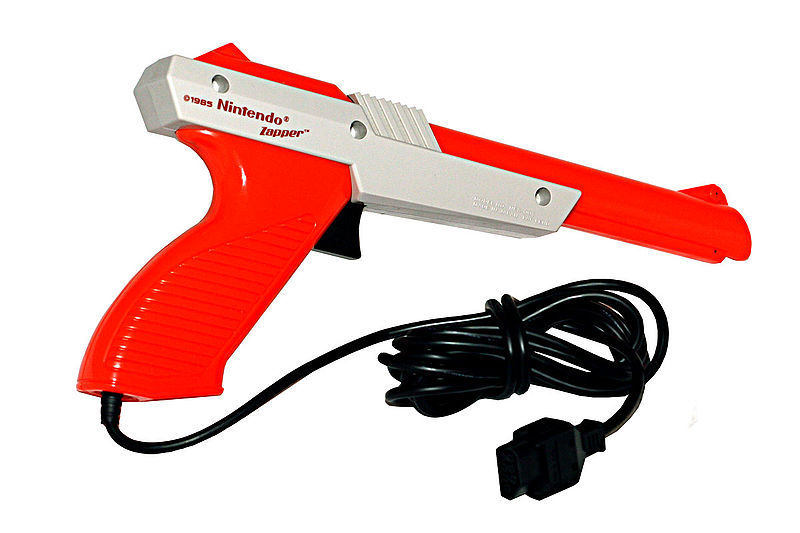 I can’t explain my love for the light gun. It’s one of the oldest forms of interactive entertainment, dating back to the carnival days where you would fire air rifles at a metal bullseye to make an old man’s hat pop up or a dog bark. Once the gun made the transition to video games it honestly became one of the most lifelike and violent gaming tropes throughout history. Not to get deep with it, but you are pointing a gun at a target, usually alive, and shooting it. There is not other gesture like it, you are shooting a modern device to kill something, virtual or not. At the same time it also doubles as the most simple form of proficiency. I don’t think anyone will claim that being good at Duck Hunt or Lethal Enforcers relates to being a good shot in a shooting range, but it’s got a much higher chance of significance than being able to get a headshot in Call of Duty. Whereas the FPS emulates the concept of aiming and firing a gun with 1:1 responses from a controller, a light gun truly simulates the experience.
 Light gun games have been a niche genre, but that doesn’t prevent them from withstanding the test of time and being available on most home consoles and one of the most popular games, even today, in arcades. I guess it’s because despite the maturity implied behind firing a gun, it’s one of the easiest concepts for us to pick up. I’ve been on many adventures thanks to light gun games – whether it’s cleaning up the future in T2: The Arcade Game, battling zombies in a haunted house through House of the Dead, or enjoying some of the worst acting of all time in Mad Dog McCree.
It’s also significant because the light gun is a genre nearly impossible to emulate and doesn’t translate well in today’s technology. While there are exceptions, you will have a hard time playing Crypt Killer properly on a PC running MAME and most HDTV technologies don’t support light guns from the past. Authenticity is as important as the genre itself. This month I’ve decided to dedicate to a timeless style of video game that I always make first priority when buying a new (or old) system: the light gun shooter. Come join me to learn about some of the best, worst, funniest, and definitely weirdest titles to ever grace the hobby of video games. Thanks to my huge CRT television and original hardware, I can even show you videos.
Darkstalkers 3
 Also Known As: Vampire Savior: Lord of the Vampires in Japan
Console: Arcade
Released: 1997
Developer: Capcom
Publisher: Capcom
Ports: Playstation 1, Sega Saturn (as Vampire Savior: Lord of the Vampires in Japan only), PS2 (part of Vampire: Darkstalkers Collection, released only in Japan), Dreamcast (technically, see below, as Vampire Chronicle for Matching Service in Japan only), PSP (as Darkstalkers Chronicle: The Chaos Tower), PS3 (part of Vampire: Darkstalkers Resurrection, released to disc only in Japan)
Digital Release? Yes – As a PSOne game on PSN ($5.99) that works for PS3/PSP/Vita, as Darkstalkers: The Chaos Tower for PSP ($10.00), Part of Darkstalkers Resurrection in the US on XBLA or PSN ($15.00)
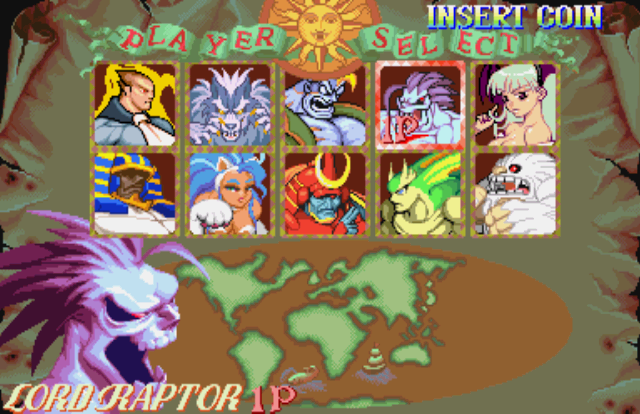
This is the game where Capcom went nuts. As the list above suggests, there were several ports of this game and in different forms. So many, in fact, that a brunt of this article is about the ports and differences themselves than the actual game. Darkstalkers 3 released to a very crowded arcade in 1997, most fighters at that time were also developed by Capcom might I add, and thus Darkstalkers 3 was almost unnoticed in an arcade in America. Furthermore, the dwindling US arcade market probably saw it releasing to fewer locations. Originally titled Darkstalkers: Jedah’s Damnation for the US, this title was dropped – I can think of a few reasons why – and the very generic Darkstalkers 3 replaced the title domestically. As it stood in 1997 you could walk into an arcade and choose between Street Fighter III, Street Fighter EX Plus, Marvel Super Heroes vs. Street Fighter, and that’s just the Capcom fighers.

Darkstalkers: The Night Warriors
 Also Known As: Vampire: The Night Warriors in Japan
Console: Arcade
Released: 1994
Developer: Capcom
Publisher: Capcom
Ports: PS1, PS2 (part of Vampire: Darkstalkers Collection, released only in Japan)
Price: $11.18 (used) $455.00 (new) pricecharting.com
Digital Release? Yes – PSOne release for PS3/PSP/Vita ($5.99)
It seemed that all classic fighters started life with iterative trilogies. Seriously, it happened with Street Fighter II (original, champion, turbo), Mortal Kombat (1-3), Art of Fighting (1-3), ClayFighter…okay, scrap that last one. Darkstalkers, known as Vampire in Japan, was no exception. The first Capcom fighting game that wasn’t from the Street Fighter series, these games were less about building a new series and more about being a testing ground for new mechanics. That doesn’t make the games any less awesome, nor does it discredit the silky smooth gameplay and beautiful animation that was significantly improved over the Street Fighter graphics that had begun to look dated in 1994. While it may be a true timepiece that you either grew up in the mid 90s playing or missed completely, Darkstalkers: The Night Warriors is a great starting point when learning the more hardcore mechanics of today’s fighters.
 Gaming History 101