Archive for the ‘PS2’ Category
Darkstalkers 3
 Also Known As: Vampire Savior: Lord of the Vampires in Japan
Console: Arcade
Released: 1997
Developer: Capcom
Publisher: Capcom
Ports: Playstation 1, Sega Saturn (as Vampire Savior: Lord of the Vampires in Japan only), PS2 (part of Vampire: Darkstalkers Collection, released only in Japan), Dreamcast (technically, see below, as Vampire Chronicle for Matching Service in Japan only), PSP (as Darkstalkers Chronicle: The Chaos Tower), PS3 (part of Vampire: Darkstalkers Resurrection, released to disc only in Japan)
Digital Release? Yes – As a PSOne game on PSN ($5.99) that works for PS3/PSP/Vita, as Darkstalkers: The Chaos Tower for PSP ($10.00), Part of Darkstalkers Resurrection in the US on XBLA or PSN ($15.00)
This is the game where Capcom went nuts. As the list above suggests, there were several ports of this game and in different forms. So many, in fact, that a brunt of this article is about the ports and differences themselves than the actual game. Darkstalkers 3 released to a very crowded arcade in 1997, most fighters at that time were also developed by Capcom might I add, and thus Darkstalkers 3 was almost unnoticed in an arcade in America. Furthermore, the dwindling US arcade market probably saw it releasing to fewer locations. Originally titled Darkstalkers: Jedah’s Damnation for the US, this title was dropped – I can think of a few reasons why – and the very generic Darkstalkers 3 replaced the title domestically. As it stood in 1997 you could walk into an arcade and choose between Street Fighter III, Street Fighter EX Plus, Marvel Super Heroes vs. Street Fighter, and that’s just the Capcom fighers.

Night Warriors: Darkstalkers Revenge
 Also Known As: Vampire Hunter: Darkstalkers’ Revenge in Japan
Console: Arcade
Released: 1995
Developer: Capcom
Publisher: Capcom
Ports: Sega Saturn, PS2 (part of Vampire: Darkstalkers Collection, released only in Japan), PS3 (part of Vampire: Darkstalkers Resurrection, released to disc only in Japan)
Price: $20.00 (used) $49.99 (new) pricecharting.com
Digital Release? Yes – Part of Darkstalkers Resurrection in the US on XBLA or PSN ($15.00)
Not wasting any time, which is something you’ll notice from all popular Capcom franchises, a sequel to the original Darkstalkers was brought out only a short year later in 1995. It’s important to note that this was common for arcades back then with much shorter development time and a need to ride the coattails of any popular game franchise in coin-op form. The moment your game didn’t have anything new to offer and hardcore fans stopped playing it, you were dead in the water. While the original title mixed up the formula for Capcom fighters, Night Warriors was more of a refinement of the unique ideas its predecessor introduced. This time around Capcom focused more on adapting the “special” bar, now having up to 3 levels of power, and more complex chain combos. Additionally the animation was so well coded the characters moved on screen like living cartoons, no more awkward mechanical movements or odd frames of animation. Some say this was one of the first games that frame counting became a more complex and time-intensive activity and with new 3-gauge EX specials and combos, you could make or break your match. Players also have the option of playing a traditional style of gameplay or the new “auto-block,” which would prove popular to those new to the series and not cause any grief from veterans. Unfortunately the way Capcom staggered its release schedule of fighters, Night Warriors was the first of three major fighters introduced by the company in 1995 and somewhat fell to the wayside going into summer (this released in March, technically the end of winter). It’s unfortunate because some fans of the series, like myself, consider it to be the best of the three titles.
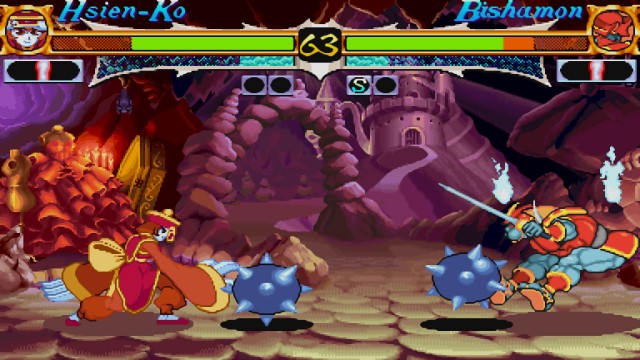
New character Hsien-Ko
Darkstalkers: The Night Warriors
 Also Known As: Vampire: The Night Warriors in Japan
Console: Arcade
Released: 1994
Developer: Capcom
Publisher: Capcom
Ports: PS1, PS2 (part of Vampire: Darkstalkers Collection, released only in Japan)
Price: $11.18 (used) $455.00 (new) pricecharting.com
Digital Release? Yes – PSOne release for PS3/PSP/Vita ($5.99)
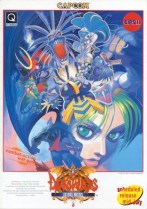
It seemed that all classic fighters started life with iterative trilogies. Seriously, it happened with Street Fighter II (original, champion, turbo), Mortal Kombat (1-3), Art of Fighting (1-3), ClayFighter…okay, scrap that last one. Darkstalkers, known as Vampire in Japan, was no exception. The first Capcom fighting game that wasn’t from the Street Fighter series, these games were less about building a new series and more about being a testing ground for new mechanics. That doesn’t make the games any less awesome, nor does it discredit the silky smooth gameplay and beautiful animation that was significantly improved over the Street Fighter graphics that had begun to look dated in 1994. While it may be a true timepiece that you either grew up in the mid 90s playing or missed completely, Darkstalkers: The Night Warriors is a great starting point when learning the more hardcore mechanics of today’s fighters.
Games You’ve (Probably) Never Played: Tiny Toons Adventures: Defenders of the Universe (PS2)
If you’re not familiar with this Playstation 2 title it’s probably because it never came out. On our most recent podcast, we discussed the developer Treasure, responsible for a slew of great and popular titles but the company itself is quite lesser known to those in America. With a resume that spans almost every console from the 16-bit era on, there are some odd releases that Treasure is also responsible for, namely Tiny Toon Adventures: Defenders of the Universe (which will be referred to as DotU from now on and was also at one point Defenders of the Looniverse).
Conspiracy Games, a somewhat obscure publisher that is responsible for a bunch of licensed and lower budgeted projects on the PS2, Wii, and PSP, must have acquired the Tiny Toons license because it was and has developed a few games for the series. Conspiracy specifically works with developers that want to make a game but do not have the financial backing to do so. This title was to be a somewhat large collaboration that had Tetsuhiko Kikuchi (aka HAN), best known for the great Saturn brawler/RPG Guardian Heroes, as director and even its own web site: http://www.dotu.com. Very little is known about the development cycle, struggles, or overall issues about the development of this game, but what started as an early PS2 release in 2001 eventually was delayed 3 years into 2004 (according to IGN) and eventually canceled. Because deals with publishers and developers often result in delayed processes and forced decisions that the creative team does not like, it’s really anyone’s guess why this game spent so long in development and was eventually sapped.
Somehow, a prototype of the game was recovered and released on the Internet for all to enjoy. In order to play this “game” you need to either have a PS2 emulator on your computer (that runs marginally well) or burn the game to a disc and play it on a modded PS2. I have a modded PS2 so I check it out on the latter. Below is a video of the gameplay and pretty much the entire prototype (I was one or two screens from the end), which appears to be simply a demo. It’s pretty interesting that the game seems to support up to four players taking on each other in a hybrid co-op/competitive team game to save the Universe. DotU seems to harken back to the N64 days – at the time of initial development somewhere around 2000 this would make senses until a publisher comes in and explains that the N64 is dead and to release a game is far too great a risk and cost. I don’t even know if the 4 player multi-tap for the PS2 was out yet, but you can see where Treasure would have made great use of it. I wish there was more to this game – I’ve heard this is a nearly completed version, which sounds completely wrong since there’s only about half an hour of content on this disc and half of it is cutscene. Still, had they continued on and increased the dynamic of team play while also adding the challenges of beating the group, I could see this being one of those licensed games we discuss that was “ahead of its time.” As it stands the title remains unfinished and unreleased, lost to the annuls of history and just another holy grail of people like myself that want to experience as many prototypes as possible. If you have the capabilities to play it, especially with multiple controllers, you may want to check out this early knock-off of a Mario Party title. For the majority of you, here’s 18 minutes of a game that never saw the light of day.
Podcast: The Treasure Box
This week Trees returns and we are talking about the Japanese developer Treasure, best known for some of the most impressive games on Sega’s consoles (Gunstar Heroes, Radiant Silvergun, Guardian Heroes, and Ikaruga) as well as Nintendo’s later consoles (Bangai-O and Sin & Punishment). We discuss the company origins, values, and of course the entire library of this impressive developer.
Download this episode (right click and save)
Subscribe: RSS iTunes Google Podbean
Below is a video of an unreleased (canceled) title, Tiny Toons: Defenders of the Universe. The beta that was presumably used as a trade show demo eventually leaked on the internet. We have acquired it and played it on an original, modded, PS2. Enjoy!
Review: Espgaluda (PS2)
 Console: Playstation 2 (Japan Only)
Released: 2004
Developer: Cave (original arcade design, port by Arika)
Publisher: Arika (PS2 version only)
Difficulty: Moderate
Price: $60-$100 (used, unknown new)
Digital Release? No
Aside from its Japan only status and the incredibly difficult pronunciation, Espgaluda (pronounced “esu-pu-galuda” in English) has so much going for it. A second generation shmup from Cave, the development studio responsible for DoDonPachi, this is when the studio began to think outside the box and expand its audience to the masses. This game is made easier than most titles in its genre with the slowing of bullets and shields to assist the player in getting familiar with the danmaku (bullet hell) genre. Wrap it all together and it truly is a shame this title has never made its way stateside because it’s much more approachable than the titles we have received.
The roots of Espgaluda stem from the arcade (and Japan) only title ESP Ra.De. (pronounced “esu-pu-rye-do”) about a group of young girls with super human powers. It all takes place in the not-too-distant future (2018) on a remote island called Tokyo-2 off the shores of an overpopulated Japan. It appears the Japanese police force is hunting down these “ESPers” that are capable of psychic powers and the story takes place over a 24-hour period of time for three escaping females. None of this matters all that much since the game was only in Japanese (not localized on the MAME versions I’ve found), but the game is notable for several reasons. For starters the fact that you control a flying girl instead of a ship or vehicle will be the first thing you notice, and given the 1998 release of the title it’s quite possibly the first time this type of character is used in a shmup. Each girl has a barrier power, which allows them to temporarily absorb the power of the bullets coming at them and then release that energy back at their opponents. Aside from that the game is relatively a standard vertical shmup with plenty of explosions, bullets to dodge, and massive boss battles.
Podcast: Game Club – Ico
This week Fred is joined by Chip Cella of the B-Team Podcast to discuss our February game club title Ico. We cover development, Team Ico studio, the campaign, and significance of this artistic early PS2 title.
Top 5 Shmups Worth Importing

Ah March, shmuppreciation is back and in full effect on Gaming History 101. If this is your first time hearing the phrase, shmuppreciation is for the love of the shoot-em-up genre (shmup for short) and is celebrated all March on the site. If you missed Shmuppreciation 2012 I highly recommend you check it out as we provided more than 30 articles dedicated to introducing you to genre specifics and the myriad of popular series in the most triumphant genre of all time.
This year we’re going past introductions and into the intermediate world of shmups, which requires more skill, dedication, and money than the games covered last year. While I would hardly call the games we will be covering obscure by any stretch, these titles are much less known outside of enthusiastic shmup fans. To kick it off we’re featuring the top 5 games worth importing. Shmups are of the most expensive games out there so you can expect a bit of sticker shock even with the games mentioned here. Just keep in mind that you’re currently dropping $60 for day one releases and sometimes even more if you’re into that special edition stuff. The titles in this list are unique because they have not seen a release, even digital, within the United States and thus require some sort of special circumstances to play today. There’s a great list of import games that have released digitally on PSN, XBLA, and Wii Virtual Console as well so be sure to check out our article on those titles as well. In order to play these games you have to either import them or get access to a digital service outside of your region. The links in each title will take you to the games’ review or video on our site.
Review: Deus Ex (PC)
 Console: PC
Released: June 2000
Developer: Ion Storm
Publisher: Eidos
Instruction Manual: Not necessary
Difficulty: Moderate
Played when it released? Yes
Other Releases: Yes – PS2 (as Deus Ex: The Conspiracy)
Digital Release? Yes – Steam ($9.99) and gog.com ($9.99), both are the Game of the Year Edition
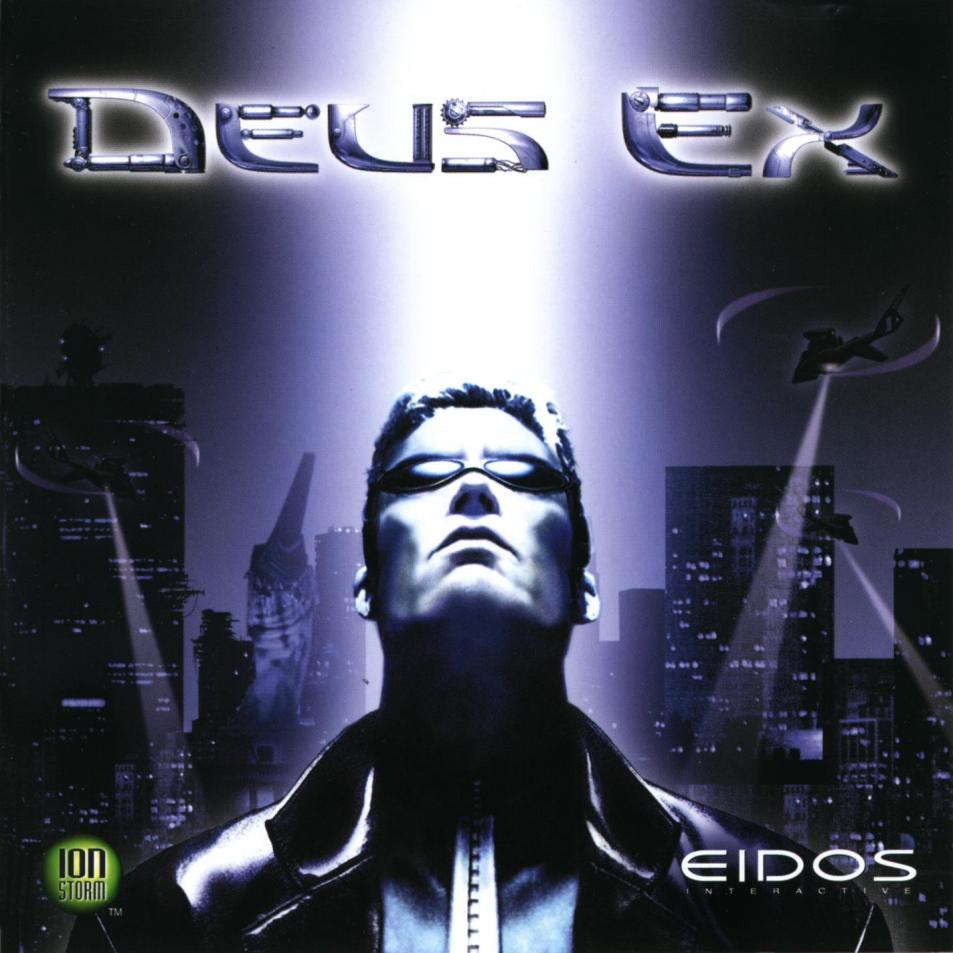
Deus Ex is an interesting game for several reasons. The way various factors all came together at its inception, it almost feels like a lucky form of happenstance that it worked at all. Those that played it when it released will tell you it’s a must play title that will blow you away with its innovation. On one hand they’re right, like other heavily influential games in history it does set precedence and introduces gaming to many staples we see today. On the other hand, it’s the earliest version of many of these ideas and will always be tied down to the conventions of gaming at the time. Those that give it a chance, grind their teeth to learn the gameplay techniques, and resist the urge to cheat will find a strong cyberpunk tale that doesn’t disappoint.

This is the typical view when playing Deus Ex
The Hobbit Review
 Console: Xbox
Released: October 24, 2003
Developer: Inevitable Entertainment
Publisher: Vivendi Universal
Instruction Manual: Not Necessary
Difficulty: Easy
Played it as a child? Yes
Value: $4-$10 (used), $10.49 (new) (pricecharting.com)
Other Releases: Yes – PS2, Gamecube, and PC and a modified version for the Gameboy Advance
Digital Release? No
No, sorry, this is not the ZX Spectrum game from 1983, but rather the more widespread console release from twenty years later, although I’ve never played the original so perhaps it’s garbage and this is the better choice. Back when the Lord of the Rings film trilogy was nearing its end, a slew of video games hoping to cash in on the wild success of Peter Jackson’s movies released. After sapping all of the film properties, the books themselves became source material for spin-offs and one of the first was based on Tolkien’s prequel book The Hobbit. As a mild fan of the series I always felt that The Hobbit was the better book and overall story, which explains the tale of how Bilbo Baggins became the first hobbit to embark on an adventure with 12 dwarves and wizard Gandolf the Grey. Not only that, but it introduces the ring, odd creature Gollum, and probably one of the only dragons in that universe, the unrivaled greedy dragon Smaug. Despite the semi-decent cartoon version of the book that I had seen in my youth, I was immediately drawn to the playful cartoon re-imagining of Tolkien’s book and despite some major snags in the gameplay department, I was pleasantly surprised.

 Gaming History 101