Archive for the ‘PS3’ Category
Getting It Backwards
 Video game consoles are one of the most interesting electronics items on the market for several reasons. Probably the most prolific is the fact that there are frequent hardware upgrades, which we call generations, that move home consoles forward. Because each new console is basically a piece of hardware frozen in time, the need to innovate and improve on future games demands that they be constantly updated. This works counter to movies or music, which see improvements from new hardware but don’t require the upgrade to enjoy the medium. Imagine if you could play Super Mario Bros. on the Wii but with drastically upgraded visuals or Dead Space on the original Playstation with the juxtaposed setback, this is exactly what we see when we watch Ghostbusters on VHS versus DVD versus Blu Ray. As a result new consoles come out all the time, typically in 5-8 year intervals, and usher in a more interactive experience – it’s important to note that the greatest difference between games and other media is that they are active, not passive experiences – and with it comes a new format for software.
Enter the concern of the consumer. It can be frustrating for both gamers and parents of gamers alike to purchase a new console, especially when it renders an entire collection on an older console useless. As retro gamers I’m sure we see the value in it, but for the majority there’s a want to move forward and never look back. Well, that is until there are enough new games to get me to migrate over. This is another slow start that prevents all but early adopters to purchase new hardware, which can then result in fewer sales. With fewer sales comes more canceled projects on new hardware, which then results in fewer sales of the hardware and the cycle continues until a console is considered dead in the water. Just look at the Virtual Boy, Jaguar, and possibly even the WiiU about this problem; developers have enough to worry about, they can’t also deal with poor penetration rate due to a false start console. One excellent solution to help usher in that awkward period between consoles is the concept of backwards compatibility, or a new console that can play a previous generation’s games.
Review: Giana Sisters: Twisted Dreams (XBLA)

 For those not aware of the microcomputer craze in Europe that dominated the late 80s, the name “Giana Sisters” may not mean much. By the time the NES came out in Europe many had already invested in a microcomputer and parents were not eager to purchase a new console, so having games on popular computers like the ZX Spectrum and Commodore 64 was essential. The Great Giana Sisters was a widespread clone of Super Mario Bros. that provided a great side-scrolling platformer alternative to Nintendo’s classic. Unfortunately due to its highly similar content, including an opening level that literally cloned 1-1 from Super Mario Bros., Nintendo’s legal involvement got the game pulled off store shelves. Since then it has lived on as a rare holy grail for some gamers and having played it myself I must admit that it doesn’t steal as much from Super Mario Bros. as the initial level would suggest. Now the Giana Sisters are reborn in one of the first Kickstarter projects to benefit and release from the crowd-funding program and it is clear that Giana Sisters: Twisted Dreams is anything but a clone. In fact, Super Mario Bros. could learn a thing or two from this gorgeous modern platformer.
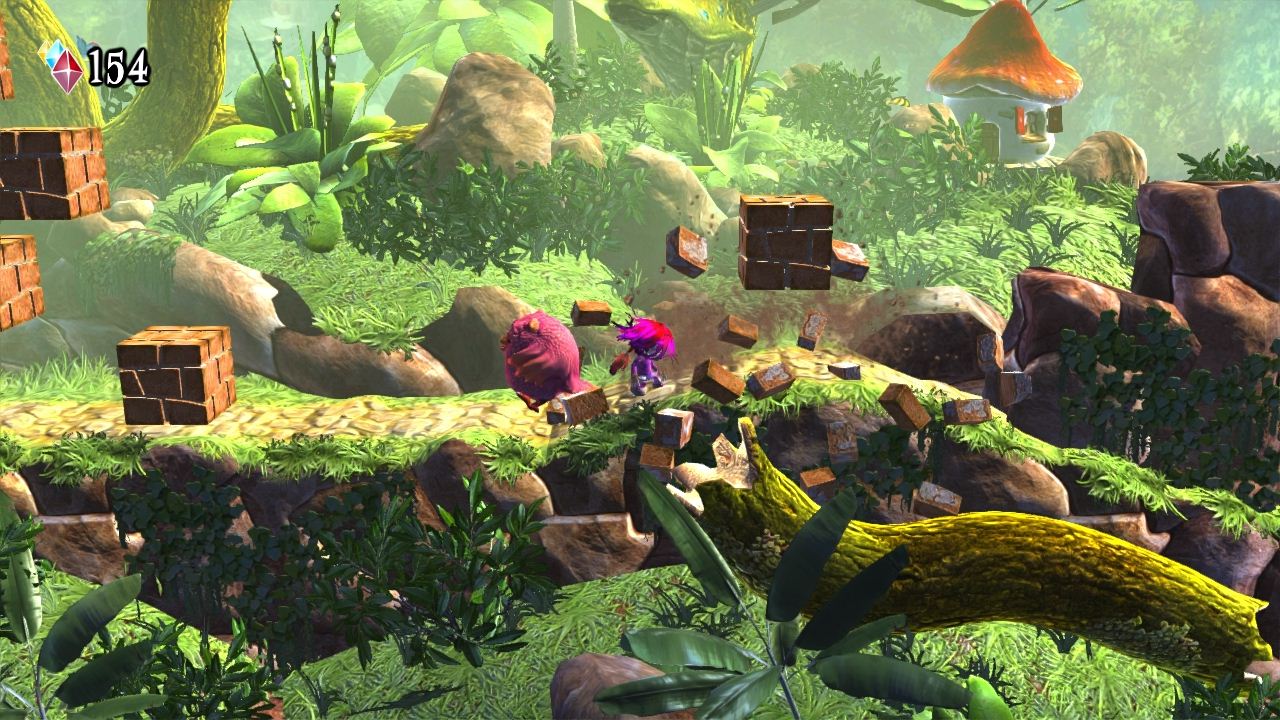 Twisted Dreams is a sequel to this controversial original, which did see a legal re-imagining on the DS in 2009, and picks up an original story that thankfully does not require knowledge of the original. Maria, Giana’s sister, has been kidnapped by an evil dragon and it’s up to Giana to enter the dream world and rescue her. Now a teenager, Giana is capable of utilizing the power of her two personalities – an interesting take on the changes one experiences in those awkward teenage years – allowing her to transform between a bright “Cute” persona and a rebellious “Punk” persona at will. Most interesting about this transformation is that it comes not only with new powers, but the entire world changes on the fly along with her. This dichotomy of not only the play style, but also the aesthetic of the entire game, creates a unique formula for each level. It allows the platformer to escape the confines of relying on level design and instead allows small simple spaces to become obstacle courses that will challenge your mind and reflexes. It’s not about dodging the pit and jumping on the enemy anymore, you need to think and think fast to make it in Twisted Dreams.
Review: Darkstalkers Resurrection
Capcom has continued to make its library as available as possible to the masses, especially when it comes to arcade re-releases from decades passed. This generation marks the first where old school arcade titles can be re-released at low prices, individually, with visual filters, online play, and perform exactly as they did in the arcade. Granted, it’s still a pain to figure out how to find each of these titles – a perfect example being Capcom Arcade Cabinet, which provides several of Capcom’s classic coin-ops that would seem to include Street Fighter II and Darkstalkers – but let’s face it, some games are much more marketable than others. The newest of this tradition is Darkstalkers Resurrection, an HD re-release of sorts, that covers the second and third titles in a series that never quite made a faithful translation to American households.

Night Warriors with smoothing filters on
As for the games themselves, they are not covered in this review so see our Night Warriors: Darkstalkers’ Revenge and Darkstalkers 3 coverage respectively, and then continue on. I am aware that a nearly arcade perfect port of Night Warriors did release in the US on the Sega Saturn and Darkstalkers 3 was decent in its US version on the Playstation (and PSOne digital store currently), but I hardly think these platforms, especially if you want both titles, are the best and easiest way to play these games. Furthermore they are not without specific tech-based flaws – mostly visual on the Saturn and gameplay on the Playstation – and Darkstalkers 3 was so updated and altered in the home port that it’s barely the original arcade game. Putting all that aside, with the recent resurgence of the fighter genre, many hardcore fans have fight sticks or specific fighter game pads on their newest consoles that a 360/PS3 version can support. Capcom has also decided to keep this title digital only in the US, which also accounts for the low price point that is much more affordable than the 4,000 yen ($45) disc version in Japan. Now that this game’s presence is thoroughly justified, I must commend Capcom for treating a classic re-release with so much care because Darkstalkers Resurrection is the definitive way to play these games at home.
Darkstalkers 3
 Also Known As: Vampire Savior: Lord of the Vampires in Japan
Console: Arcade
Released: 1997
Developer: Capcom
Publisher: Capcom
Ports: Playstation 1, Sega Saturn (as Vampire Savior: Lord of the Vampires in Japan only), PS2 (part of Vampire: Darkstalkers Collection, released only in Japan), Dreamcast (technically, see below, as Vampire Chronicle for Matching Service in Japan only), PSP (as Darkstalkers Chronicle: The Chaos Tower), PS3 (part of Vampire: Darkstalkers Resurrection, released to disc only in Japan)
Digital Release? Yes – As a PSOne game on PSN ($5.99) that works for PS3/PSP/Vita, as Darkstalkers: The Chaos Tower for PSP ($10.00), Part of Darkstalkers Resurrection in the US on XBLA or PSN ($15.00)
This is the game where Capcom went nuts. As the list above suggests, there were several ports of this game and in different forms. So many, in fact, that a brunt of this article is about the ports and differences themselves than the actual game. Darkstalkers 3 released to a very crowded arcade in 1997, most fighters at that time were also developed by Capcom might I add, and thus Darkstalkers 3 was almost unnoticed in an arcade in America. Furthermore, the dwindling US arcade market probably saw it releasing to fewer locations. Originally titled Darkstalkers: Jedah’s Damnation for the US, this title was dropped – I can think of a few reasons why – and the very generic Darkstalkers 3 replaced the title domestically. As it stood in 1997 you could walk into an arcade and choose between Street Fighter III, Street Fighter EX Plus, Marvel Super Heroes vs. Street Fighter, and that’s just the Capcom fighers.

Night Warriors: Darkstalkers Revenge
 Also Known As: Vampire Hunter: Darkstalkers’ Revenge in Japan
Console: Arcade
Released: 1995
Developer: Capcom
Publisher: Capcom
Ports: Sega Saturn, PS2 (part of Vampire: Darkstalkers Collection, released only in Japan), PS3 (part of Vampire: Darkstalkers Resurrection, released to disc only in Japan)
Price: $20.00 (used) $49.99 (new) pricecharting.com
Digital Release? Yes – Part of Darkstalkers Resurrection in the US on XBLA or PSN ($15.00)
Not wasting any time, which is something you’ll notice from all popular Capcom franchises, a sequel to the original Darkstalkers was brought out only a short year later in 1995. It’s important to note that this was common for arcades back then with much shorter development time and a need to ride the coattails of any popular game franchise in coin-op form. The moment your game didn’t have anything new to offer and hardcore fans stopped playing it, you were dead in the water. While the original title mixed up the formula for Capcom fighters, Night Warriors was more of a refinement of the unique ideas its predecessor introduced. This time around Capcom focused more on adapting the “special” bar, now having up to 3 levels of power, and more complex chain combos. Additionally the animation was so well coded the characters moved on screen like living cartoons, no more awkward mechanical movements or odd frames of animation. Some say this was one of the first games that frame counting became a more complex and time-intensive activity and with new 3-gauge EX specials and combos, you could make or break your match. Players also have the option of playing a traditional style of gameplay or the new “auto-block,” which would prove popular to those new to the series and not cause any grief from veterans. Unfortunately the way Capcom staggered its release schedule of fighters, Night Warriors was the first of three major fighters introduced by the company in 1995 and somewhat fell to the wayside going into summer (this released in March, technically the end of winter). It’s unfortunate because some fans of the series, like myself, consider it to be the best of the three titles.
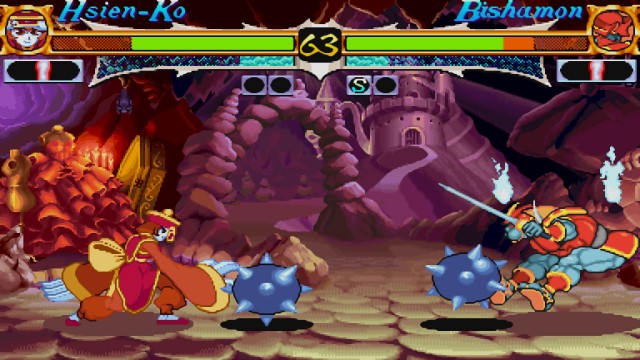
New character Hsien-Ko
Podcast: Game Club – Ico
This week Fred is joined by Chip Cella of the B-Team Podcast to discuss our February game club title Ico. We cover development, Team Ico studio, the campaign, and significance of this artistic early PS2 title.
Review: Capcom Arcade Cabinet (XBLA/PSN)
 Whenever I hear about another announcement for another arcade collection to be released individually I always think back to Game Room. Here we go again. Not only that but you would be hard pressed to not point out that Capcom has released these arcade gems before, most if not all of them (there are some games I don’t yet know about) appearing on the Capcom Classics Collection that appeared on Xbox, PS2, and PSP. Despite all of that against it – your interest and want in the specific games notwithstanding – Capcom Arcade Cabinet offers exactly what retro gamers purchasing arcade games on today’s consoles look for and all at an easy impulse buy price.
At its core it’s a lot like Game Room in that you navigate a main screen that displays the available games you have to play. Games that you have not purchased or that aren’t available yet are blacked out. Of the titles you do have, you can read a quick background paragraph on the game or enter its specific menu. As of now the selection is an interesting mixed bag of highly popular and relatively unknown titles from 1984-1987 – currently the three titles from 1987 have been released: Black Tiger, 1943, and Avengers – and the overall package looks to be consistent with that structure moving forward. Whether or not you want these games is entirely up to you and probably responsible for whether or not you’ll pick up anything, but this review isn’t about each individual game but rather the options and package you get with Capcom Arcade Cabinet.

Review: Christmas Nights Into Dreams (Saturn)
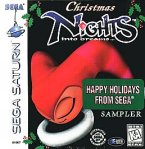 Console: Saturn
Released: December 1996
Developer: Sonic Team
Publisher: Sega
Instruction Manual: It did not have one – manual of the original game should suffice
Difficulty: Easy
Played it as a child? Yes
Value: $24.25 (used), $56.00 (new) (pricecharting.com)
Other Releases: Yes – A Japan only PS2 remake of Nights Into Dreams includes the Christmas content
Digital Release? Yes – included in the HD remake of Nights Into Dreams on XBLA and PSN, certain content removed (see below)
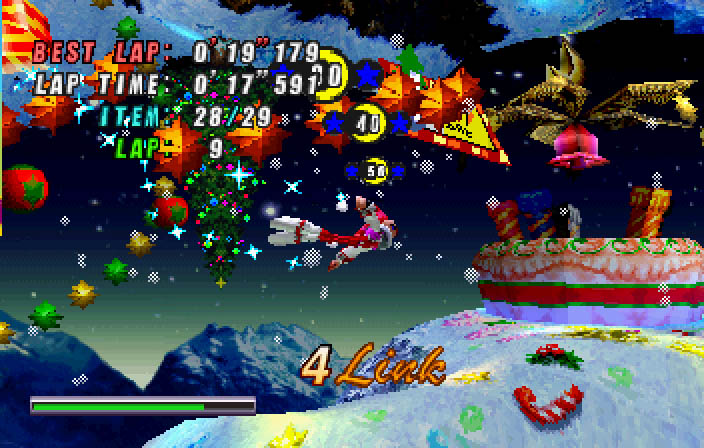
Christmas Nights Into Dreams is significant for several reasons, but most of all it’s one of the only Christmas themed games to ever come out. No, seriously, look through the vaults of retro console history, this is a holiday that is rarely celebrated save for games that focus on certain days (Animal Crossing, for example). In the winter of 1996 Sega was already in big trouble with the Saturn. At only about a year and a half old, Sony’s Playstation was killing it in terms of sales and there were few exclusive titles that generated any kind of buzz. Even Sonic, the faithful hedgehog that always seemed to sweep in and save Sega’s butt, hadn’t released a real game yet. Not only that, but this was the Christmas release of the Nintendo 64 and Mario 64 was selling out consoles nationwide. Nights Into Dreams was the only recent release on the Saturn that appealed to the typical gamer and with its colorful aesthetic, roots in platforming, and Sonic Team developer it was Sega’s best bet for the holidays. Under these circumstances Christmas Nights invaded the market in several forms from being a free pack-in with Christmas console bundles (that already included Nights), inside several magazines, a mail away/in store offer with certain game purchases, and even for rent at Blockbuster Video. This “sampler” title was everywhere, but only for about 45 days, and now it’s one of the more rare and sought after pieces of a retro gamer’s collection.
Review: Sonic CD (Sega CD)
 Console: Sega-CD/Mega-CD
Released: 1993
Developer: Sonic Team
Publisher: Sega
Instruction Manual: Not Necessary – Link
Difficulty: Moderate
Played it as a child? Yes
Value: $11.99 (used), $23.50 (new) (pricecharting.com)
Other Releases: Yes – PC, PS2/Gamecube (Sonic Gems Collection)
Digital Release? Yes – Steam, Xbox 360, PS3, Android, iOS ($5 on all platforms)
Sonic CD is one of those games that it’s just popular to like. I don’t want to start on a negative note, the game does have some merit, but it’s not a particularly good Sonic game and doesn’t quite change the universe like many will claim. Before Sega decided to blitz every console on the market with the digital version, Sonic fans were gnawing at the bit for a decent port (sadly the Sonic Gems Collection ports had emulation issues). Now that it’s everywhere the gaming community seems to have adjusted to a more realistic view of the CD adventure that throws a few imaginative ideas at relatively lackluster level design.

At one point you’re forced to beat Metal Sonic in a race.
For those that aren’t up on their Sonic history, the hedgehog was co-created by Naoto Oshima and his more known partner Yuji Naka. After the release of the first game, Naka and several members of that team moved to the United States and joined with STI (Sega Technical Institute) to create Sonic the Hedgehog 2. Meanwhile the remaining developers, including Oshima, took the concepts that were in early development for Sonic 2 and expanded upon them into what eventually became Sonic CD. This is why despite coming out around the same time as Sonic 2, Sonic CD looks graphically more like the original and doesn’t seem to adapt some of the great ideas of the sequel. Still, it does feature some interesting gameplay mechanics, like the ability to move into the past and future with two full versions of the many levels. This dual expansion of the campaign does have a casualty: level design. Many of the levels in Sonic CD feature plenty of wasted real estate in the interest of moving quickly to the right, odd gimmicks that net death if you don’t tolerate the so-so platforming, and several instances where Sonic’s momentum is completely spoiled by a random ramp or springboard. Despite these layout flaws I still contest that the boss designs are superior over Sonic 2 and prove that not all of the talent in Sega’s Japanese team migrated to America.
Review: Final Fight CD (Sega CD)
 Console: Sega-CD/Mega-CD
Released: 1993
Developer: Capcom
Publisher: Sega (Sega/Mega-CD, 32X CD)
Instruction Manual: Not necessary
Difficulty: Hard
Played it as a child? Yes
Value: $21.50 (used) $76.00 (new) (pricecharting.com) – Price for Sega CD version only
Price: $23-$60 (used) N/A on US Version (new) on eBay
Other Releases: Arcade, SNES, Gameboy Advance
Digital Release? Yes – SNES version on Virtual Console ($8), Arcade version on XBLA/PSN as Double Impact ($10)
Final Fight is a pivotal late 80s arcade release for Capcom for two reasons: it established the norms that would make up the concept of the “beat-em-up” genre for its short-lived life (although it oddly enough didn’t introduce any of them) and it created the aesthetic and building blocks of Street Fighter II. Anyone who has played this game or SFII will immediately be familiar with that semi-realistic semi-animated graphical style of Final Fight that remained exclusive to these two titles moving forward for a few sequels (I’m considering the numerous re-hashes of SFII to be sequels). In full disclosure this is my favorite brawler of all time and definitely ranks highly in my overall top games I’ve ever played despite the fact that Final Fight doesn’t translate well to home consoles because it’s intended to take your money and prompt more quarters rather than be completed in a finite number of lives/credits. In order to complete the game in the allotted five credits requires you to memorize the cheaper boss battles and exploit the collision detection. For me it was just repetitive stupid fun.
 Gaming History 101