Archive for the ‘Saturn’ Category
Darkstalkers 3
 Also Known As: Vampire Savior: Lord of the Vampires in Japan
Console: Arcade
Released: 1997
Developer: Capcom
Publisher: Capcom
Ports: Playstation 1, Sega Saturn (as Vampire Savior: Lord of the Vampires in Japan only), PS2 (part of Vampire: Darkstalkers Collection, released only in Japan), Dreamcast (technically, see below, as Vampire Chronicle for Matching Service in Japan only), PSP (as Darkstalkers Chronicle: The Chaos Tower), PS3 (part of Vampire: Darkstalkers Resurrection, released to disc only in Japan)
Digital Release? Yes – As a PSOne game on PSN ($5.99) that works for PS3/PSP/Vita, as Darkstalkers: The Chaos Tower for PSP ($10.00), Part of Darkstalkers Resurrection in the US on XBLA or PSN ($15.00)
This is the game where Capcom went nuts. As the list above suggests, there were several ports of this game and in different forms. So many, in fact, that a brunt of this article is about the ports and differences themselves than the actual game. Darkstalkers 3 released to a very crowded arcade in 1997, most fighters at that time were also developed by Capcom might I add, and thus Darkstalkers 3 was almost unnoticed in an arcade in America. Furthermore, the dwindling US arcade market probably saw it releasing to fewer locations. Originally titled Darkstalkers: Jedah’s Damnation for the US, this title was dropped – I can think of a few reasons why – and the very generic Darkstalkers 3 replaced the title domestically. As it stood in 1997 you could walk into an arcade and choose between Street Fighter III, Street Fighter EX Plus, Marvel Super Heroes vs. Street Fighter, and that’s just the Capcom fighers.

Night Warriors: Darkstalkers Revenge
 Also Known As: Vampire Hunter: Darkstalkers’ Revenge in Japan
Console: Arcade
Released: 1995
Developer: Capcom
Publisher: Capcom
Ports: Sega Saturn, PS2 (part of Vampire: Darkstalkers Collection, released only in Japan), PS3 (part of Vampire: Darkstalkers Resurrection, released to disc only in Japan)
Price: $20.00 (used) $49.99 (new) pricecharting.com
Digital Release? Yes – Part of Darkstalkers Resurrection in the US on XBLA or PSN ($15.00)
Not wasting any time, which is something you’ll notice from all popular Capcom franchises, a sequel to the original Darkstalkers was brought out only a short year later in 1995. It’s important to note that this was common for arcades back then with much shorter development time and a need to ride the coattails of any popular game franchise in coin-op form. The moment your game didn’t have anything new to offer and hardcore fans stopped playing it, you were dead in the water. While the original title mixed up the formula for Capcom fighters, Night Warriors was more of a refinement of the unique ideas its predecessor introduced. This time around Capcom focused more on adapting the “special” bar, now having up to 3 levels of power, and more complex chain combos. Additionally the animation was so well coded the characters moved on screen like living cartoons, no more awkward mechanical movements or odd frames of animation. Some say this was one of the first games that frame counting became a more complex and time-intensive activity and with new 3-gauge EX specials and combos, you could make or break your match. Players also have the option of playing a traditional style of gameplay or the new “auto-block,” which would prove popular to those new to the series and not cause any grief from veterans. Unfortunately the way Capcom staggered its release schedule of fighters, Night Warriors was the first of three major fighters introduced by the company in 1995 and somewhat fell to the wayside going into summer (this released in March, technically the end of winter). It’s unfortunate because some fans of the series, like myself, consider it to be the best of the three titles.
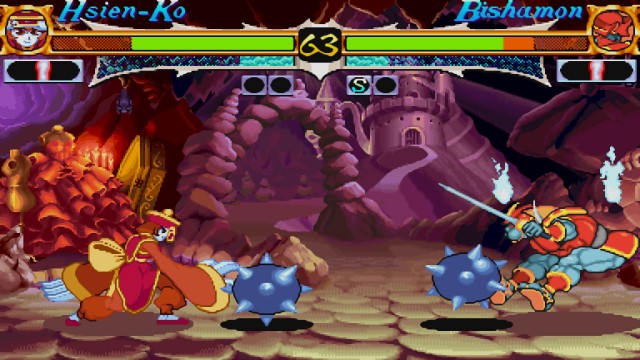
New character Hsien-Ko
Podcast: The Treasure Box
This week Trees returns and we are talking about the Japanese developer Treasure, best known for some of the most impressive games on Sega’s consoles (Gunstar Heroes, Radiant Silvergun, Guardian Heroes, and Ikaruga) as well as Nintendo’s later consoles (Bangai-O and Sin & Punishment). We discuss the company origins, values, and of course the entire library of this impressive developer.
Download this episode (right click and save)
Subscribe: RSS iTunes Google Podbean
Below is a video of an unreleased (canceled) title, Tiny Toons: Defenders of the Universe. The beta that was presumably used as a trade show demo eventually leaked on the internet. We have acquired it and played it on an original, modded, PS2. Enjoy!
Top 5 Shmups Worth Importing

Ah March, shmuppreciation is back and in full effect on Gaming History 101. If this is your first time hearing the phrase, shmuppreciation is for the love of the shoot-em-up genre (shmup for short) and is celebrated all March on the site. If you missed Shmuppreciation 2012 I highly recommend you check it out as we provided more than 30 articles dedicated to introducing you to genre specifics and the myriad of popular series in the most triumphant genre of all time.
This year we’re going past introductions and into the intermediate world of shmups, which requires more skill, dedication, and money than the games covered last year. While I would hardly call the games we will be covering obscure by any stretch, these titles are much less known outside of enthusiastic shmup fans. To kick it off we’re featuring the top 5 games worth importing. Shmups are of the most expensive games out there so you can expect a bit of sticker shock even with the games mentioned here. Just keep in mind that you’re currently dropping $60 for day one releases and sometimes even more if you’re into that special edition stuff. The titles in this list are unique because they have not seen a release, even digital, within the United States and thus require some sort of special circumstances to play today. There’s a great list of import games that have released digitally on PSN, XBLA, and Wii Virtual Console as well so be sure to check out our article on those titles as well. In order to play these games you have to either import them or get access to a digital service outside of your region. The links in each title will take you to the games’ review or video on our site.
Review: Christmas Nights Into Dreams (Saturn)
 Console: Saturn
Released: December 1996
Developer: Sonic Team
Publisher: Sega
Instruction Manual: It did not have one – manual of the original game should suffice
Difficulty: Easy
Played it as a child? Yes
Value: $24.25 (used), $56.00 (new) (pricecharting.com)
Other Releases: Yes – A Japan only PS2 remake of Nights Into Dreams includes the Christmas content
Digital Release? Yes – included in the HD remake of Nights Into Dreams on XBLA and PSN, certain content removed (see below)
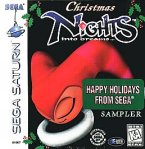
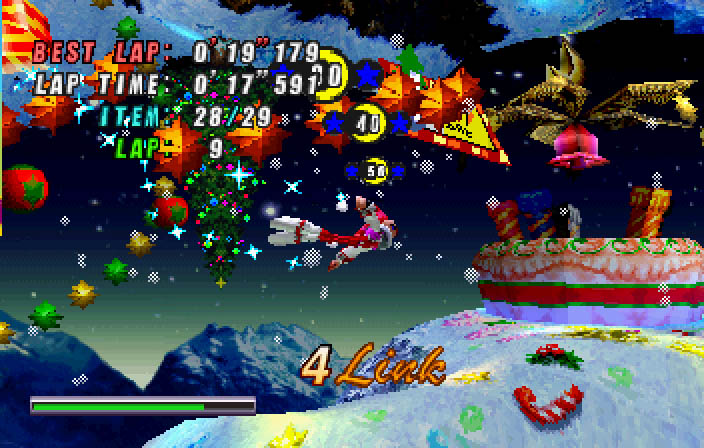
Christmas Nights Into Dreams is significant for several reasons, but most of all it’s one of the only Christmas themed games to ever come out. No, seriously, look through the vaults of retro console history, this is a holiday that is rarely celebrated save for games that focus on certain days (Animal Crossing, for example). In the winter of 1996 Sega was already in big trouble with the Saturn. At only about a year and a half old, Sony’s Playstation was killing it in terms of sales and there were few exclusive titles that generated any kind of buzz. Even Sonic, the faithful hedgehog that always seemed to sweep in and save Sega’s butt, hadn’t released a real game yet. Not only that, but this was the Christmas release of the Nintendo 64 and Mario 64 was selling out consoles nationwide. Nights Into Dreams was the only recent release on the Saturn that appealed to the typical gamer and with its colorful aesthetic, roots in platforming, and Sonic Team developer it was Sega’s best bet for the holidays. Under these circumstances Christmas Nights invaded the market in several forms from being a free pack-in with Christmas console bundles (that already included Nights), inside several magazines, a mail away/in store offer with certain game purchases, and even for rent at Blockbuster Video. This “sampler” title was everywhere, but only for about 45 days, and now it’s one of the more rare and sought after pieces of a retro gamer’s collection.
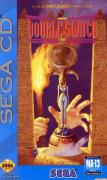
Review: Double Switch (Sega CD)
 Console: Sega-CD/Mega-CD
Released: 1993
Developer: Digital Pictures
Publisher: Sega
Instruction Manual: Not Necessary – Link
Difficulty: Hard
Played it as a child? Yes
Value: $2.63 (used), $7.63 (new) (pricecharting.com)
Other Releases: Yes – Sega Saturn, PC/MAC
Digital Release? No
This is the game that brought it all together and proved that not only was a full motion video (FMV) game possible, it could be properly acted with high production values. Unfortunately, I’m pretty sure this title completely bombed on the Sega CD, otherwise there wouldn’t be so many freaking copies in the world (both used and sealed). Despite its commonality, Double Switch is like many other titles in the vast gaming world that starts off solid and becomes a veritable train wreck near the end. Honestly that’s when its commonality and subsequent low price tag come in to justify the purchase because I still really dig this title. It’s definitely not without plenty of flaws and if played in long intervals, can easily induce the need to never touch it again. If you can stomach it, this title does bring with it all the charm of a far-fetched early 90s pop film, which lead Corey Haim should suggest by the very fact he’s cast in the game. With the proper introduction, Double Switch was a fair follow-up to its much more popular, although purely due to its controversy, older brother Night Trap.
Developer Digital Pictures is solely to blame for the FMV game and it held the most firm grasp and largest library on the Sega CD. A company that started off as the lead developer for Hasbro’s canceled NEMO game system (that would do basically the same thing with VHS tapes), most of the sales celebrated by the company came from all the controversy of Night Trap. Even back then there was clear admission that Night Trap was a dated title that lacked almost any interactivity by the player and had terrible acting to boot. Double Switch, the successor that would follow the same structure without being a true sequel, hoped to address many of these complaints and did a fairly decent job of it. Unfortunately no one factored in the fact that many gamers thought they would see graphic violence or sexual themes as the sole reason for picking up Night Trap, the return on investment was hardly there. With what was surely a much higher budget than any similar title at the time, Double Switch was a big gamble that failed and not without good reason.
Review: Castlevania: Symphony of the Night (PS1)
 Console: Sony Playstation (also released on Sega Saturn in Japan only)
Released: 1997
Developer: Konami
Publisher: Konami
Japan? Yes (as Akumajo Dracula X: Gekka no Yasokyoku Translation: Devil’s Castle Dracula X: Nocturne in the Moonlight)
Instruction Manual: Not necessary – Link
Difficulty: Moderate
Played it as a child? No
Value: $22.87 (used) $64.45 (new) (pricecharting.com) – NOTE: There are two versions: original and greatest hits. Original is much more rare and expensive, so adjust your buying habits appropriately.
Price: $15-25 (used GH) $35-$60 (used original) $90-$130 (new GH) $400 (new original) on eBay
Digital Release? Yes – released as PSOne title on PS3/PSP and on XBLA – $10.00 for all versions. Also available with Rondo of Blood in the Dracula X Collection for PSP – $15 digital, varies on UMD.
***We also did a podcast on this and other Castlevania titles like it here.***
While Rondo of Blood may be the hidden gem of the Castlevania series, Symphony of the Night is anything but. There wasn’t a Playstation gamer around that didn’t see this release back in 1997, bringing a much-needed change to the traditional formula. Every Castlevania game that released on consoles seemed to push the hardware to do things it was never intended to do and usually had amazing results, so it was interesting that in a world consumed by 3D polygonal graphics Symphony of the Night was a 2D side scroller. In Japan, the series has a much easier way to identify the games that go together – main campaign titles often wore Akumajo in the title and in this case Dracula X – but in America we had not received (and most of us had not played) Rondo of Blood. The game starts out with you climbing the stairs to Dracula’s chamber at the end of Rondo and you re-create the final fight with Dracula (of which you cannot die). Then a long bit of lore scrolls the screen and next thing you know you’re playing as Alucard, Dracula’s son, and you’re rushing to Castlevania to rescue Richter from its curse. It was like being dropped into the middle of an epic you had not previously learned the story of. Frankly, it didn’t matter, and even today playing Rondo of Blood only assists in giving you background detail because like all other Castlevania games it’s the gameplay and level design that keeps you hooked.
Now & Then: Mortal Kombat II (Midway)

Midway must have known it had a hit on its hands with the original Mortal Kombat because no time was wasted creating the sequel. While most of us anticipated the home release of the first title, Mortal Kombat II (MKII) snuck into arcades and blew our minds. This game literally had it all – more characters, more fatalities/finishing moves, and more violence. For most MK series fans, myself included, this is considered to be the best and it’s one of the highest grossing video games of all time.
MK Meets its Match
The original Mortal Kombat was an impressive fighter, especially for one that was developed with digitized actors in only 10 months, but creator Ed Boon wanted to do more. “[MKII] had everything we wanted to put in the original MK but didn’t have time for,” he said in an interview with EGM2 (issue 5, Nov. 1994). It does seem like there’s some truth to his claim, especially with the introduction of more stage fatalities, a second fatality for each character, and even joke finishers “friendships” and “babalities”. I’m not so sure the roster was an initial idea, nor was the background concepts of Outworld, but I can definitely see the Midway team wanting to break away from the perceived reality of the original. Not only was MKII the definitive version of the original concept, but it continues to be the template for which all other titles in the series are based on.
Rayman (Ubisoft)
Rayman wants to be a strong classic platformer, and it’s really a shame that the steep difficulty curve will turn off even the most determined of contemporary gamers, because from an aesthetic and game design perspective this game should be appreciated. Alas Rayman has been ported to console after console and seen commercial success, but I wonder how many people have actually experienced most of what this title has to offer.
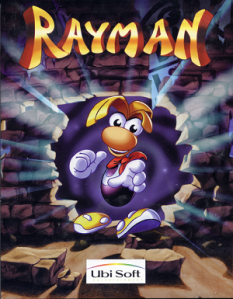
During the mid 90s there was no shortage of consoles – both the 16-bit generation and 32-bit generation were coming to be, not to mention CD consoles – and Rayman was caught right in the thick of it. Not only that, but thanks to Mario and Sonic, platformers were among the highest in popularity behind fighting games. The title began life as a brainchild of Ubisoft creative director Michel Ancel (who is also responsible for cult favorite Beyond Good & Evil) and the then struggling developer/publisher bet the house on his creation and won. Rayman started life on the Super NES as a two-player title based on various cultural fairy tales and eventually it was decided that the game would receive a cartoon makeover with better animation and subsequent move to the Playstation CD add-on for the SNES (read that story here). When Nintendo announced the cancellation of both the Playstation and Phillips CD projects Ubisoft wanted to move to the Jaguar thanks to its specs and eventually chose the Sony Playstation as the lead console. As you can see, the game was already bouncing from console to console.
 Gaming History 101