Archive for the ‘Xbox 360’ Category
Podcast: Xbox 360 Retrospective

This week Fred is joined by Steve (@r9cast) of the R9 Cast and Norma (@normii477) of Knuckleballer Radio and Zombiecast to discuss the beloved Xbox 360. They discuss the console launch, launch titles, significant advances, hardware setbacks, and a bunch of other ups and downs in Microsoft’s second, and currently most notable, console.
The photo of my Tauntaun sleeping bag as referenced in the show can be found here.
Download this episode (right click and save)
Subscribe: RSS iTunes Google Podbean
Review: Pac-Man and the Ghostly Adventures
 Normally I wouldn’t see myself even taking a second glance at a title like this. Thanks to the re-invention of shovelware on the Wii and subsequent titles of its ilk, it’s not a good day to be a 3D rendition of a classic game. Couple that with Chip’s lackluster impressions of the multiplayer – which were spot on – and I did not go into Pac-Man and the Ghostly Adventures with high expectations. To my surprise this title is a rock solid 3D platformer that can almost serve as a pseudo Kameo 2, borrowing most of its gameplay elements from that title, but there just isn’t enough here to justify even the budget price associated with it.
Pac-Man has never done well as a platformer. Whether it’s with the 16-bit era titles in the Pac-Land series or really anything Namco has done with him other than re-creating the original game, there just doesn’t seem to be anything there to differentiate these games from all the rest, until now. Pac-Man’s world has changed quite a bit. He’s back in high school (and apparently appropriate age despite being older than I am), the four ghosts that plagued him in the original arcade title are now his friends, and he loves to wear different hats that grant him special powers. None of this begins to define a worthwhile game until you start playing the initial levels and using early hats like the frost beam or the iguana that have grounded but useful applications. Then you realize the level design compliments these powers well and a bit of Mario nostalgia sneaks in. Pac-Man retains the eating ghosts mechanic and can even use a “scare” power to turn them blue and devour them old school style. Before you know it you’re having a blast traversing the game’s six worlds, all borrowed from video game tropes of old, and you don’t want to stop playing.
Podcast: Generation in Review
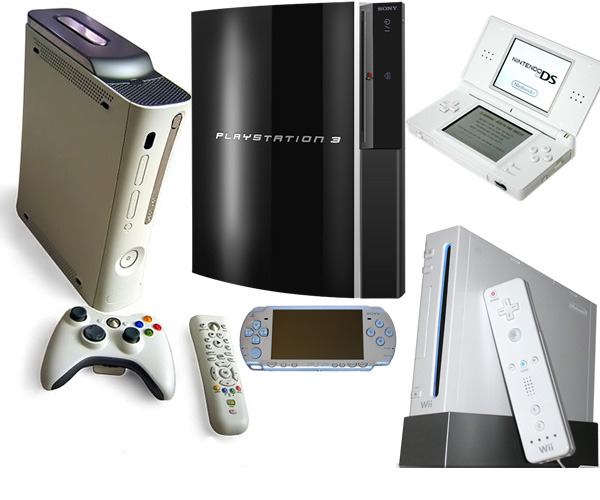
This week Fred welcomes listener Yuri (@JamesFortengard) and fellow podcaster Isaiah (@i_say_uh) from the Party Chat to discuss the console generation that officially comes to an end on 11/15/2013. They discuss innovations, trends, and passing fads of the longest generation ever in history that awarded gamers with some of the most dynamic experiences to date.
Review: Power-Up
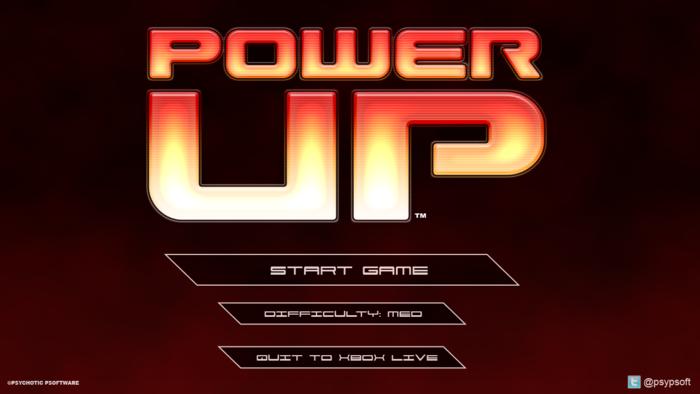 Console: Xbox 360 (XBLA Indie Games)
Released: September 13, 2013
Developer: Psychotic Psoftware
Publisher: Psychotic Psoftware
Difficulty: Hard
Price: $1.00
Similar Titles: Sine Mora, Deathsmiles, eXceed
In full disclosure I have been watching Power-Up since it was first discussed about a year ago, along with my push to support the game on Kickstarter, and contact with the developer. Still, like so many other games one can get jazzed about in concept art and developer interviews it really comes down to the released product (and I never show favor to a project I back). I assumed that with the title and art design Power-Up was going to be a Gradius clone – which definitely isn’t a bad thing since I’ve been dying for a true sequel – but what I received instead was a delightful surprise. Power-Up has a hook that feels unique, and coupled with the beatiful art, aggressive design, and a momentum-inducing soundtrack it stands alone as its own property. The fact that it sells for a mere dollar only stresses even more that developer Psychotic Psoftware is almost giving away a product that would be a steal at ten times the amount.
 Naturally as the title implies, Power-Up is a side-scrolling shmup that is all about building up weapons and raking in the highest possible score. What’s unique about the way it handles power-ups is the fact that you have five weapons to choose from, all available from the beginning, and it’s up to you how you upgrade them. Swapping weapons at will is easy, simply tap the left or right bumper to move to the previous or next weapon, and whatever you have active when you collect a power-up will level it up. While this may seem somewhat simple, especially since most shmup players are acutely aware of their preferred shot, the level and enemy spawn design forces you to utilize each weapon at certain times. This combination of having all the right tools at your disposal and requiring you to know when and how to use them is why I’m so impressed with this game. All of the so-called rules of shmups are broken, enemies flying in from every direction attempting to shoot down or even kamikaze their way into your ship makes for a frantic game of cat and mouse. Not only that, but play tactics depend solely upon you, so if you can handle enemies from behind without relying on the reverse shot or above/below without a vertical shot then success can really be had any way you want it. There are times – namely boss battles, flurries of enemies, or scenarios – where I couldn’t see how you wouldn’t use a specific weapon, but if there’s one thing I know about shmups it’s that nothing is impossible.
Review: DuckTales Remastered
 Release Date: August 13, 2013
Developer: WayForward
Publisher: Capcom
Price: $14.99
Platforms: Xbox 360 (XBLA), PS3 (PSN), WiiU (eShop), PC (Steam)
Most HD remakes require a certain degree of love for the original game, especially when you consider a brunt of them just increase the resolution on lower quality assets. In the case of NES classic DuckTales, this doesn’t really apply. It was a stunning game that had few flaws when placed up against other titles of its time. There was much work to do bringing it into modern times and if you are going to do this type of upgrade while still retaining sprites, WayForward is probably the best equipped for the job. The visual result is spectacular, justifying the somewhat melodramatic title of Remastered in a mere screenshot. Unfortunately it seems the team was so focused on keeping the aesthetics intact that they spent little time on gameplay. As a result DuckTales Remastered is a title that will tug at your nostalgic heartstrings before crushing them under the minor, but significant, tweaks of this modernization.

Review: Dungeons & Dragons: Chronicles of Mystara

Originally hitting arcades back in 1993, Dungeons & Dragons: Tower of Doom was quite the oddity. It prominently featured gameplay similar to that of its other brawler brethren, specifically the combat system of Final Fight mixed with the license quality of titles like The Simpsons, but also with the added benefit of being part of the complex D&D story. Not only was the game addictive but mild RPG elements, power-ups, and branching paths that had you etching a unique campaign were almost unheard of in arcades. Unfortunately this gameplay style and a long branching campaign required two important things: time and money. It probably costs somewhere between $5-$10 in quarters to conquer the first game, and probably twice that to take on the sequel Shadow Over Mystara and at least an hour of your time. As it stood, I never completed this game as a child, either due to lack of time or money, and I always wondered how fun it would be to have this title at home. Well finally Capcom has decided to bring this classic arcade duo in digital format and finally give free rein to a pair of arcade games that are among my favorite of all time.

Podcast: It’s Pronounced La-Ra

This week Fred and Trees are talking about the Tomb Raider series and its busty protagonist Lara Croft that shadowed the video game as a pop culture icon in the late 1990s. We discuss development, creation, and production of both Core and recent Crystal Dynamics’ vision for Lara and her many adventures.
Getting It Backwards
 Video game consoles are one of the most interesting electronics items on the market for several reasons. Probably the most prolific is the fact that there are frequent hardware upgrades, which we call generations, that move home consoles forward. Because each new console is basically a piece of hardware frozen in time, the need to innovate and improve on future games demands that they be constantly updated. This works counter to movies or music, which see improvements from new hardware but don’t require the upgrade to enjoy the medium. Imagine if you could play Super Mario Bros. on the Wii but with drastically upgraded visuals or Dead Space on the original Playstation with the juxtaposed setback, this is exactly what we see when we watch Ghostbusters on VHS versus DVD versus Blu Ray. As a result new consoles come out all the time, typically in 5-8 year intervals, and usher in a more interactive experience – it’s important to note that the greatest difference between games and other media is that they are active, not passive experiences – and with it comes a new format for software.
Enter the concern of the consumer. It can be frustrating for both gamers and parents of gamers alike to purchase a new console, especially when it renders an entire collection on an older console useless. As retro gamers I’m sure we see the value in it, but for the majority there’s a want to move forward and never look back. Well, that is until there are enough new games to get me to migrate over. This is another slow start that prevents all but early adopters to purchase new hardware, which can then result in fewer sales. With fewer sales comes more canceled projects on new hardware, which then results in fewer sales of the hardware and the cycle continues until a console is considered dead in the water. Just look at the Virtual Boy, Jaguar, and possibly even the WiiU about this problem; developers have enough to worry about, they can’t also deal with poor penetration rate due to a false start console. One excellent solution to help usher in that awkward period between consoles is the concept of backwards compatibility, or a new console that can play a previous generation’s games.
Review: Giana Sisters: Twisted Dreams (XBLA)

 For those not aware of the microcomputer craze in Europe that dominated the late 80s, the name “Giana Sisters” may not mean much. By the time the NES came out in Europe many had already invested in a microcomputer and parents were not eager to purchase a new console, so having games on popular computers like the ZX Spectrum and Commodore 64 was essential. The Great Giana Sisters was a widespread clone of Super Mario Bros. that provided a great side-scrolling platformer alternative to Nintendo’s classic. Unfortunately due to its highly similar content, including an opening level that literally cloned 1-1 from Super Mario Bros., Nintendo’s legal involvement got the game pulled off store shelves. Since then it has lived on as a rare holy grail for some gamers and having played it myself I must admit that it doesn’t steal as much from Super Mario Bros. as the initial level would suggest. Now the Giana Sisters are reborn in one of the first Kickstarter projects to benefit and release from the crowd-funding program and it is clear that Giana Sisters: Twisted Dreams is anything but a clone. In fact, Super Mario Bros. could learn a thing or two from this gorgeous modern platformer.
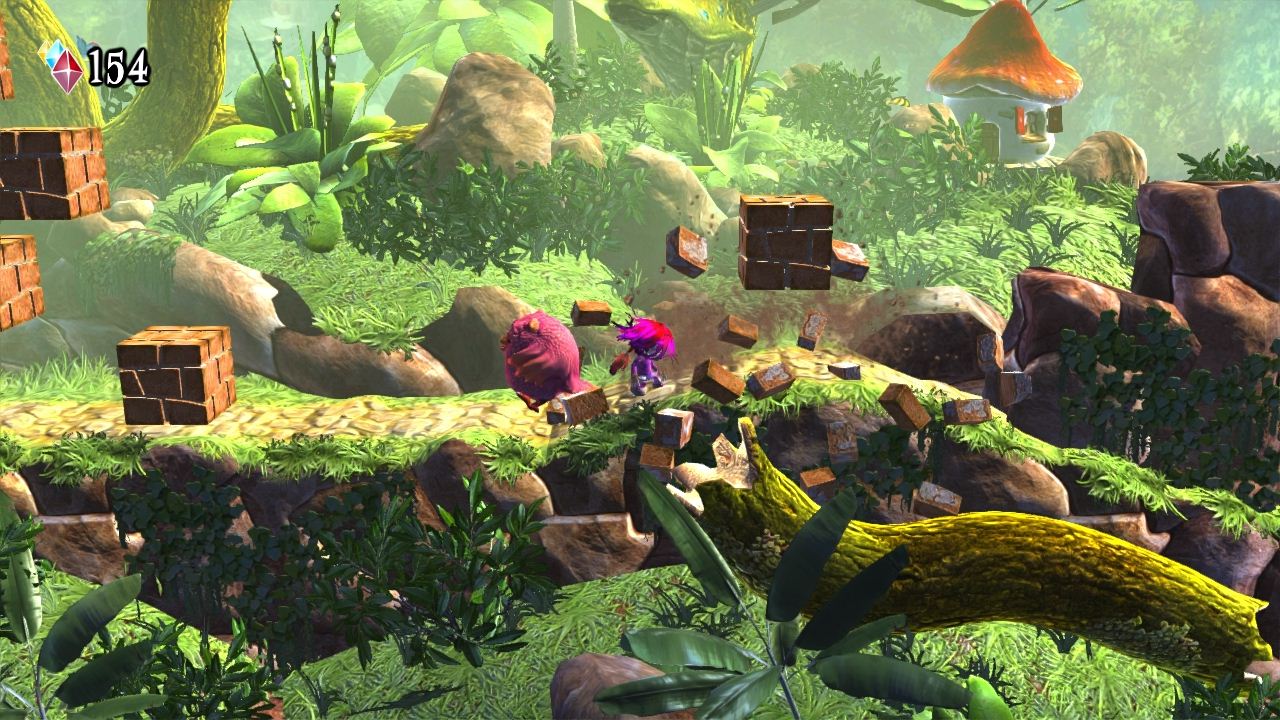 Twisted Dreams is a sequel to this controversial original, which did see a legal re-imagining on the DS in 2009, and picks up an original story that thankfully does not require knowledge of the original. Maria, Giana’s sister, has been kidnapped by an evil dragon and it’s up to Giana to enter the dream world and rescue her. Now a teenager, Giana is capable of utilizing the power of her two personalities – an interesting take on the changes one experiences in those awkward teenage years – allowing her to transform between a bright “Cute” persona and a rebellious “Punk” persona at will. Most interesting about this transformation is that it comes not only with new powers, but the entire world changes on the fly along with her. This dichotomy of not only the play style, but also the aesthetic of the entire game, creates a unique formula for each level. It allows the platformer to escape the confines of relying on level design and instead allows small simple spaces to become obstacle courses that will challenge your mind and reflexes. It’s not about dodging the pit and jumping on the enemy anymore, you need to think and think fast to make it in Twisted Dreams.
Review: Darkstalkers Resurrection
Capcom has continued to make its library as available as possible to the masses, especially when it comes to arcade re-releases from decades passed. This generation marks the first where old school arcade titles can be re-released at low prices, individually, with visual filters, online play, and perform exactly as they did in the arcade. Granted, it’s still a pain to figure out how to find each of these titles – a perfect example being Capcom Arcade Cabinet, which provides several of Capcom’s classic coin-ops that would seem to include Street Fighter II and Darkstalkers – but let’s face it, some games are much more marketable than others. The newest of this tradition is Darkstalkers Resurrection, an HD re-release of sorts, that covers the second and third titles in a series that never quite made a faithful translation to American households.

Night Warriors with smoothing filters on
As for the games themselves, they are not covered in this review so see our Night Warriors: Darkstalkers’ Revenge and Darkstalkers 3 coverage respectively, and then continue on. I am aware that a nearly arcade perfect port of Night Warriors did release in the US on the Sega Saturn and Darkstalkers 3 was decent in its US version on the Playstation (and PSOne digital store currently), but I hardly think these platforms, especially if you want both titles, are the best and easiest way to play these games. Furthermore they are not without specific tech-based flaws – mostly visual on the Saturn and gameplay on the Playstation – and Darkstalkers 3 was so updated and altered in the home port that it’s barely the original arcade game. Putting all that aside, with the recent resurgence of the fighter genre, many hardcore fans have fight sticks or specific fighter game pads on their newest consoles that a 360/PS3 version can support. Capcom has also decided to keep this title digital only in the US, which also accounts for the low price point that is much more affordable than the 4,000 yen ($45) disc version in Japan. Now that this game’s presence is thoroughly justified, I must commend Capcom for treating a classic re-release with so much care because Darkstalkers Resurrection is the definitive way to play these games at home.
 Gaming History 101