Fantasy Zone (Sega)
So many shmups have heavy music, vast spacescapes and horrid alien bosses, but not Fantasy Zone. One of Sega’s first shooters to grace arcades in 1986 it’s also one of the best titles that explains exactly what you’re going to get. Fantasy Zone breaks the mold for such a popular title – it was ported to almost everything imaginable in the late 80s – and still manages to be a fun and addicting shmup. Forget the brutal challenge and seriousness of other shmups (like Gradius, which has been owning my soul all morning) and instead wander over to a colorful bubbly world with protagonist Opa-Opa.

Looking like a hybrid between a space ship and a small winged creature with legs, Opa-Opa has been somewhat of a sidekick for Sega, even getting an appearance in Sonic and Sega All-Stars Racing. In Fantasy Zone you will control this little ship in a scrolling world (think Defender) while defeating bad guys to collect money and upgrade your ship. As you move along certain boss battles will unlock that move you on to the next world, each new one as unique as the one before it. Fantasy Zone is littered with bright colors and funny looking enemies that get it categorized as more of a “cute ’em up”. To this day I still don’t know exactly where to unlock each boss, but I do know that they appear before you have spent too much time thinking about it. That’s the thing, unlike many other shmups you’re not trying to reach a goal per se, but rather exploring a world and letting it take you on a ride. I know plenty of people who didn’t think there even was a world beyond the first and still pumped quarters into the machine to play it anyway.
Gradius Series (Konami)
Responsible for plenty of attributes to the shmup genre, notably the space aesthetic, but the most significant thing I remember about the title “Gradius” is how often people mispronounced it. Okay people, I’ve confirmed this with Konami, the pronunciation is “grah-dee-us”, not “gray-dee-us”, “grah/grey-die-oos” or any other awkward pronunciation. It’s pronounced simply how it is spelled.

The Gradius series has withstood the test of time with the first technical iteration in 1981 and the most recent actual game released in 2008 (Gradius ReBirth on Wii). In that time the series has graced almost every console and portable that has come out, although recent iterations have been predominantly collections. Not only that, the series is responsible for a few offshoots including my favorite shmup of all time, Salamander (Life Force in US), and the Parodius series. Despite critics rightfully complaining that each new title in the series seems to harken back to the original, I feel it is the series staples that keep dedicated fans and strong sales. I grew up knowing this series on the NES, although I am told that in Japan and Europe it has a more significant presence on the MSX. Like all shmups, it does bury its roots in the early days of the arcade and to me is still on that short list of video games you must play before you die. Nowadays the list of titles is quite long, but after recently playing the series over last week, I still find the original title (not necessarily first in the series) to be the most significant.
19XX Series (Capcom)
I figured we would start of this Shmuppreciation month right with one of the first examples of a true shoot ’em up: Capcom’s 19xx series. It’s a bit funny that I even reference it as such, because to the best most gamers are only aware of the first two titles and they are quite similar: 1942 and 1943: Battle of Midway. The lesser known three titles are 1941: Counter Attack, 1944, and 19xx. There are, however, many different iterations of each so we will discuss the premise, differences in versions and significance to the series. Over the years I have come to realize that shmups make for pretty poor screen shots; it can be nearly impossible to discern what’s going on in most stills so this year I will be providing gameplay video. While it’s ideal for all video to be shot by me from my own consoles/arcades, it’s a lot of work so I will try to capture my own video when I can.
Capcom is definitely no stranger to the arcade scene, but before they generated monster hits with Final Fight and Street Fighter II, they managed some strong success with 1942 in 1984. Set in the Pacific front of World War II, it was pretty interesting to see that this title had you flying a “Super Ace” to destroy the Japanese air force and attack Tokyo. You would think that a World War II title out of Japan wouldn’t focus so much on some of the rougher international relations with the United States, but regardless of that fact 1942 not only came out but was a runaway hit in both regions. Known best for the distinctive twin booms of the plane, which closely resemble the Lockheed P-38 Lightning fighter plane the Super Ace was clearly designed after, and the ability to perform a loop-the-loop that made you temporarily invisible. 1942 introduced the vertically scrolling shooter, gun power-ups and small assisting planes, all significant staples to shmups moving forward. While it wasn’t the first Capcom arcade to get a sequel, it was definitely the most popular. As such, this title has been ported to several systems including the NES/Famicom, MSX, PC-8801, Amstrad CPC, ZX Spectrum, C64, Gameboy Color, Playstation 2/Xbox/PSP (in a Capcom collection), and even a recent revival on PC/PSN/XBLA as 1942: Joint Strike.
What is a Shmup?

For some reason, this screen from R-Type is always what I think about when I hear the word “shmup”.
It’s leap day, a day that on most years doesn’t even exist, and had it not been for today it would officially be March. For those of us in the retro gaming world, shooter fans or basically anyone who listens to Drunken Gamers Radio it also means Shmuppreciation month. For 31 long days we show our appreciation for intergalactic starships, Moai heads, tiered power-ups, sexy young girls with large breasts that aren’t involved in a hentai game, dodging thousands of bullets and actually seeing a vertical raster effect in a high-definition game. It is all for the love of the shoot ’em up, these days called “shmups” for short. What’s distinct about the shmup is that aside from most other genres, it has been around as long as video games themselves – yes, the first video game was a shmup – and has remained relatively unchanged for more than 30 years. As an avid fan with probably more than $1,000 in shmups alone among almost every system – did I mention the shmup has some of the most expensive games in existence? – I wanted to reflect on the history of the shmup.
Suquels: Newer Isn’t Always Better
 Okay so the title (pronounced “suck-wells”) is a tad unsophisticated as is the concept it implies, but frankly I’ve had it up to my ears in recent sequels that don’t even remember what made their predecessors great. Congratulations gaming, you’ve now entered into the same dangerous realm Hollywood has where production budgets are so great that the slightest tweak can result in a hit or miss product. Don’t get me wrong, this isn’t a new problem – ask anyone who was around for the crankfest that was the Mega Man series on the NES and they will tell you that it peaked at either Mega Man 2 or 3 and then tapered into oblivion. Don’t misunderstand me, though, these games aren’t bad by any stretch, they just can’t live up to the quality of the previous game. I know what you’re thinking, you’re wondering how one goes about topping Uncharted 2 within the same series or competing with the achievement of Legend of Zelda. In short, perhaps you don’t. Maybe its high time that publishers, because they are the boss, understand that some games run their course. On the other hand God of War 2 was definitely the apex of that series but thanks to a console generation between the second and the third, it was refreshing to receive a sequel that looked so much better. There’s a formula that works, so stop worrying about your own personal issues or listening to too many focus groups and do your best to capture the magic of the property. Please keep in mind that like the mantra of Scream 2, trilogies are not considered sequels in my eyes and thus are awarded certain liberties as a result. That doesn’t mean I’m not going to rip into the entire trilogy once the third releases if obvious oversights weren’t dealt with.
Death of the Portable
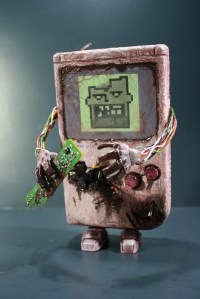
Portable gaming has been around almost as long as gaming as a whole. Since the first moment bleeps and bloops could be captured on a screen, engineers have been hard at work trying to recreate the same experience on the go. Now with both the Playstation Vita and Nintendo 3DS this goal has, for the most part, become a reality. While neither is quite on par with the likes of their HD gaming counterparts, there’s no doubt that the smaller screen does make the distinction difficult. Having personally played Resident Evil: Revelations, Super Mario Land 3D, Wipeout 2048 and Uncharted: Golden Abyss, I admit that I feel these games are nearly identical both in gameplay and graphics to home console titles. This is nothing new, in fact many would argue that the Playstation Portable was nothing but a slew of PS2-style titles both unique and ported. Unlike the PSP, though, it appears that the gaming public claim this is what they want. The sales, of course, tell a different tale.
Review: Abobo’s Big Adventure (PC/Mac/Flash)
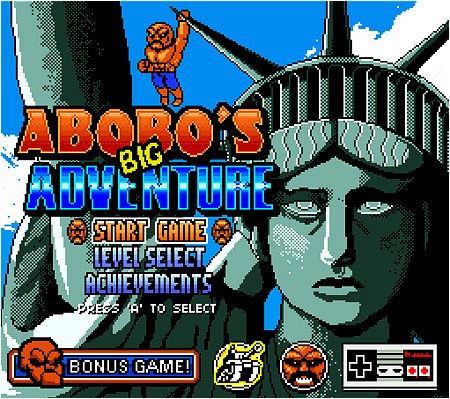
There have been a lot of games, especially in the indie scene, that harken back to the days of 8-bit and 16-bit systems. Some do an incredible job of capturing that retro feel, developer Way Forward should be commended for work on titles like Contra 4, and other efforts like Capcom’s Dark Void Zero attempt to take modern game design and give it that retro flair. Those are major companies, though, the small team indie developers are much more miss than hit, so you go into a title like Abobo’s Big Adventure with the overused term “cautiously optimistic”. Fortunately the teams of I-Mockery (design/sound/story), Pestoforce (programming) and Pox Box (art/animation) have created exactly what was advertised: the ultimate tribute to the NES.
Love Lessons Taught by Video Games

Being an Aggressive Lover Will Make You Rich but Lonely
Learned by: Custer’s Revenge (2600)
 It’s always important to treat a woman like a lady, respectfully and gently. Despite what some of my drunken college shenanigans have suggested, no one wants to be treated in the pathetic way that General Custer does in Custer’s Revenge. Without going into much detail, this early Atari game for adults only is significant for two reasons: it’s one of the most expensive games on the Atari 2600 (nearly $200 on eBay) and no one has played it. For reasons of an offensive nature and the fact that the game just isn’t that good, it’s forever stuck in Dead Pixel fame. The message is clear: be an aggressive lover and you’ll be worth some money, but you’ll also remain dusty and alone.
…oh yeah, I guess Kratos got away with it, but those were different times and from what I saw those women were begging for it. So I guess you’re allowed to if you happen to be in a brothel in Vegas or something, but it isn’t real love.
Now & Then: The Simpsons Arcade Game
Now & Then is different from both a retrospective and a review. It tackles games you probably already know and is a place for gamers to discuss these games. Below is an overview of a game’s presence in the market then and now. Authors of these articles share their personal experience, so we encourage all of you to do the same in the comments.
Last week The Simpsons Arcade Gamereleased on the PSN, the XBLA version coming out a few days earlier, and completed Konami’s classic beat-em-up licensed arcade series. For some reason media outlets decided to review this game – this makes little sense to me given that by definition the game will be outdated and any potential customer has already played it – but I know plenty of freelance reviewers that have amassed a decent collection of free retro games by trading a review for a download code. Although this is not the best arcade brawler on the market, even among licensed peers X-Men and Teenage Mutant Ninja Turtles, it’s probably the most popular. There’s a good reason for this, as Simpsons mania took America by storm at the beginning of the 90s, it was impossible to avoid the disfunctional family from Springfield, USA.

Review: Quake 4
 Console: Xbox 360
Released: 2005
Developer: Raven Software, id
Publisher: Activision
Value: $4.99 (360) $4.44 (PC) $10.19 (Mac) (pricecharting.com)
Price: $5.99 starting (ebay) $4.99 (GameStop used) $19.99 (GS Digital)
Also Available On: PC (recommended), Mac
Watch For: Copies on PC that have the bonus DVD of content and copies on 360 that have a bonus DVD containing the same content as well as Quake 2.
Round IV
The Quake series is quite an interesting one, especially when you consider its legacy and creation. Developer id, of the Wolfenstein and Doom series and bascially responsible for the first person shooter (FPS) genre, finally created a true 3D FPS with the original Quake. Unlike games before it, the engine didn’t ignore things like height and depth when calculating shots or movement, Quake understood the 3D plane. As the series progressed in Quake II marine Matthew Kane was introduced as a strong protagonist to help fight off the alien race known as the Strogg. I don’t want to discredit the plot completely, but there are striking similarities to the Quake series and Doom series in every way. Continuing that similar trend, Quake III was an arena-only shooter that took the online PC gaming community by storm whereas the plot-heavy game belonged to none other than the revamped demonic classic Doom 3. It is for this reason that Quake 4 marks an interesting place in the id universe given its continuation of Kane’s story from Quake II and drastic visual similarity to Doom 3.
 Gaming History 101