Archive for the ‘Features’ Category
For the Love of the Light Gun
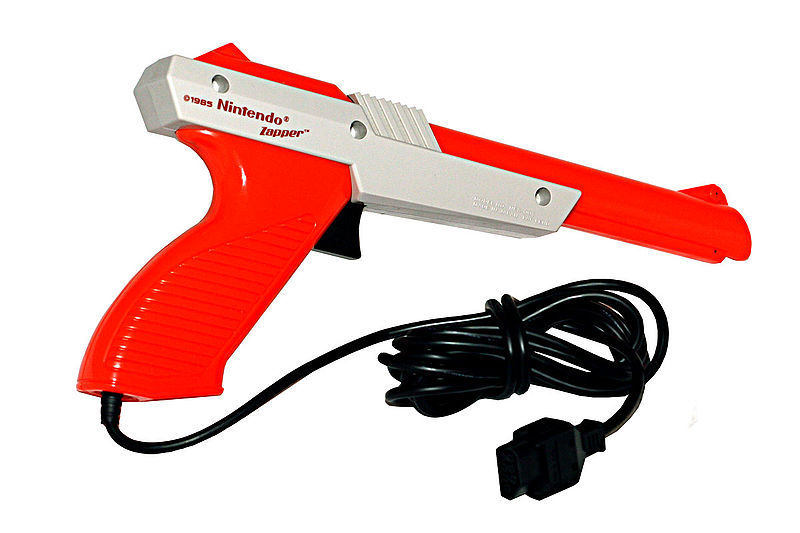 I can’t explain my love for the light gun. It’s one of the oldest forms of interactive entertainment, dating back to the carnival days where you would fire air rifles at a metal bullseye to make an old man’s hat pop up or a dog bark. Once the gun made the transition to video games it honestly became one of the most lifelike and violent gaming tropes throughout history. Not to get deep with it, but you are pointing a gun at a target, usually alive, and shooting it. There is not other gesture like it, you are shooting a modern device to kill something, virtual or not. At the same time it also doubles as the most simple form of proficiency. I don’t think anyone will claim that being good at Duck Hunt or Lethal Enforcers relates to being a good shot in a shooting range, but it’s got a much higher chance of significance than being able to get a headshot in Call of Duty. Whereas the FPS emulates the concept of aiming and firing a gun with 1:1 responses from a controller, a light gun truly simulates the experience.
 Light gun games have been a niche genre, but that doesn’t prevent them from withstanding the test of time and being available on most home consoles and one of the most popular games, even today, in arcades. I guess it’s because despite the maturity implied behind firing a gun, it’s one of the easiest concepts for us to pick up. I’ve been on many adventures thanks to light gun games – whether it’s cleaning up the future in T2: The Arcade Game, battling zombies in a haunted house through House of the Dead, or enjoying some of the worst acting of all time in Mad Dog McCree.
It’s also significant because the light gun is a genre nearly impossible to emulate and doesn’t translate well in today’s technology. While there are exceptions, you will have a hard time playing Crypt Killer properly on a PC running MAME and most HDTV technologies don’t support light guns from the past. Authenticity is as important as the genre itself. This month I’ve decided to dedicate to a timeless style of video game that I always make first priority when buying a new (or old) system: the light gun shooter. Come join me to learn about some of the best, worst, funniest, and definitely weirdest titles to ever grace the hobby of video games. Thanks to my huge CRT television and original hardware, I can even show you videos.
Feature: Max Payne – A New Perspective

Growing up, I played Max Payne for the excitement I got out of the gameplay, that slow motion diving and shooting mechanic. It felt perfect when I was in my teens playing these games for the first time. It was over-the-top action fun. I wasn’t looking for realism or a great story, I just wanted to shoot things. The Max Payne games were a perfect fit with their smooth and methodical gunplay.
I’ve played through Max Payne 1 and 2 about four times each, always playing the second title just after the first. It isn’t hard to do. Each game is only about 5 to 6 hours long. If I wasn’t completing one of the games in less than 6 hours it sure as hell felt like I was.
Other things that kept me coming back were the locales. They’re iconic and memorable – a frozen New York City, a grimy subway station, a sleazy hotel, an old church turned gothic nightclub, just to name a few.

“Life knows two miseries: getting what you don’t want and not getting what you want.”
Even though the locales were iconic, the gameplay superb, and the playtimes short, the story of Max Payne was something I had never paid attention to. I haven’t played the first two games in years, but I recently went back and finished them again before playing Max Payne 3.
Great Retro Halloween Games That Aren’t Scary
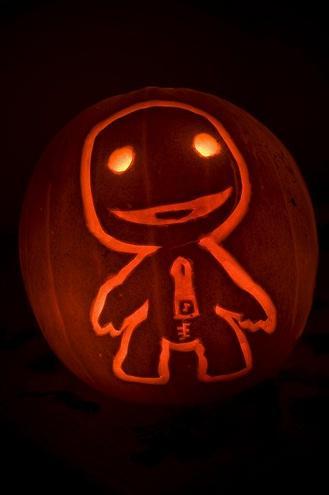
Happy Halloween to all of our lovely retro readers. All month we’ve been chatting about horror gaming, ominous dark rooms, and I’ve been spending one moment in Silent Hill and the next running from the Slenderman. I thought it might be fun to finally offer some retro Halloween gaming for the timid, nervous, screaming little scaredy cats out there. Yep, you read that correctly, here’s a list of fun Halloween videos games that aren’t intended to scare you.
Happy 20th to the Sega CD

Sega CD Model 2 with Genesis Model 2, the most common setup
Okay, I know the Sega CD actually turned 20 exactly one week ago on October 15, but we’ve been very busy over here so we regretfully missed the window. Fortunately we are making up for that with tons of Sega CD coverage for the month of November, check in to see write-ups and gameplay on many of the titles that made Sega’s overpriced add-on a temptation in 1993. Now I know it is popular opinion to crap all over the Sega CD and in full disclosure I’m an avid fanboy of this specific system, but somewhere in between lies its true value. Someone once told me that any console with at least three good games is worth being in existence and under that theory the Sega CD justifies itself at least three times over. In recent days the Sega CD has also dropped in price/value so it’s quite possible to get your hands on a Genesis/CD combo for roughly $50-$75, which isn’t too shabby even by today’s standards.
In truth the Sega CD (Mega CD in Japan and Europe) wasn’t designed for our market. It was developed in Japan to compete with the PC-Engine CD (Turbografx-16 Duo in our country) and hopefully migrate the consumers of the time into the CD generation as an unassuming add-on instead of a full-blown machine. In the end both consoles did make their way stateside (NEC being very conservative with Turbo Duo distribution and Sega liberally releasing any and all hardware in every market) with hefty price tags ($300-$450). Sega CD emerged victorious but many would argue its victory was due more to the fact that almost every game that released in Japan came over here whereas an extremely meager amount of PC-Engine CD titles ever made it stateside. Like the PC-Engine CD, the Sega CD was able to upgrade visuals, considerably upgrade audio quality (especially with straight CD tracks in red and yellow book audio format), and increase capacity of discs to 600 mb when compared to the frail 32 megabit capacity of the Genesis. Sega CD was kept under wraps so tightly that aside from technical specs, many developers of early games had no idea what console they were developing for.
The Value (and Necessity) of Retro Gaming
The following article was written by Derek on the retro gamer and why more should join the cause. For all intents and purposes it seems to demonstrate the mantra of this site – perhaps even moonlighting as a retro gamer manifesto of sorts. Either way it’s a well written and concise explanation of why the retro gamer cannot and should not disappear, even if it isn’t mainstream. Enjoy the read. – Fred – GH101 Executive Editor
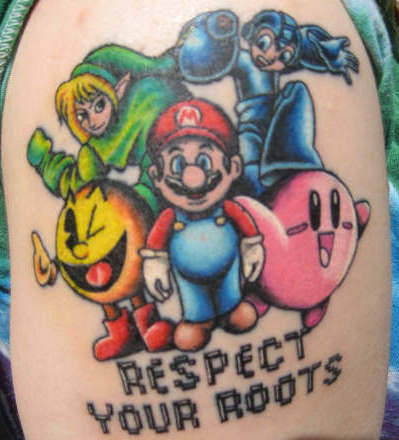
Atari, NES, Amiga, and Master System. The grandfathers of modern consoles and the canvasses for which many classics were displayed upon. Whether you’re part of the young generation or you got a late start on gaming there is no better time than now to start playing retro games. Yes I realize the graphics, sound, and some of the game play isn’t up to par with today’s game releases but this by no means makes these titles inferior. So why go retro? It’s quite simple really: affordability, fun, and nostalgia. Gaming is one of few art mediums where the majority of people don’t know or appreciate the roots and genesis of it all. It’s time for that to change!
Head to Head: Super Mario Bros. 2
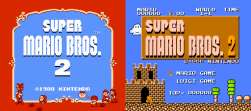
Ask anyone who grew up playing NES games and they will tell you that Super Mario Bros. 2 was somewhat of an anomaly. It is completely unlike the other games in the series, complete with an Arabian theme, veggie-pulling, the option to select one of four protagonists, and Bowser (King Koopa) is nowhere to be seen. Fortunately for Nintendo it blended right in with sequels to various other popular franchises in the console, including the radically different Zelda II: Adventures of Link and Castlevania II: Simon’s Quest. As a seven-year-old gamer back then I shrugged it off and said, “why not?” It may shock you to discover that the American version of Super Mario Bros. 2 is not actually the intended sequel to the original Super Mario Bros., nor is it in Japan. The true Super Mario Bros. 2 is better known as Lost Levels in America and our Super Mario Bros. 2 began life as the game Yume Kojo: Doki Doki Panic! and based on a Saturday morning cartoon in Japan and was later re-worked, improved, and re-released as Super Mario Bros. USA. Both versions of Super Mario Bros. 2 are as different as two games can get and thus warrant a head to head.
Feature: Mascots
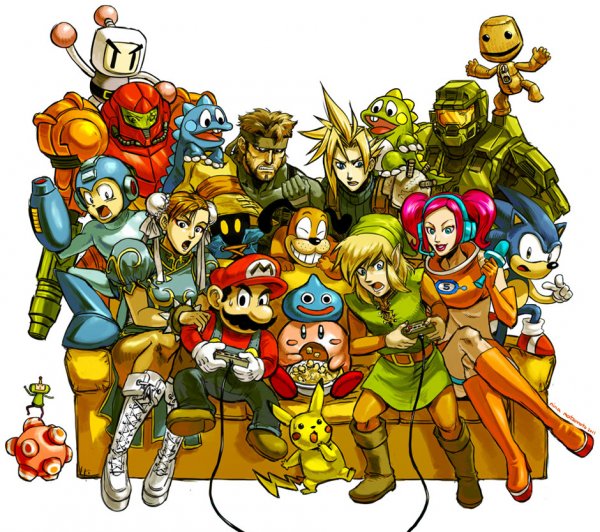
Mascots, you have to love them. No, wait, you don’t. For the most part mascots have been one of the dark spots on a game publisher’s marketing blitz. At first there was only one iconic mascot, Mario from Super Mario Bros., and frankly he was an accidental mascot that Nintendo had never imagined would become its poster child. After Mario other companies were consistently trying to establish mascots no matter the negative cost to the consumer. Mario is an exception not because he’s a particularly good or mistakenly genius mascot, he’s just iconic because his game was the catalyst to the return of video games after the crash of 1983. During the mid 80s Nintendo established a handful of strong franchises that are beloved by many fans and despite Mario being the “leader” per se, he’s definitely not alone when Nintendo wants to sell a product. I would argue that Link (from Legend of Zelda), Kirby (from Kirby’s Dream Land), Pikachu (from Pokemon), and to certain extent Donkey Kong (from Donkey Kong/Donkey Kong Country) and Samus (from Metroid). Much like Disney, Nintendo brings with it a cast of characters and franchises that all assist the overall brand in creating long running quality games. Everyone wanted to have that same wonderful family in the 90s (all of the above named characters had at least one title on the NES by 1992), but they seemed to miss the point that these characters were not created to be mascots, they just happened to get popular enough to become mascots.
Feature: Castlevania Retrospective

Few titles that started life on the NES still exist today. Of those titles there are even fewer that weren’t developed by Nintendo. Konami is one of the few companies that has a list of titles like this, although many of them suffer from very few updates and recent iterations such as the Metal Gear (Solid) series and Gradius. Castlevania does not have this problem. In fact, it still seems to withstand the test of time and despite trying to reinvent itself so many times, celebrates at least mild success with each new iteration. As a gamer who got his first console, an NES, in 1988, I have literally grown up alongside the series and played most titles it has to offer. If you don’t know Castlevania or have never played a single game, this will hopefully explain why you need to.
Head to Head: Double Dragon
In many cases, games with the same name – and even the same game ported to various consoles – can be drastically different. This was especially true in the 8-bit era where plenty of popular arcade games were deemed too limited for a boxed release on consoles like the NES. Head to Head takes two particular games and explains the drastic difference between the two that often keep fans of each camp drastically divided. Aside from ports, you can also expect several other types of comparisons such as localization.

Double Dragon Arcade
VS
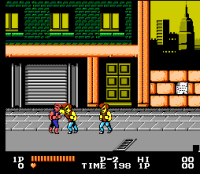
In 1987 Technos released a spiritual successor to its popular brawler Renegade (Nekketsu Kōha Kunio-kun) known as Double Dragon. It told the story of two brothers, Billy Lee and Jimmy Lee (Hammer and Spike in US arcades), who are fighting the mean streets of the Black Warriors turf to get back Billy’s girlfriend. It released first to arcades and eventually saw a port over to the NES, which drastically changed the game. Chances are if you are an American that played the game in your past, then you remember the NES version. Now that arcade ports of many games we loved on the NES are releasing on services like Xbox Live and Playstation Network, it’s important to know the drastic differences between the two because they are different games. Love ’em or hate ’em, here’s the Head to Head on Double Dragon.
Feature: Remembering the Virtual Boy
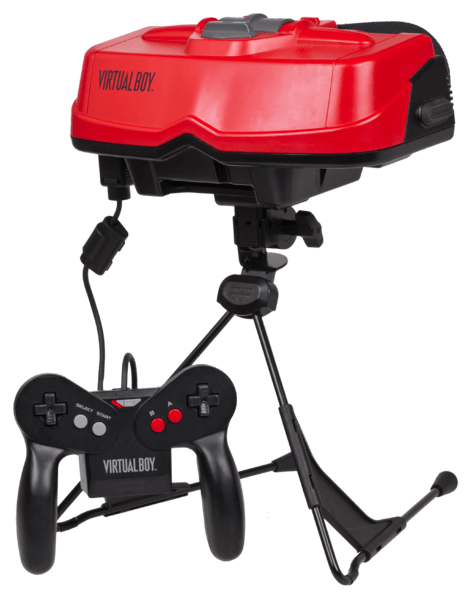
If you’ve been reading this site for a while you may remember my lesson sets on home consoles known as the “Generation Gap Series” or my portable series known as “Gaming To-Go“. In these two sets, only two consoles were unable to be categorized in either location: the 32x (which got its own feature as well) and the Virtual Boy. Why? Read on to find out.
 Gaming History 101