Archive for the ‘Arcade’ Category
Podcast: Shmup Game Club

This week we are joined by listener Jason (@albirhiza) to discuss our Shmup Game Club: Giga Wing 2, Velocity (Ultra), Radiant Silvergun, Power-Up, and Sine Mora. Campaigns, tactics, high scores, and more are covered as we dissect some of the more contemporary additions to the genre.
Retro Game Challenge: Radiant Silvergun
For those of you gearing up for this week’s Gaming History 101 shmup game club, we’ve got the Radiant Silvergun campaign through to completion on a video here. Don’t expect the best playing in the world, I’m okay but I’m no match for the one-lifers who take this game on. It was more like 50 lives in my case, but nonetheless, I managed to complete the game despite some self destructing bosses.
How Product Design has Transformed the Amusement Industry

The term “arcade game” these days conjures up images of cutting-edge graphics and sound, combined with innovative and interactive technology that can bring any concept to life. However, good graphics and interactivity have not always been a necessity for a game that is both enjoyable and addictive. I dread to mention the recent phenomenon of the Flappy Bird app but it is an example of an outrageously faulty and basic game becoming extremely popular. This has been seen in the past with games like Space Invaders, Pac Man, Tetris and Asteroids following very basic concepts and graphics, but still being addictive and rewarding when completed.
The Really Early Days
The first arcade games kicked off at amusement parks and are still present at fairs and theme parks, but there’s nothing particularly sophisticated about them. Ring toss, throwing balls at stacked cans, shooting targets, and other simple challenges have been doing the rounds for hundreds of years and can still draw in the punters to this day. Just don’t go expecting an easy win. Perhaps this is what is indicative of a good game – making it appear simple whilst making it actually fiendishly difficult to win. Make it too hard, however ,and you are left with Zelda II.
Strider Retrospective

Starting today the reboot of Strider hits home consoles and PCs as developer Double Helix attempts to capture the charm that came with the original’s dedicated cult following. When I try to look back at Strider – and yes I grew up playing every version from the arcade at my local bowling alley that was ported to the Genesis along with the completely different NES version – it’s hard to see what exactly needs to be in the new game. Still, there’s no denying the hardcore appeal of this unique and odd addition to classic gaming that justifies looking back for those that didn’t grow up with it.
 If you haven’t played it, the original arcade version of Strider is all over the place. There are multiple languages, settings across the globe, massive mechanical ape bosses, and even lead protagonist Hiryu riding on a whale at the end. As one of the pioneer titles of Capcom’s new CP arcade platform – think of it as a cartridge-based cabinet that allowed quick swapping of games with only a few ROM changes – the graphics are indicative of the cartoon style all CP titles shared (ie: Ghouls’n Ghosts, Willow, and of course Final Fight). Graphics aside, the game is also noted for its crazy gameplay that features hanging from walls and ceilings, fighting massive enemies, and reversed gravity. To accompany this eclectic melting pot was an equally frantic soundtrack that covered all the bases from electronic progressive music to ambient classical style. While the soundtrack is uncredited to original composer Junko Tamiya (she also did the solid NES version of Bionic Commando as well as my personal favorite Sweet Home), the original versions of the arcade game didn’t feature the Aerial Battleship or Third Moon stages (replaced instead by the first stage music on a loop) so it can be deduced that someone went back and composed those additional tunes. While the game itself covers a scant five stages that will take the average person probably 60-90 minutes in total (pros can do it in half that time) the high difficulty and game design that was more indicative of home consoles was fresh. Instead of trying to rack up a high score or conquer a single mechanic over and over you were progressing through brutally difficult levels with the carrot on the stick being that provided you could afford to continue as many times as it took, you could see the ending. This is why most people who play it today will either set it to free play on the cabinet or emulator and also explains why the PS1 port flat-out gave you unlimited continues.
Podcast: Heroes in a Half Shell
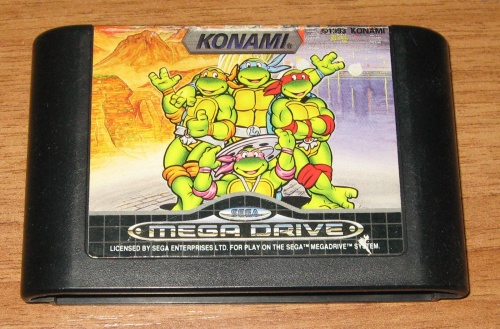
You can’t have grown up in the late 80s and not been struck by the Teenage Mutant Ninja Turtles. It apparently transcends geographic location as co-hosts Fred (@spydersvenom) and James (@Jamalais) both had similar experiences growing up in different parts of the world. In this episode we dissect TMNT’s roots, marketing, and obvious integration into video game culture, covering the games that made the surfer-style pizza-eating New York crime fighters a pop culture sensation.
Podcast: Taito Legends

This week Fred is joined by James (@Jamalais) to discuss the arcade classics released by Taito in the 1980s. They cover the company’s history and many of the staple titles like Space Invaders, Jungle Hunt, Zoo Keeper, Bubble Bobble, Darius, Rainbow Islands, and Rastan. Return to one of the arcade pioneers of gaming’s golden years.
Download this episode (right click and save)
Subscribe: RSS iTunes Google Podbean
Please note: In the show Jam refers to a review for Rainbow Islands that was very close to him. That review can be read, unedited, here. (It is in an open document type, so I recommend using Google Docs to view.)
Podcast: Excelsior!

This week Chip Cella (@CaptinChaos) and Andy Urquhart (@damien14273) from the Agents of Shieldcast join Fred to discuss retro titles featuring Marvel Characters. They learn that the distinction of titles early in gaming were almost nonexistent and perhaps Marvel having Disney behind it may actually be a good thing. Listen on true believers!
Podcast: Twas the Night Before Xmas Part 2
This year we celebrate more releases of Christmas time with special guests Rob “Trees” (@TreesLounge00), Shawn Freeman (@Freemandaddy5), and special guest Yomar “Yogi” (@Yogizilla). With a goal of 1991-1996, we only make it through the first half of 1994 but it’s a fun ride through the biggest titles of the 16-bit era. Merry Christmas everyone!
Download this episode (right click and save)
Subscribe: RSS iTunes Google Podbean
And as a bonus we have a special Christmas card from Jam:
Version: Mortal Kombat
In this new video series we dissect the home versions of the arcade classic Mortal Kombat. Check out the roughly 10 minute video for a quick retrospective on the title and the craze that resulted in September 1993 as many kids brought this violent title home.
Podcast: Devil’s Castle Dracula

This week Fred is joined by Allen (@tearsofafeather) to discuss the Castlevania franchise. As a fan of both this show and Castlevania, Allen assisted in talking about the vast adventures of the first six titles for the Belmont clan (Castlevania I-IV along with Rondo of Blood and Bloodlines). Join us in one of the most technologically advanced and entertaining horror action platformers ever released.
 Gaming History 101