Archive for the ‘Genesis’ Category
Podcast: Ghouls, Ghosts, ‘N Goblins
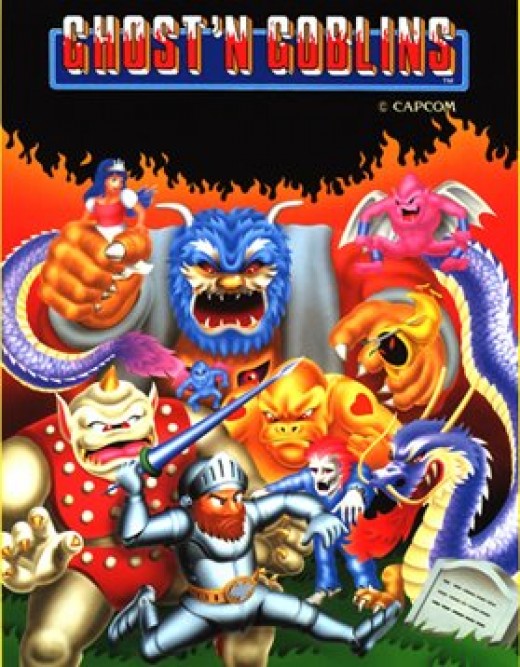
This week Fred and Jam are discussing the Capcom series Ghosts’N Goblins (or Makaimura if you prefer). Easily one of the most punishing franchises ever created, the boys tackle the trials and tribulations of Sir Arthur on a never ending quest to save his girlfriend. Along the path he will traverse to various worlds, see terrible beings, and of course battle the many derivatives of the Devil.
Download this episode (right click and save)
Subscribe: RSS iTunes Google Podbean
And just for fun, have a video of me cussing out the original for two hours:
Version: Wolfenstein 3D on 16-bit
This week we put the original SNES release of Wolfenstein 3D up against the recent homebrew port of the game on the Sega Genesis. How do you think it will work out?
Looking Back at Wolfenstein 3D
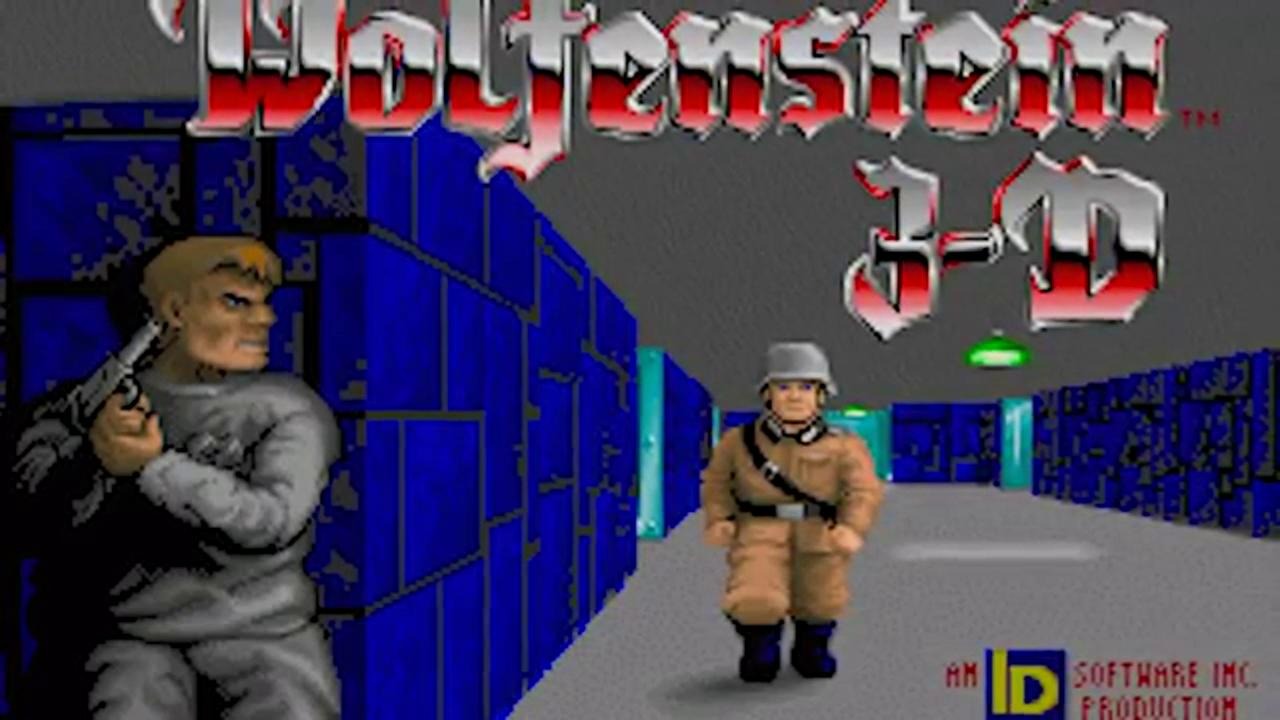
In truth the dawn of the first person shooter (FPS) and its popularity is more a case of luck as a group of intelligent designers got together and created pseudo-3D worlds. In 1991 John Carmack was accompanied by three others as the development team at id Software (that story was already told in our podcast) and funded by a company named Apogee (they also developed Rise of the Triad). Carmack had created the Catacomb 3D engine, which utilized ray casting to create 3D looking environments. In ray casting, basically lines are drawn in a grid and if they intersect a texture is placed at the intersection and over a grand enough grid, you get depth perception and a software-based flat image that looks like it’s in 3D. Combine that with the fact that Muse Software, developers of the innovative stealth-action Castle Wolfenstein title from the 80s, had let the license lapse and you have the building blocks of this innovation in game design. Apogee gave Carmack and his team $100,000 to develop a shareware title and they decided to move forward with Wolfenstein 3D.
Soliel / Crusader of Centy Review

 Console: Sega Genesis (Mega Drive in Europe/Japan)
Also Known As: Soliel (the title used in this review based on the writer being from Europe), Shin Sōseiki Ragunasenti (Dawn of the Era: Ragnacenty) in Japan
Released: 1994
Developer: Nextech
Publisher: Sega/Atlus (NA only)
Digital Release? No
Price: $134.00 (used, cart only), $309.99 (CIB), Sealed price is $109.52, but that’s biased because the only known copy was a random eBay listing in 2012 (according to Price Charting)
In the twilight years of the Mega Drives life a surprising amount of gems came out for the system, and one of the biggest surprises for me was the 1994 release Soleil (Crusader ot Centy for North America). Now I got very lucky finding this game when I was a lot younger. I was at a marketplace with my grandfather and I had saved up all my pocket money for four weeks to buy a game. Heading over to the only game stall in the entire market place I picked up the rather suspicious looking Soleil, a game I brought totally blind for eight British pounds and I was very impressed with what I found. Several years later, and revisiting the game, lets see how it holds up today.
Podcast: Genesis Does
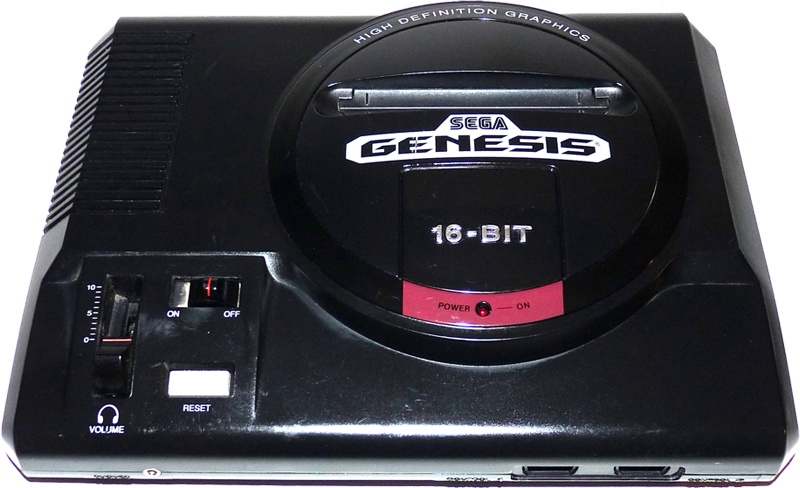
This week Fred, Jam, and Derrick from Dead Pixel Live are celebrating the 25th Anniversary of the Sega Genesis. The first heavy hitter of the 16-bit generation started as a console for sports games and high quality arcade ports and later became known as the console for edge and violence. They cover the creation, launch, and span of a console that in six short years gave us a coveted library of memories.
Retro Game Night: Sega Master System Brawl, Streets of Rage 2 hack, and Yume Kojo: Doki Doki Panic!
This week we’re covering a lot of ground in a little bit of time. Not to be outdone by the upcoming Wii U Smash Bros, Sega fans made a Genesis/Mega Drive homebrew of classic Master System characters and levels duking it out entitled Sega Master System Brawl and we check it out. Then we move on to a color enhancing hack on Streets of Rage 2 that is said to bring it closer to SNES quality (and we put the original’s gameplay in the corner for comparison). Finally we play the Famicom Disk System (FDS) title Yume Kojo: Doki Doki Panic! which you all probably know better as it released in the US as Super Mario Bros 2 on the NES. Like Streets of Rage, we put the original gameplay in the corner for comparison. This was played on original hardware with either original games or a flash cart for homebrew/hacks, no emulation.
Podcast: Data Easy Meets West

No it’s not a typo (just an inside joke), but we are actually talking about Data East and Data West. This includes the games they developed, published, and even the pinball titles available. It may not seem it, but Data East was a limited and significant developer of the mid-late 80s and just about all of the 90s.
Special thanks to Retronauts Episode 88 (1up Run), Brandon Sheffield (and his blog/podcast Insert Credit), as well as Topless Robot for your Data East and extensive Data West information.
Also be sure to check out the ASCII RPG/roguelike Sanctuary, for free, at the following address: http://blackshellgames.itch.io/srpg
Review: Splatterhouse 2
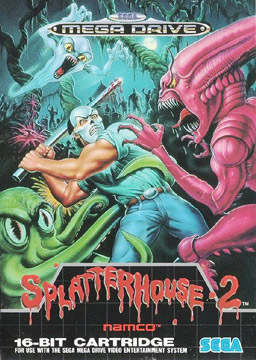 Console: Sega Genesis (Mega Drive in Europe/Japan)
Released: 1992
Developer: Now Production
Publisher: Namco
Digital Release? Yes – Wii Virtual Console (US/Japan only), also as an unlockable on the 2010 Splatterhouse on 360/PS3
Price: $35 (used, cart only), $87-$105 (used, complete), No known New pricing (all prices according to PriceCharting.com), $8 (VC), $4-10 (used 360/PS3 copies of 2010’s Splatterhouse)
Now I remember very fondly getting this game with my brothers when we were younger. My dad deliberately chose it for us because of the title since he was a fan of horror and gore. A game, whether brand new or pre-owned, in our household was rarer than a UFO sighting when we were younger so we relished in any game thrown at us. Splatterhouse 2 shared a special place in our little hearts.
 The story of Splatterhouse 2 will depend on your familiarity with the first game released in arcades and the TurboGrafx-16. The basic plot is you are Rick and you have a mask which looks a lot like the Jason Voorhees hockey mask (he was the killer in the Friday the 13th series) and your job is to rescue your girlfriend, Jennifer. The mask is known as the “terror mask” or “hell mask” depending which version of the game you own. The mask gives you super powers and also sort of possess you as it talks to you during small cutscenes between levels.
How Product Design has Transformed the Amusement Industry

The term “arcade game” these days conjures up images of cutting-edge graphics and sound, combined with innovative and interactive technology that can bring any concept to life. However, good graphics and interactivity have not always been a necessity for a game that is both enjoyable and addictive. I dread to mention the recent phenomenon of the Flappy Bird app but it is an example of an outrageously faulty and basic game becoming extremely popular. This has been seen in the past with games like Space Invaders, Pac Man, Tetris and Asteroids following very basic concepts and graphics, but still being addictive and rewarding when completed.
The Really Early Days
The first arcade games kicked off at amusement parks and are still present at fairs and theme parks, but there’s nothing particularly sophisticated about them. Ring toss, throwing balls at stacked cans, shooting targets, and other simple challenges have been doing the rounds for hundreds of years and can still draw in the punters to this day. Just don’t go expecting an easy win. Perhaps this is what is indicative of a good game – making it appear simple whilst making it actually fiendishly difficult to win. Make it too hard, however ,and you are left with Zelda II.
Strider Retrospective

Starting today the reboot of Strider hits home consoles and PCs as developer Double Helix attempts to capture the charm that came with the original’s dedicated cult following. When I try to look back at Strider – and yes I grew up playing every version from the arcade at my local bowling alley that was ported to the Genesis along with the completely different NES version – it’s hard to see what exactly needs to be in the new game. Still, there’s no denying the hardcore appeal of this unique and odd addition to classic gaming that justifies looking back for those that didn’t grow up with it.
 If you haven’t played it, the original arcade version of Strider is all over the place. There are multiple languages, settings across the globe, massive mechanical ape bosses, and even lead protagonist Hiryu riding on a whale at the end. As one of the pioneer titles of Capcom’s new CP arcade platform – think of it as a cartridge-based cabinet that allowed quick swapping of games with only a few ROM changes – the graphics are indicative of the cartoon style all CP titles shared (ie: Ghouls’n Ghosts, Willow, and of course Final Fight). Graphics aside, the game is also noted for its crazy gameplay that features hanging from walls and ceilings, fighting massive enemies, and reversed gravity. To accompany this eclectic melting pot was an equally frantic soundtrack that covered all the bases from electronic progressive music to ambient classical style. While the soundtrack is uncredited to original composer Junko Tamiya (she also did the solid NES version of Bionic Commando as well as my personal favorite Sweet Home), the original versions of the arcade game didn’t feature the Aerial Battleship or Third Moon stages (replaced instead by the first stage music on a loop) so it can be deduced that someone went back and composed those additional tunes. While the game itself covers a scant five stages that will take the average person probably 60-90 minutes in total (pros can do it in half that time) the high difficulty and game design that was more indicative of home consoles was fresh. Instead of trying to rack up a high score or conquer a single mechanic over and over you were progressing through brutally difficult levels with the carrot on the stick being that provided you could afford to continue as many times as it took, you could see the ending. This is why most people who play it today will either set it to free play on the cabinet or emulator and also explains why the PS1 port flat-out gave you unlimited continues.
 Gaming History 101