Archive for the ‘PC/Mac’ Category
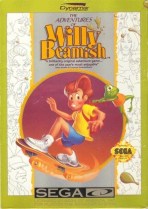
Review: The Adventures of Willy Beamish (Sega CD)
 Console: Sega-CD/Mega-CD
Released: 1993
Developer: Dynamix
Publisher: Sierra
Instruction Manual: Not necessary
Difficulty: Moderate
Played it as a child? Yes
Value: $8.99 (used) $15.01 (new) (pricecharting.com) – Price for Sega CD version only
Price: $6.00-$10.00 (used) $88.00 (new) on eBay
Other Releases: Amiga, PC, Mac
Digital Release? No
Another early Sega CD release, while most of the games that came out near launch were cool new CD-ROM interactions and FMV games, The Adventures of Willy Beamish was a port of an Amiga point-and-click adventure title that received several enhancements on Sega’s system. Published by Sierra, one of the two major producers of the adventure genre at the time, Willy Beamish totes you along on an adventure of a nine-year-old boy and the several decisions and influences you will deal with. Beamish is somewhat of a troublemaker as established by the opening scene in detention on the final day of school before summer break, which begins your adventure by sneaking past your ancient teacher and getting home. In typical Bart Simpson emulation for the time, Willy rides a skateboard, has a pet frog, and is prone to causing problems for any adults in his wake. From then on an amusing tale of a young boy saving his town unfolds that has you doing everything from the mundane – playing with your younger sister on the swingset – to the completely crazy – combat with a vampiric babysitter. As much as many critics have compared this game to a storybook come to life, little touches like a playable video game console in your bedroom and somewhat brancing plot paths show impressive game design for the time.

Review: Sherlock Homes Consulting Detective (Sega CD)
 Console: Sega-CD/Mega-CD
Released: 1992
Developer: ICOM Simulations
Publisher: Sega (Sega/Mega-CD)
Instruction Manual: Not necessary
Difficulty: Moderate
Played it as a child? Yes
Value: $5.99 (used) $11.99 (new) (pricecharting.com) – Price for Sega CD version only
Price: $5.00-$10.00 (used) N/A on US Version (new) on eBay
Other Releases: FM Towns (original release, Japan only), DOS/MAC, Commodore CDTV, Turbografx-16 CD
Digital Release? Yes – an updated version with better video quality released on PC, Mac OS X, and iPad in late Sept. 2012
Sherlock Holmes Consulting Detective is a bit of an anomaly in the realm of video games. Much like Myst, the game premiered on CD-based consoles and computers to show off the benefits of the new technology, but was much less of a game than it was an interactive form of media. A basic interface allowed the player to navigate various options and view content (mostly video) in order to solve one of the popular cases that originally appeared in the novel by the same name. To show off all of the fancy marvels of a multimedia CD-ROM title there was complete focus on showing off content rather than optimizing any aspect of the game for quick playing, resulting in a few simple actions taking ridiculous amounts of time to accomplish. I was recording gameplay videos for this article last night and it took more than 30 mins just to capture the “tutorial” that includes many icons, each with its own slow loading audio (no subtitles) background, and a video from Sherlock Holmes himself. It was so slow-paced and boring to capture, I made the executive decision that it would be even more boring to watch and scrapped the video. Don’t let this discourage you, especially with the re-releases likely having no load times, Sherlock Holmes Consulting Detective is a thought-provoking hybrid between the adventure genre and the full motion video (FMV) game.
Grand Theft Auto Vice City Turns 10 (PS2/Xbox/PC)
 Console: Playstation 2, Xbox, PC
Released: 10/29/2002 (US, PS2)
Developer: Rockstar North
Publisher: Rockstar
Difficulty: Moderate
Value: $0.88 (used) $8.25 (new) (pricecharting.com) – Prices for PS2 Version
Price: $5.00-$10.00 (used) $10-$20 (new) on eBay
Digital Release? Not Yet – ESRB suggests a PS3 and possibly Xbox 360 release and iOS/Android app should be out any day
When Grand Theft Auto III hit the Playstation 2, Rockstar North single-handedly proved that it could make a clearly defined, open world that players could explore in a fully rendered 3D city. It wasn’t until the follow-up, Grand Theft Auto Vice City, that the studio gave this concept personality. Some think of it as a sequel, but in retrospect Vice City was merely an update to the engine that allowed to tell a side tale, which would be made available nowadays as a large DLC add-on. It basically retells the story of Scarface within the GTA III engine, but adds enough detail and flair to the mix to place it among one of the top rated games of last generation – and even garnered it a sequel that started life on PSP and moved to the more prevalent PS2. Personally, this is my favorite game in the series because it’s clever storytelling promotes completion of the campaign while the familiar 80s soundtrack brings me back to the early days of my youth.
Podcast: (Re)Visiting Silent Hill 2
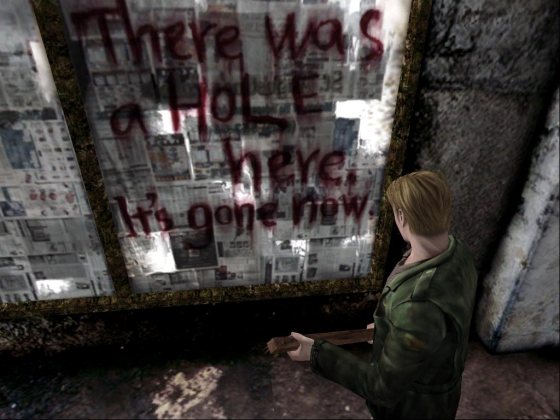
This week Fred reflects back on survival horror favorite Silent Hill 2. This is his first time playing the game and he discusses the atmosphere, gameplay, and plot of Konami’s unnerving title.
Review: Retro City Rampage
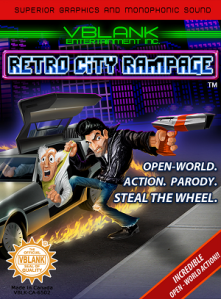 Every now and again a video game comes out that completely embraces the culture of growing up with gaming, most of these developers being in their 30s and were kids in the 80s during the so-called “Nintendo Generation”. These games borrow commonalities with their aged ancestors, but refine the years of innovation and can generate an even better title than was possible back then. Retro City Rampage (RCR) doesn’t really do that. Instead, this game packs itself to the brim with 80s pop culture references while walking, talking, and acting just like a classic 8-bit Nintendo game. While the nostalgia factor, especially for a gamer like me and readers like you, is always a welcome addition, it does cloud the focus of the developers to the point that the gameplay is a jack of all trades and expert of none.
Retro City Rampage actually started life back on the original NES as a homebrew project. Designer Brian Provinciano began the project in 2002, building his own NES dev kit and trying to “demake” – a term used for modern games remade on classic consoles – his favorite titles, one of which was Grand Theft Auto III. For years he was creating technical breakthroughs on Nintendo’s old gray box and possibly pulled off a faithful demake entitled Grand Theftendo before deciding to scrap the NES limitations and continue in PC development. By 2007 he decided to integrate some classic game references (leading to pop culture references as well) and eventually creating the original title Retro City Rampage. If this hasn’t already become abundantly clear, those that didn’t grow up playing Nintendo games will likely be lost on the (sometimes obscure) references. That doesn’t stop this GTA clone from still being an amusing romp and shouldn’t discourage anyone who would like to check out what is ultimately a decent-sized game that doesn’t lose pace, even at the end.
Guilty Pleasure: Night Trap (Sega CD/32X CD/3DO/PC)
 Console: Sega-CD/Mega-CD, 32X CD, 3DO, PC
Released: 1992
Developer: Digital Pictures
Publisher: Sega (Sega/Mega-CD, 32X CD), Virgin (3DO), Digital Pictures (PC)
Instruction Manual: Not necessary – Link
Difficulty: Easy
Played it as a child? Yes
Value: $25.00-$50.00 (used) $50.00 (new) (pricecharting.com) – Prices for various platforms
Price: $25-$50 (used) N/A (new) on eBay
Digital Release? No

Oh Night Trap, your reputation precedes you. In actuality this game has received far too much press than it’s probably worth and constitutes an odd sense of rarity about the title. It’s too bad because had this title fallen into the $5-$10 category that its brethren Sewer Shark, Corpse Killer, and Double Switch dwell, more people would probably appreciate the title. Unfortunately due to some senate hearings and the fact that this game was alongside Mortal Kombat and Lethal Enforcers for why the ESRB ratings needed to exist in the first place, people think they are going to see some explicit content. That, friends, is simply not true. Putting all that publicity aside, there is a meaty cult-style game here that perhaps suffers less than other full motion video (FMV) games. It’s not great, but it sure is fun to watch at least once.
Now & Then: American McGee’s Alice
Now & Then is a series where we dissect the culture of a specific series or genre or compare an influential game from the past and how it holds up today.
Then
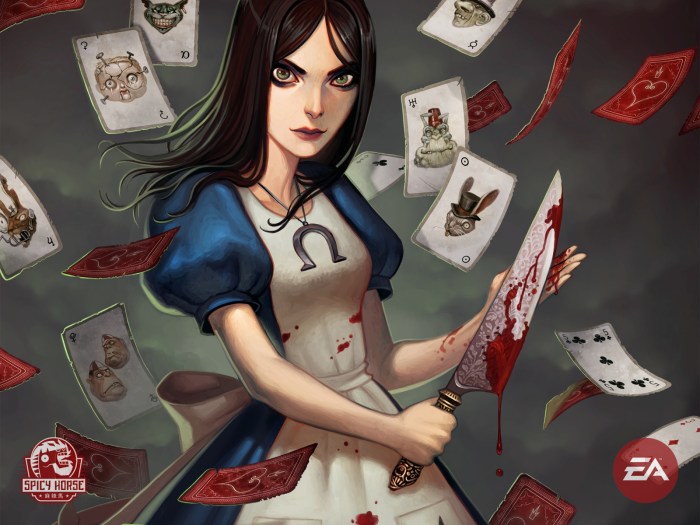
It’s a bit wierd that American McGee (yes, that’s his real name as far as I know) was given an opportunity to be a Creative Director on this ambitious project, even moreso as an early project with EA. He began his career at idworking mostly in level design for many of the first person shooter series that I grew up playing: Wolfenstein 3D, Doom, and Quake. He was fired from id for reasons not known and eventually ended up at Electronic Arts, where after a few sound design and writing projects he was given a large budget and the role of Creative Director for Alice. Why EA back then agreed to put his name as part of the title or allowed him to create such a vivid project (in the Quake III engine, for irony’s sake) is beyond me, but it was a solid and pivotal decision. American McGee’s Alice is one of the darkest, most twisted games I’ve ever played and takes the story begun by Lewis Carroll more than a century prior and turns it on its head. To be fair, Wonderland has never been a “normal” place, begot mostly of fantasy concepts and mind-altered states, but I never felt that violence, murder, and insanity were heavy themes. While the gameplay wasn’t spectacular even at the time, the imagery and graphics impressed gamers enough to sell more than 1.5 million copies.
Now & Then: Mortal Kombat II (Midway)

Midway must have known it had a hit on its hands with the original Mortal Kombat because no time was wasted creating the sequel. While most of us anticipated the home release of the first title, Mortal Kombat II (MKII) snuck into arcades and blew our minds. This game literally had it all – more characters, more fatalities/finishing moves, and more violence. For most MK series fans, myself included, this is considered to be the best and it’s one of the highest grossing video games of all time.
MK Meets its Match
The original Mortal Kombat was an impressive fighter, especially for one that was developed with digitized actors in only 10 months, but creator Ed Boon wanted to do more. “[MKII] had everything we wanted to put in the original MK but didn’t have time for,” he said in an interview with EGM2 (issue 5, Nov. 1994). It does seem like there’s some truth to his claim, especially with the introduction of more stage fatalities, a second fatality for each character, and even joke finishers “friendships” and “babalities”. I’m not so sure the roster was an initial idea, nor was the background concepts of Outworld, but I can definitely see the Midway team wanting to break away from the perceived reality of the original. Not only was MKII the definitive version of the original concept, but it continues to be the template for which all other titles in the series are based on.
Rayman 2: The Great Escape (Ubisoft)
Four years after the release of the original Rayman and plenty of celebrated success, Ubisoft released a sequel that changed the concept of the series entirely. Unlike the original cartoon-like platformer that was tough as nails, we were greeted with a dark, 3D rendered platformer. While the jump to 3D was hit or miss for various gaming staples, Rayman found a welcome home with Rayman 2: Great Escape, touted by many (myself included) as one of the best 3D platformers ever developed.
If I mention a cutesy 3D platformer that stars evil robots and pirates it would be hard to tell if I was talking about a Ratchet & Clank, Rayman, or even Conker because the idea is so recycled. While the plot may remain the same, that’s where the comparisons end. Instead of the aggressive worlds that had one goal – to kill you – of the original, we are now given fully rendered open environments that crave exploration. For the most part you are tasked with going from the beginning of any level to the end, but along the way you also collect the glowing lums from the original. For the lums that are on your path and along the way this is no big deal and it will surely get you to end of the game, but if you want to unlock everything you will have to find all 1,000 lums. That is where the game goes from a simple level-to-level game and becomes a test of platforming abilities and risky gameplay. It felt a lot like the convention we saw in Super Mario Galaxy, where the game can literally be as hard or as easy as you like, but back in 1999 this was a new concept. Rayman 2 is also much easier as a whole, which allows you to appreciate the game and environment instead of threatening to destroy your controller with every new turn. It’s just a fun ride with enough levels to secure a 6-10 hour campaign.

Rayman (Ubisoft)
Rayman wants to be a strong classic platformer, and it’s really a shame that the steep difficulty curve will turn off even the most determined of contemporary gamers, because from an aesthetic and game design perspective this game should be appreciated. Alas Rayman has been ported to console after console and seen commercial success, but I wonder how many people have actually experienced most of what this title has to offer.
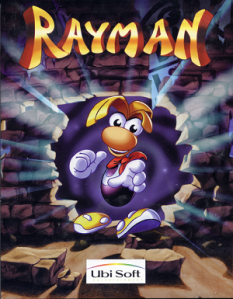
During the mid 90s there was no shortage of consoles – both the 16-bit generation and 32-bit generation were coming to be, not to mention CD consoles – and Rayman was caught right in the thick of it. Not only that, but thanks to Mario and Sonic, platformers were among the highest in popularity behind fighting games. The title began life as a brainchild of Ubisoft creative director Michel Ancel (who is also responsible for cult favorite Beyond Good & Evil) and the then struggling developer/publisher bet the house on his creation and won. Rayman started life on the Super NES as a two-player title based on various cultural fairy tales and eventually it was decided that the game would receive a cartoon makeover with better animation and subsequent move to the Playstation CD add-on for the SNES (read that story here). When Nintendo announced the cancellation of both the Playstation and Phillips CD projects Ubisoft wanted to move to the Jaguar thanks to its specs and eventually chose the Sony Playstation as the lead console. As you can see, the game was already bouncing from console to console.
 Gaming History 101