Archive for the ‘NES’ Category
Podcast: Adventures of Link
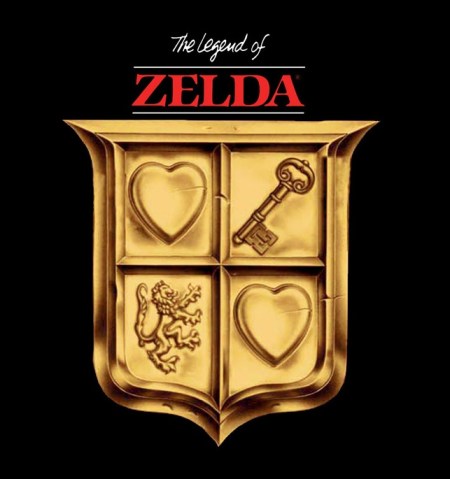
This week Fred is joined by Eli (@sodoom) and we are talking about the Legend of Zelda series. We delve into all of Link’s adventures across various platforms and the gaming significance of each.
Opening Song – Legend of Zelda Theme (NES)
Closing Song – Ocarina of Time Theme (N64)
Podcast: DC Bullet

This week Fred and Trees celebrate the release of Injustice: Gods Among Us by discussing old games based on DC comics (which pretty much means Batman and Superman titles). Also remember next week is our game club with Guardian Heroes (Saturn/XBLA).
Title reference: “DC Bullet” is the official logo used by the company from the 80s until recently.
Opening Song: “Superman Theme” from the Famicom title of the same name.
Closing Song: “Boss Theme” from Batman: Return of the Joker on the NES.
Cover Art: “Killing Joke”
Review: The Punisher (NES)
 Console: NES
Released: 1990
Developer: Beam Software
Publisher: LJN
Difficulty: Moderate
Instruction Manual: Not Necessary – Link
Played as a child? Yes
Price: $5.88 (used) $27.47 (complete) $130.00 (new) pricecharting.com
Famicom Version? No, this was Nintendo only
Ports: Gameboy (differences, see below)
Digital Release? No
In probably one of the most doomed to fail ideas, I have to admit that in my childhood The Punisher was my first taste of what would later establish a love for light gun and first-person shooters alike. Ironically, this title is neither. It takes the crosshair light gun motif we first saw in Operation Wolf and adapts it into a third-person shooter (without light gun) that integrated upgrades and even brawler elements to an otherwise rote shooter title. Released in 1990, and despite the common license and title that holds no similarity to other games, The Punisher was a licensed LJN game that proved you shouldn’t judge a book by its cover. In short, I loved this flawed, aggressive shooter.
 Your task is to take down some of the biggest criminals the city has to offer, including longtime Punisher nemesis Jigsaw, in a series of levels. Interestingly enough, you aren’t forced into linear progression; the game allows you to choose any of the three initial targets to go after. As you take out each one, the remaining two targets become available levels until your final option, Kingpin, becomes the only level and boss. With each target you are given two levels to conquer, each containing power-ups, ammo, and grenades to help build up your arsenal, and a final encounter with the target themself. Unfortunately the power of choice, at least for me, is tarnished by the fact that doing the levels in their obvious order (from left to right) seems to be the only viable way to complete the game. Along the way you will take out a massive army of the game’s three or four enemy types and eventually make your way to a boss. The biggest hurdle is that if you run out of lives, it’s game over. No continues, no second chances. This isn’t really a deal breaker, it just establishes long bouts between attempts to finish the game.
Operation Wolf (Arcade)
 Console: Arcade
Released: 1987
Developer: Taito
Publisher: Taito
Ports: NES (1989), Sega Master System (1990), DOS (1991), PC-Engine (Japan Only, 1992), Microcomputers (varies), PS2 (in Taito Legends, arcade version), Xbox (in Taito Legends, arcade version)
Digital Release? Yes – NES Version on Virtual Console (no light gun support, see below)
Operation Wolf is a game I can’t help but associate with Pizza Hut. Taito’s introduction and unique take on the light gun shooter flooded the American franchise so much in the late 80s that I can think of no other place I’ve actually played the game. Of course being a pizza franchise and not an arcade the difficulty was always cranked to the highest and I swear they timed the machine to play approximately half the time it took to cook a pizza so that families with two kids would each play one credit before the food was ready. This title brought more realism to the light gun shooter as you play a member of special forces diving behind enemy lines in Cuba to extract five hostages. Aside from the realistic violence of invading and destroying enemy encampments, this was the first light gun shooter to feature a plot and natural progression as well as a moving, scrolling stage instead of a fixed location. Did I mention it was addicting too?
 Mind you, we are still back in 1987, where arcade games were more about providing a specialized challenge with amazing graphics instead of explicitly drinking as many quarters as you’ll offer. The cabinet had a large mounted Uzi machine gun that could only swivel slightly with forced feedback to emulate gunfire kickback, pretty nifty for games of that time. At first glance it seems like a spray & pray title, but as you run out of ammo, die, and get captured you begin to realize you might need a slight bit of strategy. If you die, even if you have another quarter in the machine, you will still need to complete the current level from scratch (although you will now have full ammo and life). Innocent people are thrown into the mix, which you should not shoot, and animals, which you should shoot, for bonus items. Early on there’s not much penalty (as I prove in the video below) for blasting civilians or missing a vulture flying overhead, but by the final levels your screen will have a literal 50/50 spread of civilians and enemies with these animals being mostly your only source of ammo and power. I only do one playthrough in the video, but in truth I replayed this game for a couple of hours of fun. Unlike other light gun shooters before it, this game was less about accuracy and more used the gun as a placeholder for an invisible reticule. This is why most home ports and conversions don’t suffer from controller porting and in truth this type of game has proven to be just as effective, if not more so, with a reticule and controller as opposed to a light gun (which I cover in the home ports below).
Hogan’s Alley (NES)
 Console: NES
Released: 1985
Developer: Nintendo R&D 1
Publisher: Nintendo
Difficulty: Easy
Instruction Manual: Not Necessary – Link
Played as a child? Yes
Price: $2.00 (used) $500.00 (new)
Famicom Version? Yes, as Hōganzu Arei
Digital Release? No
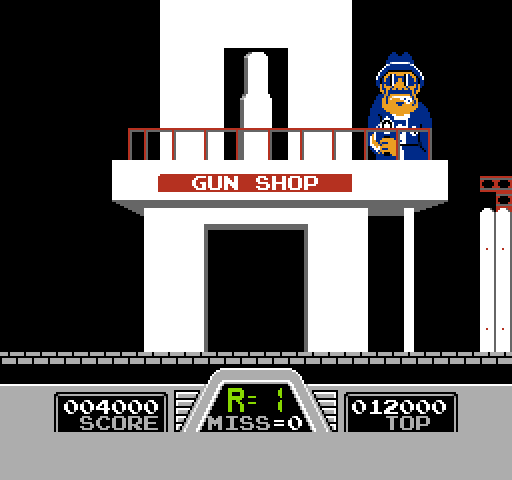 There’s more to Hogan’s Alley than it originally seems. If you’re doing a double-take and noticing considerable similarities (especially on the main screen) to Duck Hunt, that’s not a mistake. Considering it was developed by the same studio, in the same year, and a launch title for the initial NES, this was the next logical step for a light gun shooter. I was probably one of the few that picked this title up at its initial release but it impressed the hell out of me. It was a surprising simulation of the FBI training program with cardboard cutouts for new recruits. Basically, if you’ve ever seen a shooting range in a movie, this is the basic design for the program. When Duck Hunt and Wild Gunman were the only competition, Hogan’s Alley (especially in the cityscape “Game B”) was a breath of fresh air and gave way to the more popular Lethal Enforcers and Crime Patrol series.
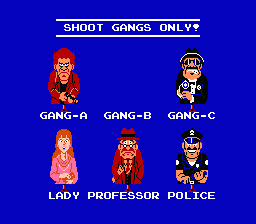 You have 3 games to choose from: one is a cardboard shooting range, one is a simulated town (complete with amazing music) where you take out the bad guys and spare the innocent, and finally a can shooting game that provides the most compelling gameplay of the mix. The game was apparently named for the FBI training program, which I was unable to validate, but I can confirm it was part of a Special Police training school at Camp Perry pre-World War II and an actual training camp name at the Quantico FBI training camp. While there’s not much else to say about the title, it’s just a fun time that demonstrates what we all love about light gun shooters.
Podcast: Game Club – Salamander/Life Force

This week Fred flies solo to discuss the shoot-em-up (shmup) series Salamander, better known as Life Force in the United States. He discusses the various games from the arcade titles to the NES/Famicom port, to even the MSX and PC-Engine (Turbografx-16) ports. Additionally the connections to series Gradius are discussed and the various ways to play the games today. He also announces April’s game club title.
Download this episode (right click and save)
Subscribe: RSS iTunes Google Podbean
Supplemental Videos:
Duck Hunt (NES)
 Console: NES
Released: 1985
Developer: Nintendo R&D 1
Publisher: Nintendo
Difficulty: Easy
Instruction Manual: Not Necessary – Link
Played as a child? Yes
Price: $1.74 (used)
Famicom Version? Yes, as Dakku Hanto
Digital Release? No
 Duck Hunt is one of those games that should need no introduction. On the other hand I speak with eager retro gamers every day that didn’t get started until the Playstation or N64 era and especially with modern HDTVs being incompatible with light guns, Duck Hunt is yet again just another classic title lost in the shuffle. Back when the NES released there wasn’t a console out that didn’t have a copy of Duck Hunt, usually in a hybrid cart with Super Mario Bros. This game is a light gun shooter that has you hunting for ducks, just as the name suggests. Additionally there was a skeet shooting alternative to blasting live ducks, which had increased difficulty and was PETA approved. Unfortunately there’s no getting around the fact that this title gets repetitive, and boring, fast.
Duck Hunt was designed as a launch title for the NES that would release concurrently with a light gun peripheral, the Zapper. While it had different goals and release schedules in Japan, making a light gun peripheral and game for the NES was crucial along with R.O.B. the Robot in convincing the United States that the NES was not a video game, but a toy. This is why Duck Hunt isn’t all that fun, nor is it all that complex, because everyone had it as a pack-in to convince Americans the NES wasn’t a video game. Duck Hunt was developed by Nintendo Research and Development (R&D) 1, a mostly hardware based department responsible for the Zapper as well. The producer on the project was Gunpei Yokoi, notable as the creator of the Game & Watch series and later the Gameboy, which helps to explain Duck Hunt‘s simple but addictive design. Duck Hunt released in 1985 but by 1986 it was packaged with Super Mario Bros. and offered in the holiday release “Action Set” as a staple for almost all NES console sales. It would later be included on the triple game cart Super Mario Bros./Duck Hunt/World Class Track Meet when both the Zapper and Power Pad became standard pack-ins for the NES.
For the Love of the Light Gun
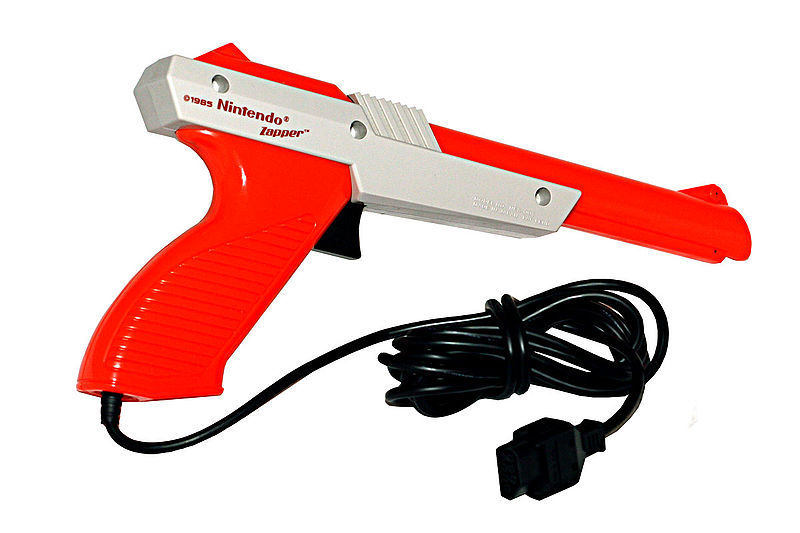 I can’t explain my love for the light gun. It’s one of the oldest forms of interactive entertainment, dating back to the carnival days where you would fire air rifles at a metal bullseye to make an old man’s hat pop up or a dog bark. Once the gun made the transition to video games it honestly became one of the most lifelike and violent gaming tropes throughout history. Not to get deep with it, but you are pointing a gun at a target, usually alive, and shooting it. There is not other gesture like it, you are shooting a modern device to kill something, virtual or not. At the same time it also doubles as the most simple form of proficiency. I don’t think anyone will claim that being good at Duck Hunt or Lethal Enforcers relates to being a good shot in a shooting range, but it’s got a much higher chance of significance than being able to get a headshot in Call of Duty. Whereas the FPS emulates the concept of aiming and firing a gun with 1:1 responses from a controller, a light gun truly simulates the experience.
 Light gun games have been a niche genre, but that doesn’t prevent them from withstanding the test of time and being available on most home consoles and one of the most popular games, even today, in arcades. I guess it’s because despite the maturity implied behind firing a gun, it’s one of the easiest concepts for us to pick up. I’ve been on many adventures thanks to light gun games – whether it’s cleaning up the future in T2: The Arcade Game, battling zombies in a haunted house through House of the Dead, or enjoying some of the worst acting of all time in Mad Dog McCree.
It’s also significant because the light gun is a genre nearly impossible to emulate and doesn’t translate well in today’s technology. While there are exceptions, you will have a hard time playing Crypt Killer properly on a PC running MAME and most HDTV technologies don’t support light guns from the past. Authenticity is as important as the genre itself. This month I’ve decided to dedicate to a timeless style of video game that I always make first priority when buying a new (or old) system: the light gun shooter. Come join me to learn about some of the best, worst, funniest, and definitely weirdest titles to ever grace the hobby of video games. Thanks to my huge CRT television and original hardware, I can even show you videos.
Retro Game Challenge: Stinger (NES)
 Console: NES
Released: 1987
Developer: Konami
Publisher: Konami
Instruction Manual: Not necessary – Link
Difficulty: Moderate
Played it as a child? No
Value: $3.65 (used), ???? (new) (pricecharting.com)
Other Releases: Yes – as Muero! TwinBee in Japan on the Famicom Disc System and Famicom (cart version)
Digital Release? Yes – Virtual Console for Wii (Japan only)
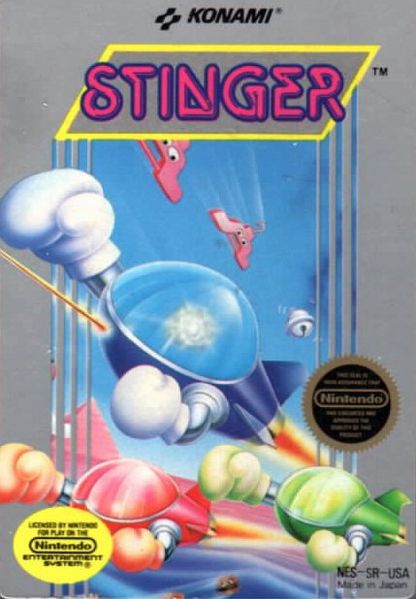
Below is the completion of the hybrid horizontal/vertical shmup Stinger, better known in Japan as Muero! TwinBee due to the fact that it is a sequel to the original TwinBee set 100 years after the events of the original. Since we did not get TwinBee in this country, the title was changed to Stinger and a different back story was given, the title belonging to the given name of the ship you pilot. It’s clearly a TwinBee title, though, with the distinctive bells that you juggle to gather power-ups and point bonuses. Other interesting differences between the American and Japanese version were multiple difficulty settings, selectable as medium or hard in Japan and eventually an easy option was added for the Famicom cart release. In America we only received one default difficulty (medium) but the game immediately starts over upon completion on the hard difficulty, easy does not exist in the US version. This title was intended to support up to three players and in Japan the cartridge had an extra controller port for the third player. Since carts loaded out of the top on the Famicom this was possible, however at this point there was only a side load for NES carts and thus the game was forced into a two player only mode. If you had the optional accessory, the four score, which added four more port to the console, Stinger would still only support two players. In the video below I complete the entire game although I do not replay the harder difficulty as it does not give more content or a different ending.
Retro Game Challenge: Super C (NES)
 Console: NES
Released: April 1990
Developer: Konami
Publisher: Konami
Instruction Manual: Not necessary – Link
Difficulty: Moderate
Played it as a child? Yes
Value: $9.03 (used), $179.95 (new) (pricecharting.com)
Other Releases: Yes – as Super Contra on arcade, PCs (microcomputer and IBM compatibles)
Digital Release? Yes – Virtual Console for Wii (NES version) and XBLA (arcade version)
Per a request from reader Quark, our follow up from the Contra retro review. Now we complete the sequel.
 Gaming History 101