Archive for the ‘Reviews’ Category
Review: Make My Own Music Video (Sega CD)
 Console: Sega-CD/Mega-CD
Released: 1992
Developer: Digital Pictures
Publisher: Sony Imagesoft
Instruction Manual: Not necessary
Difficulty: Non-existent
Played it as a child? Yes
Value: pricecharting.com has hilarously not even covered these games
Price: Don’t even bother
Other Releases: Absolutely Not
Digital Release? No, aside from how horrible they are, the music is timely
 There is just no getting around this, these are terrible video games. Not only are they pop groups that only existed in the early part of the 1990s, but they aren’t games at all. You goal is just as it sounds: make a music video. It’s a crash course in linear digital editing where three streams of video appear on the screen at once and you use the A, B, and C button to select the “active” feed that will become your master video. Unfortunately the three feeds are made up of a random lot of public domain videos from the first half of the century, sometimes altered slightly for the beat, and the original music video for the game. I’m not saying that these videos are directorial masterpieces, but when combined with the patethic hodgepodge of public domain video, they’re the next Star Wars, I have never once wanted to leave the feed of the main video. Having said that, they are amazing fun at a party when you want to laugh your head off at how pathetically cheesy this generation of pop music was.
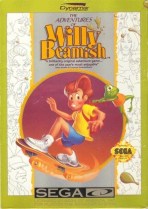
Review: The Adventures of Willy Beamish (Sega CD)
 Console: Sega-CD/Mega-CD
Released: 1993
Developer: Dynamix
Publisher: Sierra
Instruction Manual: Not necessary
Difficulty: Moderate
Played it as a child? Yes
Value: $8.99 (used) $15.01 (new) (pricecharting.com) – Price for Sega CD version only
Price: $6.00-$10.00 (used) $88.00 (new) on eBay
Other Releases: Amiga, PC, Mac
Digital Release? No
Another early Sega CD release, while most of the games that came out near launch were cool new CD-ROM interactions and FMV games, The Adventures of Willy Beamish was a port of an Amiga point-and-click adventure title that received several enhancements on Sega’s system. Published by Sierra, one of the two major producers of the adventure genre at the time, Willy Beamish totes you along on an adventure of a nine-year-old boy and the several decisions and influences you will deal with. Beamish is somewhat of a troublemaker as established by the opening scene in detention on the final day of school before summer break, which begins your adventure by sneaking past your ancient teacher and getting home. In typical Bart Simpson emulation for the time, Willy rides a skateboard, has a pet frog, and is prone to causing problems for any adults in his wake. From then on an amusing tale of a young boy saving his town unfolds that has you doing everything from the mundane – playing with your younger sister on the swingset – to the completely crazy – combat with a vampiric babysitter. As much as many critics have compared this game to a storybook come to life, little touches like a playable video game console in your bedroom and somewhat brancing plot paths show impressive game design for the time.

Review: Sherlock Homes Consulting Detective (Sega CD)
 Console: Sega-CD/Mega-CD
Released: 1992
Developer: ICOM Simulations
Publisher: Sega (Sega/Mega-CD)
Instruction Manual: Not necessary
Difficulty: Moderate
Played it as a child? Yes
Value: $5.99 (used) $11.99 (new) (pricecharting.com) – Price for Sega CD version only
Price: $5.00-$10.00 (used) N/A on US Version (new) on eBay
Other Releases: FM Towns (original release, Japan only), DOS/MAC, Commodore CDTV, Turbografx-16 CD
Digital Release? Yes – an updated version with better video quality released on PC, Mac OS X, and iPad in late Sept. 2012
Sherlock Holmes Consulting Detective is a bit of an anomaly in the realm of video games. Much like Myst, the game premiered on CD-based consoles and computers to show off the benefits of the new technology, but was much less of a game than it was an interactive form of media. A basic interface allowed the player to navigate various options and view content (mostly video) in order to solve one of the popular cases that originally appeared in the novel by the same name. To show off all of the fancy marvels of a multimedia CD-ROM title there was complete focus on showing off content rather than optimizing any aspect of the game for quick playing, resulting in a few simple actions taking ridiculous amounts of time to accomplish. I was recording gameplay videos for this article last night and it took more than 30 mins just to capture the “tutorial” that includes many icons, each with its own slow loading audio (no subtitles) background, and a video from Sherlock Holmes himself. It was so slow-paced and boring to capture, I made the executive decision that it would be even more boring to watch and scrapped the video. Don’t let this discourage you, especially with the re-releases likely having no load times, Sherlock Holmes Consulting Detective is a thought-provoking hybrid between the adventure genre and the full motion video (FMV) game.
Review: Final Fight CD (Sega CD)
 Console: Sega-CD/Mega-CD
Released: 1993
Developer: Capcom
Publisher: Sega (Sega/Mega-CD, 32X CD)
Instruction Manual: Not necessary
Difficulty: Hard
Played it as a child? Yes
Value: $21.50 (used) $76.00 (new) (pricecharting.com) – Price for Sega CD version only
Price: $23-$60 (used) N/A on US Version (new) on eBay
Other Releases: Arcade, SNES, Gameboy Advance
Digital Release? Yes – SNES version on Virtual Console ($8), Arcade version on XBLA/PSN as Double Impact ($10)
Final Fight is a pivotal late 80s arcade release for Capcom for two reasons: it established the norms that would make up the concept of the “beat-em-up” genre for its short-lived life (although it oddly enough didn’t introduce any of them) and it created the aesthetic and building blocks of Street Fighter II. Anyone who has played this game or SFII will immediately be familiar with that semi-realistic semi-animated graphical style of Final Fight that remained exclusive to these two titles moving forward for a few sequels (I’m considering the numerous re-hashes of SFII to be sequels). In full disclosure this is my favorite brawler of all time and definitely ranks highly in my overall top games I’ve ever played despite the fact that Final Fight doesn’t translate well to home consoles because it’s intended to take your money and prompt more quarters rather than be completed in a finite number of lives/credits. In order to complete the game in the allotted five credits requires you to memorize the cheaper boss battles and exploit the collision detection. For me it was just repetitive stupid fun.
Grand Theft Auto Vice City Turns 10 (PS2/Xbox/PC)
 Console: Playstation 2, Xbox, PC
Released: 10/29/2002 (US, PS2)
Developer: Rockstar North
Publisher: Rockstar
Difficulty: Moderate
Value: $0.88 (used) $8.25 (new) (pricecharting.com) – Prices for PS2 Version
Price: $5.00-$10.00 (used) $10-$20 (new) on eBay
Digital Release? Not Yet – ESRB suggests a PS3 and possibly Xbox 360 release and iOS/Android app should be out any day
When Grand Theft Auto III hit the Playstation 2, Rockstar North single-handedly proved that it could make a clearly defined, open world that players could explore in a fully rendered 3D city. It wasn’t until the follow-up, Grand Theft Auto Vice City, that the studio gave this concept personality. Some think of it as a sequel, but in retrospect Vice City was merely an update to the engine that allowed to tell a side tale, which would be made available nowadays as a large DLC add-on. It basically retells the story of Scarface within the GTA III engine, but adds enough detail and flair to the mix to place it among one of the top rated games of last generation – and even garnered it a sequel that started life on PSP and moved to the more prevalent PS2. Personally, this is my favorite game in the series because it’s clever storytelling promotes completion of the campaign while the familiar 80s soundtrack brings me back to the early days of my youth.
Podcast: (Re)Visiting Silent Hill 2
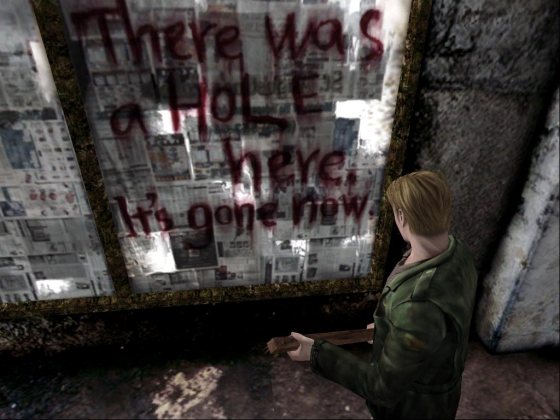
This week Fred reflects back on survival horror favorite Silent Hill 2. This is his first time playing the game and he discusses the atmosphere, gameplay, and plot of Konami’s unnerving title.
Happy 20th to the Sega CD

Sega CD Model 2 with Genesis Model 2, the most common setup
Okay, I know the Sega CD actually turned 20 exactly one week ago on October 15, but we’ve been very busy over here so we regretfully missed the window. Fortunately we are making up for that with tons of Sega CD coverage for the month of November, check in to see write-ups and gameplay on many of the titles that made Sega’s overpriced add-on a temptation in 1993. Now I know it is popular opinion to crap all over the Sega CD and in full disclosure I’m an avid fanboy of this specific system, but somewhere in between lies its true value. Someone once told me that any console with at least three good games is worth being in existence and under that theory the Sega CD justifies itself at least three times over. In recent days the Sega CD has also dropped in price/value so it’s quite possible to get your hands on a Genesis/CD combo for roughly $50-$75, which isn’t too shabby even by today’s standards.
In truth the Sega CD (Mega CD in Japan and Europe) wasn’t designed for our market. It was developed in Japan to compete with the PC-Engine CD (Turbografx-16 Duo in our country) and hopefully migrate the consumers of the time into the CD generation as an unassuming add-on instead of a full-blown machine. In the end both consoles did make their way stateside (NEC being very conservative with Turbo Duo distribution and Sega liberally releasing any and all hardware in every market) with hefty price tags ($300-$450). Sega CD emerged victorious but many would argue its victory was due more to the fact that almost every game that released in Japan came over here whereas an extremely meager amount of PC-Engine CD titles ever made it stateside. Like the PC-Engine CD, the Sega CD was able to upgrade visuals, considerably upgrade audio quality (especially with straight CD tracks in red and yellow book audio format), and increase capacity of discs to 600 mb when compared to the frail 32 megabit capacity of the Genesis. Sega CD was kept under wraps so tightly that aside from technical specs, many developers of early games had no idea what console they were developing for.
Review: Retro City Rampage
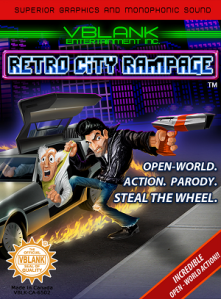 Every now and again a video game comes out that completely embraces the culture of growing up with gaming, most of these developers being in their 30s and were kids in the 80s during the so-called “Nintendo Generation”. These games borrow commonalities with their aged ancestors, but refine the years of innovation and can generate an even better title than was possible back then. Retro City Rampage (RCR) doesn’t really do that. Instead, this game packs itself to the brim with 80s pop culture references while walking, talking, and acting just like a classic 8-bit Nintendo game. While the nostalgia factor, especially for a gamer like me and readers like you, is always a welcome addition, it does cloud the focus of the developers to the point that the gameplay is a jack of all trades and expert of none.
Retro City Rampage actually started life back on the original NES as a homebrew project. Designer Brian Provinciano began the project in 2002, building his own NES dev kit and trying to “demake” – a term used for modern games remade on classic consoles – his favorite titles, one of which was Grand Theft Auto III. For years he was creating technical breakthroughs on Nintendo’s old gray box and possibly pulled off a faithful demake entitled Grand Theftendo before deciding to scrap the NES limitations and continue in PC development. By 2007 he decided to integrate some classic game references (leading to pop culture references as well) and eventually creating the original title Retro City Rampage. If this hasn’t already become abundantly clear, those that didn’t grow up playing Nintendo games will likely be lost on the (sometimes obscure) references. That doesn’t stop this GTA clone from still being an amusing romp and shouldn’t discourage anyone who would like to check out what is ultimately a decent-sized game that doesn’t lose pace, even at the end.
Guilty Pleasure: Night Trap (Sega CD/32X CD/3DO/PC)
 Console: Sega-CD/Mega-CD, 32X CD, 3DO, PC
Released: 1992
Developer: Digital Pictures
Publisher: Sega (Sega/Mega-CD, 32X CD), Virgin (3DO), Digital Pictures (PC)
Instruction Manual: Not necessary – Link
Difficulty: Easy
Played it as a child? Yes
Value: $25.00-$50.00 (used) $50.00 (new) (pricecharting.com) – Prices for various platforms
Price: $25-$50 (used) N/A (new) on eBay
Digital Release? No

Oh Night Trap, your reputation precedes you. In actuality this game has received far too much press than it’s probably worth and constitutes an odd sense of rarity about the title. It’s too bad because had this title fallen into the $5-$10 category that its brethren Sewer Shark, Corpse Killer, and Double Switch dwell, more people would probably appreciate the title. Unfortunately due to some senate hearings and the fact that this game was alongside Mortal Kombat and Lethal Enforcers for why the ESRB ratings needed to exist in the first place, people think they are going to see some explicit content. That, friends, is simply not true. Putting all that publicity aside, there is a meaty cult-style game here that perhaps suffers less than other full motion video (FMV) games. It’s not great, but it sure is fun to watch at least once.
Retrospective: Psychonauts
 Psychonauts has still got to be one of the most interesting cases of game neglect I have ever seen. Okay gamers, lets cut through all the lies we tell ourselves and face facts: when someone tells you a game is a “great game that you should try out”, we rarely do. As hobbyists that claim to have so much in common we are quite fickle when it comes to altering our plans on what we’re currently playing and what we will play. As someone who maintains a site destined to never generate the traffic that I would if I focused on contemporary gaming, it’s almost a waste of breath and writing to mention a title from last generation. This is the world that Psychonauts lives in – no one played it when it released and few will drag themselves back to play it now. It’s a shame because this is an imaginative masterpiece that justifies the, frankly, so-so releases that Double Fine has offered in recent years. Don’t get me wrong, I love most of Double Fine’s efforts more than the average gamer, but most of the studio’s games require some sort of caveat as of late. Not Psychonauts. It’s a complete package. Although it’s a waste of my time, I have to say it: You need to play Psychonauts.
Almost every excuse you can clamor is gone for not playing this game. It’s on every HD platform: Steam, PC download (on gog.com so it’s compatible with Win XP-7), Xbox 360 (it’s an Xbox Original), and as of today it’s on PSN as a PS2 digital release. You won’t even pay more than about $10-$15 for it either. Okay, so it’s easy to get, but you’re still wondering why to play it, right?
 Gaming History 101